Question 1 of 40Rules of the road · Speed and following distance
Practice test 2 of 10 — New Brunswick class 7 test
Practice test 2 questions
Question 2 of 40Rules of the road · Sharing the road
In New Brunswick, after stopping for a school bus with red lights flashing, when may you go on?
Question 3 of 40Rules of the road · Right-of-way
In New Brunswick, an ambulance comes toward you with its siren and red lights on. What must you do?
Question 4 of 40Rules of the road · Safe driving and hazards
In New Brunswick, you see exhaust smoke from a parked car ahead. What could it mean?
Question 5 of 40Rules of the road · Sharing the road
In New Brunswick, is it legal to ride a bicycle without a helmet?
Question 6 of 40Rules of the road · Sharing the road
In New Brunswick, why does the handbook say to leave more space behind a motorcycle?
Question 7 of 40Rules of the road · Parking and stopping
In New Brunswick, how close may you park to the nearest rail of a railway crossing?
Question 8 of 40Rules of the road · Sharing the road
In New Brunswick, how much space must you leave when passing a cyclist?
Question 9 of 40Rules of the road · Right-of-way
In New Brunswick, where there are no sidewalks, which side of the road should people walk on?
Question 10 of 40Rules of the road · Alcohol, drugs and penalties
In New Brunswick, what blood alcohol level is a crime under the Criminal Code?
Question 11 of 40Rules of the road · Safe driving and hazards
In New Brunswick, a child must ride in a child safety seat until reaching which of these thresholds?
Question 12 of 40Rules of the road · Turning, passing and lanes
In New Brunswick, you may not drive on the left side of the road when you are within what distance of an intersection or railway crossing?
Question 13 of 40Rules of the road · Speed and following distance
Unless a sign says otherwise, what is the speed limit in a New Brunswick urban district?
Question 14 of 40Rules of the road · Safe driving and hazards
In New Brunswick, which foot should work both the gas and brake pedals?
Question 15 of 40Rules of the road · Licensing and insurance
In New Brunswick, who may ride with a Level 1 graduated driver?
Question 16 of 40Rules of the road · Sharing the road
In New Brunswick, may cyclists ride on sidewalks?
Question 17 of 40Rules of the road · Safe driving and hazards
In New Brunswick, you are first at a crash. What should you do about the injured?
Question 18 of 40Rules of the road · Safe driving and hazards
In New Brunswick, how does the handbook say to correct a rear-wheel skid?
Question 19 of 40Rules of the road · Alcohol, drugs and penalties
In New Brunswick, how long is a suspension for losing demerit points under the Motor Vehicle Act?
Question 20 of 40Rules of the road · Alcohol, drugs and penalties
In New Brunswick, at what total of points is a driver who is not newly licensed suspended?
Question 21 of 40Road signs · Signs, signals and road markings

In New Brunswick, what does this red eight-sided sign mean?
Question 22 of 40Road signs · Signs, signals and road markings
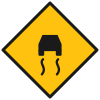
In New Brunswick, what is this sign telling you about the road?
Question 23 of 40Road signs · Signs, signals and road markings
In New Brunswick, you face a red light with a green arrow. What may you do?
Question 24 of 40Road signs · Signs, signals and road markings
In New Brunswick, a white sign shows two cars inside a red circle with a slash. What does it mean?
Question 25 of 40Road signs · Signs, signals and road markings
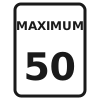
In New Brunswick, what does this sign show?
Question 26 of 40Road signs · Signs, signals and road markings

In New Brunswick, what must you do at this triangular sign?
Question 27 of 40Road signs · Signs, signals and road markings
In New Brunswick, what do yellow lines on the pavement divide?
Question 28 of 40Road signs · Signs, signals and road markings
In New Brunswick, what do the downward-sloping stripes on a hazard marker beside the road show?
Question 29 of 40Road signs · Signs, signals and road markings
In New Brunswick, what does the colour green on a sign show?
Question 30 of 40Road signs · Signs, signals and road markings
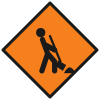
In New Brunswick, what does this orange sign mark?
Question 31 of 40Road signs · Signs, signals and road markings
In New Brunswick, you face a red light. There is no stop line and no crosswalk. Where must you stop?
Question 32 of 40Road signs · Signs, signals and road markings
In New Brunswick, what does a yellow diamond sign with a black "T" mean?
Question 33 of 40Road signs · Signs, signals and road markings
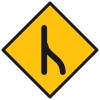
In New Brunswick, what should you expect where this sign is posted?
Question 34 of 40Road signs · Signs, signals and road markings
In New Brunswick, what should you do at a "Steep hill ahead" sign if you are going down a very steep hill?
Question 35 of 40Road signs · Signs, signals and road markings
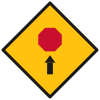
In New Brunswick, what is ahead when you pass this warning sign?
Question 36 of 40Road signs · Signs, signals and road markings
In New Brunswick, what does a single solid yellow centre line mean?
Question 37 of 40Road signs · Signs, signals and road markings
In New Brunswick, may you turn right on a red light?
Question 38 of 40Road signs · Signs, signals and road markings
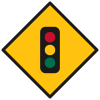
In New Brunswick, what should you be ready for after this sign?
Question 39 of 40Road signs · Signs, signals and road markings
In New Brunswick, what does an "Added lane" warning sign tell you?
Question 40 of 40Road signs · Signs, signals and road markings
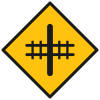
In New Brunswick, an advisory speed sign is posted under this warning sign. What does it show?
1 of 40
Answer each question to see the explanation. Keyboard: A–D or 1–4 to answer, N next, P previous.
Answers and explanations (text version)
The correct answer to each question above, why it is right, and where it comes from. Try the test first.
Question 1: A. No closer than 150 metres
The handbook says: "It is an offence to follow within 150 metres (500 feet) of any fire apparatus which is responding to an emergency."
Handbook: NB Driver's Handbook, Part 4 Rules of the Road — Following Fire Vehicles (p. 34)
Question 2: B. When the red lights stop, the bus moves, or the driver waves you on
The handbook says you must not proceed "until the school bus resumes motion or until signalled by the school bus driver" (Part 4) and "until the red lights are no longer flashing" (Part 6).
Handbook: NB Driver's Handbook, Part 4 Rules of the Road — 4.5 School zones, school buses and construction zones (p. 36)
Question 3: A. Pull to the right-hand curb and stop
The handbook says drivers "must immediately drive to the right hand curb and must stop and remain stopped until the emergency vehicle has passed."
Handbook: NB Driver's Handbook, Part 4 Rules of the Road — Emergency vehicles (p. 34)
Question 4: C. The driver may be about to pull out
The handbook says: "Exhaust smoke coming from a vehicle could indicate a driver ready to pull out."
Handbook: NB Driver's Handbook, Part 5 Safe Driving — Defensive driving (p. 61)
Question 5: A. No, it is against the law
The handbook says: "It is against the law to ride a bicycle without a helmet."
Handbook: NB Driver's Handbook, Part 6 Sharing the Road — 6.4 Drivers and bicycles (p. 80)
Question 6: A. Motorcycles can stop more quickly
The handbook says: "Motorcycles can stop quicker than other vehicles, therefore allow extra following distance."
Handbook: NB Driver's Handbook, Part 6 Sharing the Road — 6.3 Drivers and motorcycles (p. 79)
Question 7: B. No closer than 15 metres
The handbook says you may not park "within 15 metres (50 feet) of the nearest rail of a railroad crossing."
Handbook: NB Driver's Handbook, Part 4 Rules of the Road — Parking regulations (p. 48)
Question 8: A. At least one metre
The handbook says that when it is safe to pass "the driver must leave at least one metre (three feet) of open space between the vehicle and the bicycle."
Handbook: NB Driver's Handbook, Part 6 Sharing the Road — 6.4 Drivers and bicycles (p. 79)
Question 9: B. The left side, facing traffic
The handbook says pedestrians must, when practical, "walk only on the left side of the roadway or its shoulder facing traffic."
Handbook: NB Driver's Handbook, Part 4 Rules of the Road — Walking on the highway (p. 52)
Question 10: C. 80 mg or more per 100 mL (0.08)
The handbook says it is prohibited "to drive with a blood-alcohol concentration (BAC) of 80 milligrams or more (mg) of alcohol per 100 millilitres (ml) of blood (0.08 percent or more)."
Handbook: NB Driver's Handbook, Part 5 Safe Driving — Consequences for alcohol-impaired driving (p. 65)
Question 11: D. Age 9, 36 kg, or 145 cm tall
The handbook says children must be in child safety seats until they reach "age of nine; weight of 36 kg (79 lbs.); height of 145 cm (57 inches)."
Handbook: NB Driver's Handbook, Part 5 Safe Driving — 5.3 Seat belts save lives (p. 56)
Question 12: B. 30 metres
The handbook says it is unlawful to drive left of centre "when approaching within 30 metres (100 feet) of or crossing any intersection or railroad grade crossing."
Handbook: NB Driver's Handbook, Part 4 Rules of the Road — 4.4 Passing a vehicle (p. 36)
Question 13: B. 50 km/h
The handbook says the limit is "50 km (30 miles) per hour in any urban district," that is, 50 km/h.
Handbook: NB Driver's Handbook, Part 4 Rules of the Road — 4.2 Speed restrictions (p. 35)
Question 14: A. The right foot
The handbook says: "Always use your right foot to operate the accelerator and brake pedal."
Handbook: NB Driver's Handbook, Part 5 Safe Driving — Driving posture (p. 60)
Question 15: C. One passenger with a Class 5 and 3 years of experience
The handbook says Level 1 drivers must be accompanied by "only one passenger who has a Class 5 or better licence, at least three years (3) of driving experience" in the front seat.
Handbook: NB Driver's Handbook, Part 1 Licensing of Drivers — Level 1 (p. 10)
Question 16: B. No, it is an offence
The handbook says: "It is an offence to drive on sidewalks. Bicyclists are subject to the same rules of the road as motor vehicle drivers."
Handbook: NB Driver's Handbook, Part 6 Sharing the Road — 6.4 Drivers and bicycles (p. 80)
Question 17: B. Do not move them unless they are in danger
The handbook says: "Do not move the injured. Unless they are in a burning car or other immediate danger, leave them in the car until trained help arrives."
Handbook: NB Driver's Handbook, Part 5 Safe Driving — 5.8 Crash (p. 62)
Question 18: A. Feet off the pedals; steer the way of the skid
The handbook says: "To correct a rear-wheel skid, remove your feet from the pedals and steer in the direction of the skid."
Handbook: NB Driver's Handbook, Part 5 Safe Driving — Skids (p. 71)
Question 19: D. Three months
The handbook says: "Suspensions resulting from loss of demerit points for offences under the Motor Vehicle Act are for a period of three months."
Handbook: NB Driver's Handbook, Part 1 Licensing of Drivers — Suspension of driving privilege (p. 21)
Question 20: C. 10 points
The handbook says the Registrar must suspend "when a total of 10 points is assessed against your driving record (other than a newly licensed driver)."
Handbook: NB Driver's Handbook, Part 1 Licensing of Drivers — 1.6 How you may lose your driving privilege (p. 20)
Question 21: A. Come to a full stop and make sure the way is clear
The handbook says the stop sign, a red octagon, "means come to a full stop and be sure the way is clear before proceeding."
Handbook: NB Driver's Handbook, Part 7 Traffic Signs — 7.1 Six basic sign shapes every driver must know (p. 86)
Question 22: C. It is slippery when wet
The handbook captions this sign "Road surface slippery when wet."
Handbook: NB Driver's Handbook, Part 7 Traffic Signs — 7.4 Warning signs (p. 91)
Question 23: D. Turn the way of the arrow, after yielding
The handbook says this signal means "motorists may turn cautiously in the direction the arrow is pointing, after yielding to pedestrians and other traffic."
Handbook: NB Driver's Handbook, Part 4 Rules of the Road — 4.15 Traffic control signals (p. 43)
Question 24: D. Passing is not permitted
The handbook captions this sign "Passing not permitted": a red circle and slash deny permission.
Handbook: NB Driver's Handbook, Part 7 Traffic Signs — 7.3 Regulatory Signs (p. 88)
Question 25: B. The top speed allowed under ideal conditions
The handbook captions this sign "The maximum speed allowed under ideal conditions."
Handbook: NB Driver's Handbook, Part 7 Traffic Signs — 7.3 Regulatory Signs (p. 88)
Question 26: B. Slow down, give right of way, and stop if needed
The handbook says a yield sign means you must reduce speed, "give right of way and stop if necessary if any other traffic is in, or closely approaching, the intersection."
Handbook: NB Driver's Handbook, Part 7 Traffic Signs — 7.1 Six basic sign shapes every driver must know (p. 86)
Question 27: B. Traffic moving in opposite directions
The handbook says: "Yellow lines on the pavement divide traffic moving in opposite directions."
Handbook: NB Driver's Handbook, Part 4 Rules of the Road — 4.7 Laned traffic and pavement markings (p. 37)
Question 28: D. The side on which you may safely pass
The handbook says this marker shows a "Hazard close to the edge of the road. The downward lines show the side on which you may safely pass."
Handbook: NB Driver's Handbook, Part 7 Traffic Signs — Hazard Markers (p. 92)
Question 29: C. Permitted moves or direction guidance
The handbook says: "Green — Indicates traffic movement such as turns which are permitted or directional guidance."
Handbook: NB Driver's Handbook, Part 7 Traffic Signs — 7.2 Standard sign colours (p. 87)
Question 30: C. A zone where road workers are present
The handbook shows this sign as "Road work ahead": it "marks a zone where construction workers and maintenance activities are present."
Handbook: NB Driver's Handbook, Part 7 Traffic Signs — Construction Signs (p. 93)
Question 31: A. Before entering the intersection
At a red light the handbook says stop at a marked stop line "or, if none, before entering the nearest crosswalk or, if none, before entering the intersection."
Handbook: NB Driver's Handbook, Part 4 Rules of the Road — 4.15 Traffic control signals (p. 43)
Question 32: A. The road ends ahead; turn sharply right or left
The handbook says this sign "warns of T intersection. Road turns sharply right and left."
Handbook: NB Driver's Handbook, Part 7 Traffic Signs — 7.4 Warning signs (p. 91)
Question 33: D. Two lanes merge, with traffic coming from the right
The handbook captions this sign "Two lanes merge ahead. Traffic entering from right."
Handbook: NB Driver's Handbook, Part 7 Traffic Signs — 7.4 Warning signs (p. 92)
Question 34: D. Shift to a lower gear or slow down
The handbook captions this sign "Steep hill ahead. Shift to lower gear or slow down if going down very steep hill."
Handbook: NB Driver's Handbook, Part 7 Traffic Signs — 7.4 Warning signs (p. 91)
Question 35: C. A stop sign is ahead
The handbook lists this warning sign as "Stop sign ahead": a stop sign is ahead, so be ready to stop.
Handbook: NB Driver's Handbook, Part 7 Traffic Signs — 7.4 Warning signs (p. 90)
Question 36: A. Passing is not permitted
The handbook says: "A solid single yellow line indicates that passing is not permitted."
Handbook: NB Driver's Handbook, Part 4 Rules of the Road — 4.7 Laned traffic and pavement markings (p. 37)
Question 37: B. Yes, after a full stop, unless a sign forbids it
The handbook says: "Unless a sign indicates otherwise, a right turn may be made on a red light provided the vehicle is first brought to a full stop."
Handbook: NB Driver's Handbook, Part 4 Rules of the Road — 4.15 Traffic control signals (p. 43)
Question 38: C. Traffic signals; be prepared to stop
The handbook captions this sign "Traffic signals ahead. Be prepared to stop."
Handbook: NB Driver's Handbook, Part 7 Traffic Signs — 7.4 Warning signs (p. 91)
Question 39: A. Two roads join, and merging is not needed
The handbook captions this sign "Added lane. Two roads converge and merging movements are not required."
Handbook: NB Driver's Handbook, Part 7 Traffic Signs — 7.4 Warning signs (p. 91)
Question 40: B. That the safe speed is lower than the posted limit
The handbook says an advisory speed sign may be posted "to show that the safe road speed is less than the posted speed."
Handbook: NB Driver's Handbook, Part 7 Traffic Signs — 7.5 Railway Crossings (p. 94)
Practice test 2 of 10 for the Written tests (Class 7 Level 1 learner's licence); road sign recognition exam and rules of the road knowledge exam (SNB): 40 questions · 16 of 20 in each section to pass · no time limit.