Question 1 of 25Sharing the road (Colorado)
Practice test 2 of 10 — Colorado permit test
Practice test 2 questions
Question 2 of 25Turning, passing and lanes (Colorado)
In Colorado, when may a driver cross a bike lane?
Question 3 of 25Road signs
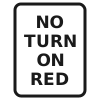
What does this sign mean while the light is red?
Question 4 of 25Road signs (Colorado)
A Colorado railroad crossing in a quiet zone has a "No Train Horn" sign. What warns you of a train there?
Question 5 of 25Safe driving and hazards
Which headlights should you use in fog?
Question 6 of 25Speed and following distance
Why is it unsafe to drive faster than your lights can show at night?
Question 7 of 25Right of way (Colorado)
In Colorado, when must you yield to a transit bus that is pulling into traffic?
Question 8 of 25Road signs
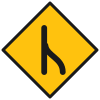
You are on the main road and see this sign. What is the best thing to do?
Question 9 of 25Alcohol, drugs and penalties
You are in a crash. Is it legal to drive away without stopping?
Question 10 of 25Turning, passing and lanes
Why is weaving from lane to lane dangerous?
Question 11 of 25Emergencies and equipment (Colorado)
According to the Colorado handbook, during "Accident Alert" status, how soon must a minor no-injury crash be reported to police?
Question 12 of 25Right of way
You have stopped at a stop line, but your view of the cross street is blocked. What should you do?
Question 13 of 25Road signs

What does this white X-shaped sign mark?
Question 14 of 25Road signs
Signs that are taller than they are wide, in white with black letters, usually:
Question 15 of 25Sharing the road
A vehicle is stopped on the shoulder with flashing emergency lights. What should you do?
Question 16 of 25Parking and stopping (Colorado)
When you parallel park in Colorado, how close to the curb must your car be?
Question 17 of 25Signals and pavement markings
Arrows painted in your lane show:
Question 18 of 25Alcohol, drugs and penalties
How does alcohol affect your driving?
Question 19 of 25Sharing the road
How should you pass a person riding a horse?
Question 20 of 25Right of way
At an intersection with no signs, you want to turn left. An oncoming car is going straight. What should you do?
Question 21 of 25Right of way
In general, how should you treat a funeral procession?
Question 22 of 25Right of way
You are at a stop sign. A car on the cross street is signaling a turn onto your road but has not slowed down yet. What is safest?
Question 23 of 25Parking and stopping
May you park in a disability space without a valid placard or plate?
Question 24 of 25Alcohol, drugs and penalties
What kind of drug is alcohol?
Question 25 of 25Parking and stopping
When you finish parallel parking, where should your car be?
1 of 25
The timer starts when you answer the first question. Keyboard: A–D or 1–4 to answer, N next, P previous.
Answers and explanations (text version)
The correct answer to each question above, why it is right, and where it comes from. Try the test first.
Question 1: C. At least 3 feet
Colorado drivers must give "a minimum of three feet" when passing bicyclists, that is 3 feet.
Handbook: Bicyclists — Colorado laws regarding motorists and bicyclists
Question 2: B. When turning or entering a road, driveway or alley
Colorado says "you may cross a bike lane when turning, entering or leaving another road, driveway or alley," yielding to bicyclists.
Handbook: Bicyclists — Colorado laws regarding motorists and bicyclists
Question 3: D. You may not turn, even after you stop
This sign means no turn on red. You must stop and wait for a green light before you turn.
Handbook: Chapter: Traffic signs — Regulatory signs
Question 4: C. The flashing lights and gates
At Colorado quiet-zone crossings train horns do not blow; "the flashing lights and gates warn you" of a train.
Handbook: Light Rail — Quiet Zone signs
Question 5: C. Low beams
Use low beams in fog. High beams reflect off the fog and make it harder to see.
Handbook: Chapter: Safe driving and hazards — Night and weather
Question 6: A. You may not see a hazard in time to stop
If you drive faster than your lights reach, you may not see a hazard in time to stop.
Handbook: Chapter: Speed and following distance — Speed and road conditions
Question 7: A. When it signals and its rear yield sign is lit
Colorado drivers must yield to a transit bus "signaling to enter a traffic lane" when the yield sign on its rear is lit.
Handbook: Right-of-Way — Transit buses
Question 8: A. Watch for cars joining and adjust your speed
At a merge, both drivers share the job. Watch for cars joining and adjust your speed or lane to help them merge.
Handbook: Chapter: Traffic signs — Warning signs
Question 9: D. No, you must stop
You must stop after any crash you are in. Leaving the scene is a serious offense.
Handbook: Chapter: Alcohol, drugs and penalties — Penalties
Question 10: D. It raises the chance of a crash
Weaving in and out of lanes surprises other drivers and raises the chance of a crash.
Handbook: Chapter: Turning, passing and lane use — Changing lanes
Question 11: B. Within 24 hours
Under Accident Alert Status in Colorado, "you must file an accident report with law enforcement within 24 hours."
Handbook: Crash Tips — Accident Alert Status
Question 12: D. Edge forward until you can see, then go
After stopping, edge forward slowly until you can see cross traffic, then go only when it is clear.
Handbook: Chapter: Right of way — Stop signs and intersections
Question 13: B. A railroad crossing
The white X-shaped crossbuck marks the place where the road crosses railroad tracks.
Handbook: Chapter: Traffic signs — Regulatory signs
Question 14: C. Give a rule you must obey
Upright white rectangles are regulatory signs, such as speed limits. They give a rule you must obey.
Handbook: Chapter: Traffic signs — Sign shapes and colors
Question 15: D. Move over a lane, or slow down
Every state has a move over law. Move over a lane if you can, or slow down if you cannot.
Handbook: Chapter: Sharing the road — Emergency and work vehicles
Question 16: A. Within 12 inches
Where parallel parking is allowed in Colorado, your car "must be within 12 inches of the curb."
Handbook: Parking — Parallel parking
Question 17: C. Which way traffic in that lane may go
Lane arrows show which way traffic in that lane may go, such as straight or left only.
Handbook: Chapter: Traffic signals and pavement markings — Pavement markings
Question 18: A. It slows your reactions and blurs vision
Alcohol slows your reactions, blurs vision and weakens coordination, even in small amounts.
Handbook: Chapter: Alcohol, drugs and penalties — How alcohol affects you
Question 19: B. Slowly, with plenty of room and no horn
Pass a horse slowly and give it plenty of room. Do not honk, as noise can scare it.
Handbook: Chapter: Sharing the road — Slow-moving vehicles
Question 20: D. Yield to the oncoming car
A driver turning left must yield to oncoming traffic that is close enough to be a hazard.
Handbook: Chapter: Right of way — Uncontrolled intersections
Question 21: B. Yield and do not cut into the line
In general, yield to a funeral procession and do not cut into it, even if your light is green.
Handbook: Chapter: Right of way — Special situations
Question 22: C. Wait until it clearly starts to turn
A turn signal is not a promise. Wait until the car clearly starts to turn before you pull out in front of it.
Handbook: Chapter: Right of way — Stop signs and intersections
Question 23: C. No, it is not allowed
Disability spaces are only for vehicles with a valid placard or plate. Others may not park there.
Handbook: Chapter: Parking and stopping — Where not to park
Question 24: B. A depressant that slows the brain
Alcohol is a depressant. It slows the brain and the body's reactions.
Handbook: Chapter: Alcohol, drugs and penalties — How alcohol affects you
Question 25: B. Close to and lined up with the curb
A parallel-parked car should sit close to the curb and lined up with it, not sticking out into traffic.
Handbook: Chapter: Parking and stopping — Parallel parking
Practice test 2 of 10 for the Driving Knowledge Test (written permit test) (the Colorado DMV): 25 questions, 20 to pass — the commonly reported format; the Colorado DMV does not publish the count or a pass mark. Our practice timer: 60 minutes.