Question 1 of 30Turning, passing and lanes (Hawaii)
Practice test 1 of 10 — Hawaii permit test
Practice test 1 questions
Question 2 of 30Emergencies and equipment (Hawaii)
In Hawaii, a crash must be reported to police right away if property damage is at least what?
Question 3 of 30Road signs

Where would you expect to see this sign?
Question 4 of 30Road signs
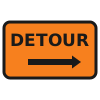
What does this sign tell you to do?
Question 5 of 30Alcohol, drugs and penalties
What does an ignition interlock device do?
Question 6 of 30Alcohol, drugs and penalties (Hawaii)
Where does Hawaii law ban drinking or holding an alcoholic drink?
Question 7 of 30Turning, passing and lanes
You are pulling away from the curb. What should you do first?
Question 8 of 30Parking and stopping
You park on a hill with no curb, facing up or down. Which way should you turn your wheels?
Question 9 of 30Signals and pavement markings
A center lane is marked with a solid yellow line and a broken yellow line on each side. What is it for?
Question 10 of 30Safe driving and hazards (Hawaii)
Where does the Hawaii manual say you are most likely to meet fog?
Question 11 of 30Speed and following distance
Why does the risk of hydroplaning go up as you drive faster?
Question 12 of 30Safe driving and hazards
What is the main danger of driving when angry or upset?
Question 13 of 30Signals and pavement markings
A red X lights up over your lane on a highway. What does it mean?
Question 14 of 30Turning, passing and lanes (Hawaii)
In Hawaii, how far ahead must you signal before you turn, stop or change lanes?
Question 15 of 30Right of way (Hawaii)
You stopped for a Hawaii school bus with flashing red lights. When may you go?
Question 16 of 30Emergencies and equipment
When should you adjust your seat and mirrors?
Question 17 of 30Licensing and insurance (Hawaii)
A Hawaii permit holder drives from 11 at night to 5 in the morning. Who must ride along?
Question 18 of 30Speed and following distance
Why does it usually take longer to stop when you are going downhill?
Question 19 of 30Speed and following distance
What is a "space cushion"?
Question 20 of 30Road signs
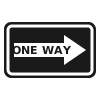
What does this sign tell you about the road?
Question 21 of 30Road signs
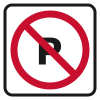
What does this sign mean?
Question 22 of 30Right of way (Hawaii)
A Hawaii school bus is stopped with red lights flashing in the lane next to yours, going your way. What must you do?
Question 23 of 30Alcohol, drugs and penalties
In general, about how fast does the body clear alcohol?
Question 24 of 30Sharing the road
You are turning right and a cyclist is riding in the bike lane next to you. What should you do?
Question 25 of 30Signals and pavement markings
A flashing "DON'T WALK" or raised hand signal means people on foot should:
Question 26 of 30Road signs
Most diamond-shaped signs:
Question 27 of 30Safe driving and hazards
What is an "escape route" when driving?
Question 28 of 30Alcohol, drugs and penalties
What usually happens if you refuse a lawful breath or blood test?
Question 29 of 30Road signs
Which sign is the only one with eight sides?
Question 30 of 30Road signs
On an Interstate route sign, what does an odd route number usually tell you?
1 of 30
The timer starts when you answer the first question. Keyboard: A–D or 1–4 to answer, N next, P previous.
Answers and explanations (text version)
The correct answer to each question above, why it is right, and where it comes from. Try the test first.
Question 1: C. It is unlawful to speed up
The no-passing rules note: "When you are being passed, it is unlawful to increase your speed."
Handbook: Chapter V: Traffic Laws, Ordinances, Rules and Regulations — No Passing Rules
Question 2: C. $3,000
Crashes with injury, death or "property damage of $3,000 or more must be reported to the police immediately."
Handbook: Chapter VII: Crash Procedures
Question 3: A. On the outside edge of a sharp curve
Chevron signs are placed on the outside of a sharp curve and point the way to steer.
Handbook: Chapter: Traffic signs — Warning signs
Question 4: C. Follow the signs around a closed road
A detour sign leads you around a closed road. Follow the detour signs to get back on your route.
Handbook: Chapter: Traffic signs — Work zone signs
Question 5: C. Stops the car if alcohol is on your breath
An ignition interlock is a breath tester that stops the car from starting if it finds alcohol on your breath.
Handbook: Chapter: Alcohol, drugs and penalties — Penalties
Question 6: D. On any public highway or sidewalk
It is against the law to consume or possess any alcoholic beverage "on any public highway or any public sidewalk."
Handbook: Chapter IX: Alcohol and Other Drugs — The Law
Question 7: A. Signal and check for traffic
Signal and check mirrors and your blind spot before pulling away from the curb.
Handbook: Chapter: Turning, passing and lane use — Signaling
Question 8: A. Toward the edge of the road
With no curb, turn the wheels toward the edge of the road so the car rolls off the road, not into traffic.
Handbook: Chapter: Parking and stopping — Parking on hills
Question 9: C. Left turns by traffic from both directions
This is a two-way left-turn lane. Drivers from both directions use it only to make left turns.
Handbook: Chapter: Traffic signals and pavement markings — Pavement markings
Question 10: D. On roads at higher elevations
Fog almost never occurs at lower elevations; it is found "on roads at higher elevations where low-lying clouds meet the ground surface."
Handbook: Chapter X: Safe Driving Techniques — Driving in Inclement Weather
Question 11: D. Your tires cannot push water away fast enough
At higher speed, tires cannot clear the water fast enough and can ride up on a thin layer of it.
Handbook: Chapter: Speed and following distance — Speed and road conditions
Question 12: D. You may take more risks
Strong feelings make you take more risks and pay less attention, so wait until you are calm before you drive.
Handbook: Chapter: Safe driving and hazards — Defensive driving
Question 13: A. You must not drive in that lane
A steady red X over a lane means the lane is closed to you. Move to a lane with a green arrow.
Handbook: Chapter: Traffic signals and pavement markings — Lane control signals
Question 14: D. At least 100 feet
Signals "must be given for at least 100 feet" (100 feet) before you change lanes, turn or stop, about five car lengths.
Handbook: Chapter V: Traffic Laws, Ordinances, Rules and Regulations — Required Signals
Question 15: C. When the bus moves again or its red lights go off
Drivers must stop and "shall not proceed until the school bus resumes motion" or its flashing red lamps are turned off.
Handbook: Chapter XII: Pedestrian Safety — Stopping for a School Bus
Question 16: B. Before you start to drive
Adjust your seat and mirrors before you start to drive, so you can see well and are not distracted on the road.
Handbook: Chapter: Emergencies and vehicle equipment — Vehicle equipment
Question 17: A. A parent or guardian
A licensed driver 21 or older is needed at all times, but from 11 to 5 "you must be accompanied by your parent or guardian."
Handbook: Chapter I: Licensing of Drivers — Driving by Minors
Question 18: A. Gravity keeps pulling the car forward
Going downhill, gravity keeps pulling the car forward, so it takes longer to stop; slow down and leave more space.
Handbook: Chapter: Speed and following distance — Stopping distance
Question 19: D. Open space around your car on all sides
A space cushion is room around your car on all sides so you have time and space to react.
Handbook: Chapter: Speed and following distance — Managing space
Question 20: C. All traffic moves the way the arrow points
A one way sign means all traffic on that road moves only in the direction the arrow shows.
Handbook: Chapter: Traffic signs — Regulatory signs
Question 21: D. You may not park here
This is a no parking sign. You may not leave your car parked in the area it covers.
Handbook: Chapter: Traffic signs — Regulatory signs
Question 22: A. Stop before you reach the bus
Drivers in the bus lane and all lanes next to it "shall stop the driver's vehicle before reaching the school bus."
Handbook: Chapter XII: Pedestrian Safety — Stopping for a School Bus
Question 23: C. About one standard drink per hour
In general, the body clears about one standard drink per hour, and nothing speeds it up.
Handbook: Chapter: Alcohol, drugs and penalties — How alcohol affects you
Question 24: A. Let the cyclist pass, then turn
Yield to the cyclist in the bike lane. Let them go by, then make your turn behind them.
Handbook: Chapter: Sharing the road — Bicycles
Question 25: D. Not start, but finish if already crossing
A flashing don't walk or raised hand means do not start to cross; those already crossing should finish.
Handbook: Chapter: Traffic signals and pavement markings — Traffic signals
Question 26: B. Warn you of a hazard or change ahead
Diamond-shaped signs are warning signs. They tell you about a hazard or change in the road ahead.
Handbook: Chapter: Traffic signs — Sign shapes and colors
Question 27: A. Open space you can steer into
An escape route is open space you can steer into if you suddenly need to avoid a crash.
Handbook: Chapter: Safe driving and hazards — Defensive driving
Question 28: B. Your license can be suspended
Under implied consent laws, refusing a lawful test usually leads to a license suspension.
Handbook: Chapter: Alcohol, drugs and penalties — Testing and implied consent
Question 29: D. Stop
Only the stop sign has eight sides, so you can know it by shape alone.
Handbook: Chapter: Traffic signs — Sign shapes and colors
Question 30: D. The highway runs mostly north and south
Interstate routes with odd numbers usually run north and south; even numbers usually run east and west.
Handbook: Chapter: Traffic signs — Guide and service signs
Practice test 1 of 10 for the Written knowledge test (Class 3 learner's instruction permit); online or at a county driver licensing center (Hawaii county licensing): 30 questions · 24 of 30 (80%) to pass · 60 minutes.