Question 1 of 80Turning, passing and lanes
Practice test 2 of 10 — Michigan permit test
Practice test 2 questions
Question 2 of 80Right of way (Michigan)
In Michigan, a school bus with flashing red lights is stopped across a grass median on a divided highway. Must you stop?
Question 3 of 80Emergencies and equipment (Michigan)
After a Michigan crash, you must notify the police if anyone is hurt or property damage is more than what?
Question 4 of 80Right of way
A person is crossing the middle of a block, not at a crosswalk. What is true?
Question 5 of 80Alcohol, drugs and penalties
In nearly every state, what is the legal blood alcohol limit for drivers 21 and over?
Question 6 of 80Alcohol, drugs and penalties (Michigan)
In a Michigan work zone, how many points do you get for speeding more than 15 mph over the limit?
Question 7 of 80Right of way (Michigan)
Must a Michigan driver pull over when meeting a funeral procession on the road?
Question 8 of 80Right of way
You and a driver on your right stop at a four-way stop at the same time. Who goes first?
Question 9 of 80Road signs
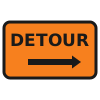
What does this sign tell you to do?
Question 10 of 80Parking and stopping
Why should you not park in front of a fire station driveway?
Question 11 of 80Safe driving and hazards
When should you turn on your headlights?
Question 12 of 80Alcohol, drugs and penalties (Michigan)
A Michigan driver is convicted of a drug crime with no prior drug violations. How long is the license suspension?
Question 13 of 80Parking and stopping
May you park so that you block a driveway?
Question 14 of 80Right of way
Why must drivers always yield to trains at a crossing?
Question 15 of 80Safe driving and hazards
The headlights of an oncoming car are blinding you. Where should you look?
Question 16 of 80Right of way
Which statement about the right-of-way is true?
Question 17 of 80Parking and stopping
In general, may you park on a bridge or in a tunnel?
Question 18 of 80Road signs
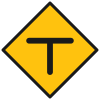
What does this sign tell you about the road ahead?
Question 19 of 80Safe driving and hazards (Michigan)
Under Michigan's Kelsey's Law, may a Level 1 or Level 2 teen make a non-emergency call with a hands-free phone?
Question 20 of 80Parking and stopping
When you leave your car parked, what should you do?
Question 21 of 80Right of way
You hear a siren and see a fire truck with flashing lights behind you. What should you do?
Question 22 of 80Signals and pavement markings
Generally, when may you turn right on a steady red light?
Question 23 of 80Emergencies and equipment
A front tire blows out. What should you do?
Question 24 of 80Alcohol, drugs and penalties
Which is a common penalty for a first conviction of driving under the influence?
Question 25 of 80Road signs
An Interstate route has three digits, and the first digit is even. What does that usually mean?
Question 26 of 80Safe driving and hazards (Michigan)
In Michigan, it is illegal to use or flash high beams within how far of an oncoming vehicle?
Question 27 of 80Safe driving and hazards
You are driving on a two-lane road and an oncoming car drifts into your lane. What should you do?
Question 28 of 80Signals and pavement markings (Michigan)
Under Michigan law, which of these may use flashing green lights on a road work vehicle?
Question 29 of 80Emergencies and equipment
You are in a crash and someone is hurt. What should you do?
Question 30 of 80Parking and stopping
What is double parking?
Question 31 of 80Road signs
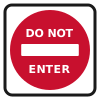
What does this sign mean?
Question 32 of 80Safe driving and hazards
You are on a dark, empty road with no cars ahead or coming toward you. Which headlights help you see best?
Question 33 of 80Turning, passing and lanes (Michigan)
At a Michigan intersection with a "Michigan Left," how do you make a left turn?
Question 34 of 80Speed and following distance
Why should you avoid driving right beside other cars on a multi-lane road?
Question 35 of 80Right of way
You are turning right on red. Who must you yield to?
Question 36 of 80Road signs
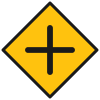
What does this sign tell you is ahead?
Question 37 of 80Road signs

You reach this sign as a car with the right-of-way is coming. What should you do?
Question 38 of 80Signals and pavement markings
The letters "RXR" painted on the road warn of:
Question 39 of 80Road signs
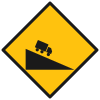
This sign shows a truck on a downward slope. What does it warn you about?
Question 40 of 80Turning, passing and lanes
When you back up, where should you look?
Question 41 of 80Road signs
A small yellow sign below a curve sign shows "35 MPH". What does it mean?
Question 42 of 80Alcohol, drugs and penalties
Your friend has been drinking and wants to drive you home. What should you do?
Question 43 of 80Right of way
A person is walking across the street in a crosswalk ahead of you. What must you do?
Question 44 of 80Alcohol, drugs and penalties (Michigan)
According to the Michigan manual, how many points does a driver under 21 get for any bodily alcohol content?
Question 45 of 80Speed and following distance
Why do you need more following distance behind a motorcycle?
Question 46 of 80Turning, passing and lanes
What is the acceleration lane on a highway on-ramp for?
Question 47 of 80Road signs
Small green signs with numbers along a highway are mile markers. How can they help you?
Question 48 of 80Road signs (Michigan)
In Michigan, an orange triangle on the back of a vehicle marks it as slow-moving. What is the top speed of such a vehicle?
Question 49 of 80Signals and pavement markings
What do two solid yellow lines down the center of the road mean?
Question 50 of 80Speed and following distance
The best way to avoid hitting a car that stops suddenly in front of you is to:
Question 51 of 80Alcohol, drugs and penalties
Which ability does alcohol usually affect first?
Question 52 of 80Alcohol, drugs and penalties
How does a conviction for driving under the influence usually affect insurance?
Question 53 of 80Speed and following distance
Driving well over the limit on a short trip usually:
Question 54 of 80Sharing the road (Michigan)
The Michigan manual says a commercial vehicle at 55 mph needs about how far to stop?
Question 55 of 80Road signs
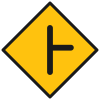
What should you expect after you pass this sign?
Question 56 of 80Safe driving and hazards
Another driver makes a rude gesture at you. What should you do?
Question 57 of 80Right of way (Michigan)
In Michigan, how far from a school bus with flashing red overhead lights must you stop?
Question 58 of 80Turning, passing and lanes
Where should you slow down when leaving a highway?
Question 59 of 80Road signs
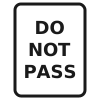
What does this sign mean?
Question 60 of 80Right of way
You want to turn left at a green light. A car is coming straight toward you. What should you do?
Question 61 of 80Parking and stopping
May you park in a marked bike lane?
Question 62 of 80Licensing and insurance (Michigan)
Before the driving skills test, a Michigan teen's log must show how many supervised hours?
Question 63 of 80Signals and pavement markings
There is a solid yellow line on your side of the center and a broken yellow line on the far side. May you pass?
Question 64 of 80Parking and stopping
Where is parking never allowed?
Question 65 of 80Speed and following distance
If you double your speed, about how much farther do you travel once you brake?
Question 66 of 80Signals and pavement markings (Michigan)
According to the Michigan manual, may you turn left on a steady red light from a two-way street onto a one-way street?
Question 67 of 80Road signs
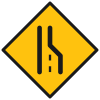
You are in the lane that this sign says will end. What should you do?
Question 68 of 80Speed and following distance
Why does it usually take longer to stop when you are going downhill?
Question 69 of 80Safe driving and hazards
When should you use your horn?
Question 70 of 80Road signs
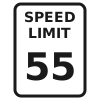
What does this sign tell you?
Question 71 of 80Speed and following distance (Michigan)
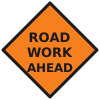
For most construction or maintenance work in Michigan, what is the work zone speed limit unless posted differently?
Question 72 of 80Licensing and insurance (Michigan)
A Michigan Level 2 driver with no adult along may carry how many passengers under 21 who are not family?
Question 73 of 80Turning, passing and lanes
Before turning right, what should you watch for on your right?
Question 74 of 80Signals and pavement markings (Michigan)
In Michigan, what does a solid white line between two lanes going the same way tell you?
Question 75 of 80Sharing the road (Michigan)
Michigan law requires how much space between your car and a bicyclist when you pass?
Question 76 of 80Road signs
You pass a sign that says "END ROAD WORK". What does it mean?
Question 77 of 80Right of way
A person starts to cross against a "DON'T WALK" signal in front of you. What should you do?
Question 78 of 80Alcohol, drugs and penalties
A medicine label says "Do not operate heavy machinery." What should you do?
Question 79 of 80Turning, passing and lanes
A long line of cars is behind you on a two-lane road. What should you do?
Question 80 of 80Safe driving and hazards (Michigan)
In Michigan, a child must ride in a car seat or booster seat until which comes first?
1 of 80
Answer each question to see the explanation. Keyboard: A–D or 1–4 to answer, N next, P previous.
Answers and explanations (text version)
The correct answer to each question above, why it is right, and where it comes from. Try the test first.
Question 1: D. Before the no-passing zone begins
You must complete a pass and be back in your lane before a no-passing zone begins.
Handbook: Chapter: Turning, passing and lane use — Passing
Question 2: A. No, the median divides the road
Michigan does not require you to stop for a school bus on the other side of a highway divided by a barrier such as a grass median.
Handbook: Chapter 4: Traffic Laws — School buses
Question 3: B. $1,000
Michigan drivers must notify the police after a crash with injuries or property damage over $1,000.
Handbook: Chapter 7: Emergencies and Special Situations — Crashes
Question 4: B. They should yield, but you must still avoid them
Pedestrians outside a crosswalk should yield to cars, but drivers must still take care not to hit anyone.
Handbook: Chapter: Right of way — Pedestrians
Question 5: A. 0.08 percent
In nearly every state the limit for drivers 21 and over is 0.08 percent; a state may set it lower.
Handbook: Chapter: Alcohol, drugs and penalties — Legal limits
Question 6: C. 5 points
Michigan assesses 5 points for speeding more than 15 mph over the limit in a work zone, where fines are also doubled.
Handbook: Chapter 4: Traffic Laws — Construction zones
Question 7: B. No, but be respectful of it
Michigan drivers should be respectful of funeral processions but are not required to pull over when they see one.
Handbook: Chapter 4: Traffic Laws — Right of way and funerals
Question 8: B. The driver on your right
When two drivers stop at the same time, the driver on the left yields to the driver on the right.
Handbook: Chapter: Right of way — Stop signs and intersections
Question 9: C. Follow the signs around a closed road
A detour sign leads you around a closed road. Follow the detour signs to get back on your route.
Handbook: Chapter: Traffic signs — Work zone signs
Question 10: C. Fire trucks must leave fast
Fire trucks need to leave the station fast, so never block its driveway.
Handbook: Chapter: Parking and stopping — Where not to park
Question 11: B. Any time it is hard to see
Turn on your headlights any time it is hard to see, such as at dusk, in rain or in fog.
Handbook: Chapter: Safe driving and hazards — Night and weather
Question 12: C. 6 months
With no prior drug violations, a Michigan drug conviction brings a 6 month license suspension, even if you were not driving.
Handbook: Chapter 2: Your Driving Record — Alcohol and drugs
Question 13: A. No, it is not allowed
Do not park across a driveway. It keeps people from getting in or out.
Handbook: Chapter: Parking and stopping — Where not to park
Question 14: B. Trains cannot stop quickly or steer away
A train cannot steer and may need a mile or more to stop, so you must always yield to it.
Handbook: Chapter: Right of way — Railroad crossings
Question 15: B. Toward the right edge of your lane
Look toward the right edge of your lane to keep your path in view until the car passes.
Handbook: Chapter: Safe driving and hazards — Night and weather
Question 16: A. No driver should insist on taking it
The law says who must yield, but no driver should insist on the right-of-way if it could cause a crash.
Handbook: Chapter: Right of way — Right-of-way basics
Question 17: A. No, unless signs say you may
In general, parking on a bridge or in a tunnel is not allowed unless signs say you may.
Handbook: Chapter: Parking and stopping — Where not to park
Question 18: B. It ends, and you must turn left or right
The T-shaped symbol warns that your road ends at a crossing road, so you must turn left or right.
Handbook: Chapter: Traffic signs — Warning signs
Question 19: B. No, not even hands-free
Kelsey's Law bars teens with a GDL Level 1 or Level 2 from making or receiving non-emergency calls, so hands-free does not help.
Handbook: Chapter 4: Traffic Laws — Cell phone use prohibited for all drivers – including teens
Question 20: B. Turn off the engine, take the keys, and lock it
Turn off the engine, take the keys and lock the car so no one can drive it away and it cannot roll.
Handbook: Chapter: Parking and stopping — Leaving a parked car
Question 21: C. Pull to the right edge of the road and stop
For an emergency vehicle using its siren and lights, pull to the right edge of the road and stop until it passes.
Handbook: Chapter: Right of way — Emergency vehicles
Question 22: A. After a full stop, unless a sign forbids it
Generally you may turn right on red after a full stop if no sign forbids it and you yield to people and traffic.
Handbook: Chapter: Traffic signals and pavement markings — Traffic signals
Question 23: B. Hold the wheel firmly and ease off the gas
Hold the wheel firmly, ease off the gas and let the car slow down before you brake gently.
Handbook: Chapter: Emergencies and vehicle equipment — Tire failure
Question 24: B. License suspension
A first conviction for driving under the influence commonly leads to license suspension, along with fines.
Handbook: Chapter: Alcohol, drugs and penalties — Penalties
Question 25: D. It loops around a city or links two Interstates
A three-digit Interstate with an even first digit usually loops around a city or links two Interstates; an odd one is usually a spur.
Handbook: Chapter: Traffic signs — Guide and service signs
Question 26: C. 500 feet
Michigan makes it illegal to use or even flash high beams within 500 feet of an oncoming vehicle.
Handbook: Chapter 7: Emergencies and Special Situations — Driving at night
Question 27: B. Slow down, honk, and steer right
Slow down, warn the driver with your horn and steer right. Do not steer left into its lane, since it may move back.
Handbook: Chapter: Safe driving and hazards — Defensive driving
Question 28: C. A state or local road agency
Michigan lets state and local road agencies add green lights to maintenance vehicles; private contractors may not display green lights.
Handbook: Chapter 4: Traffic Laws — Maintenance vehicles
Question 29: D. Stop, call 911, and help if you can
Stop, call 911, and give help you are able to give. Do not move injured people unless they are in danger.
Handbook: Chapter: Emergencies and vehicle equipment — Crashes
Question 30: A. Parking on the street side of a parked car
Double parking is stopping on the street side of a parked car. It blocks traffic and is generally not allowed.
Handbook: Chapter: Parking and stopping — Where not to park
Question 31: B. You must not drive onto this road from here
This sign means do not enter. You must not drive onto the road or ramp from this direction.
Handbook: Chapter: Traffic signs — Regulatory signs
Question 32: C. High beams, until another car comes near
High beams let you see farther on a dark, empty road; switch back to low beams when another car comes near.
Handbook: Chapter: Safe driving and hazards — Night and weather
Question 33: A. Go past it and U-turn at a median crossover
At a Michigan Left you cannot turn left directly; drive past the intersection or turn right, then make a U-turn at a median crossover.
Handbook: Chapter 5: Signs, Pavement Markings and Signals — Michigan Lefts
Question 34: A. You may be in their blind spot and boxed in
Driving beside other cars can leave you in their blind spot with no room to move if something happens.
Handbook: Chapter: Speed and following distance — Managing space
Question 35: B. People crossing and cross traffic on green
When turning right on red, yield to people in the crosswalk and to cross traffic that has a green light.
Handbook: Chapter: Right of way — Turning at intersections
Question 36: B. Another road crosses yours
The cross symbol warns of a crossroad ahead. Watch for traffic coming from both sides.
Handbook: Chapter: Traffic signs — Warning signs
Question 37: B. Slow down or stop and let that car go first
At a yield sign you must give way. Slow down, or stop if needed, and let the car with the right-of-way pass first.
Handbook: Chapter: Traffic signs — Regulatory signs
Question 38: B. A railroad crossing ahead
The letters RXR painted on the road warn of a railroad crossing ahead.
Handbook: Chapter: Traffic signals and pavement markings — Pavement markings
Question 39: C. A steep downhill grade ahead
The truck on a downward slope warns of a steep downhill grade. Check your speed and use a lower gear.
Handbook: Chapter: Traffic signs — Warning signs
Question 40: D. Over your right shoulder through the rear window
Turn and look over your right shoulder through the rear window, and check all around, not just your mirrors.
Handbook: Chapter: Turning, passing and lane use — Backing
Question 41: B. A safe speed for the curve in good conditions
The yellow plaque shows an advisory speed, a safe speed for the curve in good conditions. In bad weather go slower than 35 MPH.
Handbook: Chapter: Traffic signs — Warning signs
Question 42: A. Find another way home, like a sober driver
Never ride with a driver who has been drinking. Find a sober driver or another safe way home.
Handbook: Chapter: Alcohol, drugs and penalties — Making safe choices
Question 43: A. Stop and let the person cross
Pedestrians in a crosswalk have the right-of-way. Stop and let them finish crossing.
Handbook: Chapter: Right of way — Pedestrians
Question 44: C. 4 points
The manual lists "Younger than age 21 with any bodily alcohol content" under Four Points (4 points).
Handbook: Chapter 2: Your Driving Record — Michigan's point system
Question 45: A. It can often stop in a shorter distance
A motorcycle can often stop in a shorter distance than a car, so leave more space behind it.
Handbook: Chapter: Speed and following distance — Following distance
Question 46: A. To speed up to match highway traffic
Use the acceleration lane to get up to the speed of highway traffic so you can merge smoothly.
Handbook: Chapter: Turning, passing and lane use — Highway driving
Question 47: D. They tell people where you are in an emergency
Mile markers show your place on the highway, which helps you tell police or rescue workers where you are.
Handbook: Chapter: Traffic signs — Guide and service signs
Question 48: B. 25 mph
Michigan defines slow-moving vehicles, such as Amish buggies and farm machines, as vehicles that cannot go faster than 25 mph.
Handbook: Chapter 6: Sharing the Road — Slow-moving vehicles
Question 49: D. No passing from either side
Two solid yellow lines down the center of the road mean no passing from either side.
Handbook: Chapter: Traffic signals and pavement markings — Pavement markings
Question 50: D. Keep a safe following distance
A safe following distance gives you time to react and stop if the car ahead stops suddenly.
Handbook: Chapter: Speed and following distance — Following distance
Question 51: D. Judgment
Alcohol affects judgment first, so a driver may feel fine while making poor choices.
Handbook: Chapter: Alcohol, drugs and penalties — How alcohol affects you
Question 52: B. Insurance costs go up
Insurance costs usually go up a lot after a conviction for driving under the influence.
Handbook: Chapter: Alcohol, drugs and penalties — Penalties
Question 53: A. Saves very little time and adds a lot of risk
Speeding on most trips saves only a few minutes but raises the chance and harm of a crash.
Handbook: Chapter: Speed and following distance — Basic speed rule
Question 54: D. About 400 feet
A car at 55 mph can stop in about 130 feet, but a commercial vehicle at the same speed takes about 400 feet.
Handbook: Chapter 6: Sharing the Road — Commercial vehicles
Question 55: A. Cars may enter from a road on the right
This side road sign warns that a road joins from the right, so cars may enter your road.
Handbook: Chapter: Traffic signs — Warning signs
Question 56: C. Stay calm and let it go
Do not respond to an angry driver. Stay calm, avoid eye contact, and give them room.
Handbook: Chapter: Safe driving and hazards — Road rage
Question 57: A. At least 20 feet
Michigan drivers must stop at least 20 feet from a school bus with its red overhead lights flashing.
Handbook: Chapter 4: Traffic Laws — School buses
Question 58: A. In the exit lane, after leaving the main lanes
Keep your speed in the main lanes and slow down once you are in the exit lane.
Handbook: Chapter: Turning, passing and lane use — Highway driving
Question 59: A. You may not pass other vehicles here
This sign means do not pass. You must not pass other vehicles on this part of the road.
Handbook: Chapter: Traffic signs — Regulatory signs
Question 60: D. Wait for the car to pass, then turn
When turning left on a green light, you must yield to oncoming traffic going straight or turning right.
Handbook: Chapter: Right of way — Turning at intersections
Question 61: B. Generally no, since it blocks cyclists
Generally you may not park in a bike lane, since it forces cyclists into traffic.
Handbook: Chapter: Parking and stopping — Where not to park
Question 62: C. 50 hours, with 10 at night
A Michigan teen needs at least 50 hours of supervised driving, including 10 hours at night, before the driving skills test.
Handbook: Chapter 1: Your Driver's License — Under 18 – Graduated Driver Licensing
Question 63: C. No; only oncoming drivers may pass here
A solid yellow line on your side means you may not cross it to pass. The broken line lets oncoming drivers pass.
Handbook: Chapter: Traffic signals and pavement markings — Pavement markings
Question 64: B. In an intersection
You may not park in an intersection, since it blocks traffic and people crossing.
Handbook: Chapter: Parking and stopping — Where not to park
Question 65: A. About four times as far
Braking distance grows with the square of speed, so doubling your speed makes it about four times as far.
Handbook: Chapter: Speed and following distance — Stopping distance
Question 66: C. Yes, after a full stop and yielding
The Michigan manual says that when "turning left from a two-way street onto a one-way street" on red, you stop fully and yield first.
Handbook: Chapter 4: Traffic Laws — Right of way when turning
Question 67: C. Signal and merge when there is a safe gap
When your lane ends, signal early and merge into the next lane when there is a safe gap.
Handbook: Chapter: Traffic signs — Warning signs
Question 68: A. Gravity keeps pulling the car forward
Going downhill, gravity keeps pulling the car forward, so it takes longer to stop; slow down and leave more space.
Handbook: Chapter: Speed and following distance — Stopping distance
Question 69: D. To warn others of danger
Use your horn to warn other people of danger, not to show anger.
Handbook: Chapter: Safe driving and hazards — Defensive driving
Question 70: D. The top legal speed when conditions are good
A speed limit sign shows the highest legal speed in good conditions. You may need to go slower when conditions are poor.
Handbook: Chapter: Traffic signs — Regulatory signs
Question 71: C. 45 mph
For most construction, maintenance or surveying work in Michigan, the speed limit is 45 mph unless posted differently.
Handbook: Chapter 4: Traffic Laws — Construction zones
Question 72: D. No more than one
A Level 2 driver may carry no more than one passenger under 21, unless an adult 21 or older is along, the riders are family, or it is for work.
Handbook: Chapter 1: Your Driver's License — Under 18 – Graduated Driver Licensing
Question 73: C. Cyclists and people walking
Cyclists and people walking may be on your right as you turn, so check for them before turning right.
Handbook: Chapter: Turning, passing and lane use — Turns
Question 74: A. Do not cross it
Michigan uses solid white lines to separate same-direction lanes where changes are risky, and the manual says "Do not cross a solid white line."
Handbook: Chapter 5: Signs, Pavement Markings and Signals — Solid white lines
Question 75: D. At least 3 feet
Michigan law requires at least 3 feet of space when passing a bicyclist; if that is impractical, pass at a safe distance and speed.
Handbook: Chapter 6: Sharing the Road — Bicyclists
Question 76: B. You have left the work zone
The end road work sign tells you that you have left the work zone and normal rules apply again.
Handbook: Chapter: Traffic signs — Work zone signs
Question 77: A. Yield and let them cross
Even when a pedestrian is crossing against the signal, you must yield to avoid hitting them.
Handbook: Chapter: Right of way — Pedestrians
Question 78: D. Do not drive until you know how it affects you
A car counts as heavy machinery. Do not drive until you know how the medicine affects you.
Handbook: Chapter: Alcohol, drugs and penalties — Drugs and medicine
Question 79: B. Pull over where safe and let them pass
If a long line forms behind you, pull over where it is safe and let them pass.
Handbook: Chapter: Turning, passing and lane use — Lane use
Question 80: A. Age 8 or 4 feet 9 inches tall
Michigan children ride in a car seat or booster until they are 8 years old or 4 feet 9 inches tall, whichever comes first.
Handbook: Chapter 4: Traffic Laws — Protecting children and teens
Practice test 2 of 10 for the Segment 1 state exam (teens, for the GDL Level 1 Learner's License); written driver knowledge test with road sign test (18 and older, for the Temporary Instruction Permit) (MDOS): 80 questions · 56 of 80 (70%) to pass · no time limit.