Question 1 of 30Alcohol, drugs and penalties
Practice test 2 of 10 — Mississippi permit test
Practice test 2 questions
Question 2 of 30Road signs

When you reach this sign, what must you do?
Question 3 of 30Speed and following distance
How does higher speed affect what you can see?
Question 4 of 30Signals and pavement markings
A steady yellow X appears over your lane. What does it mean?
Question 5 of 30Turning, passing and lanes
In what order should you change lanes?
Question 6 of 30Sharing the road (Mississippi)
You are stopped behind a large truck on an uphill slope in Mississippi. Where in your lane should you stay?
Question 7 of 30Road signs
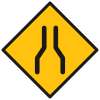
What is this sign warning you about?
Question 8 of 30Parking and stopping
Before you back out of a driveway, what is the safest step?
Question 9 of 30Parking and stopping
How should you pull out of a parallel parking space?
Question 10 of 30Right of way
A person is walking across the street in a crosswalk ahead of you. What must you do?
Question 11 of 30Safe driving and hazards
What is an "escape route" when driving?
Question 12 of 30Turning, passing and lanes
Where should you not pass on a two-lane road?
Question 13 of 30Speed and following distance
What is a "space cushion"?
Question 14 of 30Signals and pavement markings
Lights are flashing red at a railroad crossing but you see no train. What should you do?
Question 15 of 30Speed and following distance (Mississippi)
Outside a business or home district in Mississippi, how close may a truck follow another truck when not passing?
Question 16 of 30Right of way
A bus has stopped at a crosswalk to let people cross. You are in the next lane. What should you do?
Question 17 of 30Signals and pavement markings
A flashing "DON'T WALK" or raised hand signal means people on foot should:
Question 18 of 30Safe driving and hazards (Mississippi)
Your car breaks down on a Mississippi highway and you must walk for help. Where should you walk?
Question 19 of 30Right of way
Which statement about the right-of-way is true?
Question 20 of 30Alcohol, drugs and penalties
In most states, where is an open container of alcohol not allowed?
Question 21 of 30Sharing the road (Mississippi)
A bicycle ahead of you is going your way in a Mississippi no-passing zone. May you pass it?
Question 22 of 30Road signs
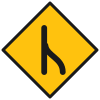
You are on the main road and see this sign. What is the best thing to do?
Question 23 of 30Road signs (Mississippi)
In rural Mississippi, how far before the tracks is the round yellow railroad warning sign normally posted?
Question 24 of 30Signals and pavement markings
What do two solid yellow lines down the center of the road mean?
Question 25 of 30Signals and pavement markings (Mississippi)
In Mississippi, what does a single solid white line between two lanes going the same way tell you?
Question 26 of 30Parking and stopping (Mississippi)
A sign is posted at a Mississippi fire station driveway. How far from the entrance must you park?
Question 27 of 30Parking and stopping
Your car is parked on a downhill slope beside a curb. How should the front wheels point?
Question 28 of 30Safe driving and hazards
You see children playing near the road ahead. What is a good step to take?
Question 29 of 30Speed and following distance (Mississippi)
What is the top speed limit for cars on Mississippi interstates?
Question 30 of 30Road signs
A sign says "REDUCED SPEED AHEAD". What should you do?
1 of 30
Answer each question to see the explanation. Keyboard: A–D or 1–4 to answer, N next, P previous.
Answers and explanations (text version)
The correct answer to each question above, why it is right, and where it comes from. Try the test first.
Question 1: A. Keep well back and report it when safe
Weaving may mean an impaired driver. Keep well back and report it to police when it is safe to do so.
Handbook: Chapter: Alcohol, drugs and penalties — Making safe choices
Question 2: C. Stop completely, then go when it is safe
This is a stop sign. You must come to a full stop and move on only when the way is clear.
Handbook: Chapter: Traffic signs — Regulatory signs
Question 3: A. Your side vision narrows
The faster you go, the more your field of view narrows, so you may miss hazards to the side.
Handbook: Chapter: Speed and following distance — Speed and road conditions
Question 4: D. Get ready to leave the lane safely
A steady yellow X means the lane will soon close. Get ready to leave the lane safely.
Handbook: Chapter: Traffic signals and pavement markings — Lane control signals
Question 5: C. Signal, check mirrors and blind spot, then move
Signal first, check your mirrors and blind spot, then move over smoothly when it is clear.
Handbook: Chapter: Turning, passing and lane use — Changing lanes
Question 6: A. To the left, so the driver sees you
Behind a large vehicle on an upgrade, Mississippi says to "keep to the left in your lane so the driver can see" you.
Handbook: Road Safety with Large Vehicles — Follow Safely
Question 7: D. The bridge ahead is narrower than the road
The narrow bridge sign means the bridge is narrower than the road. Slow down and watch for oncoming vehicles.
Handbook: Chapter: Traffic signs — Warning signs
Question 8: A. Walk around the car to check for children
Small children can be hidden behind a car. Walk around it to check before you back out.
Handbook: Chapter: Parking and stopping — Leaving a parked car
Question 9: D. Signal, check your blind spot, and yield
Signal, check your mirrors and blind spot, and yield to traffic before pulling out.
Handbook: Chapter: Parking and stopping — Parallel parking
Question 10: A. Stop and let the person cross
Pedestrians in a crosswalk have the right-of-way. Stop and let them finish crossing.
Handbook: Chapter: Right of way — Pedestrians
Question 11: A. Open space you can steer into
An escape route is open space you can steer into if you suddenly need to avoid a crash.
Handbook: Chapter: Safe driving and hazards — Defensive driving
Question 12: D. Near a hill, curve, or intersection
Do not pass near a hill, curve, intersection or rail crossing, where you cannot see oncoming traffic.
Handbook: Chapter: Turning, passing and lane use — Passing
Question 13: D. Open space around your car on all sides
A space cushion is room around your car on all sides so you have time and space to react.
Handbook: Chapter: Speed and following distance — Managing space
Question 14: A. Stop and wait until the lights stop flashing
Flashing red lights at a crossing mean a train is coming. Stop and wait until the lights stop flashing, even if you see no train.
Handbook: Chapter: Traffic signals and pavement markings — Railroad crossing signals
Question 15: D. No closer than 300 feet
Outside business or residential districts, a Mississippi truck "must not follow within three hundred feet of other trucks" unless passing (300 feet).
Handbook: Class D License — Following Distance
Question 16: A. Stop, and do not pass the bus
When a vehicle has stopped at a crosswalk for people crossing, stop too and do not pass it; it can hide people in front of it.
Handbook: Chapter: Right of way — Pedestrians
Question 17: D. Not start, but finish if already crossing
A flashing don't walk or raised hand means do not start to cross; those already crossing should finish.
Handbook: Chapter: Traffic signals and pavement markings — Traffic signals
Question 18: B. On the left side, facing traffic
If you must walk for help, the Mississippi manual says to "always walk on the left side of the highway, facing oncoming traffic."
Handbook: Rules of the Road & Safe Driving — Hazardous Conditions & Emergencies
Question 19: A. No driver should insist on taking it
The law says who must yield, but no driver should insist on the right-of-way if it could cause a crash.
Handbook: Chapter: Right of way — Right-of-way basics
Question 20: D. In the passenger area of a car on the road
In most states, an open container of alcohol is not allowed in the passenger area of a car on a public road.
Handbook: Chapter: Alcohol, drugs and penalties — Open containers
Question 21: B. Yes, when it is safe to do so
Mississippi drivers may "Only pass a bicycle traveling in the same direction in a non-passing zone when it is safe to do so."
Handbook: Sharing the Road with Bicycles — Rules for Drivers
Question 22: A. Watch for cars joining and adjust your speed
At a merge, both drivers share the job. Watch for cars joining and adjust your speed or lane to help them merge.
Handbook: Chapter: Traffic signs — Warning signs
Question 23: C. 500 to 900 feet
In rural areas the round yellow railroad sign "is normally posted 500 to 900 feet in front of the tracks."
Handbook: Traffic Signs and Signals — Railroad Crossings
Question 24: D. No passing from either side
Two solid yellow lines down the center of the road mean no passing from either side.
Handbook: Chapter: Traffic signals and pavement markings — Pavement markings
Question 25: C. Crossing it is discouraged
A single solid white line has traffic going the same way on both sides, and the Mississippi manual says "Crossing a single white line is discouraged."
Handbook: Pavement Markings — Lane Lines, Center Lines, & Barrier Lines
Question 26: A. At least 75 feet
Mississippi bans parking within 20 feet of a fire station driveway, or "within seventy-five feet if it is so posted" (75 feet).
Handbook: Parking — Prohibited Parking
Question 27: D. Toward the curb
Facing downhill, turn the wheels toward the curb so the car rolls into the curb, not into traffic.
Handbook: Chapter: Parking and stopping — Parking on hills
Question 28: D. Cover the brake so you can stop fast
Taking your foot off the gas and covering the brake cuts the time it takes to stop if a child runs out.
Handbook: Chapter: Safe driving and hazards — Defensive driving
Question 29: B. 70 mph
Mississippi sets a 70 mph top speed on interstates, and the manual says it applies "for both day and night."
Handbook: Interstate Highway Driving — Speed Limits & Following Distance
Question 30: B. Get ready to slow down to a lower limit
This sign means a lower speed limit is coming up. Get ready to slow down to the new limit.
Handbook: Chapter: Traffic signs — Regulatory signs
Practice test 2 of 10 for the Computerized Exam (knowledge exam for the Regular Learner's Permit) (the Mississippi Department of Public Safety): 30 questions, 24 to pass — the commonly reported format; the Mississippi Department of Public Safety does not publish the count. Official pass mark: 80%. Our practice tests are untimed.