Question 1 of 25Licensing and insurance (North Dakota)
Practice test 1 of 10 — North Dakota permit test
Practice test 1 questions
Question 2 of 25Sharing the road
When may a cyclist ride in the middle of a traffic lane?
Question 3 of 25Road signs
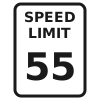
What does this sign tell you?
Question 4 of 25Alcohol, drugs and penalties
Can you be charged with impaired driving below the legal blood alcohol limit?
Question 5 of 25Road signs
A "LOW CLEARANCE" sign shows a height. What does it warn you about?
Question 6 of 25Turning, passing and lanes
In what order should you change lanes?
Question 7 of 25Road signs
A sign in bright yellow-green is most likely to warn of:
Question 8 of 25Road signs
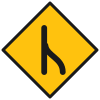
What does this sign warn you about?
Question 9 of 25Alcohol, drugs and penalties
You see a car weaving across lanes ahead. What should you do?
Question 10 of 25Speed and following distance
How can you check your following distance?
Question 11 of 25Signals and pavement markings
What should you do at a flashing red light?
Question 12 of 25Turning, passing and lanes
After passing a car, when should you move back into its lane?
Question 13 of 25Road signs
In most states, how are exit numbers on an Interstate chosen?
Question 14 of 25Parking and stopping
When you finish parallel parking, where should your car be?
Question 15 of 25Licensing and insurance (North Dakota)
What is the fine for a first offense of driving an uninsured vehicle in North Dakota?
Question 16 of 25Road signs
Small green signs with numbers along a highway are mile markers. How can they help you?
Question 17 of 25Sharing the road
You are turning right and a cyclist is riding in the bike lane next to you. What should you do?
Question 18 of 25Turning, passing and lanes (North Dakota)
North Dakota bans U-turns near a hilltop or curve where you cannot see at least how far?
Question 19 of 25Road signs
You are on the main road and see this sign. What is the best thing to do?
Question 20 of 25Emergencies and equipment (North Dakota)
You have a reportable crash outside city limits in North Dakota. Whom must you notify right away?
Question 21 of 25Right of way
You are turning left into a driveway across the oncoming lane. Who must you yield to?
Question 22 of 25Alcohol, drugs and penalties (North Dakota)
Without taking a course, how do points come off a North Dakota driving record?
Question 23 of 25Right of way
Your road ends at a T-intersection with no signs. A car is coming on the through road. Who has the right-of-way?
Question 24 of 25Speed and following distance (North Dakota)
What is the North Dakota speed limit in a business or residential district if no other limit is posted?
Question 25 of 25Emergencies and equipment
Your car stalls on the railroad tracks and a train is coming. What should you do?
1 of 25
Answer each question to see the explanation. Keyboard: A–D or 1–4 to answer, N next, P previous.
Answers and explanations (text version)
The correct answer to each question above, why it is right, and where it comes from. Try the test first.
Question 1: A. A licensed driver 18 or older with 3 years of driving
The licensed driver beside a North Dakota permit holder must be "at least 18 years of age" with at least 3 years of driving experience.
Handbook: Your Operator’s License — Permits
Question 2: C. When the lane is too narrow to share safely
Cyclists may use the middle of a lane when it is too narrow for a car and bike to share it safely.
Handbook: Chapter: Sharing the road — Bicycles
Question 3: D. The top legal speed when conditions are good
A speed limit sign shows the highest legal speed in good conditions. You may need to go slower when conditions are poor.
Handbook: Chapter: Traffic signs — Regulatory signs
Question 4: A. Yes, if your driving is impaired
Yes. You can be charged below the limit if alcohol or drugs have impaired your driving.
Handbook: Chapter: Alcohol, drugs and penalties — Legal limits
Question 5: D. An overpass or bridge with limited space above
A low clearance sign shows how much space there is under an overpass or bridge, so tall vehicles can avoid it.
Handbook: Chapter: Traffic signs — Warning signs
Question 6: C. Signal, check mirrors and blind spot, then move
Signal first, check your mirrors and blind spot, then move over smoothly when it is clear.
Handbook: Chapter: Turning, passing and lane use — Changing lanes
Question 7: D. A school, people walking, or bikes
Bright yellow-green is used for school, pedestrian and bicycle warning signs because it is easy to see.
Handbook: Chapter: Traffic signs — Sign shapes and colors
Question 8: C. Another lane of traffic will join yours
The merge sign warns that traffic from another lane or ramp will join your lane ahead.
Handbook: Chapter: Traffic signs — Warning signs
Question 9: A. Keep well back and report it when safe
Weaving may mean an impaired driver. Keep well back and report it to police when it is safe to do so.
Handbook: Chapter: Alcohol, drugs and penalties — Making safe choices
Question 10: B. Count the seconds to reach a point it passed
Pick a fixed point such as a sign. When the car ahead passes it, count the seconds until you reach it.
Handbook: Chapter: Speed and following distance — Following distance
Question 11: C. Stop fully, then go when it is safe
Treat a flashing red light like a stop sign. Stop fully, then go when it is safe.
Handbook: Chapter: Traffic signals and pavement markings — Traffic signals
Question 12: A. When you can see its headlights in your mirror
Move back when you can see the car's headlights in your mirror, so you do not cut it off.
Handbook: Chapter: Turning, passing and lane use — Passing
Question 13: A. By the mile marker nearest the exit
In most states, exit numbers match the nearest mile marker, so you can tell how far apart two exits are.
Handbook: Chapter: Traffic signs — Guide and service signs
Question 14: B. Close to and lined up with the curb
A parallel-parked car should sit close to the curb and lined up with it, not sticking out into traffic.
Handbook: Chapter: Parking and stopping — Parallel parking
Question 15: B. $150
The North Dakota fine for an uninsured vehicle "is $150 for a first violation" and $300 for a second within three years.
Handbook: Rules of the Road — Liability Insurance
Question 16: D. They tell people where you are in an emergency
Mile markers show your place on the highway, which helps you tell police or rescue workers where you are.
Handbook: Chapter: Traffic signs — Guide and service signs
Question 17: A. Let the cyclist pass, then turn
Yield to the cyclist in the bike lane. Let them go by, then make your turn behind them.
Handbook: Chapter: Sharing the road — Bicycles
Question 18: C. 500 feet
In North Dakota you may not make a U-turn near the crest of a hill or a curve where the driver "cannot see 500 feet or more."
Handbook: Rules of the Road — Right of Way
Question 19: A. Watch for cars joining and adjust your speed
At a merge, both drivers share the job. Watch for cars joining and adjust your speed or lane to help them merge.
Handbook: Chapter: Traffic signs — Warning signs
Question 20: D. The Highway Patrol or the county sheriff
Outside city limits, North Dakota says to "immediately report it to the Highway Patrol or the County Sheriff’s Office."
Handbook: Rules of the Road — Crash Reports
Question 21: C. Oncoming traffic and people on the sidewalk
When you turn left across traffic into a driveway, yield to oncoming traffic and to people on the sidewalk you will cross.
Handbook: Chapter: Right of way — Turning at intersections
Question 22: D. One point for each 3 months with no new points
North Dakota takes off "ONE POINT—for every three-month period" (3 months) in which no new points are recorded.
Handbook: Pedestrian Traffic and Recreational Vehicles — Point System
Question 23: D. The car on the through road
At a T-intersection with no signs, traffic on the ending road yields to traffic on the through road.
Handbook: Chapter: Right of way — Uncontrolled intersections
Question 24: C. 25 mph
North Dakota sets "25 miles per hour in a business or residential district, unless otherwise posted."
Handbook: Rules of the Road — Speed Limits
Question 25: A. Get out and walk away at an angle toward the train
Get out at once and walk away from the tracks at an angle toward the train, so debris thrown forward in the crash will not hit you.
Handbook: Chapter: Emergencies and vehicle equipment — Railroad emergencies
Practice test 1 of 10 for the Rules of the Road knowledge test (Class D noncommercial instruction permit) (the North Dakota Department of Transportation): 25 questions, 20 to pass — the commonly reported format; the North Dakota Department of Transportation does not publish the count or a pass mark. Our practice tests are untimed.