Question 1 of 40Right of way
Practice test 1 of 10 — Washington permit test
Practice test 1 questions
Question 2 of 40Turning, passing and lanes
When should you signal a turn?
Question 3 of 40Speed and following distance
School zone lights are flashing and children are near. What should you do?
Question 4 of 40Sharing the road (Washington)
In Washington, slow farm vehicles show an orange triangle emblem. What top speed are they built for?
Question 5 of 40Licensing and insurance (Washington)
What is the least Washington liability insurance must pay for injury or death of one person in a crash?
Question 6 of 40Turning, passing and lanes
Where is a U-turn most likely to be unsafe or not allowed?
Question 7 of 40Road signs (Washington)
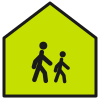
In Washington, what does a bright yellow-green warning sign tell you to watch for?
Question 8 of 40Parking and stopping
A police car signals you to pull over. What should you do?
Question 9 of 40Safe driving and hazards (Washington)
Where in Washington may you drive a car on an ocean beach?
Question 10 of 40Alcohol, drugs and penalties
Marijuana is legal for adults in some states. Is it legal to drive while impaired by it?
Question 11 of 40Turning, passing and lanes
In what order should you change lanes?
Question 12 of 40Alcohol, drugs and penalties
Which drinks hold about the same amount of alcohol?
Question 13 of 40Road signs
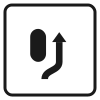
What does this sign tell you to do?
Question 14 of 40Safe driving and hazards
What is the main danger of driving when angry or upset?
Question 15 of 40Safe driving and hazards
You feel very sleepy while driving. What should you do?
Question 16 of 40Speed and following distance
How can you check your following distance?
Question 17 of 40Safe driving and hazards
Which of these is a cognitive distraction?
Question 18 of 40Speed and following distance
You are going too fast as you enter a curve. What is the best thing to do?
Question 19 of 40Safe driving and hazards (Washington)
On a long trip, how often does the Washington guide suggest you plan to stop?
Question 20 of 40Speed and following distance
Compared to dry pavement, stopping on ice takes:
Question 21 of 40Road signs
An Interstate route has three digits, and the first digit is even. What does that usually mean?
Question 22 of 40Safe driving and hazards
Why should you keep your windshield clean?
Question 23 of 40Turning, passing and lanes
In a roundabout with two lanes, how do you choose your lane?
Question 24 of 40Speed and following distance
Why does the risk of hydroplaning go up as you drive faster?
Question 25 of 40Road signs
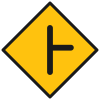
What should you expect after you pass this sign?
Question 26 of 40Parking and stopping
How should you back out of an angled parking space?
Question 27 of 40Road signs
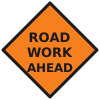
What does this orange sign tell you?
Question 28 of 40Emergencies and equipment
How should you brake hard in a car with anti-lock brakes?
Question 29 of 40Speed and following distance (Washington)
A Washington work zone has a lower posted speed, but you see no workers. What should you do?
Question 30 of 40Turning, passing and lanes (Washington)
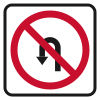
In Washington, when may you make a U-turn?
Question 31 of 40Right of way
Which statement about the right-of-way is true?
Question 32 of 40Speed and following distance (Washington)
What is the speed limit on a Washington ocean beach where driving is allowed?
Question 33 of 40Road signs
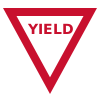
You reach this sign as a car with the right-of-way is coming. What should you do?
Question 34 of 40Alcohol, drugs and penalties (Washington)
What happens to the fine in Washington if you pass a stopped school bus?
Question 35 of 40Parking and stopping
Traffic is backed up and you are about to cross railroad tracks. What should you do?
Question 36 of 40Safe driving and hazards
When should you use your horn?
Question 37 of 40Road signs
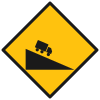
What should you do while going down the grade this sign warns about?
Question 38 of 40Turning, passing and lanes
When joining a highway, what should you look for?
Question 39 of 40Road signs
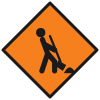
This orange sign shows a person with a shovel. What does it warn you about?
Question 40 of 40Alcohol, drugs and penalties (Washington)
For a Washington driver 21 or older, what level of active THC in the blood (ng per mL) counts as a DUI?
1 of 40
Answer each question to see the explanation. Keyboard: A–D or 1–4 to answer, N next, P previous.
Answers and explanations (text version)
The correct answer to each question above, why it is right, and where it comes from. Try the test first.
Question 1: D. The driver who stopped first
At an all-way stop, the driver who came to a stop first goes first.
Handbook: Chapter: Right of way — Stop signs and intersections
Question 2: C. Early, before you slow down or turn
Signal early, before you slow down or turn, so other drivers know what you plan to do.
Handbook: Chapter: Turning, passing and lane use — Signaling
Question 3: D. Slow to the school limit and watch for children
In an active school zone, slow to the posted school zone limit and watch closely for children.
Handbook: Chapter: Speed and following distance — Special speed zones
Question 4: B. 25 mph or less
Washington farm vehicles designed to go 25 mph or less carry the slow-moving triangle emblem on the back.
Handbook: Chapter 4: Roads — 4.8 Sharing With Agricultural Vehicles
Question 5: C. $25,000
Washington liability insurance must pay at least $25,000 for bodily injury or death of one person in a collision.
Handbook: Chapter 2: Vehicles — 2.3 Insurance Required
Question 6: C. Near a curve or hill where others cannot see you
Do not make a U-turn near a curve or hill, where drivers cannot see you in time to stop.
Handbook: Chapter: Turning, passing and lane use — Turns
Question 7: C. Schools, walkers, or bike riders
Washington uses fluorescent yellow-green signs to warn of school, pedestrian, and bicycling activity, so watch for walkers and bike riders.
Handbook: Chapter 4: Roads — 4.12 Signs
Question 8: C. Pull to the right and stay in the car
Pull to the right when it is safe, stop, and stay in the car with your hands where the officer can see them.
Handbook: Chapter: Parking and stopping — Traffic stops
Question 9: A. Only in Grays Harbor and Pacific counties
Washington allows driving on ocean beaches only in Grays Harbor and Pacific counties, using marked approaches and hard-packed sand.
Handbook: Chapter 4: Roads, 4.20 Maritime — Beaches
Question 10: D. No, impaired driving is illegal everywhere
Even where marijuana is legal, driving while impaired by it is illegal everywhere.
Handbook: Chapter: Alcohol, drugs and penalties — Drugs and medicine
Question 11: C. Signal, check mirrors and blind spot, then move
Signal first, check your mirrors and blind spot, then move over smoothly when it is clear.
Handbook: Chapter: Turning, passing and lane use — Changing lanes
Question 12: A. A 12 oz beer, a 5 oz glass of wine, and a 1.5 oz shot
A standard 12 oz beer, 5 oz glass of wine and 1.5 oz shot of liquor each hold about the same alcohol.
Handbook: Chapter: Alcohol, drugs and penalties — How alcohol affects you
Question 13: C. Pass to the right of the island ahead
A keep right sign means you must pass to the right of the island, divider or object ahead.
Handbook: Chapter: Traffic signs — Regulatory signs
Question 14: D. You may take more risks
Strong feelings make you take more risks and pay less attention, so wait until you are calm before you drive.
Handbook: Chapter: Safe driving and hazards — Defensive driving
Question 15: B. Stop in a safe place and rest
The only cure for being drowsy is rest. Stop in a safe place and sleep or switch drivers.
Handbook: Chapter: Safe driving and hazards — Fatigue
Question 16: B. Count the seconds to reach a point it passed
Pick a fixed point such as a sign. When the car ahead passes it, count the seconds until you reach it.
Handbook: Chapter: Speed and following distance — Following distance
Question 17: B. Daydreaming about your plans
A cognitive distraction takes your mind off driving, such as daydreaming, even if your eyes are on the road.
Handbook: Chapter: Safe driving and hazards — Distracted driving
Question 18: D. Ease off the gas and steer smoothly through it
If you enter a curve too fast, ease off the gas and steer smoothly. Hard braking in a curve can cause a skid.
Handbook: Chapter: Speed and following distance — Speed and road conditions
Question 19: D. About every 100 miles or 2 hours
Washington suggests planning a stop about every 100 miles or 2 hours on long trips to fight fatigue.
Handbook: Chapter 3: Drivers, 3.1 Impaired Driving — Fatigue and Drowsy Driving
Question 20: A. Much longer
Ice gives your tires very little grip, so stopping takes much longer than on dry pavement.
Handbook: Chapter: Speed and following distance — Speed and road conditions
Question 21: D. It loops around a city or links two Interstates
A three-digit Interstate with an even first digit usually loops around a city or links two Interstates; an odd one is usually a spur.
Handbook: Chapter: Traffic signs — Guide and service signs
Question 22: A. Dirt and glare make it harder to see
A dirty windshield adds glare and makes it harder to see, most of all at night.
Handbook: Chapter: Safe driving and hazards — Night and weather
Question 23: D. Before you enter, based on your exit
Choose your lane before you enter, using signs and markings for the exit you plan to take.
Handbook: Chapter: Turning, passing and lane use — Roundabouts
Question 24: D. Your tires cannot push water away fast enough
At higher speed, tires cannot clear the water fast enough and can ride up on a thin layer of it.
Handbook: Chapter: Speed and following distance — Speed and road conditions
Question 25: A. Cars may enter from a road on the right
This side road sign warns that a road joins from the right, so cars may enter your road.
Handbook: Chapter: Traffic signs — Warning signs
Question 26: C. Slowly, looking all around you
Back out slowly and look all around. Your view may be blocked by the cars next to you.
Handbook: Chapter: Parking and stopping — Angle parking
Question 27: B. There is road work ahead, so slow down
Orange signs are for work zones. This one warns of road work ahead, so slow down and stay alert.
Handbook: Chapter: Traffic signs — Work zone signs
Question 28: D. Press firmly and hold steady pressure
With anti-lock brakes, press firmly and hold. The system pumps the brakes for you, so do not pump them.
Handbook: Chapter: Emergencies and vehicle equipment — Brakes
Question 29: A. Still slow down and obey the work zone signs
Washington says always reduce your speed in a work zone, even with no workers, and obey work zone signs until the End Road Work sign.
Handbook: Chapter 4: Roads, 4.17 Zones — Work Zone
Question 30: A. In general, unless a sign forbids it
In Washington, U-turns are generally allowed unless a sign says they are not, and never on a curve or near the crest of a hill.
Handbook: Chapter 4: Roads, 4.14 Turning — U-turns
Question 31: A. No driver should insist on taking it
The law says who must yield, but no driver should insist on the right-of-way if it could cause a crash.
Handbook: Chapter: Right of way — Right-of-way basics
Question 32: B. 25 mph
A Washington ocean beach is treated as a state highway, and its speed limit is 25 mph.
Handbook: Chapter 4: Roads, 4.20 Maritime — Beaches
Question 33: B. Slow down or stop and let that car go first
At a yield sign you must give way. Slow down, or stop if needed, and let the car with the right-of-way pass first.
Handbook: Chapter: Traffic signs — Regulatory signs
Question 34: A. It is doubled
Washington doubles the fine for anyone who passes a stopped school bus.
Handbook: Chapter 4: Roads — 4.2 Sharing With School Buses
Question 35: D. Wait until there is room past the tracks
Never stop on railroad tracks. Wait before the tracks until there is room for your whole car on the far side.
Handbook: Chapter: Parking and stopping — Stopping at railroad tracks
Question 36: D. To warn others of danger
Use your horn to warn other people of danger, not to show anger.
Handbook: Chapter: Safe driving and hazards — Defensive driving
Question 37: D. Shift to a lower gear and keep your speed down
A lower gear lets the engine help slow the car, so your brakes do not overheat on a long steep grade.
Handbook: Chapter: Traffic signs — Warning signs
Question 38: C. A gap in traffic to merge into
Look for a safe gap in traffic, signal, and match your speed to merge into it.
Handbook: Chapter: Turning, passing and lane use — Highway driving
Question 39: B. People working on or near the road
This sign warns of workers on or near the road. Slow down and give them space.
Handbook: Chapter: Traffic signs — Work zone signs
Question 40: B. 5 ng
For Washington drivers 21 and older, 5 ng of active THC per mL of blood is the DUI level shown in the guide.
Handbook: Chapter 1: Licenses, 1.15 Maintaining Your License — Driving Under the Influence (DUI)
Practice test 1 of 10 for the Written knowledge test (Driving Knowledge Exam) for the instruction (learner's) permit (WA DOL): 40 questions · 32 of 40 (80%) to pass · no time limit.