Question 1 of 35Safe driving
Practice test 2 of 10 — Australian Capital Territory ls test
Practice test 2 questions
Question 2 of 35Hazards and sharing the road
A person is walking on a road with no footpath or nature strip. Which side should they walk on?
Question 3 of 35Learner and P-plate rules
In the ACT, you were 17 when you got your learner licence. How many supervised hours must you log?
Question 4 of 35Signs and markings
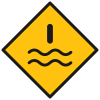
You pass this sign and see water across the road ahead. What should you do?
Question 5 of 35Learner and P-plate rules
In the ACT, a learner wants to tow a trailer. What is the heaviest trailer (GVM) a learner may tow?
Question 6 of 35Signs and markings
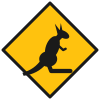
After this sign, at night, a kangaroo freezes in your headlights ahead. You have time to stop. What should you do?
Question 7 of 35Safe driving
On average, how long does it take a driver to react to danger and start braking?
Question 8 of 35Road rules
On a roundabout with two marked lanes, you will leave at the first exit, less than halfway around. Which lane do you enter from?
Question 9 of 35Road rules
You are in a crash and your car is now blocking traffic. Nobody is hurt. What may you do with your car?
Question 10 of 35Road rules
One car is towing another with a rope. What is the most space allowed between the two cars?
Question 11 of 35Alcohol, drugs and penalties
In the ACT, a driver is convicted with a BAC of 0.16. What may they also need when they return to driving after disqualification?
Question 12 of 35Alcohol, drugs and penalties
In the ACT, you hold a full licence and are supervising a learner driver. What alcohol level must you have?
Question 13 of 35Hazards and sharing the road
A fire truck with its siren on needs you to move out of its way. How does that duty rank against the other road rules?
Question 14 of 35Signs and markings

You see this sign at night on a country road at 90 km/h. What should you do?
Question 15 of 35Hazards and sharing the road
Why are pedestrians, cyclists and motorcyclists called vulnerable road users?
Question 16 of 35Road rules
In the ACT, which of these vehicles may drive in a bus lane?
Question 17 of 35Hazards and sharing the road
There is not enough room to pass a cyclist with the required gap. What must you do?
Question 18 of 35Signs and markings

You reach this sign at a quiet corner and can see no other traffic. What must you do?
Question 19 of 35Road rules
You are on the main road of a T-intersection and turn left into the side road. A person is crossing that side road. What must you do?
Question 20 of 35Signs and markings
Slanted white arrows are painted in your lane, pointing towards the next lane. What do they warn you about?
Question 21 of 35Signs and markings
A bus stopped at the kerb ahead shows a Give Way to Buses sign and signals to pull out. You are in the only lane. What must you do?
Question 22 of 35Road rules
You reach a roundabout and a car is already driving around inside it. What must you do?
Question 23 of 35Learner and P-plate rules
In the ACT, where must L plates be shown on a car a learner is driving?
Question 24 of 35Safe driving
The fog lifts and you can see well again. What should you do with your rear fog light?
Question 25 of 35Hazards and sharing the road
Children are riding bikes on your street. Why should you take extra care?
Question 26 of 35Safe driving
How should the sash part of a lap-sash seat belt sit on your body?
Question 27 of 35Signs and markings

You reach this sign and the red lights beside the track are flashing. No train is in sight yet. What must you do?
Question 28 of 35Signs and markings
You follow another car down a steep hill. What following gap should you allow?
Question 29 of 35Signs and markings
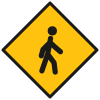
You see this sign near shops and an aged care home. What is the safest thing to do?
Question 30 of 35Road rules
At a crossroads with no signs or lights, you are going straight. A car is coming from your right. Who goes first?
Question 31 of 35Alcohol, drugs and penalties
In the ACT, a full licence holder is caught with a BAC of 0.06. Which drink driving offence level is this?
Question 32 of 35Learner and P-plate rules
In the ACT, you pass the ACT Road Rules test but wait before applying for your Ls. How long is the test result valid?
Question 33 of 35Safe driving
You are driving past a row of parked cars. Where possible, how much space should you leave beside them?
Question 34 of 35Safe driving
You are about to pull out from the kerb. What is the least time you must signal for first?
Question 35 of 35Road rules
On a road with one lane each way, when may you pass a vehicle on its left side?
1 of 35
Answer each question to see the explanation. Keyboard: A–D or 1–4 to answer, N next, P previous.
Answers and explanations (text version)
The correct answer to each question above, why it is right, and where it comes from. Try the test first.
Question 1: C. 0.1, twice the full licence limit
Twenty four hours without sleep has the same effect on driving as a BAC of 0.1, twice the legal limit for a fully licensed driver.
Handbook: ACT Road Rules Handbook — Signs of driver fatigue (p. 26)
Question 2: A. The right side, facing oncoming traffic
A pedestrian on a road without a footpath should walk on the right edge, facing oncoming traffic.
Handbook: ACT Road Rules Handbook — Pedestrians and drivers (p. 96)
Question 3: C. 100 hours, including 10 at night
ACT learners who were under 25 when their licence was issued need 100 supervised driving hours, including 10 at night.
Official source: accesscanberra.act.gov.au — Get your provisional driver licence
Question 4: D. Do not drive into the water; find another way
This sign warns that water may cover the road. Never drive into floodwater; find another route.
Handbook: ACT Road Rules Handbook — Warning signs (advisory) (p. 36)
Question 5: B. 750 kg
ACT learner drivers must not tow a trailer with a gross vehicle mass of more than 750 kg.
Official source: accesscanberra.act.gov.au — Get your learner driver licence
Question 6: B. Brake carefully and sound your horn
If an animal is dazzled by your lights, brake carefully and sound your horn; steer around it only if you cannot stop safely.
Handbook: ACT Road Rules Handbook — Night driving (p. 86)
Question 7: B. About two seconds
The average reaction time, from seeing danger to applying the brakes, is two seconds.
Handbook: ACT Road Rules Handbook — Braking and stopping (p. 82)
Question 8: C. The left lane
To leave a multi-lane roundabout less than halfway around, you must enter from the left lane or left line of traffic.
Handbook: ACT Road Rules Handbook — Roundabouts (p. 50)
Question 9: A. Move it to the side of the road if you can
If your vehicle is blocking traffic after a crash, move it to the side of the road if possible; the law does not require it to stay put.
Handbook: ACT Road Rules Handbook — What to do after a crash (p. 93)
Question 10: B. 3.5 metres
For towing another vehicle the handbook says: "The maximum allowable distance between vehicles is 3.5 metres."
Handbook: ACT Road Rules Handbook — Towing and being towed (p. 93)
Question 11: B. An alcohol interlock on their probationary licence
A high-range offence (0.15 or more) is one of the triggers for an interlock condition on the ACT probationary licence.
Official source: cityservices.act.gov.au — Drink and drug driving
Question 12: A. Zero
A zero limit applies to special drivers, including those "engaged in driver training, including supervising a learner driver".
Official source: cityservices.act.gov.au — Drink and drug driving
Question 13: D. It takes priority over every other road rule
Giving way to police and emergency vehicles comes first: the handbook says "These requirements take priority over every other road rule."
Handbook: ACT Road Rules Handbook — Emergency vehicles (p. 108)
Question 14: D. Slow down early so you can enter safely
This sign warns of a roundabout ahead, so slow down in good time and prepare to give way.
Handbook: ACT Road Rules Handbook — Warning signs (advisory) (p. 36)
Question 15: B. They have much less crash protection than people in cars
These road users are vulnerable because they lack the crash protection that people inside other vehicles have.
Handbook: ACT Road Rules Handbook — Vulnerable road users (p. 95)
Question 16: B. A motorcycle
In the ACT, bus lanes may also be used by taxis, hire cars, demand responsive vehicles and motorcycles.
Handbook: ACT Road Rules Handbook — Bus lanes (p. 77)
Question 17: B. Wait behind the cyclist until it is safe
If it is not safe to pass with the required gap, you must wait behind the cyclist until conditions change.
Handbook: ACT Road Rules Handbook — Minimum overtaking distance (p. 99)
Question 18: A. Stop fully behind the line, then go when safe
At a stop sign you must bring the vehicle to a complete stop behind the hold line, even if no traffic is coming, then give way.
Handbook: ACT Road Rules Handbook — Regulatory signs (mandatory) (p. 35)
Question 19: D. Give way to the person crossing
Drivers turning at a T-intersection must give way to people crossing the road they are entering, from either road.
Handbook: ACT Road Rules Handbook — T-intersections (p. 49)
Question 20: C. Your lane must turn further ahead
Oblique arrows warn that vehicles in that lane must turn further ahead, so change lanes early if you do not want to turn.
Handbook: ACT Road Rules Handbook — Right turn arrows (p. 31)
Question 21: B. Slow down or stop to let the bus out
When a stationary bus with this sign signals to pull out, you must slow down or stop to let it enter the traffic.
Handbook: ACT Road Rules Handbook — Giving way to buses (p. 107)
Question 22: A. Give way to the car already in the roundabout
A driver entering a roundabout must give way to any vehicle that is already in the roundabout.
Handbook: ACT Road Rules Handbook — Roundabouts (p. 52)
Question 23: B. On the front and the back of the car
ACT learner drivers must display L plates at the front and back of the vehicle.
Official source: accesscanberra.act.gov.au — Get your learner driver licence
Question 24: D. Switch it off
Rear fog lights are only for poor visibility; you must switch them off as conditions and visibility improve.
Handbook: ACT Road Rules Handbook — Fog lights (p. 87)
Question 25: C. They may not know the rules and can ride unpredictably
Children on bicycles are not always aware of the road rules, and their riding is sometimes erratic.
Handbook: ACT Road Rules Handbook — Cyclists and drivers (p. 99)
Question 26: D. Over your shoulder and across to the other hip
The sash should sit over your shoulder, not under your arm, and run across to the opposite hip.
Handbook: ACT Road Rules Handbook — Wearing your seat belt correctly (p. 17)
Question 27: A. Stop and wait until the lights stop flashing
You must not enter a level crossing while its warning lights are operating, even if you cannot see a train.
Handbook: ACT Road Rules Handbook — Level crossings (p. 62)
Question 28: A. At least six seconds
When following another vehicle down a steep hill, allow a much bigger gap than usual: at least six seconds.
Handbook: ACT Road Rules Handbook — Steep hills (p. 88)
Question 29: C. Slow down and watch for people stepping out
Watch for pedestrians near shopping areas, aged care homes and stopped buses; this sign warns that people may be crossing.
Handbook: ACT Road Rules Handbook — Pedestrians and drivers (p. 96)
Question 30: B. The car coming from your right
At an intersection with no signs or lights, a driver going straight gives way to a vehicle coming from the right.
Handbook: ACT Road Rules Handbook — Giving way at an intersection (p. 44)
Question 31: C. Level 2 (0.05 to under 0.08)
The ACT has four drink driving levels; Level 2 covers a BAC of 0.05 or more but less than 0.08.
Official source: cityservices.act.gov.au — Drink and drug driving
Question 32: A. 2 years
The ACT Road Rules test is valid for 2 years. After that you must pass a new test.
Official source: accesscanberra.act.gov.au — Get your learner driver licence
Question 33: A. At least 1 metre
Where possible, allow a minimum of 1 metre between your vehicle and parked vehicles, as doors may open or people step out.
Handbook: ACT Road Rules Handbook — Space to the sides (p. 75)
Question 34: B. Five seconds
You must give at least five seconds of indication before pulling out from the kerb.
Handbook: ACT Road Rules Handbook — Signalling (p. 77)
Question 35: C. When it is signalling right and has moved over to turn
On single-lane roads you may pass on the left of a vehicle that is signalling a right turn and has moved to the centre.
Handbook: ACT Road Rules Handbook — Overtaking (p. 81)
Practice test 2 of 10 for the Road Rules Knowledge Test (learner driver licence, taken in the Pre-Learner Licence Course) (ACT Government): 35 questions · 31 of 35 (89%) to pass · no time limit.