Question 1 of 30Signs and markings
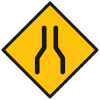
Question 1 of 30Signs and markings
Question 2 of 30Alcohol, drugs and penalties
Question 3 of 30Signs and markings

Question 4 of 30Signs and markings
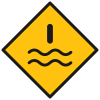
Question 5 of 30Alcohol, drugs and penalties
Question 6 of 30Signs and markings

Question 7 of 30Learner and P-plate rules
Question 8 of 30Safe driving
Question 9 of 30Alcohol, drugs and penalties
Question 10 of 30Safe driving
Question 11 of 30Signs and markings
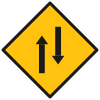
Question 12 of 30Learner and P-plate rules
Question 13 of 30Hazards and sharing the road
Question 14 of 30Signs and markings
Question 15 of 30Signs and markings
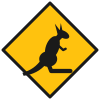
Question 16 of 30Learner and P-plate rules
Question 17 of 30Alcohol, drugs and penalties
Question 18 of 30Safe driving
Question 19 of 30Signs and markings
Question 20 of 30Alcohol, drugs and penalties
Question 21 of 30Road rules
Question 22 of 30Road rules
Question 23 of 30Road rules
Question 24 of 30Road rules
Question 25 of 30Road rules
Question 26 of 30Safe driving
Question 27 of 30Safe driving
Question 28 of 30Safe driving
Question 29 of 30Safe driving
Question 30 of 30Road rules
Answer each question to see the explanation. Keyboard: A–D or 1–4 to answer, N next, P previous.
The correct answer to each question above, why it is right, and where it comes from. Try the test first.
Question 1: A. Slow down and keep left, as the road gets narrower
This sign warns that the road narrows ahead, so slow down and take care passing oncoming traffic.
Handbook: Road Users' Handbook — Warning signs (p. 101)
Question 2: C. Someone willing to get you home safely
A Sober Bob is someone who is willing to get you home safely, so you plan your trip home before you go out.
Official source: nt.gov.au — Alcohol, drugs and driving
Question 3: A. Wait behind the line until there is room to clear the tracks
You must stay behind the stop line until there is room for your whole car to get across the tracks safely.
Handbook: Road Users' Handbook — Stop signals (p. 131)
Question 4: A. The water could make your car float off the road
Fast-flowing water can hit like wet concrete and can make your car float, so do not cross if in doubt.
Handbook: Road Users' Handbook — Water on the road (p. 56)
Question 5: C. 12 or more
An open licence is suspended at 12 or more points in any 3 years, and points stay active for up to 3 years.
Official source: nt.gov.au — Demerit points
Question 6: A. The other car, as you give way to all traffic
At this sign you must give way to all vehicles in, entering or approaching the intersection, whether they are turning or going straight, so the other car goes first.
Handbook: Road Users' Handbook — Stop signs and stop lines (p. 73)
Question 7: B. At least 26
The NT theory test has 30 questions, and "You must get at least 26 out of 30 questions correct to pass."
Official source: nt.gov.au — Get your driver licence
Question 8: A. Drive off gently instead of letting it idle
Modern cars do not need warming up except in cold places or after a long time unused. Simply drive off gently, as this warms the engine.
Handbook: Road Users' Handbook — Eco driving (p. 61)
Question 9: A. Two
The NT guide says men should not drive after more than two standard drinks in the first hour, then one an hour after that.
Official source: nt.gov.au — Alcohol, drugs and driving
Question 10: C. Pull over and stop now and then to let them pass
When towing, pull over and stop regularly so the traffic behind you can overtake safely.
Handbook: Road Users' Handbook — Towing caravans and trailers (p. 54)
Question 11: C. Traffic coming the other way will share your road
This sign warns of two-way traffic ahead, so expect oncoming traffic on the same road.
Handbook: Road Users' Handbook — Warning signs (p. 100)
Question 12: B. 2 years
Drivers under 25 get a two-year provisional licence, so at 19 your P period lasts 2 years.
Official source: nt.gov.au — Get your driver licence
Question 13: D. When riding through bends in the road
Riders are most at risk at city intersections and lane changes, and when riding through bends on rural roads and highways.
Handbook: Road Users' Handbook — Sharing the road with motorcycle riders (p. 38)
Question 14: B. A short-term emergency like an oil spill or fallen tree
This sign is used for a temporary emergency on the road ahead, such as an oil spill, fallen tree or landslip.
Handbook: Road Users' Handbook — Warning signs (p. 102)
Question 15: D. Slow down, and sound the horn if needed
Beware of large birds and other wildlife feeding on road kill; slow down and sound the horn if necessary.
Handbook: Road Users' Handbook — Animals and stock (p. 47)
Question 16: A. 80 km/h
A learner must not go faster than 80 km/h, even where the sign shows a higher limit.
Official source: nt.gov.au — Speed limits
Question 17: B. Low range
The low range covers a BAC from 0.05 to 0.079, so a reading of 0.06 is in the low range.
Official source: nt.gov.au — Alcohol, drugs and driving
Question 18: D. Let the car slow without braking, then ease back on
Many rollovers start when a driver drifts off the edge and over-corrects. Let the car slow without braking, keep the wheels straight and ease back on.
Handbook: Road Users' Handbook — Single vehicle rollovers (p. 51)
Question 19: D. A pedestrian crossing ahead that you may not see yet
Zigzag lines warn of a pedestrian crossing that a curve, crest or dip may hide from view, so take extra care.
Handbook: Road Users' Handbook — Pedestrian crossings (p. 96)
Question 20: D. You, as the driver of the car
As the driver, you must make sure all passengers are properly restrained in a seatbelt or child restraint.
Official source: nt.gov.au — Traffic offence fines and demerit points
Question 21: A. Only in the back row, in the correct child seat
Children under four must not sit in the front row of a vehicle that has two or more rows of seats.
Handbook: Road Users' Handbook — Child restraints (p. 68)
Question 22: B. Reverse
The handbook says to leave a manual car "in first gear if you are parking on a downhill slope, or reverse if you are parking on an uphill slope".
Handbook: Road Users' Handbook — Things to check when parking (p. 118)
Question 23: A. No, not without a 'U-turn permitted' sign
You must not make a U-turn at traffic lights unless a 'U-turn permitted' sign is shown there.
Handbook: Road Users' Handbook — U-turns (p. 81)
Question 24: D. You do, since you are behind it
Where the lane line ends before lanes merge, the vehicle behind gives way to the vehicle ahead.
Handbook: Road Users' Handbook — Merging lanes (p. 110)
Question 25: B. Near the left side of the road
If no lanes are marked on the road, you should drive near the left side of the road.
Handbook: Road Users' Handbook — Lanes (p. 110)
Question 26: C. About 10 hours
Long drives in high heat cause fatigue, so avoid driving for more than 10 hours a day and rest at least every two hours.
Handbook: Road Users' Handbook — Driver fatigue – long-range driving (p. 48)
Question 27: A. About 3 seconds
You need about 1.5 seconds to react and 1.5 seconds to respond, so a gap of about 3 seconds is recommended in good conditions.
Handbook: Road Users' Handbook — Front Crash Avoidance Space (p. 42)
Question 28: D. At least 6 seconds
The handbook says: "If the road is wet or slippery, you should double the crash avoidance space to at least six seconds", so keep at least 6 seconds.
Handbook: Road Users' Handbook — Safe following distance: crash avoidance (p. 51)
Question 29: A. Light pressure and a short pause, then squeeze on more
Two-stage braking means setting up the brakes with light pressure and a pause, then you squeeze on more pressure as needed.
Handbook: Road Users' Handbook — Braking technique (p. 59)
Question 30: C. Wait and give way to the people who are crossing
When turning left or right, you must give way to people crossing the road you are turning into.
Handbook: Road Users' Handbook — Traffic lights (p. 85)
Practice test 2 of 10 for the Driver knowledge test (theory test, learner driver licence) (NT MVR): 30 questions · 26 of 30 (87%) to pass · no time limit.