Question 1 of 30Giving way · Road rules
Practice test 1 of 10 — Queensland road rules test
Practice test 1 questions
Question 2 of 30Giving way · Road rules
In Queensland, when does a school zone speed limit apply?
Question 3 of 30Giving way · Road rules
You are driving out of a driveway onto a street. Someone is walking along the footpath across your driveway. What must you do?
Question 4 of 30Giving way · Road rules
You have a green light. A fire truck with flashing lights and siren has slowed down as it enters the intersection. What must you do?
Question 5 of 30Giving way · Road rules
At a T-intersection, the continuing road curves to the left. You want to leave it and go straight onto the road that ends there. What must you do?
Question 6 of 30Giving way · Road rules
You are parked at the kerb and want to drive off into traffic. What must you do?
Question 7 of 30Giving way · Road rules
You reach a railway level crossing. The red warning lights are flashing, but you cannot see a train. What must you do?
Question 8 of 30Giving way · Road rules
You come to a STOP sign at an intersection. The road looks clear both ways. What must you do?
Question 9 of 30Giving way · Road rules
You are on a road with one lane each way. When may you overtake the car ahead on its left?
Question 10 of 30Giving way · Road rules
A car in the lane next to yours has stopped at a pedestrian crossing. What must you do?
Question 11 of 30Road rules · Hazards and sharing the road
You are following an oversize vehicle that has escort vehicles. When may you overtake?
Question 12 of 30Road rules · Alcohol, drugs and penalties
In Queensland, a driver is found guilty in court of driving over their alcohol limit. What will happen to their licence?
Question 13 of 30Road rules · Safe driving
In Queensland, your car has two rows of seats. When may a 5-year-old sit in the front row?
Question 14 of 30Road rules · Signs and markings

You and a car opposite have both stopped at this sign. You want to turn right. The other car is going straight. Who goes first?
Question 15 of 30Road rules · Signs and markings

You are driving toward this sign. There are no lights or gates, but you can hear a train coming. What must you do?
Question 16 of 30Road rules · Signs and markings

You reach this sign. A car is coming along the cross street. What must you do?
Question 17 of 30Road rules · Hazards and sharing the road
A truck starts to overtake you on a country road. What should you do?
Question 18 of 30Road rules · Learner and P-plate rules
In Queensland, what P plate must a P1 licence holder show?
Question 19 of 30Road rules · Safe driving
Your loaded trailer will weigh more than 750 kg. What must it have?
Question 20 of 30Road rules · Hazards and sharing the road
You drive through roadworks with a lower speed limit, but you cannot see any workers. Why should you still keep to the limit?
Question 21 of 30Road rules · Learner and P-plate rules
In Queensland, how old must you be before you can hold an open car licence?
Question 22 of 30Road rules · Signs and markings
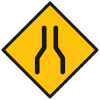
You see this sign on a two-lane country road. What should you take extra care with?
Question 23 of 30Road rules · Alcohol, drugs and penalties
In Queensland, you are charged with drink driving at a BAC of 0.12. What happens to your licence?
Question 24 of 30Road rules · Safe driving
You are towing a trailer and need to turn at a corner. What should you do?
Question 25 of 30Road rules · Safe driving
Two passengers want to share one seatbelt for a short trip. Is this allowed?
Question 26 of 30Road rules · Signs and markings
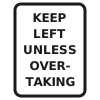
Just after this sign, you move to the right lane and pass a slower car. What should you do next?
Question 27 of 30Road rules · Signs and markings
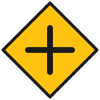
You see this sign on a rural highway. What is ahead?
Question 28 of 30Road rules · Signs and markings
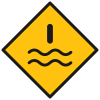
You pass this sign after heavy rain. The water over the road has started to go down. When may you drive across?
Question 29 of 30Road rules · Alcohol, drugs and penalties
You have a new medicine that may make you drowsy. What should you do before you drive?
Question 30 of 30Road rules · Hazards and sharing the road
You are on a two-lane road and plan to overtake a heavy truck. Where should you stay while you wait for a safe chance?
1 of 30
Answer each question to see the explanation. Keyboard: A–D or 1–4 to answer, N next, P previous.
Answers and explanations (text version)
The correct answer to each question above, why it is right, and where it comes from. Try the test first.
Question 1: D. Move left when it is safe, so it can pass
You must move out of an emergency vehicle's path as soon as it is safe; moving left gives it a clear run down the road.
Handbook: Your keys — Emergency vehicles (p. 137)
Question 2: C. On school days, during the hours on the sign
School zone limits only apply on school days during the hours shown on the sign, so read the sign and check the time.
Handbook: Your keys — School speed zones (p. 73)
Question 3: C. Give way to the walker and to traffic on the street
When you leave a driveway, you must give way to pedestrians and riders on the footpath and to vehicles on the road you are entering.
Handbook: Your keys — Giving way when entering or leaving a road (p. 88)
Question 4: D. Give way to it, even though your light is green
You must give way to an emergency vehicle using its siren or flashing lights, even on a green light and even if it seems to have slowed.
Handbook: Your keys — Emergency vehicles (p. 137)
Question 5: A. Signal right and give way to traffic on the continuing road
Leaving a continuing road that bends left means you must signal right and give way to vehicles travelling along the continuing road.
Handbook: Your keys — Giving way at a T-intersection (p. 86)
Question 6: C. Signal for at least five seconds and give way
When you drive out from a parked position, you must signal for at least five seconds and give way to all other vehicles.
Handbook: Your keys — Giving way from a parked position (p. 88)
Question 7: D. Stay stopped until the lights stop flashing
You must not enter a level crossing while the warning lights, bells or boom gates are operating, even if no train is in sight.
Handbook: Your keys — Railway level crossings (p. 102)
Question 8: A. Stop fully behind the line, then give way
At a STOP sign you must stop completely just behind the stop line, then give way to traffic, even if the road looks clear.
Handbook: Your keys — STOP signs (p. 82)
Question 9: A. When it is signalling to turn right from the centre
You may overtake on the left when the vehicle ahead is turning right or making a U-turn from the centre of the road and is signalling right.
Handbook: Your keys — Overtaking on the left (p. 95)
Question 10: B. Do not pass it; slow down and be ready to stop
You must not overtake a vehicle that has stopped at a pedestrian crossing, and you must give way to anyone on or entering it.
Handbook: Your keys — Giving way at pedestrian and children's crossings (p. 87)
Question 11: C. When the rear escort driver signals you to pass
Wait until the rear escort vehicle driver signals that you can pass. Then pass the escorts and the oversize vehicle in one move.
Handbook: Your keys — Pilot vehicles (p. 139)
Question 12: D. They will be banned from driving for a set time
A drink driving conviction means you are banned (disqualified) from driving for a set time, as well as fined.
Handbook: Your keys — Alcohol and drugs (p. 103)
Question 13: D. When all other seats hold children under 7
A child aged 4 to under 7 may sit in the front row only if all other seats are taken by children under 7.
Handbook: Your keys — A guide to child restraints (p. 153)
Question 14: D. The other car, as you turn across its path
Once both drivers have stopped and given way to other traffic, the car turning right must give way because it turns across the other car's path.
Handbook: Your keys — Giving way (p. 83)
Question 15: A. Stop and wait for the train to pass
At a level crossing you must give way to trains, so stop and wait for the train to pass when you hear or see one.
Handbook: Your keys — Railway level crossings (p. 102)
Question 16: A. Slow down, and stop if needed, to let it go
At this sign you slow down, and stop if you need to, so that traffic on the other road can go first.
Handbook: Your keys — Giving way (p. 82)
Question 17: C. Keep a steady speed and let it pass
If a heavy vehicle wants to pass you, do not speed up. Keep a steady speed so it can pass safely.
Handbook: Your keys — Sharing the road safely with heavy vehicles (p. 139)
Question 18: A. A red P on a white background
P1 drivers must show a red P on a white background, while P2 drivers show a green P.
Handbook: Your keys — Provisional licences (p. 36)
Question 19: A. Its own working brakes
A trailer with a loaded weight of more than 750 kg needs an efficient braking system of its own.
Handbook: Your keys — Towing a trailer or caravan (p. 156)
Question 20: C. Workers may be out of sight and the road may have changed
Roadworkers may not always be visible, and the road may be uneven, narrower or covered in loose gravel. That is why the lower limit applies.
Handbook: Your keys — Reduced speed limits through roadworks (p. 101)
Question 21: A. At least 20
You must be at least 20 to get an open licence, even if you have finished your P plate time.
Handbook: Your keys — Open licences (p. 39)
Question 22: C. Oncoming traffic, as the road gets narrower
This sign warns that the road narrows ahead, so take care with oncoming traffic and keep well to the left.
Handbook: Your keys — Warning signs (p. 65)
Question 23: D. It is suspended until the court deals with the charge
A charge with a BAC of 0.10 or more means your licence is suspended at once until the court deals with the charge.
Handbook: Your keys — Licence sanctions (p. 165)
Question 24: D. Allow extra room for the trailer
When turning, allow extra room for the trailer, because it is longer and wider than your car alone.
Handbook: Your keys — Towing a trailer or caravan (p. 156)
Question 25: A. No, each person needs their own belt
Everyone in the car must have their own seatbelt. Two people must never share one belt.
Handbook: Your keys — Correct seatbelt and child restraint use (p. 152)
Question 26: B. Move back to the left lane when it is safe
On this road the right lane is for overtaking, so once you have passed the car you move back to the left lane when it is safe.
Handbook: Your keys — Signs and signals (p. 63)
Question 27: D. A road crossing yours, with cars from both sides
This sign warns of a crossroad ahead, so watch for vehicles coming from both the left and the right.
Handbook: Your keys — Warning signs (p. 65)
Question 28: B. Once the authorities say the road is open again
Even as flood water goes down, do not drive over the road or bridge until the authorities have declared it open again.
Handbook: Your keys — Road closures due to flooding and wet weather (p. 151)
Question 29: D. Ask your doctor or pharmacist if it is safe
Many medicines can affect driving, so ask your doctor or pharmacist if it is safe to drive while taking it.
Handbook: Your keys — Alcohol and drugs (p. 105)
Question 30: A. Well back, at a safe gap, behind the centre line
Stay back at a safe following distance, without crossing the centre line, until it is safe to overtake.
Handbook: Your keys — Overtaking a heavy vehicle (p. 138)
Practice test 1 of 10 for the Class C (car) PrepL and written road rules test (TMR): 30 questions · 27 of 30 (9 of 10 giving way and 18 of 20 road rules) to pass · no time limit.