Question 1 of 30Alcohol, drugs and penalties
Practice test 2 of 10 — South Australia theory test
Practice test 2 questions
Question 2 of 30Safe driving
You are coming up to a sharp bend a little too fast. When should you do your braking?
Question 3 of 30Hazards and sharing the road
In South Australia, you are driving at 80 km/h on a country road behind a bicycle rider. What is the smallest side gap you must leave when you pass?
Question 4 of 30Road rules
You are parked at the kerb and want to move off. A car is coming up behind you in the lane you will enter. What must you do?
Question 5 of 30Alcohol, drugs and penalties
A police officer stops you at a roadside checkpoint in South Australia and directs you to take a breath test. What applies?
Question 6 of 30Road rules
At a cross intersection with no lights or signs, you are going straight ahead. A car coming from your right is about to turn right. Who must give way?
Question 7 of 30Alcohol, drugs and penalties
You had several drinks at dinner and need to drive later. Which of these will actually lower your blood alcohol level?
Question 8 of 30Road rules
You see a lane painted red with the words 'Bus Only' in white. Who may drive in this lane?
Question 9 of 30Road rules
You are stopped at a red traffic light. Your mobile phone rings, and it is not in a mount. What may you do?
Question 10 of 30Learner and P-plate rules
In South Australia, how many demerit points on a learner's permit or provisional licence will lead to disqualification?
Question 11 of 30Hazards and sharing the road
In South Australia, which of these stopped vehicles means you must slow to 25 km/h as you pass it?
Question 12 of 30Road rules
You are on the through road of a T-intersection and want to turn right into the side road. An oncoming car is about to turn left into the same side road. Who must give way?
Question 13 of 30Learner and P-plate rules
A P1 driver in South Australia took a Safer Driver Agreement to avoid a ban. Then she got four more demerit points. What happens now?
Question 14 of 30Road rules
You are making a U-turn on a street. Another car is driving out of a car park beside the road onto the same street. Who must give way?
Question 15 of 30Signs and markings
You are coming up to a red traffic light and want to turn left. A sign there says 'Left Turn on Red Permitted After Stopping'. What may you do?
Question 16 of 30Safe driving
In South Australia, you are the driver in a crash in which someone is injured. Within what time must you report to police for alcohol and drug testing?
Question 17 of 30Road rules
You are approaching a single-lane roundabout and plan to leave by an exit more than halfway around. What signal must you give as you approach?
Question 18 of 30Learner and P-plate rules
In South Australia, you have just finished a one-hour practice drive as a learner. What makes that session count in your log book?
Question 19 of 30Learner and P-plate rules
You are a learner about to drive your family's car to the shops in South Australia. Where must your L plates be shown?
Question 20 of 30Road rules
In South Australia, you are driving through a school zone between the school zone signs. A child is walking on the footpath. What is your speed limit?
Question 21 of 30Signs and markings
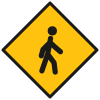
You see this sign near a row of busy pubs late on a Saturday night. What should you do?
Question 22 of 30Safe driving
Your car is involved in a minor crash on a busy road. What must you do first?
Question 23 of 30Safe driving
At a crash scene, a passenger has a deep cut that is bleeding badly. An ambulance is on its way. What should you do?
Question 24 of 30Signs and markings
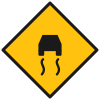
Rain has just started and you pass this sign. You are following another car. What gap should you keep?
Question 25 of 30Safe driving
You are driving on a dry, sealed road in good weather. Using the time lapse method, how long should pass between the car ahead passing a signpost and you reaching it?
Question 26 of 30Hazards and sharing the road
You are driving through a busy shopping strip with many people walking about. Some of them are elderly. What should you do?
Question 27 of 30Safe driving
You are in a 60 km/h zone. Each 5 km/h you drive over the limit is compared to raising your blood alcohol level by how much?
Question 28 of 30Road rules
You are on a divided road and want to turn right through a gap in the median strip. An oncoming car is already sitting in the gap, waiting to turn. Who must give way?
Question 29 of 30Hazards and sharing the road
You have parked on a street and are about to open the driver's door. Which method helps you spot a bicycle rider coming from behind?
Question 30 of 30Hazards and sharing the road
After heavy rain, a large puddle covers part of the road ahead. You need to drive through it. What should you do?
1 of 30
Answer each question to see the explanation. Keyboard: A–D or 1–4 to answer, N next, P previous.
Answers and explanations (text version)
The correct answer to each question above, why it is right, and where it comes from. Try the test first.
Question 1: B. 0.05 or more
Full licence holders in South Australia must not drive with a BAC of 0.05 or more.
Handbook: Driver's Handbook — Alcohol, Drugs, Medicines and Driving (p. 20)
Question 2: B. Before the bend, while the car is still straight
Brake to a safe speed before the bend, as a car stays more stable when you brake in a straight line.
Handbook: Driver's Handbook — Speeding and Inappropriate Travel Speeds (p. 19)
Question 3: B. 1.5 metres
When you are travelling over 60 km/h, you must leave at least 1.5 metres when passing a bicycle rider.
Handbook: Driver's Handbook — Hazardous Driving Situations (p. 39)
Question 4: A. Let the car pass, then move off when it is safe
When you move off from the kerb or a parking space, you must give way to vehicles travelling along the road.
Handbook: Driver's Handbook — Giving Way (p. 75)
Question 5: C. Refusing or not following the direction is an offence
It is an offence to refuse, or fail to follow, a police direction to take a breath test, and police can test drivers at any time.
Handbook: Driver's Handbook — What is Random Breath Testing (RBT)? (p. 22)
Question 6: D. You give way, because the car is on your right
At an uncontrolled intersection that is not a T-intersection, you give way to the vehicle on your right even if it is turning.
Handbook: Driver's Handbook — Giving Way (p. 77)
Question 7: D. Waiting long enough before you drive
Only time lowers your BAC; coffee, cold showers, exercise, fresh air or a big meal do not help, so you must wait before you drive.
Handbook: Driver's Handbook — Only time reduces your BAC level (p. 23)
Question 8: A. Public buses and emergency vehicles only
Only public buses and emergency vehicles may travel in a Bus Only lane, and heavy penalties apply to other vehicles.
Handbook: Driver's Handbook — Driving on the Road (p. 51)
Question 9: D. Leave it, as you must not hold the phone in traffic
You must not use a hand-held mobile phone while moving or while stopped in traffic, such as at traffic lights.
Handbook: Driver's Handbook — Mobile Phones While Driving (p. 102)
Question 10: B. 4 or more points
Learners and provisional drivers are disqualified if they build up 4 or more demerit points, which breaches a licence condition.
Handbook: Driver's Handbook — Losing your licence (disqualification) (p. 127)
Question 11: C. A roadside assistance van with flashing amber lights
In South Australia the 25 km/h limit also applies when passing a stopped breakdown or roadside assistance vehicle with flashing amber lights.
Handbook: Driver's Handbook — Speed Limits (p. 47)
Question 12: C. You must give way to the oncoming car
When turning right from the continuing road, you give way to oncoming traffic, including a car turning left into the road you are entering.
Handbook: Driver's Handbook — Giving Way (p. 74)
Question 13: B. A 12 month disqualification that cannot be appealed
Breaching a Safer Driver Agreement means a 12 month disqualification, twice the usual period, and you cannot appeal to the Court.
Handbook: Driver's Handbook — Safer Driver Agreement (p. 130)
Question 14: A. The car leaving the car park gives way to you
A U-turning driver gives way to all others "except to drivers entering the road from a road-related area (like a car park)", so the car leaving the car park gives way to you.
Handbook: Driver's Handbook — Giving Way (p. 76)
Question 15: B. Stop at the line, then turn left when it is safe
With this sign you may turn left on red, but only after stopping at the stop line, when it is safe and after giving way to all vehicles and pedestrians.
Handbook: Driver's Handbook — Left Turn on Red Permitted after Stopping (p. 66)
Question 16: D. Not more than 90 minutes after the crash
The driver must report to a police officer "not more than 90 minutes after the crash" so they can be tested for alcohol and drugs.
Handbook: Driver's Handbook — In Case of a Crash (p. 15)
Question 17: B. A right turn signal
If you will leave a roundabout after the halfway point, you must give a right turn signal as you approach.
Handbook: Driver's Handbook — Approaching and Entering a Roundabout (p. 79)
Question 18: D. Your supervising driver signs it off
Each practice session is only valid once your qualified supervising driver signs it off in the log book.
Handbook: Driver's Handbook — Who is required to fill it out? (p. 116)
Question 19: C. Clearly visible from both the front and the rear
A learner car must show L plates that can be clearly seen from the front and the rear (only motor bikes show them at the rear alone).
Handbook: Driver's Handbook — 'L' plates (p. 115)
Question 20: B. 25 km/h
In a South Australian school zone, the limit is 25 km/h whenever a child is on the road, footpath, median strip or a bicycle.
Handbook: Driver's Handbook — Speed Limits (p. 47)
Question 21: C. Slow down and watch for people who may step out
Slow down where many people are about, and watch for people who may have been drinking near pubs and other venues.
Handbook: Driver's Handbook — Pedestrians (p. 32)
Question 22: D. Stop at the scene and turn on your hazard lights
You must stop at the scene of any crash you are involved in, and your hazard lights warn other road users of danger.
Handbook: Driver's Handbook — In Case of a Crash (p. 14)
Question 23: A. Press firmly on the wound with a clean cloth
To control bleeding, uncover the injury and press directly on the wound, using a clean cloth if you have one.
Handbook: Driver's Handbook — In Case of a Crash (p. 16)
Question 24: A. More than three seconds behind it
Three seconds is the minimum gap in good conditions. On a wet or slippery road you need more than three seconds.
Handbook: Driver's Handbook — Time Lapse Formula (p. 18)
Question 25: D. 3 seconds
The time lapse formula says to "allow three seconds to pass" after the car ahead passes a fixed point, and you often need more than 3 seconds.
Handbook: Driver's Handbook — Time Lapse Formula (p. 18)
Question 26: D. Slow down and allow extra time for them to cross
Slow down where there are lots of pedestrians, as older people and those with disabilities may need extra time to cross.
Handbook: Driver's Handbook — Share the Road (p. 32)
Question 27: C. 0.05
In a 60 km/h zone, each 5 km/h rise in speed is said to equal adding 0.05 to your BAC.
Handbook: Driver's Handbook — Speeding and Inappropriate Travel Speeds (p. 17)
Question 28: C. You must give way to the car already in the gap
When turning at a break in a median strip, you must give way to any oncoming car that is already in the break and waiting to turn.
Handbook: Driver's Handbook — Giving Way (p. 76)
Question 29: B. Open it with your left hand, the one furthest from the door
The Dutch Reach means using the hand furthest from the door, which turns your body so you look back for riders.
Handbook: Driver's Handbook — Share the Road (p. 33)
Question 30: D. Slow down before you reach the water
Slow down before the water, as hitting it too fast can make the car aquaplane and slide out of control.
Handbook: Driver's Handbook — Hazardous Driving Situations (p. 40)
Practice test 2 of 10 for the Learner's theory test (car learner's permit); myLs online course test or in-office test at Service SA (DIT): 30 questions · 27 of 30 (90%) to pass · no time limit.