Question 1 of 20Signs and markings
Tasmania road signs test: free practice with 20 sign questions.
Question 1 of 20Signs and markings
Question 2 of 20Signs and markings

Question 3 of 20Signs and markings
Question 4 of 20Signs and markings
Question 5 of 20Signs and markings
Question 6 of 20Signs and markings
Question 7 of 20Signs and markings

Question 8 of 20Signs and markings
Question 9 of 20Signs and markings
Question 10 of 20Signs and markings
Question 11 of 20Signs and markings
Question 12 of 20Signs and markings
Question 13 of 20Signs and markings

Question 14 of 20Signs and markings
Question 15 of 20Signs and markings
Question 16 of 20Signs and markings
Question 17 of 20Signs and markings
Question 18 of 20Signs and markings
Question 19 of 20Signs and markings
Question 20 of 20Signs and markings
Answer each question to see the explanation. Keyboard: A–D or 1–4 to answer, N next, P previous.
The correct answer to each question above, why it is right, and where it comes from. Try the test first.
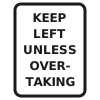
Question 1: A. Move back to the left lane when it is safe
Where this sign is posted, you must drive in the left lane except when overtaking, so return to the left lane once you have passed.
Handbook: Tasmanian Road Rules — 4. Keeping left (p. 9)
Question 2: C. Wait until the lights stop; another train may come
Wait for the warning lights to stop flashing before you cross, even after a train has passed, because another train may be coming.
Handbook: Tasmanian Road Rules — 11. Intersections (p. 51)
Question 3: D. Stop and wait until he has left the crossing
At a pedestrian crossing you must stop for anyone on or entering it, and wait until they have left the crossing.
Handbook: Tasmanian Road Rules — 7. Giving way (p. 25)
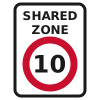
Question 4: A. No faster than the speed shown on the sign
Where a shared zone sign shows a speed limit, you must drive at or below that speed and watch for people on foot.
Handbook: Tasmanian Road Rules — 7. Giving way (p. 26)
Question 5: C. The right lane, since you may not use the bus lane
You may drive in the right lane when the left lane is a special purpose lane you are not allowed to use, such as a bus lane.
Handbook: Tasmanian Road Rules — 4. Keeping left (p. 10)
Question 6: C. No, this sign also bans U-turns there
This sign bans U-turns as well as right turns: it means "Do not turn right or make a U-turn at a street or entrance with this sign."
Handbook: Tasmanian Road Rules — 14. Traffic signs (p. 62)
Question 7: C. On either side of the island
This hazard marker marks the nose of an island or object that traffic may pass on either side, unlike the one-way chevron markers.
Handbook: Tasmanian Road Rules — 14. Traffic signs (p. 65)
Question 8: B. You may, when safe, but you must indicate first
You may change lanes in a multi-lane roundabout when it is safe, but you must indicate before you change lanes.
Handbook: Tasmanian Road Rules — 11. Intersections (p. 51)
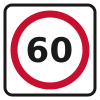
Question 9: D. When you pass a new limit sign or an end sign
A posted speed limit keeps applying until another speed sign, an end speed limit sign, or the end of the road.
Handbook: Tasmanian Road Rules — 6. Speed limits (p. 20)
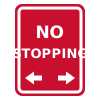
Question 10: D. No, hazard lights do not make stopping legal
If it is illegal to stop somewhere, turning on your hazard lights does not change that. A no stopping sign bans stopping in its area.
Handbook: Tasmanian Road Rules — 13. Stopping and parking (p. 58)
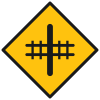
Question 11: B. Wait until the gates have finished opening
You must not drive onto a level crossing while its gates are shut or still moving, even once the lights stop. Wait until the gates have finished opening.
Handbook: Tasmanian Road Rules — 11. Intersections (p. 51)
Question 12: A. No, you must stay with the car while stopped
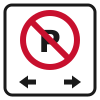
Under a no parking sign you may stop briefly to drop off or pick up, but you must not leave the car unattended.
Handbook: Tasmanian Road Rules — 13. Stopping and parking (p. 59)
Question 13: B. Both the car from the right and the man crossing
After stopping at a stop sign to turn left, you give way to traffic from the right going straight ahead and to people crossing the road you enter.
Handbook: Tasmanian Road Rules — 11. Intersections (p. 45)
Question 14: B. Give way to the car already in the roundabout
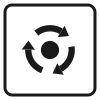
When entering a roundabout you must give way to any vehicle already in it, whichever way it is heading.
Handbook: Tasmanian Road Rules — 11. Intersections (p. 49)
Question 15: B. Slow down and use a lower gear going down
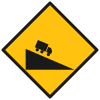
This sign warns of a steep downhill ahead. Slow down and use a lower gear so the car does not run away from you.
Handbook: Tasmanian Road Rules — 14. Traffic signs (p. 65)
Question 16: A. Slow down, as the road may lose its grip
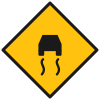
This sign warns that the surface may be slippery. On wet roads you should slow down and drive below the speed limit.
Handbook: Tasmanian Road Rules — 14. Traffic signs (p. 65)
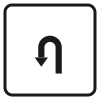
Question 17: C. All vehicles and all pedestrians
Even where a U-turn is permitted, you must indicate and give way to all vehicles and pedestrians before you turn.
Handbook: Tasmanian Road Rules — 8. Making turns (p. 34)
Question 18: A. The car on your left gives way to you
At a junction with no signs, lines or lights, drivers give way to traffic from their right. You are on that car's right, so it gives way to you.
Handbook: Tasmanian Road Rules — 11. Intersections (p. 43)
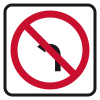
Question 19: B. Do not turn left; find another route
A no left turn sign means you must not turn left at that street or entrance, so plan another route.
Handbook: Tasmanian Road Rules — 14. Traffic signs (p. 62)
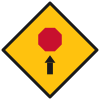
Question 20: C. Slow down and get ready to stop at the junction ahead
This sign warns that a stop sign is ahead. Slow down early so you can stop at the line when you reach it.
Handbook: Tasmanian Road Rules — 14. Traffic signs (p. 65)
Australian road signs and Tasmanian road rules as set out in the Tasmanian Road Rules Handbook; the new test uses '3D in-car view graphics that reflect real Tasmanian settings'. 16 correct (80%) is our practice mark, not an official pass mark.
Our own simplified drawings of the signs learners meet most. The full list, with meanings, is in the Australia sign library; the official reference is the Tasmanian Road Rules Handbook.
Stop completely at the stop line, then give way to all traffic before moving on.

Slow down and stop if needed to let other traffic go first.
The maximum legal speed until another limit is shown.
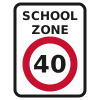
A lower speed limit applies during the school times shown on the sign.
Pedestrians and vehicles share this space; give way to pedestrians and keep to the low limit shown.
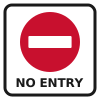
You must not drive into this road from this direction.
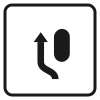
Keep to the left of the island or divider ahead.
Stay in the left lane except when overtaking; the sign applies on roads where it is posted, which each state sets by speed limit.
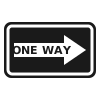
Traffic travels only in the direction of the arrow.
You must not turn left here.
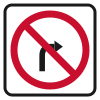
You must not turn right here.
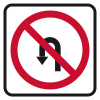
You must not make a U-turn here.
You may make a U-turn here, giving way to all other vehicles and pedestrians.
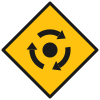
You are entering a roundabout; give way to vehicles already in it and travel clockwise.
You may stop for up to 2 minutes to drop off or pick up passengers or goods, but must stay within 3 m of the vehicle.
You must not stop at any point in the direction of the arrows unless forced to by traffic or an emergency.
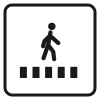
Marks a pedestrian (zebra) crossing; give way to anyone on or entering it.
Marks the level crossing; give way to trains and stop if one is approaching.
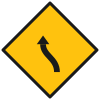
The road bends left ahead; slow to a safe speed before the curve.
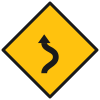
Several bends lie ahead; keep your speed down.
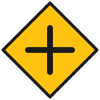
A road crosses ahead; watch for vehicles from both sides.
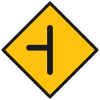
A side road joins from the left ahead.
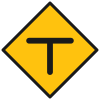
The road ends at a crossing road ahead; you will need to turn left or right.
A roundabout is coming up; slow down and prepare to give way.
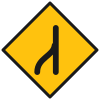
Two lanes become one ahead; merge smoothly and give way as required.
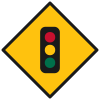
Traffic lights are ahead; be ready to stop.
A stop sign is ahead; slow down and prepare to stop.
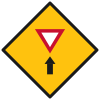
A give way sign is ahead; slow down and be ready to give way.
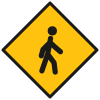
People may be walking on or crossing the road ahead.
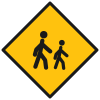
Children may be crossing ahead, often near a school; slow down.
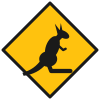
Kangaroos or other wildlife may be on the road; slow down, especially at dawn and dusk.
The road may be slippery when wet; slow down.
A railway level crossing is ahead; slow down and look for trains.
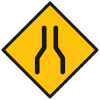
The road becomes narrower ahead; take care with oncoming traffic.
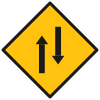
Oncoming traffic shares the road ahead.
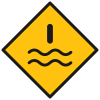
Water may cover the road here; never drive into floodwater.

An obstruction is ahead and all traffic must go around it in the direction the chevrons point, here to the left.

An obstruction is ahead and all traffic must go around it in the direction the chevrons point, here to the right.
Marks the nose of an island or obstruction that traffic may pass on either side.
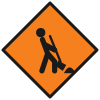
Roadwork is ahead; slow down and follow any temporary speed limit.
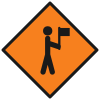
A person with a stop/slow bat is controlling traffic ahead; be ready to stop.