Question 1 of 30Signs and markings
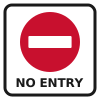
Question 1 of 30Signs and markings
Question 2 of 30Alcohol, drugs and penalties
Question 3 of 30Alcohol, drugs and penalties
Question 4 of 30Hazards and sharing the road
Question 5 of 30Signs and markings

Question 6 of 30Signs and markings
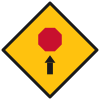
Question 7 of 30Learner and P-plate rules
Question 8 of 30Signs and markings
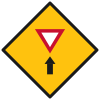
Question 9 of 30Signs and markings
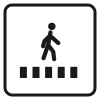
Question 10 of 30Alcohol, drugs and penalties
Question 11 of 30Signs and markings
Question 12 of 30Signs and markings
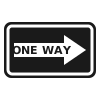
Question 13 of 30Signs and markings
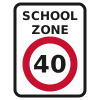
Question 14 of 30Safe driving
Question 15 of 30Learner and P-plate rules
Question 16 of 30Signs and markings
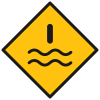
Question 17 of 30Signs and markings
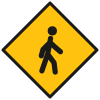
Question 18 of 30Safe driving
Question 19 of 30Learner and P-plate rules
Question 20 of 30Road rules
Question 21 of 30Alcohol, drugs and penalties
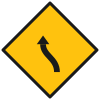
Question 22 of 30Signs and markings
Question 23 of 30Hazards and sharing the road
Question 24 of 30Road rules
Question 25 of 30Hazards and sharing the road
Question 26 of 30Road rules
Question 27 of 30Road rules
Question 28 of 30Road rules
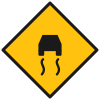
Question 29 of 30Signs and markings
Question 30 of 30Road rules
Answer each question to see the explanation. Keyboard: A–D or 1–4 to answer, N next, P previous.
The correct answer to each question above, why it is right, and where it comes from. Try the test first.
Question 1: B. You must not drive into the street from here
This sign means you must not drive into that road from this direction. Find another way to reach where you are going.
Handbook: Drive Safe 3.8 Traffic Signs (p. 51)
Question 2: B. The car is confiscated and the licence lost for good
On a third anti-hoon offence the car can be confiscated and the driver can be permanently disqualified from driving.
Handbook: Drive Safe 1.6 'Anti-Hoon' Legislation (p. 18)
Question 3: D. 48 hours
Under anti-hoon laws, a driver caught racing or doing burnouts can lose the vehicle for 48 hours.
Handbook: Drive Safe 1.6 'Anti-Hoon' Legislation (p. 18)
Question 4: C. Heavy trucks need more room to stop than a car
Heavy vehicles may need extra stopping distance. If you cut in and then brake, the truck may not stop in time.
Handbook: Drive Safe 3.2.3 How long does it take to stop a heavy vehicle (p. 45)
Question 5: D. Stop fully at the line, then go when it is safe
This sign means you must stop fully at the stop line every time, even with no traffic in sight, then give way before you go.
Handbook: Drive Safe 3.13.1 Controlled intersections (p. 68)
Question 6: B. Stop at the line, then give way to traffic
At a stop sign you must stop at the line every time, even when clear, then give way to traffic on the other road.
Handbook: Drive Safe 3.13.1 Controlled intersections (p. 68)
Question 7: A. For the first 6 months
Red P plates are shown for the first 6 months of the provisional licence. Green P plates follow after that.
Handbook: Drive Safe 2.1.1 The Graduated Driver Training and Licensing System (p. 34)
Question 8: C. Give way to it while it turns
At a give way sign you must give way to all traffic travelling along or turning from the other road.
Handbook: Drive Safe 3.13.1 Controlled intersections (p. 68)
Question 9: D. Within 20 metres before or 10 metres after it
You must not stop within 20 metres on the approach side or 10 metres on the leaving side of a pedestrian crossing.
Handbook: Drive Safe 3.17 Stopping (p. 76)
Question 10: C. 21 days
Eligible drivers have 21 days after the notice is served to elect a good behaviour period. After that, the option is gone.
Handbook: Drive Safe 5.3.3 Good Behaviour Period (p. 100)
Question 11: C. Move up and stop again as close to the line as you can
If you had to stop back from the stop line, you must stop again as close to the line as you can before you give way and go.
Handbook: Drive Safe 3.13.1 Controlled intersections (p. 68)
Question 12: B. From the right side of the road
On a one-way street, you turn right from the right side of the road, unless marked turning lanes show something else.
Handbook: Drive Safe 3.14.2 Turning (p. 71)
Question 13: A. The normal limit for that road
The lower limit on this sign applies only during the times it shows. Outside those times, the normal limit for that road applies.
Handbook: Drive Safe 3.1.1 What are the speed limits? (p. 40)
Question 14: B. Put it in first or reverse, feet off the pedals, and hold the key in start
In first or reverse with the clutch out, holding the key in the start position can turn the wheels enough to move the car off the track.
Handbook: Drive Safe 4.2.7 Stalled on a railway crossing (p. 85)
Question 15: D. Midnight to 5 am
For the first 6 months on P plates you must not drive between midnight and 5 am, unless an exemption applies.
Handbook: Drive Safe 2.1.1 The Graduated Driver Training and Licensing System (p. 33)
Question 16: D. On or near the floodway
When driving in the country, do not stop on or near a floodway, a bridge or a narrow part of the road.
Handbook: Drive Safe 3.3.4 Country driving (p. 48)
Question 17: B. More slowly, watching for people on the road
People may be walking on or crossing the road ahead. Warning signs mean you should slow down and watch for them.
Handbook: Drive Safe 3.8 Traffic Signs (p. 52)
Question 18: B. Get enough sleep
There is only one way to prevent fatigue, and that is to get enough sleep. Stimulants only delay sleep.
Handbook: Drive Safe 1.5.2 The main causes of fatigue (p. 16)
Question 19: B. Only when you drive an automatic car
A supervising driver with an automatic condition on their licence can only supervise a learner in an automatic car.
Handbook: Drive Safe 2.1.1 The Graduated Driver Training and Licensing System (pp. 30–31)
Question 20: A. Build up speed on the ramp, signal and merge smoothly
Adjust your speed on the entry ramp so you can merge smoothly with the traffic, signalling before and while you merge.
Handbook: Drive Safe 3.12.2 Entering a freeway (p. 66)
Question 21: A. A ban on driving for the next 24 hours
Police issue a notice that bans the driver from driving for 24 hours if they refuse a roadside drug test or test positive.
Handbook: Drive Safe 1.3 Alcohol and Drugs (p. 5)
Question 22: B. Before you reach the bend
The road bends left ahead, so slow to a safe speed before the bend. Braking hard in the bend can make you lose control.
Handbook: Drive Safe 3.8 Traffic Signs (p. 52)
Question 23: B. The truck driver cannot see you either
If you cannot see the driver's side mirrors, the driver cannot see you. Drop back or move to where you can be seen.
Handbook: Drive Safe 3.16.5 Large and oversize vehicles (p. 75)
Question 24: C. When you are overtaking another vehicle
On roads with a limit of 90 km/h or more, you may only use the right lane to overtake, turn right, U-turn, or when traffic is congested.
Handbook: Drive Safe 3.4.2 Roads with 2 or more lanes (p. 48)
Question 25: C. A door opening or a person stepping out between cars
Near parked cars, a driver may open a door or pull out, and people may step out from between the cars. Slow down and scan.
Handbook: Drive Safe 1.2.2 Choosing what speed to travel (p. 3)
Question 26: D. You must not stop your car on that road
In a clearway you cannot stop during the times on the signs, so traffic flows freely, and cars left there may be towed away.
Handbook: Drive Safe 3.19 Clearways (p. 79)
Question 27: B. No, you must not stop there at all
You must not stop between another stopped or parked vehicle and the centre of the road, even briefly to let someone out.
Handbook: Drive Safe 3.17 Stopping (p. 76)
Question 28: D. Straight ahead until you start to turn
Keep your wheels straight while you wait, so if you are hit from behind you are not pushed into the path of oncoming traffic.
Handbook: Drive Safe 3.14 Turning (p. 70)
Question 29: D. Make it at least twice as long
It takes longer to stop on a wet road. You should at least double your following distance when it is wet.
Handbook: Drive Safe 3.3.2 Driving in wet or hazardous weather (p. 47)
Question 30: D. Look over your shoulder to check your blind spot
Mirrors do not show everything, so glance over your shoulder to check your blind spot and give way to cars already in that lane.
Handbook: Drive Safe 3.15 Changing Lanes (p. 72)
Practice test 2 of 10 for the Learner's Permit Computerised Theory Test (CTT) (DTMI): 30 questions · 24 of 30 (80%) to pass · no time limit.