Question 1 of 50Parking and stopping
Practice test 1 of 10 — British Columbia class 7 test
Practice test 1 questions
Question 2 of 50Signs, signals and road markings
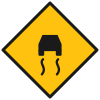
What does this sign warn you about?
Question 3 of 50Signs, signals and road markings
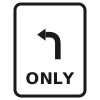
You are in a lane marked with this sign. What must you do at the intersection?
Question 4 of 50Safe driving and hazards
How should you check that your tires are at the right pressure?
Question 5 of 50Right-of-way
You are turning left on a steady green light. Cars are coming from the other way. What should you do?
Question 6 of 50Alcohol, drugs and penalties
In B.C., can police prohibit a driver whose BAC is under .08?
Question 7 of 50Parking and stopping
How far from a crosswalk must your parked vehicle be in B.C.?
Question 8 of 50Alcohol, drugs and penalties
In B.C., police can impound a vehicle for excessive speeding. What counts as excessive speeding?
Question 9 of 50Safe driving and hazards
A large animal is in your path and you cannot stop in time. What should you do just before you hit it?
Question 10 of 50Turning, passing and lanes
You are turning right from a two-way street onto another two-way street. Which lane should you end up in?
Question 11 of 50Alcohol, drugs and penalties
In B.C., what fee must you pay to have your licence reinstated after a driving prohibition?
Question 12 of 50Signs, signals and road markings
In B.C., what should you do when you come to a painted island on the road?
Question 13 of 50Signs, signals and road markings
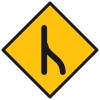
What does this sign warn you about?
Question 14 of 50Parking and stopping
The curb beside an empty space is painted red. May you park there?
Question 15 of 50Speed and following distance
You see a hazard ahead and decide to cover the brake. What does that mean?
Question 16 of 50Signs, signals and road markings
In B.C., what does a white diamond painted on a lane mean?
Question 17 of 50Licensing and insurance
In B.C., if you fail the knowledge test, how long must you wait before you try again?
Question 18 of 50Alcohol, drugs and penalties
How does the alcohol in a glass of beer compare with the alcohol in a glass of wine?
Question 19 of 50Speed and following distance
In B.C., what is the most you may drive in a lane or alley within a municipality, unless a sign shows otherwise?
Question 20 of 50Signs, signals and road markings
In B.C., what three things help you read a road sign?
Question 21 of 50Signs, signals and road markings
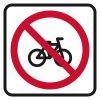
What does this sign mean?
Question 22 of 50Signs, signals and road markings
In B.C., you stop at a steady red light and the way is clear. Unless a sign forbids it, what may you do?
Question 23 of 50Alcohol, drugs and penalties
You feel angry and stressed just before a drive. Which action can help calm you?
Question 24 of 50Licensing and insurance
In B.C., how old must the supervisor of a learner driver be?
Question 25 of 50Turning, passing and lanes
You want to go straight through a two-lane roundabout. Which lane may you use?
Question 26 of 50Alcohol, drugs and penalties
In B.C., what happens if you refuse to give a breath sample to police?
Question 27 of 50Speed and following distance
Your tires start to lose their grip partway through a curve. What should you do?
Question 28 of 50Licensing and insurance
Your B.C. driver's licence expired more than three years ago. What must you pass to get a new one?
Question 29 of 50Alcohol, drugs and penalties
In B.C., how many roadside suspensions will lead to a Driver Risk Premium?
Question 30 of 50Signs, signals and road markings
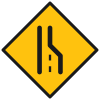
What does this sign warn you about?
Question 31 of 50Licensing and insurance
In B.C., a novice driver with no supervisor wants to carry three passengers. Which group is allowed?
Question 32 of 50Signs, signals and road markings
In B.C., what does a yellow arrow on a traffic light tell you?
Question 33 of 50Signs, signals and road markings
In B.C., what does a flashing red traffic light mean?
Question 34 of 50Safe driving and hazards
Your car has a blind spot detector. Do you still need to shoulder check?
Question 35 of 50Right-of-way
In B.C., two vehicles reach an uncontrolled intersection at the same time. Which one must yield?
Question 36 of 50Speed and following distance
You stop behind another vehicle at an intersection. About how much space should you leave?
Question 37 of 50Turning, passing and lanes
You turn left from a one-way road onto another one-way road. Which lanes should you use?
Question 38 of 50Alcohol, drugs and penalties
You are making a long trip over two days. When is tiredness most likely to affect you?
Question 39 of 50Alcohol, drugs and penalties
In B.C., when may a driver in the Graduated Licensing Program use a hands-free phone while driving?
Question 40 of 50Safe driving and hazards
Your brakes fail while you are driving. Which action can help you stop?
Question 41 of 50Right-of-way
What must you do at a flashing red light?
Question 42 of 50Alcohol, drugs and penalties
A person has a BAC of .08. About how long will it take their body to get back to a BAC of zero?
Question 43 of 50Signs, signals and road markings
In B.C., what does a double solid yellow line mean?
Question 44 of 50Licensing and insurance
In B.C., during which hours may a Class 7L learner drive?
Question 45 of 50Sharing the road
In B.C., what happens to traffic fines in construction zones?
Question 46 of 50Speed and following distance
On a highway posted at 80 km/h, you come up behind a person walking on the shoulder. In B.C., how much room must you give them as you pass?
Question 47 of 50Signs, signals and road markings
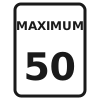
What does this sign show?
Question 48 of 50Licensing and insurance
In B.C., what is the minimum age to apply for a learner's licence?
Question 49 of 50Right-of-way
In B.C., when may you turn left on a steady red light?
Question 50 of 50Right-of-way
You are in the intersection waiting to turn left when the light turns yellow. What should you do?
1 of 50
The timer starts when you answer the first question. Keyboard: A–D or 1–4 to answer, N next, P previous.
Answers and explanations (text version)
The correct answer to each question above, why it is right, and where it comes from. Try the test first.
Question 1: C. 15 metres
It is illegal to park within 15 metres of the nearest rail of a railway crossing.
Handbook: Learn to drive smart, Ch. 4 Rules of the road — Parking tips and rules (p. 58)
Question 2: C. The road may be slippery
This sign warns that the road ahead may be slippery, so slow down and avoid sudden moves.
Handbook: Learn to drive smart, Ch. 3 Signs, signals and road markings — Warning signs (p. 33)
Question 3: D. Make a left turn
When you are in a designated lane you must follow its arrow, so you must make a left turn.
Handbook: Learn to drive smart, Ch. 3 Signs, signals and road markings — Lane use signs (p. 31)
Question 4: B. Check them cold, using the level in the owner's manual
Check pressure when the tires are cold, using the level in the owner's manual or on the driver's door sticker, not the number on the tire.
Handbook: Learn to drive smart, Ch. 2 You and your vehicle — Tire tips (p. 25)
Question 5: A. Yield to them and wait for a safe gap
When turning left on a steady green, yield to oncoming traffic and wait for a safe gap.
Handbook: Learn to drive smart, Ch. 4 Rules of the road — Intersections controlled by traffic lights (p. 44)
Question 6: C. Yes, if police think their driving is affected
Police may prohibit you if they think alcohol or drugs affect your driving, even when your BAC is not over .08.
Handbook: Learn to drive smart, Ch. 9 Your licence — Penalties for impaired driving (p. 155)
Question 7: A. At least 6 metres
It is illegal to park within 6 metres of a crosswalk or intersection.
Handbook: Learn to drive smart, Ch. 4 Rules of the road — Parking tips and rules (p. 58)
Question 8: C. 40 km/h or more over the limit
Driving 40 km/h or more over the posted limit is excessive speeding, and police can impound the vehicle for it.
Handbook: Learn to drive smart, Ch. 9 Your licence — Vehicle impoundment (p. 157)
Question 9: D. Let up on the brake pedal
Brake firmly, aim to hit at an angle, then let up on the brake pedal just before impact. The front of the car rises, so the animal is less likely to come through the windshield.
Handbook: Learn to drive smart, Ch. 8 Emergency strategies — Animals on the road (p. 130)
Question 10: B. The right lane of the cross street
To turn right, move to the right lane and turn into the right lane of the cross street.
Handbook: Learn to drive smart, Ch. 4 Rules of the road — Lane tracking (p. 49)
Question 11: C. $250
B.C. charges a $250 fee to reinstate your licence once a driving prohibition is over.
Handbook: Learn to drive smart, Ch. 9 Your licence — Penalties for unsafe driving (p. 154)
Question 12: A. Keep to its right and don't drive over it
A painted island means keep to the right and do not drive on or over it.
Handbook: Learn to drive smart, Ch. 3 Signs, signals and road markings — Other markings (p. 40)
Question 13: A. Traffic merging into your lane ahead
This sign warns of merging traffic ahead, so be ready to adjust your speed to let vehicles into your lane.
Handbook: Learn to drive smart, Ch. 3 Signs, signals and road markings — Warning signs (p. 33)
Question 14: D. No, parking at a red curb is illegal
It is illegal to park where the curb is painted yellow or red.
Handbook: Learn to drive smart, Ch. 4 Rules of the road — Parking tips and rules (p. 58)
Question 15: A. Resting your foot lightly on the brake without pressing it
Covering the brake means taking your foot off the gas and resting it lightly on the brake pedal without pressing it.
Handbook: Learn to drive smart, Ch. 5 See-think-do — Speed control (p. 69)
Question 16: C. The lane is reserved for certain vehicles
A white diamond on the road marks a reserved lane, such as one for buses or high occupancy vehicles.
Handbook: Learn to drive smart, Ch. 3 Signs, signals and road markings — Reserved lane signs (p. 32)
Question 17: A. 1 day
The guide's retest wait table lists 1 day for each failed knowledge test attempt, so you may try again the next day.
Handbook: Learn to drive smart, inside front cover — Retest wait periods
Question 18: D. They hold about the same amount
A glass of beer, a glass of wine and an average cocktail hold about the same amount of alcohol, so beer is no safer.
Handbook: Learn to drive smart, Ch. 7 Personal strategies — Facts about alcohol (p. 104)
Question 19: B. 20 km/h
The maximum speed in a lane or alleyway within a municipality is 20 km/h unless a sign shows otherwise.
Handbook: Learn to drive smart, Ch. 5 See-think-do — Speed control (p. 69)
Question 20: B. Its shape, colour and message
You can read a sign by its shape, its colour and the message printed on it.
Handbook: Learn to drive smart, Ch. 3 Signs, signals and road markings — Signs (p. 29)
Question 21: A. No bicycle riding past this point
This sign means bicycle riding is not allowed beyond this point.
Handbook: Learn to drive smart, Ch. 3 Signs, signals and road markings — Regulatory signs (p. 30)
Question 22: C. Turn right after stopping
After a full stop at a red light, you may turn right when the way is clear, unless a sign says you may not.
Handbook: Learn to drive smart, Ch. 4 Rules of the road — Intersections controlled by traffic lights (p. 43)
Question 23: A. Open a window and take a few deep breaths
Letting in fresh air and taking a few deep breaths can help you calm down. If you still cannot focus, do not drive.
Handbook: Learn to drive smart, Ch. 7 Personal strategies — Dangerous emotions (p. 103)
Question 24: D. 25 or older
A learner's supervisor must be 25 or older, hold a valid Class 1, 2, 3, 4 or 5 licence and sit beside the learner.
Handbook: Learn to drive smart, Ch. 9 Your licence — Learner stage driving restrictions (p. 138)
Question 25: A. Either the left or the right lane
To go straight through a roundabout, you may use either the left or the right lane.
Handbook: Learn to drive smart, Ch. 4 Rules of the road — Traffic circles and roundabouts (p. 47)
Question 26: D. Immediate and severe penalties can apply
Refusing to give a breath sample brings immediate and severe penalties, just like driving with alcohol or drugs in your system.
Handbook: Learn to drive smart, Ch. 9 Your licence — Penalties for impaired driving (p. 155)
Question 27: A. Ease off the gas, then reapply it gently once grip returns
Don't brake if you lose traction in a curve; ease off the gas and reapply it gently once you regain grip.
Handbook: Learn to drive smart, Ch. 5 See-think-do — Speed control (p. 71)
Question 28: B. A vision screening, signs test and road test
If your licence expired more than three years ago, you must pass a vision screening, a road signs test and a road test.
Handbook: Learn to drive smart, Ch. 9 Your licence — Keeping your licence up-to-date (p. 149)
Question 29: A. Two or more
You pay a Driver Risk Premium if you have two or more roadside suspensions, looking at your offences over three years.
Handbook: Learn to drive smart, Ch. 9 Your licence — Penalties for unsafe driving (p. 155)
Question 30: C. The right lane ends ahead
This sign warns that the right lane ends ahead, so drivers in it must move over.
Handbook: Learn to drive smart, Ch. 4 Rules of the road — Merging (p. 55)
Question 31: A. Their brother, sister and grandmother
Immediate family, such as a brother, sister or grandmother, is exempt from the novice one-passenger limit.
Handbook: Learn to drive smart, Ch. 9 Your licence — Novice stage driving restrictions (p. 140)
Question 32: A. The left-turn arrow is about to change
A yellow arrow means the advance left-turn signal is about to change, so slow down and stop unless you cannot stop safely.
Handbook: Learn to drive smart, Ch. 3 Signs, signals and road markings — Traffic lights (p. 37)
Question 33: C. Come to a full stop, then go when safe
A flashing red light means you must come to a complete stop, then go only when it is clear and safe.
Handbook: Learn to drive smart, Ch. 4 Rules of the road — Intersections controlled by traffic lights (p. 45)
Question 34: A. Yes, the detector does not replace a shoulder check
Blind spot detectors and cameras can help, but they do not replace turning your head for a shoulder check.
Handbook: Learn to drive smart, Ch. 5 See-think-do — Observing behind (p. 61)
Question 35: C. The vehicle on the left
When two vehicles arrive together at an uncontrolled intersection, the vehicle on the left yields to the one on the right.
Handbook: Learn to drive smart, Ch. 4 Rules of the road — Types of intersections (p. 41)
Question 36: C. About one car length
Leave about one car length when stopped behind another vehicle, so you have room to move if needed.
Handbook: Learn to drive smart, Ch. 5 See-think-do — Space margins (p. 72)
Question 37: A. From the left lane into the left lane
When turning left from a one-way road onto a one-way road, turn from the left lane into the left lane.
Handbook: Learn to drive smart, Ch. 4 Rules of the road — Lane tracking: left turns (p. 50)
Question 38: D. On the second day of the trip
On a long trip, the guide says to be careful on the second day, as "this is when tiredness is most likely" to affect you.
Handbook: Learn to drive smart, Ch. 7 Personal strategies — Staying awake (p. 100)
Question 39: B. Only to call 9-1-1 in an emergency
GLP drivers may not use hand-held or hands-free devices while driving, except to call 9-1-1 to report an emergency.
Handbook: Learn to drive smart, Ch. 7 Personal strategies — Cellphones and other devices (p. 101)
Question 40: C. Pump the brake pedal hard and fast
Pumping the brake pedal hard and fast may give enough braking to stop. Also gear down and apply the parking brake gently.
Handbook: Learn to drive smart, Ch. 8 Emergency strategies — Brake failure (p. 127)
Question 41: A. Stop fully, then go when it is clear and safe
A flashing red light means come to a complete stop, then go into the intersection when it is clear and safe.
Handbook: Learn to drive smart, Ch. 4 Rules of the road — Intersections controlled by traffic lights (p. 45)
Question 42: C. About six hours
Transport Canada says a body at a BAC of .08 needs about six hours to process the alcohol and get back to zero.
Handbook: Learn to drive smart, Ch. 7 Personal strategies — Facts about alcohol (p. 104)
Question 43: A. No passing is allowed
A double solid yellow line in the centre of the road means no passing is allowed.
Handbook: Learn to drive smart, Ch. 3 Signs, signals and road markings — Yellow lines (p. 38)
Question 44: C. From 5 a.m. to midnight
A learner may drive only from 5 in the morning until midnight, and always with a qualified supervisor beside them.
Handbook: Learn to drive smart, Ch. 9 Your licence — Learner stage driving restrictions (p. 138)
Question 45: A. They are doubled
Traffic fines are doubled in construction zones, and the posted zone speed limits apply 24 hours a day.
Handbook: Learn to drive smart, Ch. 6 Sharing the road — Construction zones (p. 96)
Question 46: A. At least 1.5 metres
The guide says that "on roads with speed limits above 50 km/h" you must leave at least 1.5 metres when passing a pedestrian.
Handbook: Learn to drive smart, Ch. 5 See-think-do — Space margins (p. 74)
Question 47: C. The highest legal speed in good conditions
This sign gives the maximum legal speed, which applies when conditions are good.
Handbook: Learn to drive smart, Ch. 3 Signs, signals and road markings — Regulatory signs (p. 30)
Question 48: C. 16 years old
The guide says you "must be at least 16 years old" to apply for a Class 7L learner's licence in B.C.
Handbook: Learn to drive smart, Ch. 9 Your licence — Getting your learner's licence (Class 7L) (p. 137)
Question 49: D. After a full stop, onto a one-way street
After stopping and making sure it is clear, you may turn left on a red light onto a one-way street unless a sign forbids it.
Handbook: Learn to drive smart, Ch. 4 Rules of the road — Intersections controlled by traffic lights (p. 43)
Question 50: C. Complete your turn, watching for oncoming drivers
You are legally allowed to complete your turn, but watch for oncoming drivers trying to beat the red light.
Handbook: Learn to drive smart, Ch. 4 Rules of the road — Intersections controlled by traffic lights (p. 44)
Practice test 1 of 10 for the Passenger vehicle knowledge test (Class 7L learner's licence) (ICBC): 50 questions · 40 of 50 (80%) to pass · 45 minutes.