Question 1 of 50Licensing and insurance
Practice test 2 of 10 — British Columbia class 7 test
Practice test 2 questions
Question 2 of 50Licensing and insurance
In B.C., how many multiple-choice questions are on the knowledge test?
Question 3 of 50Licensing and insurance
In B.C., how much notice must you give to cancel a road test without a fee, if you have no valid reason?
Question 4 of 50Licensing and insurance
In B.C., a novice driver has no supervisor. How many passengers who are not immediate family may they carry?
Question 5 of 50Signs, signals and road markings
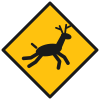
What does this sign warn you about?
Question 6 of 50Signs, signals and road markings
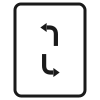
You plan to use the lane shown by this sign to turn into a driveway. What should you watch for in the lane?
Question 7 of 50Sharing the road
A cyclist ahead of you holds their right arm straight out to the side. What are they signalling?
Question 8 of 50Signs, signals and road markings

What must you do at this sign?
Question 9 of 50Sharing the road
In B.C., which rules must a person riding a horse on a public road obey?
Question 10 of 50Speed and following distance
In B.C., unless a sign says otherwise, what is the speed limit within cities and towns?
Question 11 of 50Parking and stopping
You park uphill beside a low, rolling curb that a car could roll over. Which way should the wheels be turned?
Question 12 of 50Signs, signals and road markings
In B.C., a playground zone sign has a 30 km/h tab. When does that limit apply?
Question 13 of 50Signs, signals and road markings
In B.C., a train has passed a crossing and the gate is starting to rise. When may you go?
Question 14 of 50Turning, passing and lanes
You are turning onto a street that has a reserved lane you are not allowed to use. Which lane should you turn into?
Question 15 of 50Signs, signals and road markings
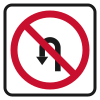
What does this sign tell you?
Question 16 of 50Speed and following distance
You drive around a curve. How does your speed change the pull of inertia on your vehicle?
Question 17 of 50Signs, signals and road markings
In B.C., the advance green arrow at the bottom of the regular lights goes off. Only the green light is left. What may you do to turn left?
Question 18 of 50Safe driving and hazards
Which air temperature is often the most dangerous for winter driving?
Question 19 of 50Licensing and insurance
In B.C., a learner's licence is valid for two years. What must you do to renew it?
Question 20 of 50Parking and stopping
You are pulling out from a line of parked cars, and your turn signal may be hard to see. What should you do?
Question 21 of 50Licensing and insurance
In B.C., how long may a new resident drive on a valid licence from another province or country?
Question 22 of 50Signs, signals and road markings
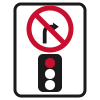
What does this sign mean?
Question 23 of 50Speed and following distance
You are on a rural B.C. highway, well outside any town, and see no speed sign. What is the most you may drive?
Question 24 of 50Signs, signals and road markings

In B.C., a train is coming and you must stop at this sign. How far from the nearest rail should you stop?
Question 25 of 50Sharing the road
In B.C., how far back must you stay when following a fire truck?
Question 26 of 50Signs, signals and road markings
This sign is over the centre lane of a road. What does it mean?
Question 27 of 50Rules of the road
How do you do a two-point turn?
Question 28 of 50Signs, signals and road markings
In B.C., what does a flashing green traffic light mean?
Question 29 of 50Signs, signals and road markings
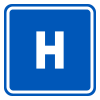
What does this sign tell you?
Question 30 of 50Speed and following distance
You spot a problem ahead. About how long does it take to see, think and press the brake before the car starts to slow?
Question 31 of 50Safe driving and hazards
Which lights should you use when driving in fog, rain or snow?
Question 32 of 50Sharing the road
The gate is down at a railway crossing. What must you do?
Question 33 of 50Safe driving and hazards
In B.C., until when must a child ride in a booster seat?
Question 34 of 50Alcohol, drugs and penalties
The label on your cold medicine says it may cause drowsiness. What is the safest choice?
Question 35 of 50Right-of-way
Another vehicle reaches a traffic circle at the same moment you do. Who should yield?
Question 36 of 50Safe driving and hazards
Your car starts to hydroplane on a wet road. What should you do?
Question 37 of 50Sharing the road
In B.C., the speed limit is 60 km/h. You approach a tow truck stopped at the roadside with lights flashing. What is the fastest you may pass?
Question 38 of 50Signs, signals and road markings
In B.C., what do yellow lines on the road divide?
Question 39 of 50Licensing and insurance
What does ICBC's Basic Autoplan coverage make sure every B.C. motorist carries?
Question 40 of 50Signs, signals and road markings
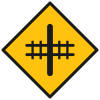
This sign has a speed tab below it. What does the tab tell you?
Question 41 of 50Sharing the road
You are following a large truck. What tells you that you are out of the driver's blind spot behind it?
Question 42 of 50Turning, passing and lanes
In ideal conditions, about how long does it take most stopped vehicles to turn left and reach 50 km/h?
Question 43 of 50Signs, signals and road markings
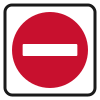
What does this sign mean?
Question 44 of 50Safe driving and hazards
Your car has ABS. How should you brake in an emergency?
Question 45 of 50Right-of-way
You have stopped at a steady red light and want to turn right. No sign forbids it. What may you do?
Question 46 of 50Parking and stopping
You are parked at the curb and about to open your door. What should you do first?
Question 47 of 50Signs, signals and road markings
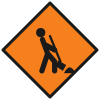
In B.C., a speed limit is posted in the work zone past this sign. When does that limit apply?
Question 48 of 50Right-of-way
You face a steady red light and want to go straight ahead. What must you do?
Question 49 of 50Rules of the road
In B.C., you must dim your high beams when you are within what distance of another vehicle?
Question 50 of 50Parking and stopping
When you park parallel to the curb, how close to the curb should your vehicle be?
1 of 50
The timer starts when you answer the first question. Keyboard: A–D or 1–4 to answer, N next, P previous.
Answers and explanations (text version)
The correct answer to each question above, why it is right, and where it comes from. Try the test first.
Question 1: C. 12 months
You must have held your learner's licence for at least one year, or 12 months, before you take the Class 7 road test.
Handbook: Learn to drive smart, Ch. 9 Your licence — Getting your novice licence (Class 7) (p. 139)
Question 2: C. 50 questions
The B.C. knowledge test has 50 multiple-choice questions on the rules and safe driving facts in the guide.
Handbook: Learn to drive smart, Ch. 9 Your licence — The knowledge test (p. 137)
Question 3: C. 48 hours
A fee is charged if you miss your road test without giving 48 hours notice or a valid reason.
Handbook: Learn to drive smart, Ch. 9 Your licence — Taking a road test (p. 144)
Question 4: D. One passenger
A novice driver may carry only one passenger, unless the others are immediate family or a qualified supervisor is present.
Handbook: Learn to drive smart, Ch. 9 Your licence — Novice stage driving restrictions (p. 140)
Question 5: A. Deer may be on the road ahead
This sign tells you to watch for deer on the road ahead and to slow down.
Handbook: Learn to drive smart, Ch. 3 Signs, signals and road markings — Warning signs (p. 34)
Question 6: D. Drivers coming the other way to turn left
Vehicles from the opposite direction also use this lane to turn left, so make sure there is space before you enter.
Handbook: Learn to drive smart, Ch. 4 Rules of the road — Two-way left-turn lanes (p. 51)
Question 7: A. A right turn
A cyclist may signal a right turn by holding the right arm straight out, so expect them to turn right.
Handbook: Learn to drive smart, Ch. 6 Sharing the road — Cyclists (p. 87)
Question 8: D. Stop fully, then go only when it is safe
At a stop sign you must come to a complete stop and then continue only when it is safe.
Handbook: Learn to drive smart, Ch. 3 Signs, signals and road markings — Regulatory signs (p. 30)
Question 9: D. The same rules as drivers of motor vehicles
Horse riders and horse carriage operators have the same rights as motor vehicle drivers and must obey the same rules.
Handbook: Learn to drive smart, Ch. 6 Sharing the road — Horses (p. 98)
Question 10: B. 50 km/h
Unless posted otherwise, the speed limit within cities and towns is 50 km/h.
Handbook: Learn to drive smart, Ch. 5 See-think-do — Speed control (p. 69)
Question 11: C. To the right, as if there were no curb
A rolling or mountable curb is too low to stop the vehicle rolling back, so turn the wheels to the right.
Handbook: Learn to drive smart, Ch. 4 Rules of the road — Parking tips and rules (p. 58)
Question 12: B. Every day, from dawn to dusk
The 30 km/h playground zone limit is in effect every day from dawn to dusk.
Handbook: Learn to drive smart, Ch. 3 Signs, signals and road markings — School, playground and crosswalk signs (p. 31)
Question 13: B. When the gate is fully up and it is safe
Stay stopped until the gate is fully raised, then cross only when it is safe.
Handbook: Learn to drive smart, Ch. 3 Signs, signals and road markings — Railway signs (p. 36)
Question 14: A. The lane next to the reserved lane
Unless you are entitled to drive in the reserved lane, turn into the lane next to it.
Handbook: Learn to drive smart, Ch. 4 Rules of the road — Reserved lanes (p. 53)
Question 15: D. You may not turn around to go back
U-turns are illegal where a sign prohibits them, so you may not turn around here to go back.
Handbook: Learn to drive smart, Ch. 4 Rules of the road — U-turns (p. 52)
Question 16: D. The faster you go, the greater it is
Inertia tries to keep you going straight in a curve, and the faster you go, the greater the force of inertia.
Handbook: Learn to drive smart, Ch. 5 See-think-do — Physics and driving (p. 70)
Question 17: B. Turn left after yielding to pedestrians and oncoming traffic
Once the arrow goes off and only the green light shows, you may still turn left but must yield to pedestrians and oncoming traffic.
Handbook: Learn to drive smart, Ch. 4 Rules of the road — Left-turn signals (p. 45)
Question 18: D. About 0°C
Temperatures about 0°C, near freezing, are more dangerous than colder ones because ice can form without warning and may not be visible.
Handbook: Learn to drive smart, Ch. 8 Emergency strategies — Ice and snow (p. 121)
Question 19: B. Pass the knowledge test again
A learner's licence is valid for two years, and the guide says you "will need to re-take the knowledge test" to renew it.
Handbook: Learn to drive smart, Ch. 9 Your licence — Getting your learner's licence (Class 7L) (p. 137)
Question 20: D. Use a hand signal as well as your turn signal
When your turn signal is hard to see, such as when pulling out from parked vehicles, add a hand signal.
Handbook: Learn to drive smart, Ch. 5 See-think-do — Communication (p. 77)
Question 21: D. The first 90 days
New residents may drive on a valid licence from elsewhere for the first 90 days, and after that they need a licence from this province.
Handbook: Learn to drive smart, Ch. 9 Your licence — New B.C. residents (p. 147)
Question 22: A. Wait for green before turning right
This sign means you may not turn right on a red light, so you must wait for the green.
Handbook: Learn to drive smart, Ch. 3 Signs, signals and road markings — Regulatory signs (p. 30)
Question 23: B. 80 km/h
Outside cities and towns, the speed limit is 80 km/h unless a sign shows a different limit.
Handbook: Learn to drive smart, Ch. 5 See-think-do — Speed control (p. 69)
Question 24: B. 5 to 15 metres
Stop no closer than 5 metres and no farther than 15 metres from the nearest rail.
Handbook: Learn to drive smart, Ch. 6 Sharing the road — Trains (p. 97)
Question 25: D. At least 150 metres
When following a fire truck, you must stay at least 150 metres behind it.
Handbook: Learn to drive smart, Ch. 6 Sharing the road — Emergency vehicles (p. 94)
Question 26: A. Drivers from both directions share it for left turns
This centre lane is shared by drivers from both directions, but only for turning left.
Handbook: Learn to drive smart, Ch. 3 Signs, signals and road markings — Lane use signs (p. 31)
Question 27: A. Stop near the side, back into a driveway, then drive out the other way
A two-point turn means stopping near the side of the road, backing into a driveway, then turning into the street to go the other way.
Handbook: Learn to drive smart, Ch. 4 Rules of the road — Turning around (p. 57)
Question 28: A. Pedestrians control it; go only if the way is clear
A flashing green is a pedestrian-controlled light, so go only if the intersection is clear and watch for people who may press the button.
Handbook: Learn to drive smart, Ch. 3 Signs, signals and road markings — Traffic lights (p. 37)
Question 29: D. A hospital is nearby
This information sign tells you that a hospital can be found nearby.
Handbook: Learn to drive smart, Ch. 3 Signs, signals and road markings — Information and destination signs (p. 35)
Question 30: C. About one and a half seconds
It takes about three-quarters of a second to see and think and another three-quarters to act, so about one and a half seconds pass before you slow.
Handbook: Learn to drive smart, Ch. 5 See-think-do — Space margins (p. 73)
Question 31: A. Low beam headlights
In rain, snow and fog, use your low beam headlights. Also slow down, leave extra space and scan more carefully.
Handbook: Learn to drive smart, Ch. 8 Emergency strategies — Loss of visibility (p. 119)
Question 32: A. Stop and wait for the gate to go up
A lowered gate means a train is coming. You must stop and wait for the gate to go up before you cross.
Handbook: Learn to drive smart, Ch. 6 Sharing the road — Trains (p. 97)
Question 33: B. Age 9 or 145 cm tall, whichever comes first
A booster seat is required until a child is at least 9 years old or 145 cm tall, whichever comes first.
Handbook: Learn to drive smart, Ch. 2 You and your vehicle — Safety restraints for children (p. 15)
Question 34: B. Let someone else drive you
If a medicine label warns about drowsiness or dizziness, do not drive. Take the bus or let someone else drive you.
Handbook: Learn to drive smart, Ch. 7 Personal strategies — Assessing your health (p. 100)
Question 35: C. You yield to the vehicle on your right
If you reach a traffic circle at the same time as another vehicle, yield to the vehicle on your right.
Handbook: Learn to drive smart, Ch. 4 Rules of the road — Traffic circles and roundabouts (p. 46)
Question 36: C. Ease off the gas and keep driving straight
If you hydroplane, ease off the gas and keep driving straight. Never brake, because you have no grip on the water.
Handbook: Learn to drive smart, Ch. 8 Emergency strategies — Rain (p. 121)
Question 37: B. 40 km/h
Where the limit is under 80 km/h, you must pass a stopped vehicle with flashing lights at no more than 40 km/h.
Handbook: Learn to drive smart, Ch. 6 Sharing the road — Stopped vehicles with flashing lights (p. 94)
Question 38: A. Traffic moving in opposite directions
Yellow lines divide traffic moving in opposite directions, so oncoming traffic is on the other side of them.
Handbook: Learn to drive smart, Ch. 3 Signs, signals and road markings — Yellow lines (p. 38)
Question 39: C. A minimum amount of liability insurance
Basic Autoplan makes sure every B.C. motorist has at least a minimum amount of liability insurance, plus help after injury crashes.
Handbook: Learn to drive smart, Ch. 9 Your licence — Insuring your vehicle (p. 153)
Question 40: B. The safe speed is lower than the posted limit
An advisory speed tab under this warning sign shows that the safe speed is less than the posted speed.
Handbook: Learn to drive smart, Ch. 6 Sharing the road — Trains (p. 96)
Question 41: C. You can see both of its side mirrors
If you can see both of the truck's side mirrors, the driver has a chance to see you. If you cannot, you are in a blind spot.
Handbook: Learn to drive smart, Ch. 6 Sharing the road — Large vehicles (p. 90)
Question 42: C. About seven seconds
Turning left and reaching 50 km/h takes about seven seconds, and you should add two more seconds for safety.
Handbook: Learn to drive smart, Ch. 5 See-think-do — Choosing a safe gap (p. 75)
Question 43: B. You may not enter this road from here
A do not enter sign means you may not drive into that road from your direction.
Handbook: Learn to drive smart, Ch. 3 Signs, signals and road markings — Regulatory signs (p. 30)
Question 44: D. Press hard and hold the pedal down until you stop
With ABS, press hard and hold the pedal down until you stop, and steer where you want to go. Pumping the pedal turns the system off.
Handbook: Learn to drive smart, Ch. 8 Emergency strategies — Emergency braking (p. 116)
Question 45: B. Turn right once the intersection is clear
After a full stop at a red light, you may turn right once the intersection is clear of vehicles, cyclists and pedestrians.
Handbook: Learn to drive smart, Ch. 4 Rules of the road — Intersections controlled by traffic lights (p. 43)
Question 46: B. Check your mirror and do a shoulder check
Do a mirror check and a shoulder check before opening your door, since a cyclist or vehicle could be coming up beside you.
Handbook: Learn to drive smart, Ch. 5 See-think-do — Observation (p. 61)
Question 47: B. At all hours, day and night
A posted construction zone speed limit applies 24 hours a day, so obey it at all hours.
Handbook: Learn to drive smart, Ch. 6 Sharing the road — Construction zones (p. 95)
Question 48: D. Stop fully and wait for the light to turn green
At a steady red you must stop, and the guide says you "must wait for the light to turn green" before going straight.
Handbook: Learn to drive smart, Ch. 4 Rules of the road — Intersections controlled by traffic lights (p. 43)
Question 49: C. 150 metres
You must switch to low beams within 150 metres of another vehicle, whether you are meeting it or following it.
Handbook: Learn to drive smart, Ch. 8 Emergency strategies — Using the headlights (p. 125)
Question 50: D. Within 30 centimetres
Park parallel to the curb and within 30 centimetres, or one foot, of it.
Handbook: Learn to drive smart, Ch. 4 Rules of the road — Parking tips and rules (p. 58)
Practice test 2 of 10 for the Passenger vehicle knowledge test (Class 7L learner's licence) (ICBC): 50 questions · 40 of 50 (80%) to pass · 45 minutes.