Question 1 of 40Parking and stopping
Practice test 1 of 10 — Newfoundland and Labrador class 5 test
Practice test 1 questions
Question 2 of 40Parking and stopping
How long should a space be for you to parallel park in it?
Question 3 of 40Rules of the road
You are on a divided highway, and traffic is joining from a ramp. What courtesy can you offer?
Question 4 of 40Safe driving and hazards
How should the lap part of a seatbelt be worn?
Question 5 of 40Signs, signals and road markings
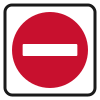
What does this sign tell you?
Question 6 of 40Safe driving and hazards
You start to feel tired while driving. What does the handbook advise?
Question 7 of 40Turning, passing and lanes
Where should you avoid changing lanes?
Question 8 of 40Parking and stopping
Where is parking not allowed?
Question 9 of 40Signs, signals and road markings

What must you do when you come to this sign?
Question 10 of 40Parking and stopping
You must park on a highway and leave your vehicle. What should you do before leaving it?
Question 11 of 40Signs, signals and road markings
A yellow diamond sign edged with black and yellow squares shows a single arrow. What should you expect?
Question 12 of 40Right-of-way
A pedestrian is already crossing when the 'don't walk' signal comes on. What is true?
Question 13 of 40Signs, signals and road markings
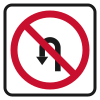
What does this sign mean?
Question 14 of 40Licensing and insurance
In Newfoundland and Labrador, what is the minimum age for a Class 5 Level I learner's permit?
Question 15 of 40Parking and stopping
You park facing uphill on a road with no curb. Which way should you turn your front wheels?
Question 16 of 40Signs, signals and road markings
A yellow diamond sign shows a height, such as 3.8 m, between two arrows. What does it tell you?
Question 17 of 40Alcohol, drugs and penalties
In Newfoundland and Labrador, a driver is ticketed for going 51 km/h or more over the posted speed limit. What happens to the licence?
Question 18 of 40Alcohol, drugs and penalties
In Newfoundland and Labrador, a driver's blood alcohol concentration is 80 mg or more. What happens right away?
Question 19 of 40Signs, signals and road markings
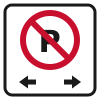
What does this sign mean?
Question 20 of 40Turning, passing and lanes
You have just passed a vehicle. When should you move back into the right lane?
Question 21 of 40Turning, passing and lanes
Before you pass on a two-lane road, what must the centre line on your left be?
Question 22 of 40Signs, signals and road markings
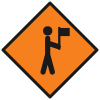
After you pass this sign, a worker signals you to stop. What must you do?
Question 23 of 40Signs, signals and road markings
There is a solid line on your left side of the centre line. What does it mean?
Question 24 of 40Signs, signals and road markings
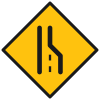
What does this sign warn you about?
Question 25 of 40Parking and stopping
You park facing uphill on a street with a curb. Which way should you turn your front wheels?
Question 26 of 40Right-of-way
You are not sure who has the right-of-way. What is the safest thing to do?
Question 27 of 40Signs, signals and road markings
You see a red-orange triangle on the back of a vehicle on the highway. What does it mean?
Question 28 of 40Licensing and insurance
In Newfoundland and Labrador, how long must a driver spend at Level II before getting a full licence?
Question 29 of 40Sharing the road
A person at a corner holds a white cane out in front of them. What does this tell you?
Question 30 of 40Parking and stopping
In Newfoundland and Labrador, how close to a stop sign may you park?
Question 31 of 40Signs, signals and road markings
An orange diamond sign reads CONSTRUCTION ENDS. What does it tell you?
Question 32 of 40Licensing and insurance
What mark do you need to pass the Newfoundland and Labrador Class 5 written test?
Question 33 of 40Turning, passing and lanes
An on-ramp becomes a new added lane on the highway. What should drivers on the ramp do?
Question 34 of 40Turning, passing and lanes
Even with your mirrors set correctly, where is your blind spot?
Question 35 of 40Alcohol, drugs and penalties
In Newfoundland and Labrador, what blood alcohol concentration must a Level I learner driver have when driving?
Question 36 of 40Signs, signals and road markings
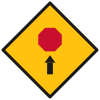
What does this sign warn you about?
Question 37 of 40Right-of-way
You reach an intersection with no lights, signs or police officer. Who must you yield to?
Question 38 of 40Licensing and insurance
In Newfoundland and Labrador, a learner does NOT take an approved driver education program. How long must they stay at Level I before the road test?
Question 39 of 40Signs, signals and road markings
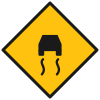
What does this sign warn you about?
Question 40 of 40Safe driving and hazards
Which of these is a warning sign that a driver is fatigued?
1 of 40
Answer each question to see the explanation. Keyboard: A–D or 1–4 to answer, N next, P previous.
Answers and explanations (text version)
The correct answer to each question above, why it is right, and where it comes from. Try the test first.
Question 1: A. Back in, then drive out
For a 90-degree space, the handbook says "you should back into the space and then drive out", so back in, then drive out.
Handbook: NL Driver's Handbook, Rules of the Road — Angle parking (p. 111)
Question 2: C. About one and a half times your car's length
Make sure the space between the two parked vehicles is about one and a half times the length of your own vehicle.
Handbook: NL Driver's Handbook, Rules of the Road — Parallel parking (p. 110)
Question 3: C. Move to the left lane if it is safe
Drivers on the highway should move to the left lane when safe, leaving the right lane open for merging traffic.
Handbook: NL Driver's Handbook, Rules of the Road — Entering and driving on a divided highway (p. 100)
Question 4: A. Low on the hips and snug
The lap belt goes low on the hips, not across the stomach, and it should be tight.
Handbook: NL Driver's Handbook, Road Safety — Seatbelts (p. 50)
Question 5: D. Do not enter this street
This sign warns motorists not to enter the street that it faces, from that direction.
Handbook: NL Driver's Handbook, Traffic Signs and Pavement Markings — Common regulatory signs (p. 67)
Question 6: C. Pull over and take a power nap
If you feel tired, pull over and have a power nap; until you are rested, your risk of a collision is higher.
Handbook: NL Driver's Handbook, Road Safety — Driver fatigue (p. 42)
Question 7: B. In an intersection
Do not change lanes at an intersection, because other drivers cannot tell whether you are changing lanes or turning.
Handbook: NL Driver's Handbook, Rules of the Road — Blind spot (p. 99)
Question 8: B. On a bridge or in a tunnel
Do not park on a bridge or in a tunnel, or where you block a sidewalk, crosswalk, driveway or traffic lane.
Handbook: NL Driver's Handbook, Rules of the Road — Parking (p. 108)
Question 9: C. Come to a full stop
This sign means come to a full stop, and make sure the way is clear before you go on.
Handbook: NL Driver's Handbook, Traffic Signs and Pavement Markings — Traffic signs (p. 65)
Question 10: D. Lock the ignition, take the key and set the brake
Before leaving a parked vehicle, lock the ignition, remove the key and set the brake properly.
Handbook: NL Driver's Handbook, Rules of the Road — Parking (p. 108)
Question 11: D. A sudden turn in the arrow's direction
This sign warns of a sudden turn in the road in the direction of the arrow; slow down and proceed with caution.
Handbook: NL Driver's Handbook, Traffic Signs and Pavement Markings — Warning signs (p. 70)
Question 12: B. The pedestrian still has the right-of-way
A pedestrian already in the intersection when the signal changes must cross quickly but still has the right-of-way.
Handbook: NL Driver's Handbook, Traffic Signs and Pavement Markings — Pedestrian light signals (p. 76)
Question 13: A. Do not make a U-turn
The red circle and stroke over the U-shaped arrow mean do not make a U-turn here.
Handbook: NL Driver's Handbook, Traffic Signs and Pavement Markings — Common regulatory signs (p. 67)
Question 14: C. 16 years old
A Level I learner must be 16 years or older, with a parent or guardian's consent if under 19.
Handbook: NL Driver's Handbook, Licensing and Registration — Graduated Driver Licensing Program (p. 7)
Question 15: C. Toward the edge of the street
Facing uphill with no curb, turn your wheels toward the edge of the street so the car rolls away from traffic.
Handbook: NL Driver's Handbook, Rules of the Road — Parking on a hill (p. 109)
Question 16: D. The space under a bridge or overpass
This sign shows the amount of space under a bridge or overpass, so tall vehicles know if they fit.
Handbook: NL Driver's Handbook, Traffic Signs and Pavement Markings — Warning signs (p. 69)
Question 17: D. It is suspended for seven days
Excessive speed of 51 km/h or more over the limit brings a seven-day licence suspension, plus a reinstatement fee.
Handbook: NL Driver's Handbook, Road Safety — High-risk driving behaviours – suspensions (p. 52)
Question 18: B. The vehicle is impounded and the licence is suspended for seven days
At 80 mg or more, the vehicle is impounded and the licence is suspended for seven days immediately, with a further suspension to follow.
Handbook: NL Driver's Handbook, Road Safety — Ninety-day suspension under the Highway Traffic Act (p. 38)
Question 19: A. No parking in the direction of the arrows
This sign means parking is not permitted in the direction shown by the arrows.
Handbook: NL Driver's Handbook, Traffic Signs and Pavement Markings — Common regulatory signs (p. 67)
Question 20: B. When you can see both of its headlights in your mirror
After passing, signal right, but wait until you can see both headlights of the passed vehicle in your rear-view mirror.
Handbook: NL Driver's Handbook, Rules of the Road — Safe passing (p. 95)
Question 21: C. A broken yellow line
You may pass only when there is a broken yellow centre line on your left-hand side.
Handbook: NL Driver's Handbook, Rules of the Road — Safe passing (p. 95)
Question 22: A. Stop and follow the worker's directions
Obey the directions of flag persons in construction areas, and be prepared to stop for their instructions.
Handbook: NL Driver's Handbook, Traffic Signs and Pavement Markings — Road construction signs (p. 73)
Question 23: C. It is unsafe to pass
A solid line on your left means it is unsafe to pass; a broken line on your left means you may pass when clear.
Handbook: NL Driver's Handbook, Traffic Signs and Pavement Markings — Pavement markings (p. 79)
Question 24: D. The right lane is ending
This warning sign means the right lane is ending, so be ready for traffic to move over.
Handbook: NL Driver's Handbook, Traffic Signs and Pavement Markings — Warning signs (p. 69)
Question 25: C. Toward the centre of the street
Facing uphill with a curb, turn your wheels toward the centre of the street so the curb stops the car if it rolls.
Handbook: NL Driver's Handbook, Rules of the Road — Parking on a hill (p. 109)
Question 26: B. Yield to the other driver
If you are unsure, yield the right-of-way to the other driver; avoiding a collision matters more than insisting on your turn.
Handbook: NL Driver's Handbook, Rules of the Road — Four-way stop (p. 83)
Question 27: A. It is a slow-moving vehicle
This triangle marks a slow-moving vehicle and must be mounted on the rear when it is driven on the highway.
Handbook: NL Driver's Handbook, Traffic Signs and Pavement Markings — Warning signs (p. 71)
Question 28: B. 12 months
To move to a full licence, a driver must spend 12 months at Level II (novice).
Handbook: NL Driver's Handbook, Licensing and Registration — Graduated Driver Licensing Program (p. 8)
Question 29: C. They intend to cross, so give them the right-of-way
A visually impaired person usually extends the cane when about to cross; take it as your signal to give them the right-of-way.
Handbook: NL Driver's Handbook, Traffic Signs and Pavement Markings — Pedestrian light signals (p. 76)
Question 30: A. No closer than 10 metres
Do not park within 10 metres of a stop sign or other traffic control signal.
Handbook: NL Driver's Handbook, Rules of the Road — Parking (p. 108)
Question 31: B. Return to the posted highway speed
The construction ends sign means you may return to the posted highway speed.
Handbook: NL Driver's Handbook, Traffic Signs and Pavement Markings — Road construction signs (p. 73)
Question 32: C. 85 per cent
The handbook says "A mark of 85 per cent is required to pass" the multiple-choice written test.
Handbook: NL Driver's Handbook, Licensing and Registration — Written test (p. 8)
Question 33: C. Continue in the new lane without merging
If an on-ramp becomes a new added lane, entering traffic continues in that lane and does not need to merge.
Handbook: NL Driver's Handbook, Rules of the Road — Added right lane (p. 105)
Question 34: B. At the left and right rear corners
There is still a blind spot at the right and left rear corners, so look over your shoulder before changing lanes.
Handbook: NL Driver's Handbook, Rules of the Road — Blind spot (p. 99)
Question 35: D. Zero
Both the Level I learner and the accompanying driver must have a zero per cent blood alcohol concentration.
Handbook: NL Driver's Handbook, Licensing and Registration — Graduated Driver Licensing Program (p. 7)
Question 36: D. A stop sign ahead, so be ready to stop
This warning sign means there is a stop sign ahead, so be prepared to stop.
Handbook: NL Driver's Handbook, Traffic Signs and Pavement Markings — Warning signs (p. 70)
Question 37: D. Traffic on your right
At an intersection with no traffic lights, stop or yield signs, or officer, yield the right-of-way to traffic on your right.
Handbook: NL Driver's Handbook, Rules of the Road — Right-of-way – who can go first? (p. 81)
Question 38: C. 12 months
Without driver education, a learner spends 12 months at Level I; an approved program cuts this to eight months.
Handbook: NL Driver's Handbook, Licensing and Registration — Road test (p. 9)
Question 39: A. The road is slippery when wet
This warning sign means the road surface is slippery when wet.
Handbook: NL Driver's Handbook, Traffic Signs and Pavement Markings — Warning signs (p. 70)
Question 40: B. Drifting over lanes
Signs of fatigue include drifting over lanes, yawning, sore eyes, delayed reactions and an unsteady speed.
Handbook: NL Driver's Handbook, Road Safety — Driver fatigue (p. 42)
Practice test 1 of 10 for the Class 05 (Passenger) Written Test (Class 5 Level I learner's licence) (the Motor Registration Division): Our practice tests use 40 questions, 34 of 40 (85%) to pass (the Motor Registration Division does not publish a fixed format). Official pass mark: 85%. Our practice tests are untimed.