Question 1 of 40Turning, passing and lanes
Practice test 2 of 10 — Newfoundland and Labrador class 5 test
Practice test 2 questions
Question 2 of 40Rules of the road
You miss your exit on a divided highway. What should you do?
Question 3 of 40Signs, signals and road markings
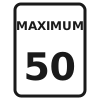
What does the number on this sign tell you?
Question 4 of 40Licensing and insurance
In Newfoundland and Labrador, how soon must you tell Motor Registration that you have moved?
Question 5 of 40Signs, signals and road markings
Two solid yellow lines enclose diagonal yellow lines on the road. What must you do?
Question 6 of 40Sharing the road
You are about to turn right, and a cyclist is travelling on your right. What must you do?
Question 7 of 40Turning, passing and lanes
Where is the late (zipper) merge strategy most useful at a lane closure?
Question 8 of 40Turning, passing and lanes
You turn onto a multi-lane, two-way street and need to change lanes. When may you do so?
Question 9 of 40Signs, signals and road markings
The light turns solid amber as you approach. What should you do?
Question 10 of 40Signs, signals and road markings
A yellow diamond sign shows a truck on a slope. What does the handbook say you may need to do?
Question 11 of 40Signs, signals and road markings
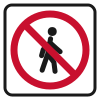
What does this sign mean?
Question 12 of 40Sharing the road
In Newfoundland and Labrador, where the posted limit is over 60 km/h, how much space must you leave when passing a cyclist or pedestrian?
Question 13 of 40Licensing and insurance
In Newfoundland and Labrador, who must be in the vehicle with a Level I learner driver?
Question 14 of 40Signs, signals and road markings

What does this sign warn you about?
Question 15 of 40Sharing the road
In Newfoundland and Labrador, where the speed limit is 60 km/h or less, how much space must you leave when passing a cyclist?
Question 16 of 40Safe driving and hazards
You are caught in very dense fog with zero visibility. What should you do?
Question 17 of 40Signs, signals and road markings
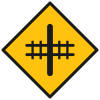
What does this sign warn you about?
Question 18 of 40Speed and following distance
About how long does an alert driver take to step on the brake after seeing danger?
Question 19 of 40Signs, signals and road markings
A sign reads YIELD CENTRE LANE TO OPPOSING TRAFFIC. Who has the first right to use the passing lane?
Question 20 of 40Parking and stopping
You park facing downhill. Which way should you turn your front wheels?
Question 21 of 40Safe driving and hazards
A tire goes flat while you are driving. What should you do first?
Question 22 of 40Turning, passing and lanes
Another vehicle is trying to pass you. What should you do?
Question 23 of 40Sharing the road
Children are riding bicycles near the road. What does the handbook advise?
Question 24 of 40Signs, signals and road markings
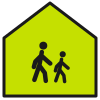
A tab is sometimes added to a sign like this one. What can the tab show?
Question 25 of 40Signs, signals and road markings
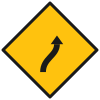
What does this sign warn you about?
Question 26 of 40Alcohol, drugs and penalties
A driver had a seven-day suspension and then a 90-day suspension related to alcohol. Which course must they finish to apply to get the licence back after the 90 days?
Question 27 of 40Rules of the road
At a cloverleaf interchange, how are all turns made?
Question 28 of 40Turning, passing and lanes
You turn left from a two-way street onto another two-way street. Which lane do you end up in?
Question 29 of 40Signs, signals and road markings
An intersection has traffic lights but no pedestrian signals. When may a pedestrian start to cross?
Question 30 of 40Licensing and insurance
In Newfoundland and Labrador, which vehicle may a Class 5 driver NOT drive?
Question 31 of 40Alcohol, drugs and penalties
In Newfoundland and Labrador, what is the suspension for a fourth or later Criminal Code impaired driving conviction?
Question 32 of 40Safe driving and hazards
Why is a vehicle's airbag no substitute for wearing a seatbelt?
Question 33 of 40Sharing the road
What does the term 'dooring' mean?
Question 34 of 40Signs, signals and road markings
What does a diamond-shaped sign warn you about?
Question 35 of 40Safe driving and hazards
A vehicle suddenly comes toward you in your lane. Where does the handbook say you should head?
Question 36 of 40Sharing the road
You have stopped for a school bus with flashing lights. When may you move again?
Question 37 of 40Sharing the road
In Newfoundland and Labrador, how do traffic fines change inside construction zones?
Question 38 of 40Alcohol, drugs and penalties
Two people drink the same amount of alcohol. Who will usually have the higher BAC?
Question 39 of 40Licensing and insurance
In Newfoundland and Labrador, a learner completes an approved driver education program. When can they take the road test?
Question 40 of 40Alcohol, drugs and penalties
An ignition interlock device has been installed in a vehicle. Who must use it?
1 of 40
Answer each question to see the explanation. Keyboard: A–D or 1–4 to answer, N next, P previous.
Answers and explanations (text version)
The correct answer to each question above, why it is right, and where it comes from. Try the test first.
Question 1: C. No faster than the posted speed limit
Speed up to complete the pass, but be careful not to go over the posted speed limit.
Handbook: NL Driver's Handbook, Rules of the Road — Safe passing (p. 95)
Question 2: B. Keep going and use the next exit
If you miss an exit, never stop or back up on a divided highway; keep going and use the next exit.
Handbook: NL Driver's Handbook, Rules of the Road — Leaving a divided highway (p. 101)
Question 3: D. The legal speed limit
This regulatory sign shows the legal speed limit for that stretch of road.
Handbook: NL Driver's Handbook, Traffic Signs and Pavement Markings — Common regulatory signs (p. 67)
Question 4: B. Within 10 days
A change of address must be reported to Motor Registration within 10 days, and it can be done online at MyGovNL.
Handbook: NL Driver's Handbook, Licensing and Registration — Updating your information (p. 14)
Question 5: A. Do not drive over them or use them to pass
These painted islands guide traffic away from fixed objects; do not drive over them or use them to pass.
Handbook: NL Driver's Handbook, Traffic Signs and Pavement Markings — Pavement markings (p. 80)
Question 6: D. Yield to the cyclist
When turning right, yield to any cyclist travelling on your right, just as you would yield to another vehicle.
Handbook: NL Driver's Handbook, Rules of the Road — Vulnerable road users (p. 122)
Question 7: A. Where traffic is heavy and moving slowly
The late merge works best with high traffic volumes and low speeds; drivers use both lanes and merge in turn at the merge point.
Handbook: NL Driver's Handbook, Rules of the Road — Late merge strategy (p. 104)
Question 8: D. Only after the turn is complete and you control your lane
Required lane changes should only be made after the left or right turn is fully completed and you have control of your lane.
Handbook: NL Driver's Handbook, Rules of the Road — Left and right turns onto multi laned, two-way street (p. 87)
Question 9: C. Stop if you can do so safely
A solid amber light means red is about to appear: stop if you can safely; otherwise go through with caution.
Handbook: NL Driver's Handbook, Traffic Signs and Pavement Markings — Traffic light signals (p. 75)
Question 10: B. Shift to a lower gear and let the engine help brake
This steep hill sign means you may need to shift to a lower gear and use the motor to help with braking.
Handbook: NL Driver's Handbook, Traffic Signs and Pavement Markings — Warning signs (p. 69)
Question 11: D. People on foot are not permitted on this highway
This sign means pedestrians are not permitted on the highway.
Handbook: NL Driver's Handbook, Traffic Signs and Pavement Markings — Common regulatory signs (p. 67)
Question 12: A. One and a half metres
Where the limit is greater than 60 km/h, the space required rises from one metre to one and a half metres.
Handbook: NL Driver's Handbook, Rules of the Road — One-metre rule (p. 121)
Question 13: B. A driver with four years as a full Class 5 driver
A Level I learner must be accompanied by a licensed driver with at least four years' experience as a full Class 5 driver.
Handbook: NL Driver's Handbook, Licensing and Registration — Graduated Driver Licensing Program (p. 7)
Question 14: A. Two-way traffic ahead, sharing the highway
This sign means two-way traffic ahead: drivers going in opposite directions must share the highway.
Handbook: NL Driver's Handbook, Traffic Signs and Pavement Markings — Warning signs (p. 70)
Question 15: D. One metre
The one-metre rule: leave one metre of open space between your vehicle and a cyclist or pedestrian where the limit is 60 km/h or less.
Handbook: NL Driver's Handbook, Rules of the Road — One-metre rule (p. 121)
Question 16: A. Pull well off the road, stop and turn on your hazard lights
In zero visibility, move as far off the road as possible, stop, turn on hazard lights and the dome light, and wait.
Handbook: NL Driver's Handbook, Rules of the Road — Fog (p. 131)
Question 17: B. A railway crossing ahead
This warning sign means there is a railway crossing ahead, so be ready to stop.
Handbook: NL Driver's Handbook, Traffic Signs and Pavement Markings — Warning signs (p. 70)
Question 18: D. About three quarters of a second
The average alert driver needs about three quarters of a second to react and press the brake pedal.
Handbook: NL Driver's Handbook, Rules of the Road — Reaction time and distance (p. 116)
Question 19: A. Vehicles coming toward you
Vehicles coming toward you have the right to use that passing lane first, so you must yield to them.
Handbook: NL Driver's Handbook, Traffic Signs and Pavement Markings — Common regulatory signs (p. 68)
Question 20: A. Toward the edge of the street
When parking facing downhill, always turn your wheels toward the edge of the street so the car rolls away from traffic.
Handbook: NL Driver's Handbook, Rules of the Road — Parking on a hill (p. 109)
Question 21: C. Ease off the gas and hold the wheel firmly
Resist braking at once: take your foot off the gas, grip the wheel firmly, and brake gently only once you have control.
Handbook: NL Driver's Handbook, Road Safety — Tire failure (p. 61)
Question 22: A. Do not speed up
Never speed up when another vehicle is trying to pass you; you may need to slow down to let it back in.
Handbook: NL Driver's Handbook, Rules of the Road — Safe passing (p. 96)
Question 23: A. Expect the unexpected and slow down
Children on bicycles can be unpredictable, so expect the unexpected and slow down.
Handbook: NL Driver's Handbook, Rules of the Road — Vulnerable road users (p. 122)
Question 24: D. The maximum speed in the school zone
Some school zone signs also show the maximum speed allowed in the school zone.
Handbook: NL Driver's Handbook, Traffic Signs and Pavement Markings — Traffic signs (p. 65)
Question 25: C. The road bends or curves ahead
This warning sign shows a slight bend or curve in the road ahead.
Handbook: NL Driver's Handbook, Traffic Signs and Pavement Markings — Warning signs (p. 71)
Question 26: D. The Think First (SHIP) alcohol and drug program
The four-hour Think First (SHIP) alcohol and drug program is required to apply for reinstatement after the 90-day suspension.
Handbook: NL Driver's Handbook, Rules of the Road — Courses to improve driving skills (p. 134)
Question 27: D. As right turns
At a cloverleaf, vehicles do not cross other traffic to turn, because all turns are right turns.
Handbook: NL Driver's Handbook, Rules of the Road — Cloverleaf (p. 101)
Question 28: A. The lane just right of the centre line
Start in the lane just right of the centre line and finish in the lane immediately to the right of the centre line.
Handbook: NL Driver's Handbook, Rules of the Road — Left turns (p. 86)
Question 29: A. When they face a solid green light
Where no pedestrian signals are installed, pedestrians may cross when they face a solid green traffic light.
Handbook: NL Driver's Handbook, Traffic Signs and Pavement Markings — Pedestrian light signals (p. 76)
Question 30: A. A taxi while it carries passengers
Class 5 covers two-axle vehicles, motor homes and farm tractors, but not a taxi while carrying passengers, which needs Class 4.
Handbook: NL Driver's Handbook, Licensing and Registration — Classes of driver's licences (pp. 19-20)
Question 31: D. A lifetime suspension
Suspensions grow with each conviction (12, 36 and 60 months), and a fourth or later offence brings a lifetime suspension.
Handbook: NL Driver's Handbook, Road Safety — Ninety-day suspension under the Highway Traffic Act (p. 38)
Question 32: A. Airbags are meant to work together with seatbelts
Airbags and seatbelts are meant to be used together; wearing a seatbelt helps the airbag do its job.
Handbook: NL Driver's Handbook, Road Safety — Seatbelt safety (p. 30)
Question 33: C. Opening a car door into the path of a road user
Dooring is unsafely opening a vehicle door into the path of a cyclist or other oncoming road user.
Handbook: NL Driver's Handbook, Rules of the Road — Dooring (p. 122)
Question 34: A. A hazard ahead
Diamond-shaped signs warn of a hazard ahead, such as a curve, a bump or a slippery road.
Handbook: NL Driver's Handbook, Traffic Signs and Pavement Markings — Traffic signs (p. 64)
Question 35: A. Toward the right shoulder, sounding your horn
Brake hard and head for the right shoulder while blowing your horn; never swerve left into oncoming traffic.
Handbook: NL Driver's Handbook, Road Safety — Head-on collisions (p. 58)
Question 36: A. When the bus moves, the driver signals, or the lights go off
Stay stopped until the bus starts moving, the driver signals you to go, or the flashing lights and stop sign are turned off.
Handbook: NL Driver's Handbook, Rules of the Road — Meeting a school bus (p. 123)
Question 37: A. They are doubled
Fines are doubled in construction zones, where workers are close to traffic with little protection.
Handbook: NL Driver's Handbook, Rules of the Road — Construction zones (p. 123)
Question 38: A. The smaller person
A smaller person who drinks the same amount as a larger person will have a higher BAC.
Handbook: NL Driver's Handbook, Road Safety — What is Blood Alcohol Concentration (BAC)? (p. 35)
Question 39: D. After 8 months as a learner
Completing an approved driver education program reduces the wait for the Class 5II road test from 12 months to 8 months.
Handbook: NL Driver's Handbook, Licensing and Registration — Graduated Driver Licensing Program (p. 6)
Question 40: B. Anyone who drives that vehicle
Once an interlock device is installed, anyone who drives that vehicle must use the device.
Handbook: NL Driver's Handbook, Road Safety — Mandatory ignition interlock (p. 41)
Practice test 2 of 10 for the Class 05 (Passenger) Written Test (Class 5 Level I learner's licence) (the Motor Registration Division): Our practice tests use 40 questions, 34 of 40 (85%) to pass (the Motor Registration Division does not publish a fixed format). Official pass mark: 85%. Our practice tests are untimed.