Question 1 of 40Rules of the road · Safe driving and hazards
Practice test 2 of 10 — Nova Scotia class 7 test
Practice test 2 questions
Question 2 of 40Rules of the road · Right-of-way
In Nova Scotia, which of these stopped vehicles must you also slow down and move over for?
Question 3 of 40Rules of the road
In Nova Scotia, you are driving so slowly that traffic is building up behind you. What must you do?
Question 4 of 40Rules of the road · Safe driving and hazards
It starts to rain after a long dry spell. When is the road most slippery?
Question 5 of 40Rules of the road · Licensing and insurance
In Nova Scotia, who must ride with you while you drive on a learner's licence?
Question 6 of 40Rules of the road · Safe driving and hazards
In the rain, what following distance should you keep behind the vehicle ahead?
Question 7 of 40Rules of the road · Right-of-way
You are leaving a parking lot onto a street. Who must you yield to?
Question 8 of 40Rules of the road · Sharing the road
You plan to pass a large commercial truck. What should you allow?
Question 9 of 40Rules of the road · Speed and following distance
The posted limit is 80 km/h, but the road is wet and foggy. How fast should you drive?
Question 10 of 40Rules of the road · Licensing and insurance
You are 17 and want a learner's licence in Nova Scotia. What extra thing do you need?
Question 11 of 40Rules of the road
You are joining a controlled-access (100-series) highway from an entrance ramp. What must you do?
Question 12 of 40Rules of the road · Alcohol, drugs and penalties
Police suspect you are impaired and the roadside screening device reads "fail". What happens next?
Question 13 of 40Rules of the road · Turning, passing and lanes
In Nova Scotia, what must you do just before you overtake and pass another vehicle?
Question 14 of 40Rules of the road · Safe driving and hazards
You drive into a tunnel on a bright, sunny day. What should you do?
Question 15 of 40Rules of the road
What is a safety scan?
Question 16 of 40Rules of the road · Safe driving and hazards
On wet roads, at about what speed can a standard car's tires ride totally on top of the water?
Question 17 of 40Rules of the road · Alcohol, drugs and penalties
What is the only thing that removes alcohol from your body?
Question 18 of 40Rules of the road · Safe driving and hazards
During a storm, several snow plows are staggered across the highway, clearing all lanes. What should you do?
Question 19 of 40Rules of the road · Licensing and insurance
What is the minimum age to get a Class 7 learner's licence in Nova Scotia?
Question 20 of 40Rules of the road · Safe driving and hazards
In winter, which parts of the road usually freeze before the rest?
Question 21 of 40Road signs · Signs, signals and road markings
The centre lane of a multi-lane highway is a two-way-left-turn lane. What must you never use it for?
Question 22 of 40Road signs · Signs, signals and road markings
A flashing light unit shows its lamps in a straight bar with no arrowheads. What does this mean?
Question 23 of 40Road signs · Signs, signals and road markings
On a two-lane road, the centre markings are a broken yellow line on your side and a solid yellow line on the other side. What does this mean for you?
Question 24 of 40Road signs · Signs, signals and road markings
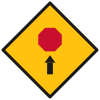
You pass this sign on a rural road. What does it tell you?
Question 25 of 40Road signs · Signs, signals and road markings
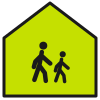
In Nova Scotia, the posted limit just before this school zone is 80 km/h. Children are present. What is the most you may drive?
Question 26 of 40Road signs · Signs, signals and road markings
In Nova Scotia, a driver with a parking permit uses a space with the accessible parking sign. Where must the permit be?
Question 27 of 40Road signs · Signs, signals and road markings
In a Nova Scotia work zone, you see a white square sign with two cars inside a red circle with a slash. What is true about it?
Question 28 of 40Road signs · Signs, signals and road markings
In Nova Scotia, a warning sign shows that a steep decline is ahead. What may you need to do?
Question 29 of 40Road signs · Signs, signals and road markings
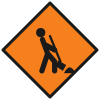
In a Nova Scotia work zone, what does this sign tell you?
Question 30 of 40Road signs · Signs, signals and road markings
In Nova Scotia, what do yellow lines on the road tell you about the lanes they separate?
Question 31 of 40Road signs · Signs, signals and road markings
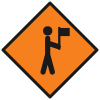
You pass this sign as you near road work in Nova Scotia. What is going on ahead?
Question 32 of 40Road signs · Signs, signals and road markings
A traffic light ahead of you turns yellow (amber). What does it mean?
Question 33 of 40Road signs · Signs, signals and road markings
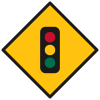
As you drive, you see this sign. What should you expect ahead?
Question 34 of 40Road signs · Signs, signals and road markings
In Nova Scotia, you reach the solid line at the end of a climbing lane. Who has the right of way?
Question 35 of 40Road signs · Signs, signals and road markings
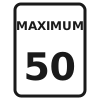
In Nova Scotia, what does the speed on this sign tell you?
Question 36 of 40Road signs · Signs, signals and road markings
A flashing light unit in a work zone shows a single arrowhead pointing right. How may you pass it?
Question 37 of 40Road signs · Signs, signals and road markings
In Nova Scotia, you see a white sign showing two cars inside a red circle with a slash. What does it mean?
Question 38 of 40Road signs · Signs, signals and road markings
You are driving over railway tracks when the warning lights start to flash. What should you do?
Question 39 of 40Road signs · Signs, signals and road markings
In Nova Scotia, when may you act differently from what a regulatory sign tells you?
Question 40 of 40Road signs · Signs, signals and road markings
You face a red light at a corner with a crosswalk but no marked stop line. Where must you stop?
1 of 40
Answer each question to see the explanation. Keyboard: A–D or 1–4 to answer, N next, P previous.
Answers and explanations (text version)
The correct answer to each question above, why it is right, and where it comes from. Try the test first.
Question 1: C. Within 24 hours
A collision with injury, death or property damage of $2,000 or more must be reported within 24 hours to police, the RCMP or the Registry.
Handbook: NS Driver's Handbook, Ch. 5 Adverse Driving Conditions — Collisions: Procedures and responsibilities (p. 149)
Question 2: D. A tow truck helping a vehicle at a collision
The slow-down and move-over rule covers emergency vehicles and also tow trucks stopped at the scene of a fire or collision or assisting a vehicle.
Handbook: NS Driver's Handbook, Introduction — Changes since publication: Emergency vehicles (p. VII)
Question 3: A. Stop where it is safe and let the traffic pass
A slow driver must not block the normal flow of traffic. Stop where it is safe so the blocked traffic can pass, then carry on.
Handbook: NS Driver's Handbook, Ch. 2 Rules of the Road — Driving too slowly (p. 48)
Question 4: C. In the first 10 to 15 minutes of rain
Roads are most dangerous in the first 10 to 15 minutes of rain. Oil and dirt on the road mix with water to make a slick surface.
Handbook: NS Driver's Handbook, Ch. 5 Adverse Driving Conditions — Rain (p. 139)
Question 5: B. An experienced driver in the front seat
A learner must drive with an experienced driver in the front seat and no other passengers in the vehicle.
Handbook: NS Driver's Handbook, Ch. 1 Your Driver's Licence — Restrictions (p. 10)
Question 6: B. Four seconds or more
When it rains, drive more slowly and increase your normal following distance to four or more seconds.
Handbook: NS Driver's Handbook, Ch. 5 Adverse Driving Conditions — Rain (p. 139)
Question 7: A. All vehicles and pedestrians
When leaving a private driveway or parking lot, stop and yield the right of way to all other vehicles and pedestrians.
Handbook: NS Driver's Handbook, Ch. 2 Rules of the Road — Right of way (p. 45)
Question 8: B. Extra room when you pass
Use extra caution near large commercial vehicles and allow extra room when passing them.
Handbook: NS Driver's Handbook, Ch. 2 Rules of the Road — Drivers and large commercial vehicles (p. 67)
Question 9: A. At a speed that is safe for the conditions
Whatever the posted limit, your speed must be reasonable for the traffic, the road surface and all conditions at the time.
Handbook: NS Driver's Handbook, Ch. 2 Rules of the Road — Choosing a safe speed (p. 50)
Question 10: C. Written consent from a parent or guardian
If you are under 18, you need written consent, usually from a parent or guardian, to get a learner's licence.
Handbook: NS Driver's Handbook, Ch. 1 Your Driver's Licence — If you are 16 or 17 years old (p. 6)
Question 11: D. Yield to through traffic until there is a safe gap
When entering a controlled-access highway, you must yield to through traffic until you find a safe gap.
Handbook: NS Driver's Handbook, Ch. 2 Rules of the Road — Using controlled-access highways (p. 66)
Question 12: D. You are arrested and taken for a breathalyzer test
A "fail" reading means arrest. You go with the officer to a police station, where you are asked to take a breathalyzer test.
Handbook: NS Driver's Handbook, Ch. 6 Driving and Impairment — Getting caught (p. 154)
Question 13: C. Signal and sound your horn
You must signal your intention to pass and sound your horn before overtaking and passing another vehicle.
Handbook: NS Driver's Handbook, Ch. 2 Rules of the Road — Overtaking and passing (p. 57)
Question 14: B. Slow down, remove sunglasses, turn on headlights
When entering a tunnel or underground garage on a bright day, slow down, take off your sunglasses and turn on your headlights.
Handbook: NS Driver's Handbook, Ch. 5 Adverse Driving Conditions — Sunlight glare (p. 137)
Question 15: A. Moving your head and eyes often to check all around
A safety scan means often moving your head and eyes to check all around, using the mirrors and shoulder checks for blind spots.
Handbook: NS Driver's Handbook, Ch. 2 Rules of the Road — Using the safety scan (p. 48)
Question 16: B. About 85 km/h
Partial hydroplaning starts at about 55 km/h. At about 85 km/h the tires may ride totally on the water, with no grip to brake or steer.
Handbook: NS Driver's Handbook, Ch. 5 Adverse Driving Conditions — Rain (p. 139)
Question 17: A. Time, as the liver slowly breaks it down
Only time removes alcohol: the liver breaks it down slowly. Coffee, cold showers and exercise do not help.
Handbook: NS Driver's Handbook, Ch. 6 Driving and Impairment — Drinking and driving (p. 154)
Question 18: C. Stay behind them; never pass between them
Do not try to pass between staggered snow plows. There is not enough room, and the ridge of snow can throw your vehicle out of control.
Handbook: NS Driver's Handbook, Ch. 5 Adverse Driving Conditions — Encountering snow plows (p. 148)
Question 19: B. 16 years old
You must be at least 16 to take the Class 7 knowledge test and get a learner's licence in Nova Scotia.
Handbook: NS Driver's Handbook, Ch. 1 Your Driver's Licence — Who can apply? (p. 6)
Question 20: C. Bridges, overpasses and shaded sections
Moisture on bridges, overpasses and shaded sections freezes before the rest of the road, and these spots thaw later too.
Handbook: NS Driver's Handbook, Ch. 5 Adverse Driving Conditions — Snow, frost, and ice (p. 140)
Question 21: C. Passing another vehicle
A two-way-left-turn lane is shared by traffic from both directions for left turns. Never use it for passing or overtaking another vehicle.
Handbook: NS Driver's Handbook, Ch. 3 Signs, Pavement Markings, and Work Zones — Two-way-left-turn lanes (p. 87)
Question 22: B. There is a hazard; it does not mean passing is safe
Lamps in a straight bar show caution mode. It warns of a hazard but does not mean it is safe to pass, so judge the conditions yourself.
Handbook: NS Driver's Handbook, Ch. 3 Signs, Pavement Markings, and Work Zones — Work zone signs (p. 103)
Question 23: B. You may pass with care when it is safe
On a two-lane road, you may pass with care when the broken yellow line is on your side of the centre markings.
Handbook: NS Driver's Handbook, Ch. 3 Signs, Pavement Markings, and Work Zones — Rules about solid and broken lines (p. 84)
Question 24: D. A stop sign is ahead, so be ready to stop
This warning sign means a stop sign is ahead. Slow down and be ready to come to a stop.
Handbook: NS Driver's Handbook, Ch. 3 Signs, Pavement Markings, and Work Zones — Warning Signs (p. 83)
Question 25: C. 50 km/h
The handbook says it is an offence to exceed "50km/h where the approaching speed limit is higher than 50km/h" when children are present; the 30 km/h limit is for 50 km/h approaches.
Handbook: NS Driver's Handbook, Ch. 3 Signs, Pavement Markings, and Work Zones — School zone (p. 80)
Question 26: A. Hung from the rearview mirror
Accessible parking spaces are for people with a mobility disability who have a special plate or permit. The permit must hang from the rearview mirror.
Handbook: NS Driver's Handbook, Ch. 3 Signs, Pavement Markings, and Work Zones — Other regulatory signs (p. 83)
Question 27: B. It is a rule; ignoring it can get you a ticket
The Do Not Pass sign is a regulatory sign that keeps traffic in order before a merge. Disobeying it is an offence that can get you a ticket.
Handbook: NS Driver's Handbook, Ch. 3 Signs, Pavement Markings, and Work Zones — Specific Signs (p. 100)
Question 28: D. Use a lower gear going down the hill
A steep decline sign warns of a steep downhill grade. You may need to use a lower gear.
Handbook: NS Driver's Handbook, Ch. 3 Signs, Pavement Markings, and Work Zones — Warning signs (p. 91)
Question 29: B. Workers are active at the site
This human activity sign means workers are active at the site. Driving mistakes here could cause fatal injuries to road workers.
Handbook: NS Driver's Handbook, Ch. 3 Signs, Pavement Markings, and Work Zones — Human Activity Signs (p. 101)
Question 30: C. Traffic in those lanes moves in opposite directions
Yellow lines separate lanes of traffic moving in opposite directions. White lines separate lanes moving the same way.
Handbook: NS Driver's Handbook, Ch. 3 Signs, Pavement Markings, and Work Zones — Rules about solid and broken lines (p. 84)
Question 31: D. Traffic control persons are directing traffic with paddles
This human activity sign means traffic control persons are directing traffic past the work site with Stop/Slow paddles.
Handbook: NS Driver's Handbook, Ch. 3 Signs, Pavement Markings, and Work Zones — Human Activity Signs (p. 101)
Question 32: A. Stop before the intersection if you can stop safely
A yellow or amber light tells you to stop before you enter the intersection, as long as you can stop safely.
Handbook: NS Driver's Handbook, Ch. 2 Rules of the Road — Traffic signal lights (p. 39)
Question 33: C. Traffic signal lights coming up soon
This warning sign tells you there are traffic signal lights ahead, so be ready to stop.
Handbook: NS Driver's Handbook, Ch. 3 Signs, Pavement Markings, and Work Zones — Warning Signs (p. 83)
Question 34: D. The vehicle in the right lane
The handbook says: "Do not attempt to pass when you reach the solid line at the end of the climbing lane. The vehicle on the right has the right of way."
Handbook: NS Driver's Handbook, Ch. 3 Signs, Pavement Markings, and Work Zones — Two-laned highway with climbing lane (p. 86)
Question 35: D. The fastest speed allowed when conditions are ideal
Maximum speed signs show the fastest speed allowed under ideal conditions. Slow down when conditions are poor or you cannot see well.
Handbook: NS Driver's Handbook, Ch. 3 Signs, Pavement Markings, and Work Zones — Regulatory signs (p. 90)
Question 36: A. Only on the right side, as the arrow shows
A flashing light unit with a single arrowhead means the lane is closed or blocked. You may pass, but only on the side the arrow shows.
Handbook: NS Driver's Handbook, Ch. 3 Signs, Pavement Markings, and Work Zones — Work zone signs (p. 103)
Question 37: B. Do not pass other vehicles here
Two cars in a red circle with a line through it means do not pass. In a green circle, the same cars mean passing is permitted.
Handbook: NS Driver's Handbook, Ch. 3 Signs, Pavement Markings, and Work Zones — Other regulatory signs (p. 83)
Question 38: A. Keep moving and finish crossing the tracks
If the lights start flashing while you are on the tracks, keep moving. The signals give you time to finish crossing, and backing up could stall your vehicle.
Handbook: NS Driver's Handbook, Ch. 3 Signs, Pavement Markings, and Work Zones — Railway crossings (p. 82)
Question 39: D. When a peace officer directs you to
You must obey regulatory signs unless a peace officer directs you to do something else.
Handbook: NS Driver's Handbook, Ch. 3 Signs, Pavement Markings, and Work Zones — Regulatory Signs (p. 80)
Question 40: C. At the near side of the crosswalk
At a red light you must stop at the marked place or, if there is none, at the nearest side of the crosswalk.
Handbook: NS Driver's Handbook, Ch. 2 Rules of the Road — Traffic signal lights (p. 39)
Practice test 2 of 10 for the Knowledge Test (Learner's Licence, class 7) (Nova Scotia RMV): 40 questions · 16 of 20 in each section to pass · no time limit.