Question 1 of 40Rules of the road · Turning, passing and lanes
Practice test 1 of 10 — Prince Edward Island class 7 test
Practice test 1 questions
Question 2 of 40Rules of the road · Licensing and insurance
In Prince Edward Island, what class of licence is a farm tractor licence?
Question 3 of 40Rules of the road · Speed and following distance
In Prince Edward Island, how should you check your following time?
Question 4 of 40Rules of the road · Alcohol, drugs and penalties
In Prince Edward Island, who are "habitual offenders" in the impaired driving rules?
Question 5 of 40Rules of the road · Safe driving and hazards
In Prince Edward Island, where does ice often form first in winter?
Question 6 of 40Rules of the road
In Prince Edward Island, when must you sound your horn, according to the handbook's passing rules?
Question 7 of 40Rules of the road · Alcohol, drugs and penalties
In Prince Edward Island, what does the ignition interlock program allow?
Question 8 of 40Rules of the road · Speed and following distance
In Prince Edward Island, how far does a car at 50 km/h travel during an average reaction time?
Question 9 of 40Rules of the road · Sharing the road
In Prince Edward Island, how much space from the curb is a cyclist entitled to ride in?
Question 10 of 40Rules of the road · Safe driving and hazards
In Prince Edward Island, when are roads especially slippery in rain?
Question 11 of 40Rules of the road · Sharing the road
In Prince Edward Island, a school bus ahead has its amber lights flashing. What must you do?
Question 12 of 40Rules of the road · Right-of-way
In Prince Edward Island, you face a flashing amber light at a crosswalk. Who must you yield to?
Question 13 of 40Rules of the road · Speed and following distance
In a PEI town at night, does the speed limit change?
Question 14 of 40Rules of the road
In Prince Edward Island, your load sticks out more than 1.2 metres past the rear in daylight. What must you show?
Question 15 of 40Rules of the road · Parking and stopping
In Prince Edward Island, how close may you park to a stop sign or traffic signal?
Question 16 of 40Rules of the road · Turning, passing and lanes
In Prince Edward Island, what should you avoid doing with the pedals or gears while actually turning?
Question 17 of 40Rules of the road
In Prince Edward Island, what must you do before backing up, according to the handbook's steps?
Question 18 of 40Rules of the road · Speed and following distance
In Prince Edward Island, why should you leave more time when following a motorcycle?
Question 19 of 40Rules of the road · Sharing the road
In Prince Edward Island, who must wear an approved helmet when riding a bicycle?
Question 20 of 40Rules of the road · Turning, passing and lanes
In Prince Edward Island, which of these does NOT need a signal, per the handbook's list?
Question 21 of 40Road signs · Signs, signals and road markings
In Prince Edward Island, what does a yellow sign with a black and yellow checkerboard pattern and arrows warn of?
Question 22 of 40Road signs · Signs, signals and road markings
In Prince Edward Island, when may the yellow line be on your right instead of your left?
Question 23 of 40Road signs · Signs, signals and road markings
In Prince Edward Island, you face a red light with no stop line and no crosswalk. Where must you stop?
Question 24 of 40Road signs · Signs, signals and road markings
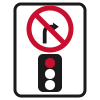
In Prince Edward Island, what does this sign tell you when the light is red?
Question 25 of 40Road signs · Signs, signals and road markings
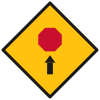
In Prince Edward Island, what is ahead when you pass this warning sign?
Question 26 of 40Road signs · Signs, signals and road markings
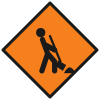
In Prince Edward Island, what does this orange sign tell you?
Question 27 of 40Road signs · Signs, signals and road markings
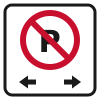
In Prince Edward Island, what does this sign with arrows under it mean?
Question 28 of 40Road signs · Signs, signals and road markings
In Prince Edward Island, what does a green traffic light give you?
Question 29 of 40Road signs · Signs, signals and road markings
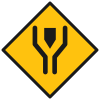
In Prince Edward Island, what does this warning sign tell you?
Question 30 of 40Road signs · Signs, signals and road markings
In Prince Edward Island, what does the colour red on a sign show?
Question 31 of 40Road signs · Signs, signals and road markings

In Prince Edward Island, what are these signs used for?
Question 32 of 40Road signs · Signs, signals and road markings

In Prince Edward Island, what should you do as you come to this sign?
Question 33 of 40Road signs · Signs, signals and road markings
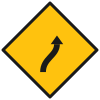
In Prince Edward Island, a 30 km/h tab is posted with this curve sign. What does the tab show?
Question 34 of 40Road signs · Signs, signals and road markings
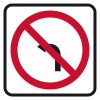
In Prince Edward Island, what may you not do where this sign is posted?
Question 35 of 40Road signs · Signs, signals and road markings
In Prince Edward Island, what does an orange "Low shoulder ahead" sign warn of?
Question 36 of 40Road signs · Signs, signals and road markings
In Prince Edward Island, where may a white-on-red WRONG WAY sign be placed?
Question 37 of 40Road signs · Signs, signals and road markings
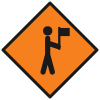
In Prince Edward Island, what should you be ready to do after this orange sign?
Question 38 of 40Road signs · Signs, signals and road markings
In Prince Edward Island, what does an orange "Uneven lanes" sign warn of?
Question 39 of 40Road signs · Signs, signals and road markings
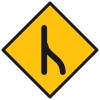
In Prince Edward Island, what should you expect where this sign is posted?
Question 40 of 40Road signs · Signs, signals and road markings
In Prince Edward Island, what should you do at a yellow diamond playground warning sign?
1 of 40
Answer each question to see the explanation. Keyboard: A–D or 1–4 to answer, N next, P previous.
Answers and explanations (text version)
The correct answer to each question above, why it is right, and where it comes from. Try the test first.
Question 1: C. The left-hand lane
The handbook says vehicles turning left or making a U-turn "must be in the left-hand lane."
Handbook: PEI Driver's Handbook, Ch. 4 Speed Limits, Following Distances and Driving Skills — Roundabouts – How They Work (p. 110)
Question 2: A. Class 9
The handbook says: "CLASS 9 VEHICLES are farm tractors," and there is no road test for this class.
Handbook: PEI Driver's Handbook, Ch. 1 Your Driver's Licence — Class 9 (p. 22)
Question 3: D. Count from when the car ahead passes a marker
The handbook says that when the driver ahead "passes a fixed marker, begin counting," and if you reach the mark first you are too close.
Handbook: PEI Driver's Handbook, Ch. 4 Speed Limits, Following Distances and Driving Skills — Following Distances – The Time-Interval Formula (p. 85)
Question 4: A. Drivers with two or more impaired convictions
The handbook says: "Habitual offenders are drivers with two or more convictions of impaired driving," who need an alcohol/drug assessment before reinstatement.
Handbook: PEI Driver's Handbook, Ch. 4 Speed Limits, Following Distances and Driving Skills — Habitual Offenders (p. 128)
Question 5: C. On bridges
The handbook says: "During the winter months, bridges will have ice on the road surface before ice forms on the highway."
Handbook: PEI Driver's Handbook, Ch. 4 Speed Limits, Following Distances and Driving Skills — Bridge Freezes Before Road (p. 116)
Question 6: B. When you pass another vehicle
The handbook says: "Remember, when passing, the law requires that you signal your intention and sound your horn."
Handbook: PEI Driver's Handbook, Ch. 4 Speed Limits, Following Distances and Driving Skills — Safe Passing Practices (p. 96)
Question 7: D. Early return to driving, in a car with the device
The handbook says the program "will allow early reinstatement of a driver's licence after a drinking and driving conviction," with a licence limited to interlock vehicles.
Handbook: PEI Driver's Handbook, Ch. 7 Highway Safety Programs — Ignition Interlock Program (p. 175)
Question 8: A. About 10 metres
The handbook says in three-quarters of a second "a vehicle traveling at 50 km/h (30 mph) will go 10 metres (33 feet)" before braking starts.
Handbook: PEI Driver's Handbook, Ch. 4 Speed Limits, Following Distances and Driving Skills — Following Distances – The Time-Interval Formula (p. 86)
Question 9: B. At least one metre
The handbook says "cyclists are entitled to ride at least one metre from the curb" and may ride further out to avoid hazards.
Handbook: PEI Driver's Handbook, Ch. 6 Bicycles — Information for Motorists (p. 158)
Question 10: B. Just after it begins to rain
The handbook says: "Roads are likely to be especially slippery JUST AFTER IT BEGINS TO RAIN."
Handbook: PEI Driver's Handbook, Ch. 4 Speed Limits, Following Distances and Driving Skills — Driving in the Rain (p. 119)
Question 11: B. Reduce speed and go with caution
The handbook says when amber lights are displayed "you must REDUCE SPEED and proceed with caution."
Handbook: PEI Driver's Handbook, Ch. 4 Speed Limits, Following Distances and Driving Skills — School Buses (p. 97)
Question 12: D. Pedestrians in the crosswalks
The handbook says a driver at a flashing amber light "must enter with caution and yield the right-of-way to any pedestrians within the crosswalks."
Handbook: PEI Driver's Handbook, Ch. 2 Rules of the Road — Flashing Amber (p. 57)
Question 13: C. No, but you should still slow down
The handbook says: "the speed limit does not change at night, but visibility does so you should slow down."
Handbook: PEI Driver's Handbook, Ch. 4 Speed Limits, Following Distances and Driving Skills — Speed (p. 112)
Question 14: C. A red flag at least 0.3 m square
The handbook says a load extending more than 1.2 metres needs "a red flag not less than 0.3 metres (12 inches) in length and width" in daylight.
Handbook: PEI Driver's Handbook, Ch. 1 Your Driver's Licence — Flag or Light at End of Load (p. 35)
Question 15: A. No closer than 12 metres
The handbook says it is illegal to stop or park "within 12 metres (40 feet) of a stop sign or traffic signal."
Handbook: PEI Driver's Handbook, Ch. 4 Speed Limits, Following Distances and Driving Skills — Parking and Stopping (p. 101)
Question 16: D. Pressing the brake or clutch, or shifting
The handbook says: "Do not have the brake or clutch pedal pushed down or shift gears while actually turning."
Handbook: PEI Driver's Handbook, Ch. 4 Speed Limits, Following Distances and Driving Skills — Turning at Intersections (p. 91)
Question 17: B. Look all around and sound the horn
The handbook's steps in backing include: "Look out the rear window" and "Sound the horn immediately before backing, to alert any pedestrians you may have missed."
Handbook: PEI Driver's Handbook, Ch. 4 Speed Limits, Following Distances and Driving Skills — Steps in Backing (p. 104)
Question 18: A. Motorcycles are light and can stop quickly
The handbook says: "Motorcycles are light and can stop quickly. Allow yourself another second or two of following distance."
Handbook: PEI Driver's Handbook, Ch. 4 Speed Limits, Following Distances and Driving Skills — Following Distances – The Time-Interval Formula (p. 86)
Question 19: D. Everyone who rides a bicycle
The handbook says: "Under the Bicycle Helmet Regulations, everyone who operates a bicycle must wear an approved safety helmet."
Handbook: PEI Driver's Handbook, Ch. 6 Bicycles — Bicycle Helmets (p. 161)
Question 20: C. Driving straight through a green light
The handbook lists signals before changing lanes, turning, pulling over, pulling out from a parked position, and passing and moving back; going straight is not on the list.
Handbook: PEI Driver's Handbook, Ch. 4 Speed Limits, Following Distances and Driving Skills — Signals and Changing Lanes (p. 90)
Question 21: B. A sharp turn or bend in the road
The handbook lists this sign as "Sharp turn or bend in the roadway ahead."
Handbook: PEI Driver's Handbook, Ch. 3 Signs, Pavement Markings and Work Zones — Warning Signs (p. 77)
Question 22: A. Only when you are passing
The handbook says: "The yellow line must always be on the left of the driver except when passing another vehicle."
Handbook: PEI Driver's Handbook, Ch. 3 Signs, Pavement Markings and Work Zones — Yellow Lines (p. 67)
Question 23: B. Before entering the intersection
The handbook says a red light means stop at a stop line "or, if none, at the nearest crosswalk or, if none, before entering the intersection."
Handbook: PEI Driver's Handbook, Ch. 3 Signs, Pavement Markings and Work Zones — Red Light (p. 63)
Question 24: D. Do not turn right until the light turns green
The handbook lists this sign as "No right on red signal", so do not turn right until the light turns green.
Handbook: PEI Driver's Handbook, Ch. 3 Signs, Pavement Markings and Work Zones — Regulatory Signs (p. 74)
Question 25: D. A stop sign
The handbook lists this warning sign as "Stop sign ahead": be ready to stop at a stop sign.
Handbook: PEI Driver's Handbook, Ch. 3 Signs, Pavement Markings and Work Zones — Warning Signs (p. 76)
Question 26: C. There is road work ahead
The handbook lists this construction sign as "Road work ahead."
Handbook: PEI Driver's Handbook, Ch. 3 Signs, Pavement Markings and Work Zones — Construction Signs (p. 71)
Question 27: C. No parking in either direction
The handbook lists this sign as "No parking in either direction."
Handbook: PEI Driver's Handbook, Ch. 3 Signs, Pavement Markings and Work Zones — Regulatory Signs (p. 74)
Question 28: B. Permission to go with care, not a full right
The handbook says: "The green signal is only a qualified permission to proceed carefully in the direction permitted by the signal."
Handbook: PEI Driver's Handbook, Ch. 3 Signs, Pavement Markings and Work Zones — Traffic Signals (p. 62)
Question 29: A. A divided highway is ahead
The handbook lists this warning sign as "Divided highway ahead."
Handbook: PEI Driver's Handbook, Ch. 3 Signs, Pavement Markings and Work Zones — Warning Signs (p. 76)
Question 30: A. A move that is prohibited
The handbook says: "red is used to indicate prohibited manoeuvres while green designates permitted movements."
Handbook: PEI Driver's Handbook, Ch. 3 Signs, Pavement Markings and Work Zones — Traffic Signs (p. 69)
Question 31: D. Guiding drivers around sharp curves
The handbook says chevron signs "guide drivers around sharp curves."
Handbook: PEI Driver's Handbook, Ch. 3 Signs, Pavement Markings and Work Zones — Warning Signs (p. 76)
Question 32: B. Slow down, look, and yield, stopping if needed
For the yield sign the handbook says to slow down, look and "yield to traffic and pedestrians," and stop when necessary.
Handbook: PEI Driver's Handbook, Ch. 3 Signs, Pavement Markings and Work Zones — Yield Sign (p. 70)
Question 33: D. A safe speed for the turn
The handbook says the posted speed sign under a "Right curve ahead" sign "indicates safe speed for this turn."
Handbook: PEI Driver's Handbook, Ch. 3 Signs, Pavement Markings and Work Zones — Warning Signs (p. 77)
Question 34: B. Turn left
The handbook lists this sign as "No left turn permitted", so you may not turn left here.
Handbook: PEI Driver's Handbook, Ch. 3 Signs, Pavement Markings and Work Zones — Regulatory Signs (p. 73)
Question 35: C. A drop between the lane and the shoulder
The handbook says this sign warns of a "Difference in elevation due to construction" between the road and the shoulder.
Handbook: PEI Driver's Handbook, Ch. 3 Signs, Pavement Markings and Work Zones — Construction Signs (p. 72)
Question 36: A. Further along a ramp, facing wrong-way drivers
The handbook says a Do Not Enter sign faces traffic entering a road or ramp the wrong way, and "a white on red WRONG WAY sign may be placed further down the prohibited direction."
Handbook: PEI Driver's Handbook, Ch. 3 Signs, Pavement Markings and Work Zones — Vertical Rectangle (p. 70)
Question 37: B. Obey a traffic control person's signals
The handbook lists this sign as "Traffic control person ahead", and says: "Please obey the flagperson's signal."
Handbook: PEI Driver's Handbook, Ch. 3 Signs, Pavement Markings and Work Zones — Construction Signs (p. 72)
Question 38: A. The lanes are at different heights
The handbook lists "Uneven lanes" among construction signs, with "Low shoulder" and "High shoulder" signs for differences in elevation due to construction.
Handbook: PEI Driver's Handbook, Ch. 3 Signs, Pavement Markings and Work Zones — Construction Signs (p. 72)
Question 39: B. Traffic merging with your lane
The handbook lists this warning sign as "Merge": traffic will be merging with your lane ahead.
Handbook: PEI Driver's Handbook, Ch. 3 Signs, Pavement Markings and Work Zones — Warning Signs (p. 76)
Question 40: C. Slow down and be ready to stop for children
The handbook says: "Reduce speed and be prepared to make an emergency stop as children may run onto the roadway."
Handbook: PEI Driver's Handbook, Ch. 3 Signs, Pavement Markings and Work Zones — Playground Warning Sign (p. 70)
Practice test 1 of 10 for the Class 7 written exam (Instruction Driver's Permit) (PEI Highway Safety): Our practice tests use 40 questions, 16 of 20 in each section to pass (PEI Highway Safety does not publish a fixed format). Our practice tests are untimed.