Question 1 of 40Rules of the road · Sharing the road
Practice test 2 of 10 — Prince Edward Island class 7 test
Practice test 2 questions
Question 2 of 40Rules of the road · Safe driving and hazards
In Prince Edward Island, how should you brake in an emergency in a car with ABS?
Question 3 of 40Rules of the road · Right-of-way
In Prince Edward Island, an ambulance with its siren on approaches. What must you do?
Question 4 of 40Rules of the road · Safe driving and hazards
In Prince Edward Island, in which kind of crash do air bags deploy?
Question 5 of 40Rules of the road · Turning, passing and lanes
In Prince Edward Island, you are stopped, waiting to turn left. How should you hold your wheels?
Question 6 of 40Rules of the road · Sharing the road
In Prince Edward Island, what must a bicycle have for riding at night?
Question 7 of 40Rules of the road · Turning, passing and lanes
In a PEI city, how far ahead should you signal before a turn or stop?
Question 8 of 40Rules of the road · Right-of-way
In Prince Edward Island, a pedestrian is in an unmarked crosswalk at an intersection with no signals. What must you do?
Question 9 of 40Rules of the road · Right-of-way
At a PEI three- or four-way stop, two vehicles arrive at about the same time. Who yields?
Question 10 of 40Rules of the road · Sharing the road
In Prince Edward Island, a school bus is stopped with its red lights flashing. What must you do?
Question 11 of 40Rules of the road · Speed and following distance
In Prince Edward Island, what happens to fines for speeding in a signed school zone?
Question 12 of 40Rules of the road · Alcohol, drugs and penalties
According to the PEI Driver's Handbook, how much more often are drinking drivers involved in collisions than sober drivers?
Question 13 of 40Rules of the road · Parking and stopping
In Prince Edward Island, what must you do when you leave your parked car?
Question 14 of 40Rules of the road
In Prince Edward Island, may you put tinted film on the windshield or the front side windows?
Question 15 of 40Rules of the road · Sharing the road
In Prince Edward Island, you cannot see a truck driver's face in their side mirror. What does this mean?
Question 16 of 40Rules of the road · Right-of-way
In Prince Edward Island, when may a car in a funeral procession go through a red light or stop sign?
Question 17 of 40Rules of the road · Sharing the road
In Prince Edward Island, what are the "No-Zones"?
Question 18 of 40Rules of the road
In Prince Edward Island, which of these is one of the handbook's "five points" to give when reporting a collision?
Question 19 of 40Rules of the road · Right-of-way
In Prince Edward Island, a blind pedestrian raises a white cane at the curb. What does it mean for you?
Question 20 of 40Rules of the road · Alcohol, drugs and penalties
In Prince Edward Island, a roadside screening device shows "WARN" or "FAIL". How long is the roadside suspension?
Question 21 of 40Road signs · Signs, signals and road markings
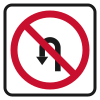
In Prince Edward Island, which move does this sign forbid?
Question 22 of 40Road signs · Signs, signals and road markings
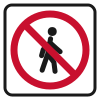
In Prince Edward Island, who may not use a road posted with this sign?
Question 23 of 40Road signs · Signs, signals and road markings
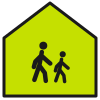
In Prince Edward Island, what does this five-sided sign mark?
Question 24 of 40Road signs · Signs, signals and road markings
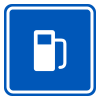
In Prince Edward Island, what service does this blue sign point to?
Question 25 of 40Road signs · Signs, signals and road markings
In Prince Edward Island, what do yellow lines on the road separate?
Question 26 of 40Road signs · Signs, signals and road markings
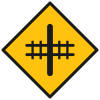
In Prince Edward Island, what does this warning sign tell you to do?
Question 27 of 40Road signs · Signs, signals and road markings
In Prince Edward Island, a yellow diamond sign shows a truck coming in from the side of the road. What does it mean?
Question 28 of 40Road signs · Signs, signals and road markings
In Prince Edward Island, when is it legal to enter an intersection on an amber light?
Question 29 of 40Road signs · Signs, signals and road markings
In Prince Edward Island, what does a flashing amber light mean?
Question 30 of 40Road signs · Signs, signals and road markings
In Prince Edward Island, when must you obey the speed limit in a construction zone?
Question 31 of 40Road signs · Signs, signals and road markings

In Prince Edward Island, which way may traffic go on a road with this sign?
Question 32 of 40Road signs · Signs, signals and road markings
In Prince Edward Island, a sign shows a black diamond inside a red circle with a slash. What does it mean?
Question 33 of 40Road signs · Signs, signals and road markings
Why does the PEI Driver's Handbook say each sign shape carries its own meaning?
Question 34 of 40Road signs · Signs, signals and road markings

In Prince Edward Island, what does this sign tell approaching drivers to do?
Question 35 of 40Road signs · Signs, signals and road markings
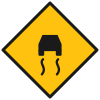
In Prince Edward Island, what is this sign telling you about the road?
Question 36 of 40Road signs · Signs, signals and road markings
According to the PEI Driver's Handbook, how do Island traffic signs compare with those in other provinces?
Question 37 of 40Road signs · Signs, signals and road markings
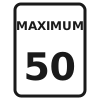
In Prince Edward Island, what does this white rectangular sign show?
Question 38 of 40Road signs · Signs, signals and road markings
In Prince Edward Island, what shape is a speed limit sign always?
Question 39 of 40Road signs · Signs, signals and road markings
In Prince Edward Island, what does a yellow diamond sign with a black "T" mean?
Question 40 of 40Road signs · Signs, signals and road markings
In Prince Edward Island, a yellow diamond sign shows a bicycle. What should you watch for?
1 of 40
Answer each question to see the explanation. Keyboard: A–D or 1–4 to answer, N next, P previous.
Answers and explanations (text version)
The correct answer to each question above, why it is right, and where it comes from. Try the test first.
Question 1: A. No
The handbook's rules for cyclists say: "DO NOT: ride on a sidewalk", so no, they may not.
Handbook: PEI Driver's Handbook, Ch. 6 Bicycles — Rules of the Road for Cyclists (p. 159)
Question 2: A. Hold the pedal down; do not pump
The handbook says: "When you need to stop, don't pump the brakes. Just hold the brake pedal down."
Handbook: PEI Driver's Handbook, Ch. 4 Speed Limits, Following Distances and Driving Skills — Antilock Brake Systems (ABS) (p. 115)
Question 3: B. Clear the intersection, pull right and stop
The handbook says to yield by "immediately moving clear of an intersection," driving close to the right-hand curb, and "stopping and remaining stopped" until it passes.
Handbook: PEI Driver's Handbook, Ch. 2 Rules of the Road — Right-of-Way of Emergency Vehicles (p. 55)
Question 4: C. Frontal impacts only
The handbook says air bags "deploy in frontal impacts only, and not in rear-end collisions, side impacts or rollovers."
Handbook: PEI Driver's Handbook, Ch. 2 Rules of the Road — Air Bags (p. 49)
Question 5: C. Straight until you are ready to turn
The handbook says: "do not turn the steering wheel to the left until you are ready to complete the turn," or a rear-end crash may push you into traffic.
Handbook: PEI Driver's Handbook, Ch. 4 Speed Limits, Following Distances and Driving Skills — Left Turns (p. 92)
Question 6: C. A front lamp and a red rear reflector
The handbook says the bike must have "a lamp on front that is visible from a distance of 150 metres" and "a red reflector on the rear."
Handbook: PEI Driver's Handbook, Ch. 6 Bicycles — Special Rules for Cyclists (p. 160)
Question 7: C. 30 metres
The handbook says: "in the city signal 30 metres (100 feet) in advance of a turn or stop."
Handbook: PEI Driver's Handbook, Ch. 4 Speed Limits, Following Distances and Driving Skills — Signals and Changing Lanes (p. 89)
Question 8: B. Yield to the pedestrian
The handbook says pedestrians "have the right-of-way within a marked or unmarked crosswalk" at such intersections, and "Drivers must yield to a pedestrian."
Handbook: PEI Driver's Handbook, Ch. 2 Rules of the Road — Pedestrians' Rights and Duties at Intersections with No Traffic Signals (p. 57)
Question 9: D. The vehicle on the left yields to the one on the right
The handbook says: "the vehicle on the left will yield the right-of-way to the vehicle on the right."
Handbook: PEI Driver's Handbook, Ch. 2 Rules of the Road — Right-of-Way at Three-Way or Four-Way Intersections (p. 52)
Question 10: A. Stop, from the front or the rear
The handbook says you must stop "from the front or rear of the bus" and "IT IS ILLEGAL TO PASS a school bus when the alternating flashing RED lights are displayed."
Handbook: PEI Driver's Handbook, Ch. 4 Speed Limits, Following Distances and Driving Skills — School Buses (p. 97)
Question 11: B. They are doubled
The handbook says amendments to the Highway Traffic Act "have doubled fines for speeding in a signed school zone."
Handbook: PEI Driver's Handbook, Ch. 4 Speed Limits, Following Distances and Driving Skills — Speed Limits, Following Distances and Driving Skills (p. 84)
Question 12: B. 10 times as often
The handbook says drivers who drink and drive "are involved in 10 times as many collisions as drivers who are sober."
Handbook: PEI Driver's Handbook, Ch. 4 Speed Limits, Following Distances and Driving Skills — Alcohol and Collisions (p. 126)
Question 13: C. Set the brake, stop the motor and take the keys
The handbook says "you must set your hand or foot brake, stop the motor and remove the keys from the ignition."
Handbook: PEI Driver's Handbook, Ch. 4 Speed Limits, Following Distances and Driving Skills — Parking Regulations (p. 101)
Question 14: C. No, it is illegal
The handbook says: "It is illegal to apply or operate a motor vehicle with aftermarket vehicle glass darkening material to the windshield and the front side windows."
Handbook: PEI Driver's Handbook, Ch. 1 Your Driver's Licence — Tinted Glass or Window Glazing (p. 35)
Question 15: D. The driver cannot see you
The handbook says: "If you can't see the driver's face in the side-view mirror, he or she can't see you."
Handbook: PEI Driver's Handbook, Ch. 4 Speed Limits, Following Distances and Driving Skills — Side No-Zones (p. 98)
Question 16: C. Only when a police officer directs it
The handbook says: "Only if a police officer is present and directs, then may you proceed through the red light or stop sign with caution."
Handbook: PEI Driver's Handbook, Ch. 2 Rules of the Road — Right-of-Way of Funeral Procession (p. 56)
Question 17: A. Blind spots and danger areas around big vehicles
The handbook says: "No-Zones are danger areas around trucks and buses where crashes are more likely to occur."
Handbook: PEI Driver's Handbook, Ch. 4 Speed Limits, Following Distances and Driving Skills — What Are the No-Zones (p. 98)
Question 18: C. The exact location
The handbook lists the exact location, the time, the damage, the injuries and the names and details of those involved as the five points.
Handbook: PEI Driver's Handbook, Ch. 8 Collisions — Five Points in Reporting Collisions (p. 178)
Question 19: C. Stop and let them go ahead
The handbook says a blind person "will raise his/her cane when they are uncertain of crossing the street in safety. That is your signal to STOP and allow him/her to go ahead."
Handbook: PEI Driver's Handbook, Ch. 2 Rules of the Road — Advice to Drivers (p. 59)
Question 20: D. 24 hours
The handbook says the driver's "driving privileges will be suspended for a period of 24 hours from the time the request is made."
Handbook: PEI Driver's Handbook, Ch. 7 Highway Safety Programs — 24-Hour Roadside Suspension (p. 173)
Question 21: C. A U-turn
The handbook lists this sign as "No U-turn permitted", so a U-turn is not allowed here.
Handbook: PEI Driver's Handbook, Ch. 3 Signs, Pavement Markings and Work Zones — Regulatory Signs (p. 73)
Question 22: B. People on foot
The handbook lists this sign as "Pedestrians prohibited", so people on foot may not use that road.
Handbook: PEI Driver's Handbook, Ch. 3 Signs, Pavement Markings and Work Zones — Additional Signs (p. 81)
Question 23: B. A school zone
The handbook lists this fluorescent five-sided sign as "School zone" among regulatory signs.
Handbook: PEI Driver's Handbook, Ch. 3 Signs, Pavement Markings and Work Zones — Regulatory Signs (p. 74)
Question 24: D. Gas
The handbook lists this square blue information sign as "gas": fuel is available nearby.
Handbook: PEI Driver's Handbook, Ch. 3 Signs, Pavement Markings and Work Zones — Information Signs (p. 72)
Question 25: A. Traffic going in opposite directions
The handbook says: "Yellow lines are used to separate traffic travelling in the opposite directions."
Handbook: PEI Driver's Handbook, Ch. 3 Signs, Pavement Markings and Work Zones — Yellow Lines (p. 67)
Question 26: C. Look, listen and slow down, as you may need to stop
The handbook says advance warning signs "tell you to look, listen and slow down because you may have to stop."
Handbook: PEI Driver's Handbook, Ch. 3 Signs, Pavement Markings and Work Zones — Advance Warning Signs (p. 64)
Question 27: A. Trucks may be entering the road
The handbook lists this warning sign as "Truck entering", so watch for trucks entering the road.
Handbook: PEI Driver's Handbook, Ch. 3 Signs, Pavement Markings and Work Zones — Warning Signs (p. 77)
Question 28: D. Only when you cannot stop safely
The handbook says: "It is a violation of the Highway Traffic Act to enter an intersection on an amber light, unless stopping cannot be done safely."
Handbook: PEI Driver's Handbook, Ch. 3 Signs, Pavement Markings and Work Zones — Traffic Signals (p. 63)
Question 29: D. Caution: slow down and be ready to stop
The handbook says: "A flashing amber light means caution. When facing a flashing amber light, slow down and be prepared to stop."
Handbook: PEI Driver's Handbook, Ch. 3 Signs, Pavement Markings and Work Zones — Flashing Amber Light (p. 64)
Question 30: D. At all times, even when no one is working
The handbook says construction zone speed limits "must be obeyed at all times, even when workers and equipment are not working."
Handbook: PEI Driver's Handbook, Ch. 3 Signs, Pavement Markings and Work Zones — Construction Signs (p. 71)
Question 31: B. Only the way the arrow points
The handbook says this sign is used "to indicate streets or highways upon which the traffic is allowed in one direction only."
Handbook: PEI Driver's Handbook, Ch. 3 Signs, Pavement Markings and Work Zones — Vertical Rectangle (p. 70)
Question 32: B. Dangerous goods are prohibited
The handbook lists this sign as "Dangerous goods prohibited"; the green-circle version marks a "Dangerous goods route."
Handbook: PEI Driver's Handbook, Ch. 3 Signs, Pavement Markings and Work Zones — Regulatory Signs (p. 75)
Question 33: C. So you can know the sign when the words are hard to read
The handbook says each shape has its own meaning "so that if darkness or falling rain or snow obscure the lettering, the safety message can still be identified", so you know the sign even when the words are hard to read.
Handbook: PEI Driver's Handbook, Ch. 3 Signs, Pavement Markings and Work Zones — Traffic Signs (p. 69)
Question 34: A. Keep to the right of the island
The handbook says this sign shows the road "is divided by an island and approaching vehicles must keep to the right."
Handbook: PEI Driver's Handbook, Ch. 3 Signs, Pavement Markings and Work Zones — Vertical Rectangle (p. 70)
Question 35: A. It is slippery when wet
The handbook lists this warning sign as "Slippery when wet."
Handbook: PEI Driver's Handbook, Ch. 3 Signs, Pavement Markings and Work Zones — Warning Signs (p. 77)
Question 36: B. They are uniform across Canada
The handbook says: "All Canadian provinces and territories use uniform traffic signs," mostly the same as those in the United States.
Handbook: PEI Driver's Handbook, Ch. 3 Signs, Pavement Markings and Work Zones — Traffic Signs (p. 69)
Question 37: D. The maximum speed limit
The handbook says vertical rectangle signs are regulatory signs that "state the law, such as speed limits."
Handbook: PEI Driver's Handbook, Ch. 3 Signs, Pavement Markings and Work Zones — Vertical Rectangle (p. 70)
Question 38: D. A vertical rectangle
The handbook says "speed limit signs are always a vertical rectangle."
Handbook: PEI Driver's Handbook, Ch. 3 Signs, Pavement Markings and Work Zones — Traffic Signs (p. 69)
Question 39: A. A T intersection is ahead
The handbook lists this warning sign as "T intersection": the road ends and you must turn.
Handbook: PEI Driver's Handbook, Ch. 3 Signs, Pavement Markings and Work Zones — Warning Signs (p. 78)
Question 40: A. A bicycle crossing
The handbook lists this warning sign as "Bicycle crossing": watch for cyclists crossing.
Handbook: PEI Driver's Handbook, Ch. 3 Signs, Pavement Markings and Work Zones — Warning Signs (p. 77)
Practice test 2 of 10 for the Class 7 written exam (Instruction Driver's Permit) (PEI Highway Safety): Our practice tests use 40 questions, 16 of 20 in each section to pass (PEI Highway Safety does not publish a fixed format). Our practice tests are untimed.