Question 1 of 30Alcohol, drugs and penalties
Practice test 1 of 10 — Alabama permit test
Practice test 1 questions
Question 2 of 30Right of way
At a corner with no painted lines, is there a crosswalk?
Question 3 of 30Safe driving and hazards (Alabama)
Under Alabama's move-over law, what should you do first on a road of four or more lanes when you see a stopped emergency vehicle with lights flashing?
Question 4 of 30Turning, passing and lanes (Alabama)
On an Alabama hill or curve, you may not cross the center line to pass unless you can see clearly ahead for at least how far?
Question 5 of 30Right of way
You are in the middle of an intersection when an ambulance with a siren comes up behind you. What should you do?
Question 6 of 30Right of way
You are turning right on red. Who must you yield to?
Question 7 of 30Emergencies and equipment
When should you adjust your seat and mirrors?
Question 8 of 30Alcohol, drugs and penalties
In most states, what must you be able to show if police ask after a crash or stop?
Question 9 of 30Safe driving and hazards (Alabama)
According to the Alabama manual, how much more distance can it take to stop on snow or ice than on dry pavement?
Question 10 of 30Sharing the road (Alabama)
According to the Alabama manual, may people on bicycles ride two side by side?
Question 11 of 30Turning, passing and lanes
May you drive on the shoulder to pass a car turning left?
Question 12 of 30Turning, passing and lanes
How should you signal when leaving a roundabout?
Question 13 of 30Road signs
Green signs on a highway show:
Question 14 of 30Speed and following distance
Why does the risk of hydroplaning go up as you drive faster?
Question 15 of 30Turning, passing and lanes
You need to turn at the next intersection. When should you get into the correct lane?
Question 16 of 30Emergencies and equipment
Your hood flies up while you are driving. What should you do?
Question 17 of 30Alcohol, drugs and penalties
Why do new drivers have limits on their license in most states?
Question 18 of 30Right of way
Why must drivers always yield to trains at a crossing?
Question 19 of 30Speed and following distance
If you double your speed, about how much farther do you travel once you brake?
Question 20 of 30Road signs
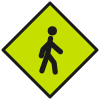
What does this sign warn you about?
Question 21 of 30Turning, passing and lanes
You miss your exit on the highway. What should you do?
Question 22 of 30Alcohol, drugs and penalties
How does alcohol affect your driving?
Question 23 of 30Speed and following distance
What can make your reaction time longer?
Question 24 of 30Road signs
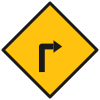
What does this sign warn of?
Question 25 of 30Road signs (Alabama)
Alabama puts mileposts along its main highways. Where does mile zero usually start?
Question 26 of 30Road signs
Blue signs along a highway point out:
Question 27 of 30Signals and pavement markings (Alabama)
After a full stop at a red light, when may an Alabama driver turn left?
Question 28 of 30Road signs
Brown signs point out:
Question 29 of 30Turning, passing and lanes (Alabama)
According to the Alabama manual, how can you let the driver ahead know you plan to pass at night?
Question 30 of 30Licensing and insurance (Alabama)
A new Alabama resident has a valid license from their old state. How long may they drive on it?
1 of 30
Answer each question to see the explanation. Keyboard: A–D or 1–4 to answer, N next, P previous.
Answers and explanations (text version)
The correct answer to each question above, why it is right, and where it comes from. Try the test first.
Question 1: C. It slows how fast alcohol is absorbed
Food slows how fast alcohol is absorbed, but it does not stop you from becoming impaired.
Handbook: Chapter: Alcohol, drugs and penalties — How alcohol affects you
Question 2: A. Yes, there is usually an unmarked crosswalk
At most intersections there is an unmarked crosswalk even with no painted lines, and you must yield to people using it.
Handbook: Chapter: Right of way — Pedestrians
Question 3: A. Leave the lane closest to it
On roads with four or more lanes, drivers "must vacate the lane closest to the emergency vehicle or wrecker."
Handbook: Chapter 6: Traffic Laws — Move-Over Law
Question 4: C. 500 feet
You may not pass on a curve or hill if you "cannot see a clear passing distance of at least 500 feet."
Handbook: Chapter 6: Traffic Laws — No Passing Zones
Question 5: C. Clear the intersection, then pull over
Do not stop in an intersection. Clear it first, then pull to the right and stop.
Handbook: Chapter: Right of way — Emergency vehicles
Question 6: B. People crossing and cross traffic on green
When turning right on red, yield to people in the crosswalk and to cross traffic that has a green light.
Handbook: Chapter: Right of way — Turning at intersections
Question 7: B. Before you start to drive
Adjust your seat and mirrors before you start to drive, so you can see well and are not distracted on the road.
Handbook: Chapter: Emergencies and vehicle equipment — Vehicle equipment
Question 8: B. Proof of insurance
In most states you must carry proof of insurance or financial responsibility and show it when asked.
Handbook: Chapter: Alcohol, drugs and penalties — Licensing rules
Question 9: D. Three to twelve times as much
On snow or ice "it takes three to twelve times as much distance to stop" as on dry pavement, so keep well back.
Handbook: Chapter 7: Adjust to Driving Conditions — Slippery Roads Are Hazardous
Question 10: A. Yes, at all times
The Alabama manual says "People on bicycles may ride two abreast at all times."
Handbook: Chapter 3: The Driving Task — Sharing the Road with Bicycles
Question 11: A. No, unless signs or markings allow it
Driving on the shoulder to pass is generally not allowed unless signs or markings say you may.
Handbook: Chapter: Turning, passing and lane use — Passing
Question 12: B. Signal right before your exit
Signal right just before your exit so others know you are leaving the roundabout.
Handbook: Chapter: Turning, passing and lane use — Roundabouts
Question 13: D. Directions, exits and distances
Green guide signs show directions, exits and how far it is to places ahead.
Handbook: Chapter: Traffic signs — Sign shapes and colors
Question 14: D. Your tires cannot push water away fast enough
At higher speed, tires cannot clear the water fast enough and can ride up on a thin layer of it.
Handbook: Chapter: Speed and following distance — Speed and road conditions
Question 15: C. Well before the intersection
Move into the correct lane well before the intersection so you do not swerve at the last moment.
Handbook: Chapter: Turning, passing and lane use — Turns
Question 16: B. Look through the gap and pull over
Look through the gap under the hood or out the side window, slow down and pull off the road.
Handbook: Chapter: Emergencies and vehicle equipment — Vehicle failures
Question 17: D. To build skill while risk is high
In most states, new drivers have limits while they gain skill, since crash risk is highest in the first months.
Handbook: Chapter: Alcohol, drugs and penalties — Licensing rules
Question 18: B. Trains cannot stop quickly or steer away
A train cannot steer and may need a mile or more to stop, so you must always yield to it.
Handbook: Chapter: Right of way — Railroad crossings
Question 19: A. About four times as far
Braking distance grows with the square of speed, so doubling your speed makes it about four times as far.
Handbook: Chapter: Speed and following distance — Stopping distance
Question 20: A. People may be crossing the road ahead
This pedestrian crossing sign warns that people may be crossing. Slow down and yield to anyone in the crosswalk.
Handbook: Chapter: Traffic signs — Warning signs
Question 21: C. Go on to the next exit
Never back up or turn around on a highway. Drive on to the next exit.
Handbook: Chapter: Turning, passing and lane use — Highway driving
Question 22: A. It slows your reactions and blurs vision
Alcohol slows your reactions, blurs vision and weakens coordination, even in small amounts.
Handbook: Chapter: Alcohol, drugs and penalties — How alcohol affects you
Question 23: B. Being tired or distracted
Being tired or distracted slows how fast you notice and react, which adds to your stopping distance.
Handbook: Chapter: Speed and following distance — Stopping distance
Question 24: A. A sharp right turn that needs a low speed
The bent arrow means a sharp turn to the right, which needs a much lower speed than a gentle curve.
Handbook: Chapter: Traffic signs — Warning signs
Question 25: B. At the south and west state lines
Alabama mileposts help pinpoint crashes, and "Zero mileage should begin at the south and west state lines" or where a route begins.
Handbook: Chapter 5: Signs, Signals and Road Markings — Informational or Guide Signs
Question 26: A. Services such as gas, food and lodging
Blue signs show services for drivers, such as gas, food, lodging and hospitals.
Handbook: Chapter: Traffic signs — Sign shapes and colors
Question 27: B. From a one-way street onto a one-way street going left
From a one-way street, you may turn left on red when "the street you turn left onto is a one-way street" with traffic moving right to left.
Handbook: Chapter 6: Traffic Laws — Stopping
Question 28: C. Parks, recreation and places of interest
Brown signs guide you to parks, recreation areas and places of cultural or historic interest.
Handbook: Chapter: Traffic signs — Sign shapes and colors
Question 29: A. With a quick flick of your headlights
Signal the driver ahead before you pass; the manual says "a flick of headlights at night is helpful."
Handbook: Chapter 6: Traffic Laws — No Passing Zones
Question 30: C. 30 days
A new resident with a valid license from the previous state may drive "for 30 days after becoming a resident."
Handbook: Chapter 1: Your License to Drive — An Alabama Driver License Is Not Required for These People
Practice test 1 of 10 for the Knowledge test (Stage I learner license) (ALEA): 30 questions, 24 to pass — the commonly reported format; ALEA does not publish the count or a pass mark. Our practice tests are untimed.