Question 1 of 30Sharing the road
Practice test 2 of 10 — Alabama permit test
Practice test 2 questions
Question 2 of 30Road signs
A blue sign with a white "H" tells you:
Question 3 of 30Sharing the road (Alabama)
According to the Alabama manual, may a person ride a bicycle on the sidewalk?
Question 4 of 30Speed and following distance (Alabama)
What is the statutory speed limit on an unpaved road in Alabama?
Question 5 of 30Signals and pavement markings
A center lane is marked with a solid yellow line and a broken yellow line on each side. What is it for?
Question 6 of 30Right of way
A person is walking across the street in a crosswalk ahead of you. What must you do?
Question 7 of 30Speed and following distance
Why does it usually take longer to stop when you are going downhill?
Question 8 of 30Sharing the road
Why should you stay well back from a snowplow?
Question 9 of 30Safe driving and hazards (Alabama)
Under Alabama law, during what hours must your headlights be on?
Question 10 of 30Sharing the road (Alabama)
In Alabama, bicycle riders under what age must wear a helmet on public roads?
Question 11 of 30Alcohol, drugs and penalties
You drank a lot late last night. Could you still be impaired the next morning?
Question 12 of 30Turning, passing and lanes
When joining a highway, what should you look for?
Question 13 of 30Road signs
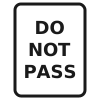
What does this sign mean?
Question 14 of 30Speed and following distance
Can you get a ticket for driving at the posted limit?
Question 15 of 30Safe driving and hazards
You feel very sleepy while driving. What should you do?
Question 16 of 30Emergencies and equipment
Your right wheels drift off the edge of the pavement. What should you do?
Question 17 of 30Safe driving and hazards
You are driving on a two-lane road and an oncoming car drifts into your lane. What should you do?
Question 18 of 30Right of way
A school bus ahead of you has flashing yellow lights. What does this mean?
Question 19 of 30Right of way
At an intersection your signal is flashing yellow, and the cross street's is flashing red. Who should go first?
Question 20 of 30Road signs
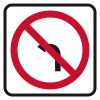
What is not allowed where this sign is posted?
Question 21 of 30Speed and following distance
The best way to avoid hitting a car that stops suddenly in front of you is to:
Question 22 of 30Safe driving and hazards
You see children playing near the road ahead. What is a good step to take?
Question 23 of 30Speed and following distance
You are towing a trailer. How should your following distance change?
Question 24 of 30Road signs
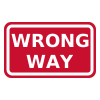
You see this sign facing you. What does it mean?
Question 25 of 30Road signs (Alabama)
In Alabama, where may two lanes of cars make right turns side by side?
Question 26 of 30Road signs
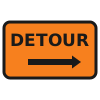
What does this sign tell you to do?
Question 27 of 30Right of way (Alabama)
An Alabama school bus is stopped on the far side of a four-lane divided highway. Must you stop?
Question 28 of 30Road signs
A small yellow sign below a curve sign shows "35 MPH". What does it mean?
Question 29 of 30Speed and following distance (Alabama)
Alabama's move-over law covers stopped emergency vehicles and what other vehicles?
Question 30 of 30Licensing and insurance (Alabama)
An Alabama teen breaks a restriction on a graduated license. What happens to the restricted period?
1 of 30
Answer each question to see the explanation. Keyboard: A–D or 1–4 to answer, N next, P previous.
Answers and explanations (text version)
The correct answer to each question above, why it is right, and where it comes from. Try the test first.
Question 1: A. It may not turn off on its own
Many motorcycle turn signals do not turn off on their own, so wait to see the rider actually turn.
Handbook: Chapter: Sharing the road — Motorcycles
Question 2: C. A hospital is nearby
A blue sign with a white "H" points the way to a nearby hospital.
Handbook: Chapter: Traffic signs — Guide and service signs
Question 3: C. No, it is illegal in Alabama
The manual says that in Alabama "it is illegal for people on bicycles to ride on the sidewalk."
Handbook: Chapter 3: The Driving Task — Sharing the Road with Bicycles
Question 4: B. 35 mph
Alabama's statutory limits list "35 miles per hour unpaved road" where no other limit is posted.
Handbook: Chapter 6: Traffic Laws — Speed Limits
Question 5: C. Left turns by traffic from both directions
This is a two-way left-turn lane. Drivers from both directions use it only to make left turns.
Handbook: Chapter: Traffic signals and pavement markings — Pavement markings
Question 6: A. Stop and let the person cross
Pedestrians in a crosswalk have the right-of-way. Stop and let them finish crossing.
Handbook: Chapter: Right of way — Pedestrians
Question 7: A. Gravity keeps pulling the car forward
Going downhill, gravity keeps pulling the car forward, so it takes longer to stop; slow down and leave more space.
Handbook: Chapter: Speed and following distance — Stopping distance
Question 8: B. It throws snow and may stop suddenly
Snowplows throw snow, move slowly and may stop or turn suddenly, so stay well back.
Handbook: Chapter: Sharing the road — Emergency and work vehicles
Question 9: D. Half an hour after sunset to half an hour before sunrise
Headlights must be on "from a half-hour after sunset to a half-hour before sunrise" and when visibility is poor.
Handbook: Chapter 7: Adjust to Driving Conditions — Night Driving
Question 10: D. Under 16
People on bicycles "under the age of 16 years are required to wear" a securely fastened helmet.
Handbook: Chapter 3: The Driving Task — Sharing the Road with Bicycles
Question 11: A. Yes, alcohol can still be in your blood
Yes. After heavy drinking, alcohol can still be in your blood the next morning, even after sleep.
Handbook: Chapter: Alcohol, drugs and penalties — How alcohol affects you
Question 12: C. A gap in traffic to merge into
Look for a safe gap in traffic, signal, and match your speed to merge into it.
Handbook: Chapter: Turning, passing and lane use — Highway driving
Question 13: A. You may not pass other vehicles here
This sign means do not pass. You must not pass other vehicles on this part of the road.
Handbook: Chapter: Traffic signs — Regulatory signs
Question 14: C. Yes, if that speed is unsafe for conditions
Yes. Under the basic speed rule you can be ticketed for driving at the limit when conditions make that speed unsafe.
Handbook: Chapter: Speed and following distance — Basic speed rule
Question 15: B. Stop in a safe place and rest
The only cure for being drowsy is rest. Stop in a safe place and sleep or switch drivers.
Handbook: Chapter: Safe driving and hazards — Fatigue
Question 16: C. Ease off the gas and steer back gently
Ease off the gas, then steer back onto the pavement gently once you have slowed down.
Handbook: Chapter: Emergencies and vehicle equipment — Running off the road
Question 17: B. Slow down, honk, and steer right
Slow down, warn the driver with your horn and steer right. Do not steer left into its lane, since it may move back.
Handbook: Chapter: Safe driving and hazards — Defensive driving
Question 18: C. It is getting ready to stop
Flashing yellow lights mean the bus is about to stop. Slow down and get ready to stop.
Handbook: Chapter: Right of way — School buses
Question 19: A. You go with care; cross traffic stops
Flashing red means the cross street must stop. Your flashing yellow means you may go on with care.
Handbook: Chapter: Right of way — Signals and right of way
Question 20: D. Turning left
This sign bans left turns. You may go straight or turn right if those moves are allowed.
Handbook: Chapter: Traffic signs — Regulatory signs
Question 21: D. Keep a safe following distance
A safe following distance gives you time to react and stop if the car ahead stops suddenly.
Handbook: Chapter: Speed and following distance — Following distance
Question 22: D. Cover the brake so you can stop fast
Taking your foot off the gas and covering the brake cuts the time it takes to stop if a child runs out.
Handbook: Chapter: Safe driving and hazards — Defensive driving
Question 23: D. Leave more space than usual
Towing adds weight, so it takes longer to stop. Leave more space than usual.
Handbook: Chapter: Speed and following distance — Following distance
Question 24: A. You are driving against traffic
A wrong way sign means you are driving against the flow of traffic. Pull over safely and turn back.
Handbook: Chapter: Traffic signs — Regulatory signs
Question 25: C. Only where signs show it is allowed
Alabama says "Double right turns are only permitted at intersections that are properly signed," so other places use normal right-turn rules.
Handbook: Chapter 5: Signs, Signals and Road Markings — Regulatory Signs
Question 26: C. Follow the signs around a closed road
A detour sign leads you around a closed road. Follow the detour signs to get back on your route.
Handbook: Chapter: Traffic signs — Work zone signs
Question 27: A. No, a stop is not required
On a divided highway with four or more lanes, "a stop is not required" when the bus is stopped in the opposing roadway.
Handbook: Chapter 6: Traffic Laws — Stopping
Question 28: B. A safe speed for the curve in good conditions
The yellow plaque shows an advisory speed, a safe speed for the curve in good conditions. In bad weather go slower than 35 MPH.
Handbook: Chapter: Traffic signs — Warning signs
Question 29: C. Wreckers with flashing amber lights
The law applies to stopped emergency vehicles and to "wreckers displaying flashing amber lights."
Handbook: Chapter 6: Traffic Laws — Move-Over Law
Question 30: D. Extended by 6 months or until age 18
A violation results in "the restrictive period being extended by 6 months" or until the driver reaches 18.
Handbook: Additional Information: GDL Summary — Enforcement
Practice test 2 of 10 for the Knowledge test (Stage I learner license) (ALEA): 30 questions, 24 to pass — the commonly reported format; ALEA does not publish the count or a pass mark. Our practice tests are untimed.