Question 1 of 36Signals and pavement markings (California)
Practice test 2 of 10 — California permit test
Practice test 2 questions
Question 2 of 36Road signs
A sign and a police officer at an intersection give you different orders. Whom do you obey?
Question 3 of 36Alcohol, drugs and penalties
What usually happens if you refuse a lawful breath or blood test?
Question 4 of 36Road signs
A sign shaped like a triangle with one point facing down means:
Question 5 of 36Right of way
You are turning left into a driveway across the oncoming lane. Who must you yield to?
Question 6 of 36Speed and following distance
Why is following distance measured in seconds instead of feet?
Question 7 of 36Speed and following distance (California)
What is the speed limit at a California blind intersection?
Question 8 of 36Safe driving and hazards (California)
In California, a child of what age may not be left alone in a vehicle?
Question 9 of 36Road signs
A blue sign with a white "H" tells you:
Question 10 of 36Sharing the road (California)
How much space must you leave when passing a bicyclist in California?
Question 11 of 36Turning, passing and lanes
May you drive on the shoulder to pass a car turning left?
Question 12 of 36Speed and following distance
When you are stopped behind another car, how much space should you leave?
Question 13 of 36Sharing the road
You are turning right and a cyclist is riding in the bike lane next to you. What should you do?
Question 14 of 36Road signs
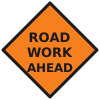
What does this orange sign tell you?
Question 15 of 36Alcohol, drugs and penalties
You see a car weaving across lanes ahead. What should you do?
Question 16 of 36Safe driving and hazards
You are driving on a two-lane road and an oncoming car drifts into your lane. What should you do?
Question 17 of 36Speed and following distance
You are towing a trailer. How should your following distance change?
Question 18 of 36Licensing and insurance (California)
What are the minimum liability insurance amounts in California?
Question 19 of 36Turning, passing and lanes
When you back up, where should you look?
Question 20 of 36Emergencies and equipment
When should you use your hazard warning lights?
Question 21 of 36Road signs
On an Interstate route sign, what does an odd route number usually tell you?
Question 22 of 36Speed and following distance
You are going too fast as you enter a curve. What is the best thing to do?
Question 23 of 36Sharing the road
You are behind a truck and cannot see its side mirrors. What does this mean?
Question 24 of 36Right of way
At a four-way stop, who should go first?
Question 25 of 36Right of way
You hear a siren and see a fire truck with flashing lights behind you. What should you do?
Question 26 of 36Turning, passing and lanes
Where is a U-turn most likely to be unsafe or not allowed?
Question 27 of 36Signals and pavement markings
A striped area of white lines lies between a highway lane and an exit ramp. What should you do?
Question 28 of 36Parking and stopping (California)
In California, how close to a marked or unmarked crosswalk may you park?
Question 29 of 36Emergencies and equipment (California)
You are in a California collision with $1,500 in property damage. What must you file?
Question 30 of 36Turning, passing and lanes
Before you change lanes, how should you check your blind spot?
Question 31 of 36Safe driving and hazards
Where is ice most likely to form first?
Question 32 of 36Road signs
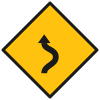
What lies ahead when you see this sign?
Question 33 of 36Turning, passing and lanes
Why should you avoid changing lanes in an intersection?
Question 34 of 36Turning, passing and lanes (California)
On a California two-lane road, you are driving slowly with vehicles behind you. When must you use a turnout to let them pass?
Question 35 of 36Right of way (California)
In California, pedestrians using guide dogs or white canes have the right-of-way when?
Question 36 of 36Safe driving and hazards
When should you turn on your headlights?
1 of 36
Answer each question to see the explanation. Keyboard: A–D or 1–4 to answer, N next, P previous.
Answers and explanations (text version)
The correct answer to each question above, why it is right, and where it comes from. Try the test first.
Question 1: B. From a one-way street onto a one-way street
You may turn left against a red light only from a one-way street onto a one-way street, if no sign forbids it.
Handbook: Section 6: Navigating the Roads — Left Turn Against a Red Light
Question 2: C. The police officer
A police officer directing traffic overrides signs and signals, so follow the officer.
Handbook: Chapter: Traffic signs — Regulatory signs
Question 3: B. Your license can be suspended
Under implied consent laws, refusing a lawful test usually leads to a license suspension.
Handbook: Chapter: Alcohol, drugs and penalties — Testing and implied consent
Question 4: C. Yield
The downward-pointing triangle is used only for the yield sign.
Handbook: Chapter: Traffic signs — Sign shapes and colors
Question 5: C. Oncoming traffic and people on the sidewalk
When you turn left across traffic into a driveway, yield to oncoming traffic and to people on the sidewalk you will cross.
Handbook: Chapter: Right of way — Turning at intersections
Question 6: B. Seconds stay right at any speed
A time gap grows with your speed on its own, so a count of seconds stays right at any speed.
Handbook: Chapter: Speed and following distance — Following distance
Question 7: A. 15 mph
An intersection with no stop signs at any corner is blind if your view is blocked; the limit there is 15 mph.
Handbook: Section 7: Laws and Rules of the Road — Blind Intersections
Question 8: C. Six years old or younger
It is illegal to leave a child six years old or younger unattended; a person at least 12 may supervise.
Handbook: Section 8: Safe Driving — Unattended Children and Pets
Question 9: C. A hospital is nearby
A blue sign with a white "H" points the way to a nearby hospital.
Handbook: Chapter: Traffic signs — Guide and service signs
Question 10: C. At least 3 feet
At least 3 feet of distance must be kept between your car and a bicyclist when you pass.
Handbook: Section 6: Navigating the Roads — Bicycle Lanes
Question 11: A. No, unless signs or markings allow it
Driving on the shoulder to pass is generally not allowed unless signs or markings say you may.
Handbook: Chapter: Turning, passing and lane use — Passing
Question 12: A. Enough to see its rear tires touch the road
If you can see the rear tires of the car ahead touching the road, you have room to steer around it.
Handbook: Chapter: Speed and following distance — Managing space
Question 13: A. Let the cyclist pass, then turn
Yield to the cyclist in the bike lane. Let them go by, then make your turn behind them.
Handbook: Chapter: Sharing the road — Bicycles
Question 14: B. There is road work ahead, so slow down
Orange signs are for work zones. This one warns of road work ahead, so slow down and stay alert.
Handbook: Chapter: Traffic signs — Work zone signs
Question 15: A. Keep well back and report it when safe
Weaving may mean an impaired driver. Keep well back and report it to police when it is safe to do so.
Handbook: Chapter: Alcohol, drugs and penalties — Making safe choices
Question 16: B. Slow down, honk, and steer right
Slow down, warn the driver with your horn and steer right. Do not steer left into its lane, since it may move back.
Handbook: Chapter: Safe driving and hazards — Defensive driving
Question 17: D. Leave more space than usual
Towing adds weight, so it takes longer to stop. Leave more space than usual.
Handbook: Chapter: Speed and following distance — Following distance
Question 18: C. $30,000 / $60,000 / $15,000
California insurance must cover at least $30,000 for one injury or death, $60,000 for more than one, and $15,000 for property.
Handbook: Section 10: Financial Responsibility, Insurance Requirements, and Collisions — Insurance Requirements
Question 19: D. Over your right shoulder through the rear window
Turn and look over your right shoulder through the rear window, and check all around, not just your mirrors.
Handbook: Chapter: Turning, passing and lane use — Backing
Question 20: B. When your stopped car could be a hazard
Use hazard lights when your car is stopped or very slow and could be a hazard to others.
Handbook: Chapter: Emergencies and vehicle equipment — Breakdowns
Question 21: D. The highway runs mostly north and south
Interstate routes with odd numbers usually run north and south; even numbers usually run east and west.
Handbook: Chapter: Traffic signs — Guide and service signs
Question 22: D. Ease off the gas and steer smoothly through it
If you enter a curve too fast, ease off the gas and steer smoothly. Hard braking in a curve can cause a skid.
Handbook: Chapter: Speed and following distance — Speed and road conditions
Question 23: C. The truck driver cannot see you
If you cannot see the truck's mirrors, the driver cannot see you. Drop back so you can.
Handbook: Chapter: Sharing the road — Large trucks and buses
Question 24: D. The driver who stopped first
At an all-way stop, the driver who came to a stop first goes first.
Handbook: Chapter: Right of way — Stop signs and intersections
Question 25: C. Pull to the right edge of the road and stop
For an emergency vehicle using its siren and lights, pull to the right edge of the road and stop until it passes.
Handbook: Chapter: Right of way — Emergency vehicles
Question 26: C. Near a curve or hill where others cannot see you
Do not make a U-turn near a curve or hill, where drivers cannot see you in time to stop.
Handbook: Chapter: Turning, passing and lane use — Turns
Question 27: B. Do not drive on it except in an emergency
The striped gore area between a lane and a ramp keeps traffic apart. Do not drive across it or stop on it except in an emergency.
Handbook: Chapter: Traffic signals and pavement markings — Pavement markings
Question 28: D. No closer than 20 feet
Never park within 20 feet of a crosswalk, or within 15 feet where there is a curb extension.
Handbook: Section 6: Navigating the Roads — Illegal Parking
Question 29: D. An SR 1 report with DMV within 10 days
Report a collision to DMV on form SR 1 within 10 days if damage is over $1,000 or anyone is hurt.
Handbook: Section 10: Financial Responsibility, Insurance Requirements, and Collisions — Reporting a Collision
Question 30: B. Turn your head and look over your shoulder
Mirrors do not show everything. A quick look over your shoulder checks the blind spot before you move.
Handbook: Chapter: Turning, passing and lane use — Changing lanes
Question 31: C. On bridges and overpasses
Bridges and overpasses lose heat from above and below, so ice forms on them first.
Handbook: Chapter: Safe driving and hazards — Skids and slippery roads
Question 32: C. A series of curves
The wavy arrow means a winding road with a series of curves. Keep your speed down until it straightens.
Handbook: Chapter: Traffic signs — Warning signs
Question 33: B. Others may not expect it, and it can cause a crash
Changing lanes in an intersection surprises other drivers and people crossing, so it often causes crashes.
Handbook: Chapter: Turning, passing and lane use — Changing lanes
Question 34: D. When five or more vehicles are following you
You must use a turnout when driving slowly on a two-lane road where passing is unsafe and five or more vehicles follow you.
Handbook: Section 6: Navigating the Roads — Turnout Areas or Lanes
Question 35: D. At all times
Pedestrians who are blind and use guide dogs or white canes have the right-of-way at all times.
Handbook: Section 7: Laws and Rules of the Road — Pedestrians Who Are Blind
Question 36: B. Any time it is hard to see
Turn on your headlights any time it is hard to see, such as at dusk, in rain or in fog.
Handbook: Chapter: Safe driving and hazards — Night and weather
Practice test 2 of 10 for the Driver's license knowledge test (Class C) (the California DMV): 36 questions, 29 to pass — the commonly reported format; the California DMV does not publish the count. Official pass mark: 80%. Our practice tests are untimed.