Question 1 of 50Signals and pavement markings
Practice test 1 of 10 — Florida permit test
Practice test 1 questions
Question 2 of 50Safe driving and hazards (Florida)
Who must wear a seat belt under Florida law?
Question 3 of 50Signals and pavement markings
A row of white triangles across your lane points toward you. What does it mean?
Question 4 of 50Road signs
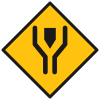
What does this sign tell you about the road ahead?
Question 5 of 50Emergencies and equipment (Florida)
You come upon a crash on a Florida highway. Which number reaches the Florida Highway Patrol from a cell phone?
Question 6 of 50Turning, passing and lanes
Before turning right, what should you watch for on your right?
Question 7 of 50Safe driving and hazards (Florida)
In Florida, who is charged when a passenger under 18 is not properly buckled?
Question 8 of 50Parking and stopping (Florida)
When you parallel park on a Florida street, how close to the curb must your right wheels be?
Question 9 of 50Speed and following distance
You are towing a trailer. How should your following distance change?
Question 10 of 50Speed and following distance (Florida)
A Florida driver says police allow 10 mph over the limit. What does the handbook say?
Question 11 of 50Licensing and insurance (Florida)
A Florida driver lets their car insurance lapse and does not show new proof. How long can the license and plate be suspended?
Question 12 of 50Road signs
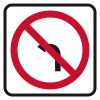
What is not allowed where this sign is posted?
Question 13 of 50Turning, passing and lanes
When should you signal a turn?
Question 14 of 50Road signs
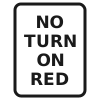
What does this sign mean while the light is red?
Question 15 of 50Road signs
A blue sign with a white "H" tells you:
Question 16 of 50Alcohol, drugs and penalties
What happens when you mix alcohol with other drugs?
Question 17 of 50Road signs (Florida)
In Florida, a "School Bus Stop Ahead" sign is placed where?
Question 18 of 50Road signs
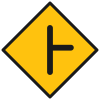
What should you expect after you pass this sign?
Question 19 of 50Sharing the road
A vehicle is stopped on the shoulder with flashing emergency lights. What should you do?
Question 20 of 50Road signs
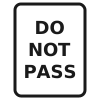
What does this sign mean?
Question 21 of 50Road signs
A sign in bright yellow-green is most likely to warn of:
Question 22 of 50Signals and pavement markings
What does a flashing yellow arrow pointing left mean?
Question 23 of 50Parking and stopping
You park a car with an automatic gearbox. What gear should it be in?
Question 24 of 50Sharing the road
How should you pass a person riding a horse?
Question 25 of 50Road signs
You pass a sign that says "END ROAD WORK". What does it mean?
Question 26 of 50Emergencies and equipment (Florida)
What is the minimum tire tread depth the Florida handbook calls for?
Question 27 of 50Right of way
You are at a stop sign and want to turn left. Cross traffic does not stop. What do you need before you go?
Question 28 of 50Sharing the road
Many states require at least 3 feet of space when passing a cyclist. What is the main reason?
Question 29 of 50Road signs
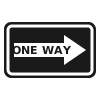
What does this sign tell you about the road?
Question 30 of 50Alcohol, drugs and penalties
How does alcohol affect your vision at night?
Question 31 of 50Sharing the road
After passing a large truck, when should you move back in front of it?
Question 32 of 50Signals and pavement markings (Florida)
In Florida, may you turn right on a red light?
Question 33 of 50Safe driving and hazards (Florida)
Under Florida law, what must a 4- or 5-year-old child ride in?
Question 34 of 50Road signs
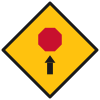
What should you do when you see this sign?
Question 35 of 50Turning, passing and lanes
Why should you not swing wide when you make a right turn?
Question 36 of 50Parking and stopping
May you park in a marked bike lane?
Question 37 of 50Right of way
Which statement about the right-of-way is true?
Question 38 of 50Right of way
A person is crossing the middle of a block, not at a crosswalk. What is true?
Question 39 of 50Road signs
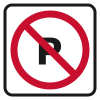
What does this sign mean?
Question 40 of 50Licensing and insurance (Florida)
A licensed 16-year-old in Florida may not drive between which hours, unless driving to work or with a driver 21+?
Question 41 of 50Turning, passing and lanes
You are passing a car and an oncoming car appears sooner than you thought. What is the best thing to do?
Question 42 of 50Turning, passing and lanes
In general, how should you use a center two-way left-turn lane?
Question 43 of 50Speed and following distance
What is a "space cushion"?
Question 44 of 50Speed and following distance
The best way to avoid hitting a car that stops suddenly in front of you is to:
Question 45 of 50Alcohol, drugs and penalties (Florida)
In Florida, what is the fine for throwing up to 15 pounds of litter from a vehicle onto a road?
Question 46 of 50Licensing and insurance (Florida)
Before a Florida driver license, how many supervised hours must a teen log, including night hours?
Question 47 of 50Sharing the road
A large truck passes you in the rain. What should you expect?
Question 48 of 50Turning, passing and lanes
Where should you slow down when leaving a highway?
Question 49 of 50Turning, passing and lanes
What is a blind spot?
Question 50 of 50Alcohol, drugs and penalties
Which ability does alcohol usually affect first?
1 of 50
The timer starts when you answer the first question. Keyboard: A–D or 1–4 to answer, N next, P previous.
Answers and explanations (text version)
The correct answer to each question above, why it is right, and where it comes from. Try the test first.
Question 1: D. Follow the officer and go through with care
Directions from a police officer take the place of signals and signs, so follow the officer and go through with care.
Handbook: Chapter: Traffic signals and pavement markings — Traffic signals
Question 2: A. Drivers, front seat riders and anyone under 18
Florida law requires all drivers, front seat passengers and passengers under 18 to wear safety belts.
Handbook: Section 3: Your Driving Privilege — Safety Belts and Child Passenger Safety
Question 3: B. Yield at that line
A row of white triangles, called a yield line, shows where you must yield.
Handbook: Chapter: Traffic signals and pavement markings — Pavement markings
Question 4: B. A median will split the two directions
This sign warns that a divided highway begins, so a median will split the two directions of traffic.
Handbook: Chapter: Traffic signs — Warning signs
Question 5: D. *FHP (*347)
Call 911 or *FHP (*347) and send someone for help if you come upon a crash.
Handbook: Section 9: Handling Emergencies — First Aid
Question 6: C. Cyclists and people walking
Cyclists and people walking may be on your right as you turn, so check for them before turning right.
Handbook: Chapter: Turning, passing and lane use — Turns
Question 7: B. The driver
The driver is charged with a safety belt or child restraint violation if any passenger under 18 is not restrained.
Handbook: Section 3: Your Driving Privilege — Safety Belts and Child Passenger Safety
Question 8: A. Within 12 inches
Park with your right-hand wheels parallel to and within 12 inches of the curb or edge of the road.
Handbook: Section 7: Driving Safety — Parking
Question 9: D. Leave more space than usual
Towing adds weight, so it takes longer to stop. Leave more space than usual.
Handbook: Chapter: Speed and following distance — Following distance
Question 10: D. That buffer is a myth; you can be cited
The "speeding buffer" is a myth: you may get a speeding citation for any speed over the limit.
Handbook: Section 7: Driving Safety — Speed Limits
Question 11: A. Up to three years
If you fail to provide proof of new insurance, your license and plate can be suspended for up to three years.
Handbook: Section 3: Your Driving Privilege — No-Fault Law
Question 12: D. Turning left
This sign bans left turns. You may go straight or turn right if those moves are allowed.
Handbook: Chapter: Traffic signs — Regulatory signs
Question 13: C. Early, before you slow down or turn
Signal early, before you slow down or turn, so other drivers know what you plan to do.
Handbook: Chapter: Turning, passing and lane use — Signaling
Question 14: D. You may not turn, even after you stop
This sign means no turn on red. You must stop and wait for a green light before you turn.
Handbook: Chapter: Traffic signs — Regulatory signs
Question 15: C. A hospital is nearby
A blue sign with a white "H" points the way to a nearby hospital.
Handbook: Chapter: Traffic signs — Guide and service signs
Question 16: D. The effects can be much stronger
Alcohol mixed with other drugs can make the effects much stronger and more dangerous.
Handbook: Chapter: Alcohol, drugs and penalties — Drugs and medicine
Question 17: B. Before a bus stop hidden by a curve or hill
This sign warns of an upcoming school bus stop that may be unexpected or hidden by a curve or hill.
Handbook: Section 6: Traffic Controls — School Zone Signs & Signals
Question 18: A. Cars may enter from a road on the right
This side road sign warns that a road joins from the right, so cars may enter your road.
Handbook: Chapter: Traffic signs — Warning signs
Question 19: D. Move over a lane, or slow down
Every state has a move over law. Move over a lane if you can, or slow down if you cannot.
Handbook: Chapter: Sharing the road — Emergency and work vehicles
Question 20: A. You may not pass other vehicles here
This sign means do not pass. You must not pass other vehicles on this part of the road.
Handbook: Chapter: Traffic signs — Regulatory signs
Question 21: D. A school, people walking, or bikes
Bright yellow-green is used for school, pedestrian and bicycle warning signs because it is easy to see.
Handbook: Chapter: Traffic signs — Sign shapes and colors
Question 22: A. You may turn left after yielding
A flashing yellow arrow means turns are allowed, but you must first yield to oncoming traffic and pedestrians.
Handbook: Chapter: Traffic signals and pavement markings — Traffic signals
Question 23: B. Park
Put an automatic car in park and set the parking brake before you get out.
Handbook: Chapter: Parking and stopping — Parking on hills
Question 24: B. Slowly, with plenty of room and no horn
Pass a horse slowly and give it plenty of room. Do not honk, as noise can scare it.
Handbook: Chapter: Sharing the road — Slow-moving vehicles
Question 25: B. You have left the work zone
The end road work sign tells you that you have left the work zone and normal rules apply again.
Handbook: Chapter: Traffic signs — Work zone signs
Question 26: B. 3/32 of an inch
The Florida handbook says tires "should have a minimum tread of at least 3/32 of an inch".
Handbook: Section 5: Before You Drive—Your Vehicle — Equipment Standards
Question 27: B. A safe gap in traffic from both ways
When turning left onto a road where traffic does not stop, you cross both lanes, so you need a safe gap from both ways.
Handbook: Chapter: Right of way — Stop signs and intersections
Question 28: B. A cyclist may swerve to avoid a hazard
Many states require at least 3 feet because a cyclist may swerve around potholes, glass or car doors.
Handbook: Chapter: Sharing the road — Bicycles
Question 29: C. All traffic moves the way the arrow points
A one way sign means all traffic on that road moves only in the direction the arrow shows.
Handbook: Chapter: Traffic signs — Regulatory signs
Question 30: A. It slows how fast your eyes recover from glare
Alcohol slows how fast your eyes recover from headlight glare, which makes night driving harder.
Handbook: Chapter: Alcohol, drugs and penalties — How alcohol affects you
Question 31: A. When its whole front shows in your mirror
Wait until you can see the whole front of the truck in your mirror before moving in front of it.
Handbook: Chapter: Sharing the road — Large trucks and buses
Question 32: A. Yes, after stopping, if no sign forbids it
After stopping, you may turn right on red if there is no NO TURN ON RED sign and the way is clear.
Handbook: Section 6: Traffic Controls — Traffic Signals
Question 33: C. A safety seat or a booster seat
Children under 4 must be in a safety seat, and children ages 4 and 5 in a safety seat or a booster seat.
Handbook: Section 3: Your Driving Privilege — Safety Belts and Child Passenger Safety
Question 34: B. Slow down and get ready to stop
This sign warns of a stop sign ahead. Slow down so you can stop at it.
Handbook: Chapter: Traffic signs — Warning signs
Question 35: B. Others may think you are turning left
Swinging wide confuses other drivers and can lead a car to pass on your right. Keep close to the curb.
Handbook: Chapter: Turning, passing and lane use — Turns
Question 36: B. Generally no, since it blocks cyclists
Generally you may not park in a bike lane, since it forces cyclists into traffic.
Handbook: Chapter: Parking and stopping — Where not to park
Question 37: A. No driver should insist on taking it
The law says who must yield, but no driver should insist on the right-of-way if it could cause a crash.
Handbook: Chapter: Right of way — Right-of-way basics
Question 38: B. They should yield, but you must still avoid them
Pedestrians outside a crosswalk should yield to cars, but drivers must still take care not to hit anyone.
Handbook: Chapter: Right of way — Pedestrians
Question 39: D. You may not park here
This is a no parking sign. You may not leave your car parked in the area it covers.
Handbook: Chapter: Traffic signs — Regulatory signs
Question 40: B. 11 p.m. and 6 a.m.
A 16-year-old may not drive between 11 at night and 6 in the morning unless going to or from work or with a licensed driver 21 or older.
Handbook: Section 3: Your Driving Privilege — Restrictions for Minors (Driving Curfews)
Question 41: A. Drop back behind the car you were passing
If you cannot finish the pass safely, slow down and drop back into your lane behind the car you were passing.
Handbook: Chapter: Turning, passing and lane use — Passing
Question 42: B. Enter it only just before your left turn
Enter a two-way left-turn lane just before you turn left and never use it to pass; how far you may drive in it varies by state.
Handbook: Chapter: Turning, passing and lane use — Lane use
Question 43: D. Open space around your car on all sides
A space cushion is room around your car on all sides so you have time and space to react.
Handbook: Chapter: Speed and following distance — Managing space
Question 44: D. Keep a safe following distance
A safe following distance gives you time to react and stop if the car ahead stops suddenly.
Handbook: Chapter: Speed and following distance — Following distance
Question 45: B. $100
Throwing litter of up to 15 pounds onto Florida roads can bring a $100 fine; more than 15 pounds is a misdemeanor.
Handbook: Section 3: Your Driving Privilege — Littering
Question 46: C. 50 hours, with 10 at night
An adult 21 or older must certify at least 50 hours of driving experience, with 10 hours at night.
Handbook: Section 1: Driver Licenses & ID Cards — Requirements for Class E Learner's & Driver License
Question 47: C. Spray and a push of wind
A passing truck can throw spray and push your car with wind, so hold the wheel firmly.
Handbook: Chapter: Sharing the road — Large trucks and buses
Question 48: A. In the exit lane, after leaving the main lanes
Keep your speed in the main lanes and slow down once you are in the exit lane.
Handbook: Chapter: Turning, passing and lane use — Highway driving
Question 49: D. An area near your car your mirrors do not show
A blind spot is an area near your car that your mirrors do not show, so you must turn your head to check it.
Handbook: Chapter: Turning, passing and lane use — Changing lanes
Question 50: D. Judgment
Alcohol affects judgment first, so a driver may feel fine while making poor choices.
Handbook: Chapter: Alcohol, drugs and penalties — How alcohol affects you
Practice test 1 of 10 for the Class E Knowledge Exam (FLHSMV): 50 questions · 40 of 50 (80%) to pass · 60 minutes.