Question 1 of 35Road signs
Practice test 2 of 10 — Illinois permit test
Practice test 2 questions
Question 2 of 35Sharing the road (Illinois)
According to the Illinois Rules of the Road, what is the rule for a marked bike lane when no bicyclists are in it?
Question 3 of 35Turning, passing and lanes
Why should you not swing wide when you make a right turn?
Question 4 of 35Emergencies and equipment
How should you brake hard in a car with anti-lock brakes?
Question 5 of 35Road signs
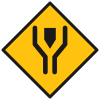
What does this sign tell you about the road ahead?
Question 6 of 35Safe driving and hazards
Another driver makes a rude gesture at you. What should you do?
Question 7 of 35Turning, passing and lanes
You miss your exit on the highway. What should you do?
Question 8 of 35Signals and pavement markings
What does a flashing yellow light mean?
Question 9 of 35Right of way
You are joining a highway from an on-ramp. Who has the right-of-way?
Question 10 of 35Licensing and insurance (Illinois)
In Illinois, at what age may you get an instruction permit if you are in an approved driver education course?
Question 11 of 35Emergencies and equipment
When should you adjust your seat and mirrors?
Question 12 of 35Parking and stopping
Why should you not park in front of a fire station driveway?
Question 13 of 35Road signs
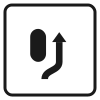
What does this sign tell you to do?
Question 14 of 35Turning, passing and lanes
What is a blind spot?
Question 15 of 35Emergencies and equipment
Your brakes suddenly stop working. What should you do first?
Question 16 of 35Safe driving and hazards
You drive into thick smoke or fog and can barely see. What is the safest choice?
Question 17 of 35Emergencies and equipment (Illinois)
In Illinois, if every vehicle is insured, a crash report is needed when property damage is more than what amount?
Question 18 of 35Licensing and insurance (Illinois)
Under the Illinois GDL rules, at what time does the night driving limit begin on Friday and Saturday?
Question 19 of 35Road signs
Most diamond-shaped signs:
Question 20 of 35Alcohol, drugs and penalties (Illinois)
Under the Illinois summary suspension law, a first offender who refuses chemical testing loses driving privileges for how long?
Question 21 of 35Right of way
A cyclist on your right and you arrive at an all-way stop together. What should you do?
Question 22 of 35Sharing the road
Why should you be careful when a motorcycle's turn signal is on?
Question 23 of 35Alcohol, drugs and penalties
Which is a common penalty for a first conviction of driving under the influence?
Question 24 of 35Signals and pavement markings
The light is green, but traffic is backed up on the far side of the intersection. What should you do?
Question 25 of 35Right of way (Illinois)
In a rural area, an Illinois school bus starts its warning lights at least how far before it stops?
Question 26 of 35Speed and following distance
Total stopping distance is made up of:
Question 27 of 35Parking and stopping
What is double parking?
Question 28 of 35Signals and pavement markings (Illinois)
On an Illinois road, a solid yellow line and a broken yellow line run side by side. When may you pass?
Question 29 of 35Sharing the road
After passing a large truck, when should you move back in front of it?
Question 30 of 35Road signs (Illinois)
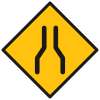
According to the Illinois Rules of the Road, a bridge marked by this sign is usually how much narrower than the road leading to it?
Question 31 of 35Alcohol, drugs and penalties
Which ability does alcohol usually affect first?
Question 32 of 35Road signs (Illinois)
On an Illinois road, what does a pink sign warn you about?
Question 33 of 35Turning, passing and lanes
You are pulling away from the curb. What should you do first?
Question 34 of 35Alcohol, drugs and penalties
What does eating a large meal before drinking do?
Question 35 of 35Road signs
In most states, how are exit numbers on an Interstate chosen?
1 of 35
Answer each question to see the explanation. Keyboard: A–D or 1–4 to answer, N next, P previous.
Answers and explanations (text version)
The correct answer to each question above, why it is right, and where it comes from. Try the test first.
Question 1: A. A no-passing zone
The pennant shape is used only to mark the start of a no-passing zone.
Handbook: Chapter: Traffic signs — Sign shapes and colors
Question 2: C. Cars may not drive, park or idle in it
Vehicles "are not allowed to drive, park, idle, or drop off or pick up passengers in these bike lanes even if bicyclists are not present."
Handbook: Chapter 5: Sharing the Road — Bicycles
Question 3: B. Others may think you are turning left
Swinging wide confuses other drivers and can lead a car to pass on your right. Keep close to the curb.
Handbook: Chapter: Turning, passing and lane use — Turns
Question 4: D. Press firmly and hold steady pressure
With anti-lock brakes, press firmly and hold. The system pumps the brakes for you, so do not pump them.
Handbook: Chapter: Emergencies and vehicle equipment — Brakes
Question 5: B. A median will split the two directions
This sign warns that a divided highway begins, so a median will split the two directions of traffic.
Handbook: Chapter: Traffic signs — Warning signs
Question 6: C. Stay calm and let it go
Do not respond to an angry driver. Stay calm, avoid eye contact, and give them room.
Handbook: Chapter: Safe driving and hazards — Road rage
Question 7: C. Go on to the next exit
Never back up or turn around on a highway. Drive on to the next exit.
Handbook: Chapter: Turning, passing and lane use — Highway driving
Question 8: B. Slow down and go on with care
A flashing yellow light is a warning. Slow down and go on with care.
Handbook: Chapter: Traffic signals and pavement markings — Traffic signals
Question 9: B. Traffic already on the highway
When joining a highway, yield to traffic already on it and merge into a safe gap.
Handbook: Chapter: Right of way — Entering a roadway
Question 10: B. Age 15
"If you are age 15-17, you may receive an instruction permit" with proof that you are enrolled in approved driver education.
Handbook: Chapter 3: Drivers Under Age 21 — Obtaining an Instruction Permit
Question 11: B. Before you start to drive
Adjust your seat and mirrors before you start to drive, so you can see well and are not distracted on the road.
Handbook: Chapter: Emergencies and vehicle equipment — Vehicle equipment
Question 12: C. Fire trucks must leave fast
Fire trucks need to leave the station fast, so never block its driveway.
Handbook: Chapter: Parking and stopping — Where not to park
Question 13: C. Pass to the right of the island ahead
A keep right sign means you must pass to the right of the island, divider or object ahead.
Handbook: Chapter: Traffic signs — Regulatory signs
Question 14: D. An area near your car your mirrors do not show
A blind spot is an area near your car that your mirrors do not show, so you must turn your head to check it.
Handbook: Chapter: Turning, passing and lane use — Changing lanes
Question 15: C. Pump the brakes and shift to a lower gear
Pump the brake pedal to build pressure and shift to a lower gear, then use the parking brake slowly if needed.
Handbook: Chapter: Emergencies and vehicle equipment — Brake failure
Question 16: B. Slow down, and pull off the road to stop
Slow down with low beams on. If you must stop, pull fully off the road so cars behind do not hit you.
Handbook: Chapter: Safe driving and hazards — Night and weather
Question 17: B. $1,500
A report must be filed for "property damage of more than $1,500"; the $500 figure applies only when a vehicle is uninsured.
Handbook: Chapter 7: Traffic Violations/Crashes — Crash Reports
Question 18: D. 11 p.m.
The nighttime limits are "Sun.-Thurs., 10 p.m.-6 a.m.; Fri.-Sat., 11 p.m.-6 a.m." (11 p.m. on Friday and Saturday).
Handbook: Chapter 3: Drivers Under Age 21 — Graduated Driver Licensing Program
Question 19: B. Warn you of a hazard or change ahead
Diamond-shaped signs are warning signs. They tell you about a hazard or change in the road ahead.
Handbook: Chapter: Traffic signs — Sign shapes and colors
Question 20: B. 1 year
A test failure brings six months, but "If you refuse to submit to chemical testing, your driving privileges will be suspended for one year" (1 year).
Handbook: Chapter 6: Driving Under the Influence (DUI) — DUI Laws
Question 21: B. Let the cyclist go first
Cyclists follow the same right-of-way rules as cars, so the rider on your right goes first.
Handbook: Chapter: Right of way — Stop signs and intersections
Question 22: A. It may not turn off on its own
Many motorcycle turn signals do not turn off on their own, so wait to see the rider actually turn.
Handbook: Chapter: Sharing the road — Motorcycles
Question 23: B. License suspension
A first conviction for driving under the influence commonly leads to license suspension, along with fines.
Handbook: Chapter: Alcohol, drugs and penalties — Penalties
Question 24: B. Wait until there is room to clear the intersection
Do not enter an intersection unless there is room to clear it, even on green. Blocking it holds up cross traffic.
Handbook: Chapter: Traffic signals and pavement markings — Traffic signals
Question 25: C. 200 feet
The bus warns "at least 100 feet (200 feet in rural areas) in advance of a stop" by flashing its lights.
Handbook: Chapter 4: Traffic Laws — Special Stops
Question 26: A. Reaction distance plus braking distance
Total stopping distance is the distance covered while you see and react plus the distance covered while braking.
Handbook: Chapter: Speed and following distance — Stopping distance
Question 27: A. Parking on the street side of a parked car
Double parking is stopping on the street side of a parked car. It blocks traffic and is generally not allowed.
Handbook: Chapter: Parking and stopping — Where not to park
Question 28: C. Only when the broken line is on your side
With a solid and a broken yellow line, "you may pass only when the broken yellow line is nearest your lane."
Handbook: Chapter 10: Traffic Signals and Pavement Markings — Pavement Markings
Question 29: A. When its whole front shows in your mirror
Wait until you can see the whole front of the truck in your mirror before moving in front of it.
Handbook: Chapter: Sharing the road — Large trucks and buses
Question 30: C. About 2 feet
The Narrow Bridge sign warns of a narrow roadway: "A bridge width is generally 2 feet less than the width of the approach pavement."
Handbook: Chapter 9: Roadway Signs — Warning Signs
Question 31: D. Judgment
Alcohol affects judgment first, so a driver may feel fine while making poor choices.
Handbook: Chapter: Alcohol, drugs and penalties — How alcohol affects you
Question 32: D. An unplanned incident, such as a crash
Pink "may be used for traffic incident signing," warning of "unplanned traffic incidents, such as traffic crashes and natural disasters."
Handbook: Chapter 9: Roadway Signs — Colors of Signs
Question 33: A. Signal and check for traffic
Signal and check mirrors and your blind spot before pulling away from the curb.
Handbook: Chapter: Turning, passing and lane use — Signaling
Question 34: C. It slows how fast alcohol is absorbed
Food slows how fast alcohol is absorbed, but it does not stop you from becoming impaired.
Handbook: Chapter: Alcohol, drugs and penalties — How alcohol affects you
Question 35: A. By the mile marker nearest the exit
In most states, exit numbers match the nearest mile marker, so you can tell how far apart two exits are.
Handbook: Chapter: Traffic signs — Guide and service signs
Practice test 2 of 10 for the Basic written exam (written test for the instruction permit) (ILSOS): 35 questions, 28 to pass — the commonly reported format; ILSOS does not publish the exact count. Official pass mark: 80%. Our practice tests are untimed.