Question 1 of 50Road signs
Practice test 1 of 10 — Indiana permit test
Practice test 1 questions
Question 2 of 50Road signs
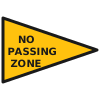
Where does Indiana post the yellow, pennant-shaped No Passing Zone sign?
Question 3 of 50Road signs · Signals and pavement markings
What does a flashing yellow arrow pointing left mean?
Question 4 of 50Road signs
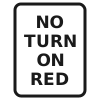
What does this sign mean while the light is red?
Question 5 of 50Road signs · Signals and pavement markings
What does a steady green light mean?
Question 6 of 50Road signs
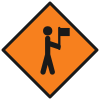
What should you be ready to do after you pass this sign?
Question 7 of 50Road signs
A red circle with a slash through a symbol means:
Question 8 of 50Road signs
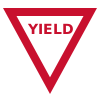
You reach this sign as a car with the right-of-way is coming. What should you do?
Question 9 of 50Road signs · Signals and pavement markings
You are stopped at a steady red light in Indiana and want to turn right. What does the law allow?
Question 10 of 50Road signs
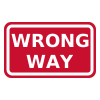
At night you pass this sign just after you turn onto a ramp. What is the best thing to do?
Question 11 of 50Road signs
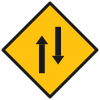
You are on a one-way street and see this sign. What does it mean?
Question 12 of 50Road signs
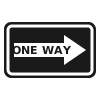
What does this sign tell you about the road?
Question 13 of 50Road signs

When you reach this sign, what must you do?
Question 14 of 50Road signs
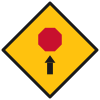
What should you do when you see this sign?
Question 15 of 50Road signs · Signals and pavement markings
When may an Indiana driver cross a marked bike lane?
Question 16 of 50Road signs
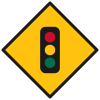
What does this sign tell you?
Question 17 of 50Rules of the road · Safe driving and hazards
Which headlights should you use in fog?
Question 18 of 50Rules of the road · Parking and stopping
You park on a hill with no curb, facing up or down. Which way should you turn your wheels?
Question 19 of 50Rules of the road · Sharing the road
When passing a bicyclist in Indiana, what is the least space the manual says to leave?
Question 20 of 50Rules of the road · Safe driving and hazards
Another driver makes a rude gesture at you. What should you do?
Question 21 of 50Rules of the road · Speed and following distance
What following gap does the Indiana manual call a good rule behind the vehicle ahead?
Question 22 of 50Rules of the road · Safe driving and hazards
When should you turn on your headlights?
Question 23 of 50Rules of the road · Sharing the road
When are cyclists hardest for drivers to see?
Question 24 of 50Rules of the road · Emergencies and equipment
You are in a crash and someone is hurt. What should you do?
Question 25 of 50Rules of the road · Right of way
Why must drivers always yield to trains at a crossing?
Question 26 of 50Rules of the road · Emergencies and equipment
You hit a parked car and cannot find the owner. What should you do?
Question 27 of 50Rules of the road · Safe driving and hazards
Which use of a hand-held phone is allowed while driving in Indiana?
Question 28 of 50Rules of the road · Alcohol, drugs and penalties
What happens when you mix alcohol with other drugs?
Question 29 of 50Rules of the road · Speed and following distance
Why does the risk of hydroplaning go up as you drive faster?
Question 30 of 50Rules of the road · Parking and stopping
Traffic is backed up and you are about to cross railroad tracks. What should you do?
Question 31 of 50Rules of the road · Turning, passing and lanes
You are waiting to turn left with oncoming traffic. How should you hold your front wheels?
Question 32 of 50Rules of the road · Emergencies and equipment
Your headlights suddenly go out at night. What should you do?
Question 33 of 50Rules of the road · Turning, passing and lanes
Where should you slow down when leaving a highway?
Question 34 of 50Rules of the road · Turning, passing and lanes
You need to turn at the next intersection. When should you get into the correct lane?
Question 35 of 50Rules of the road · Right of way
You are turning left into a driveway across the oncoming lane. Who must you yield to?
Question 36 of 50Rules of the road · Sharing the road
You stop behind a large truck on an uphill slope. Why should you leave extra space?
Question 37 of 50Rules of the road · Speed and following distance
With no lower limit posted, how fast may you drive on a rural Indiana state divided highway?
Question 38 of 50Rules of the road · Right of way
A school bus ahead of you has flashing yellow lights. What does this mean?
Question 39 of 50Rules of the road · Speed and following distance
You are driving on snow or ice. What should you do?
Question 40 of 50Rules of the road · Parking and stopping
Where is parking never allowed?
Question 41 of 50Rules of the road · Parking and stopping
What is double parking?
Question 42 of 50Rules of the road · Sharing the road
Why should you stay well back from a snowplow?
Question 43 of 50Rules of the road · Alcohol, drugs and penalties
What kinds of tests are covered by implied consent laws?
Question 44 of 50Rules of the road · Sharing the road
Why do buses and large trucks need extra room when they turn?
Question 45 of 50Rules of the road · Turning, passing and lanes
What is a blind spot?
Question 46 of 50Rules of the road · Turning, passing and lanes
You miss your exit on the highway. What should you do?
Question 47 of 50Rules of the road · Safe driving and hazards
Water is flowing across the road ahead. What should you do?
Question 48 of 50Rules of the road · Alcohol, drugs and penalties
You are in a crash. Is it legal to drive away without stopping?
Question 49 of 50Rules of the road · Parking and stopping
When may you stop or park on the shoulder of an Indiana interstate?
Question 50 of 50Rules of the road · Alcohol, drugs and penalties
Which ability does alcohol usually affect first?
1 of 50
Answer each question to see the explanation. Keyboard: A–D or 1–4 to answer, N next, P previous.
Answers and explanations (text version)
The correct answer to each question above, why it is right, and where it comes from. Try the test first.
Question 1: B. Slower drivers should use the right lane
If you are driving slower than other traffic, keep to the right lane so faster cars can pass on the left.
Handbook: Chapter: Traffic signs — Regulatory signs
Question 2: C. On the left side of a two-way road
Pennant-shaped signs are "posted on the left-hand side of two-way roads" to warn drivers not to pass.
Handbook: Chapter 6: Traffic Signs and Signals — Traffic Sign Shapes
Question 3: A. You may turn left after yielding
A flashing yellow arrow means turns are allowed, but you must first yield to oncoming traffic and pedestrians.
Handbook: Chapter: Traffic signals and pavement markings — Traffic signals
Question 4: D. You may not turn, even after you stop
This sign means no turn on red. You must stop and wait for a green light before you turn.
Handbook: Chapter: Traffic signs — Regulatory signs
Question 5: C. Go if the way is clear, yielding as needed
A green light means you may go, but only when the way is clear. You must still yield to people and cars already in the intersection.
Handbook: Chapter: Traffic signals and pavement markings — Traffic signals
Question 6: D. Follow the signals of a worker directing traffic
This sign warns of a flagger ahead. A flagger directs traffic with signals that you must obey.
Handbook: Chapter: Traffic signs — Work zone signs
Question 7: B. The action shown is not allowed
A red circle with a slash means the action in the symbol is not allowed, such as no left turn.
Handbook: Chapter: Traffic signs — Sign shapes and colors
Question 8: B. Slow down or stop and let that car go first
At a yield sign you must give way. Slow down, or stop if needed, and let the car with the right-of-way pass first.
Handbook: Chapter: Traffic signs — Regulatory signs
Question 9: A. Turning after a full stop, unless a sign forbids it
To turn right on red you "must come to a full stop," check that there is no "No Turn on Red" sign, and yield to vehicles and pedestrians.
Handbook: Chapter 6: Traffic Signs and Signals — Traffic Signals
Question 10: A. Pull over, then turn around safely
The wrong way sign means you are heading into oncoming traffic. Pull to the side right away, then turn around safely.
Handbook: Chapter: Traffic signs — Regulatory signs
Question 11: C. Traffic will soon come toward you on this road
The two-way traffic sign warns that oncoming traffic will soon use the same road as you.
Handbook: Chapter: Traffic signs — Warning signs
Question 12: C. All traffic moves the way the arrow points
A one way sign means all traffic on that road moves only in the direction the arrow shows.
Handbook: Chapter: Traffic signs — Regulatory signs
Question 13: C. Stop completely, then go when it is safe
This is a stop sign. You must come to a full stop and move on only when the way is clear.
Handbook: Chapter: Traffic signs — Regulatory signs
Question 14: B. Slow down and get ready to stop
This sign warns of a stop sign ahead. Slow down so you can stop at it.
Handbook: Chapter: Traffic signs — Warning signs
Question 15: C. Only to turn or to use a driveway or alley
Indiana drivers may "cross a bicycle path or lane only when turning or when entering or leaving an alley, driveway," or private road.
Handbook: Chapter 7: Safe Vehicle Operation — Sharing the Road with Other Vehicles
Question 16: D. There is a traffic light ahead
This sign warns of a traffic light ahead. Be ready to stop if it is yellow or red.
Handbook: Chapter: Traffic signs — Warning signs
Question 17: C. Low beams
Use low beams in fog. High beams reflect off the fog and make it harder to see.
Handbook: Chapter: Safe driving and hazards — Night and weather
Question 18: A. Toward the edge of the road
With no curb, turn the wheels toward the edge of the road so the car rolls off the road, not into traffic.
Handbook: Chapter: Parking and stopping — Parking on hills
Question 19: B. 3 feet
You may pass a bicyclist with a safe amount of room, "minimum three feet" (3 feet), when oncoming traffic is no danger.
Handbook: Chapter 7: Safe Vehicle Operation — Sharing the Road with Other Vehicles
Question 20: C. Stay calm and let it go
Do not respond to an angry driver. Stay calm, avoid eye contact, and give them room.
Handbook: Chapter: Safe driving and hazards — Road rage
Question 21: A. At least 2 to 3 seconds
A good rule is to "stay at least two to three seconds behind the vehicle ahead" (2 to 3 seconds).
Handbook: Chapter 7: Safe Vehicle Operation — Braking and Following Distances
Question 22: B. Any time it is hard to see
Turn on your headlights any time it is hard to see, such as at dusk, in rain or in fog.
Handbook: Chapter: Safe driving and hazards — Night and weather
Question 23: A. At dusk, at night, and in bad weather
Cyclists are small and easy to miss at dusk, at night and in bad weather, so look harder for them then.
Handbook: Chapter: Sharing the road — Bicycles
Question 24: D. Stop, call 911, and help if you can
Stop, call 911, and give help you are able to give. Do not move injured people unless they are in danger.
Handbook: Chapter: Emergencies and vehicle equipment — Crashes
Question 25: B. Trains cannot stop quickly or steer away
A train cannot steer and may need a mile or more to stop, so you must always yield to it.
Handbook: Chapter: Right of way — Railroad crossings
Question 26: A. Leave a note with your contact details
Leave a note with your name and contact details where the owner will find it, and report it as your state requires.
Handbook: Chapter: Emergencies and vehicle equipment — Crashes
Question 27: A. Calling 911 in a true emergency
Indiana bans using a telecommunications device while driving, except hands-free or to "contact 911 for a bona fide emergency."
Handbook: Chapter 7: Safe Vehicle Operation — Distracted Driving
Question 28: D. The effects can be much stronger
Alcohol mixed with other drugs can make the effects much stronger and more dangerous.
Handbook: Chapter: Alcohol, drugs and penalties — Drugs and medicine
Question 29: D. Your tires cannot push water away fast enough
At higher speed, tires cannot clear the water fast enough and can ride up on a thin layer of it.
Handbook: Chapter: Speed and following distance — Speed and road conditions
Question 30: D. Wait until there is room past the tracks
Never stop on railroad tracks. Wait before the tracks until there is room for your whole car on the far side.
Handbook: Chapter: Parking and stopping — Stopping at railroad tracks
Question 31: A. Straight ahead until you start to turn
Keep the wheels straight. If you are hit from behind, you will not be pushed into oncoming traffic.
Handbook: Chapter: Turning, passing and lane use — Turns
Question 32: D. Turn on hazards and pull off the road
Try your hazard lights or high beams, then pull off the road as soon as you safely can.
Handbook: Chapter: Emergencies and vehicle equipment — Lights failure
Question 33: A. In the exit lane, after leaving the main lanes
Keep your speed in the main lanes and slow down once you are in the exit lane.
Handbook: Chapter: Turning, passing and lane use — Highway driving
Question 34: C. Well before the intersection
Move into the correct lane well before the intersection so you do not swerve at the last moment.
Handbook: Chapter: Turning, passing and lane use — Turns
Question 35: C. Oncoming traffic and people on the sidewalk
When you turn left across traffic into a driveway, yield to oncoming traffic and to people on the sidewalk you will cross.
Handbook: Chapter: Right of way — Turning at intersections
Question 36: A. It may roll back when it starts to move
A large truck may roll back a little as it starts on a hill, so leave extra space in front of you.
Handbook: Chapter: Sharing the road — Large trucks and buses
Question 37: B. 60 mph
On a rural state divided highway, "vehicles may not exceed 60 miles per hour" (60 mph) or the posted limit.
Handbook: Chapter 7: Safe Vehicle Operation — Speed Limits
Question 38: C. It is getting ready to stop
Flashing yellow lights mean the bus is about to stop. Slow down and get ready to stop.
Handbook: Chapter: Right of way — School buses
Question 39: A. Go much slower and leave a lot more space
On snow and ice, stopping takes much longer, so drive much slower and leave a lot more space.
Handbook: Chapter: Speed and following distance — Speed and road conditions
Question 40: B. In an intersection
You may not park in an intersection, since it blocks traffic and people crossing.
Handbook: Chapter: Parking and stopping — Where not to park
Question 41: A. Parking on the street side of a parked car
Double parking is stopping on the street side of a parked car. It blocks traffic and is generally not allowed.
Handbook: Chapter: Parking and stopping — Where not to park
Question 42: B. It throws snow and may stop suddenly
Snowplows throw snow, move slowly and may stop or turn suddenly, so stay well back.
Handbook: Chapter: Sharing the road — Emergency and work vehicles
Question 43: D. Breath, blood, or urine tests
Implied consent laws generally cover breath, blood and urine tests for alcohol or drugs.
Handbook: Chapter: Alcohol, drugs and penalties — Testing and implied consent
Question 44: A. The back wheels take a tighter path
The back wheels of a long vehicle follow a tighter path than the front, so it needs extra room to turn.
Handbook: Chapter: Sharing the road — Large trucks and buses
Question 45: D. An area near your car your mirrors do not show
A blind spot is an area near your car that your mirrors do not show, so you must turn your head to check it.
Handbook: Chapter: Turning, passing and lane use — Changing lanes
Question 46: C. Go on to the next exit
Never back up or turn around on a highway. Drive on to the next exit.
Handbook: Chapter: Turning, passing and lane use — Highway driving
Question 47: C. Turn around and find another way
Never drive into flowing water. Even shallow water can sweep a car away, so turn around.
Handbook: Chapter: Safe driving and hazards — Night and weather
Question 48: D. No, you must stop
You must stop after any crash you are in. Leaving the scene is a serious offense.
Handbook: Chapter: Alcohol, drugs and penalties — Penalties
Question 49: B. Only in an emergency or breakdown
The manual says not to stop or park on an interstate shoulder "except in the event of an emergency or a disabled vehicle."
Handbook: Chapter 7: Safe Vehicle Operation — Driving on Interstate Highways
Question 50: D. Judgment
Alcohol affects judgment first, so a driver may feel fine while making poor choices.
Handbook: Chapter: Alcohol, drugs and penalties — How alcohol affects you
Practice test 1 of 10 for the Knowledge exam (learner's permit); traffic signs and traffic maneuvers components (the Indiana BMV): 50 questions, 41 to pass (13 of 16 road signs and 28 of 34 rules of the road) — the commonly reported format; the Indiana BMV does not publish the count. Official pass mark: 80% in each section. Our practice tests are untimed.