Question 1 of 25Turning, passing and lanes
Practice test 1 of 10 — Iowa permit test
Practice test 1 questions
Question 2 of 25Parking and stopping
How should you start to parallel park?
Question 3 of 25Turning, passing and lanes
You miss your exit on the highway. What should you do?
Question 4 of 25Signals and pavement markings
What do two broken yellow lines side by side usually mark?
Question 5 of 25Right of way
Why must drivers always yield to trains at a crossing?
Question 6 of 25Signals and pavement markings
White lines between lanes separate:
Question 7 of 25Licensing and insurance (Iowa)
Who may renew an Iowa driver’s license online?
Question 8 of 25Alcohol, drugs and penalties
A medicine label says "Do not operate heavy machinery." What should you do?
Question 9 of 25Sharing the road
Where should you take extra care to watch for children?
Question 10 of 25Licensing and insurance (Iowa)
For an Iowa license, when may the driving test be skipped?
Question 11 of 25Road signs
A sign says "SOFT SHOULDER". What should you do?
Question 12 of 25Road signs
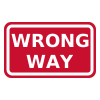
You see this sign facing you. What does it mean?
Question 13 of 25Speed and following distance
What is the "basic speed rule"?
Question 14 of 25Right of way
You want to turn left at a green light. A car is coming straight toward you. What should you do?
Question 15 of 25Speed and following distance
What can make your reaction time longer?
Question 16 of 25Road signs
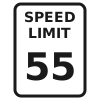
What does this sign tell you?
Question 17 of 25Right of way (Iowa)
Iowa’s Move Over or Slow Down Law covers which of these stopped vehicles?
Question 18 of 25Alcohol, drugs and penalties
Which is a common penalty for a first conviction of driving under the influence?
Question 19 of 25Safe driving and hazards (Iowa)
Under Iowa law, a child under what age must ride in a child safety seat or booster seat, not just a seat belt?
Question 20 of 25Road signs

What does this round yellow sign warn you about?
Question 21 of 25Alcohol, drugs and penalties (Iowa)
In Iowa, illegally passing a stopped school bus may lead to a license suspension of up to how long?
Question 22 of 25Signals and pavement markings
What does a flashing yellow arrow pointing left mean?
Question 23 of 25Speed and following distance
What does a minimum speed limit on a highway help prevent?
Question 24 of 25Road signs (Iowa)
Where will you find the pennant-shaped No Passing Zone sign on an Iowa road?
Question 25 of 25Emergencies and equipment
You see smoke coming from under the hood. What should you do?
1 of 25
Answer each question to see the explanation. Keyboard: A–D or 1–4 to answer, N next, P previous.
Answers and explanations (text version)
The correct answer to each question above, why it is right, and where it comes from. Try the test first.
Question 1: B. The right lane
Slower traffic should keep to the right lane so faster cars can pass on the left.
Handbook: Chapter: Turning, passing and lane use — Lane use
Question 2: A. Pull up beside the car in front of the space
Signal, then pull up alongside the car in front of the space before you start to back in.
Handbook: Chapter: Parking and stopping — Parallel parking
Question 3: C. Go on to the next exit
Never back up or turn around on a highway. Drive on to the next exit.
Handbook: Chapter: Turning, passing and lane use — Highway driving
Question 4: A. A lane whose direction changes at set times
Double broken yellow lines usually mark a reversible lane, where the direction of travel changes at set times.
Handbook: Chapter: Traffic signals and pavement markings — Pavement markings
Question 5: B. Trains cannot stop quickly or steer away
A train cannot steer and may need a mile or more to stop, so you must always yield to it.
Handbook: Chapter: Right of way — Railroad crossings
Question 6: B. Lanes of traffic moving the same way
White lane lines separate lanes of traffic moving in the same direction.
Handbook: Chapter: Traffic signals and pavement markings — Pavement markings
Question 7: D. Drivers 18 or older who qualify
Some services, "such as license renewal, are available online if you are age 18 or older and meet other requirements."
Handbook: Important Message to Drivers — Visiting a Driver’s License and ID Service Location
Question 8: D. Do not drive until you know how it affects you
A car counts as heavy machinery. Do not drive until you know how the medicine affects you.
Handbook: Chapter: Alcohol, drugs and penalties — Drugs and medicine
Question 9: C. Near schools, parks, and playgrounds
Children near schools, parks and playgrounds may run into the road without looking.
Handbook: Chapter: Sharing the road — Pedestrians
Question 10: A. When the driver’s education course rule is met
Pass a driving test, "not required if you satisfy the driver’s education course requirement."
Handbook: Chapter 1: Your Driver’s License — 1.3 Required Health Screenings and Tests
Question 11: A. Avoid driving on the edge of the road
A soft shoulder sign means the edge of the road is loose or soft. Avoid driving onto the shoulder.
Handbook: Chapter: Traffic signs — Warning signs
Question 12: A. You are driving against traffic
A wrong way sign means you are driving against the flow of traffic. Pull over safely and turn back.
Handbook: Chapter: Traffic signs — Regulatory signs
Question 13: A. Never drive faster than is safe for conditions
The basic speed rule means you must never drive faster than is safe for the road, weather and traffic, whatever the posted limit.
Handbook: Chapter: Speed and following distance — Basic speed rule
Question 14: D. Wait for the car to pass, then turn
When turning left on a green light, you must yield to oncoming traffic going straight or turning right.
Handbook: Chapter: Right of way — Turning at intersections
Question 15: B. Being tired or distracted
Being tired or distracted slows how fast you notice and react, which adds to your stopping distance.
Handbook: Chapter: Speed and following distance — Stopping distance
Question 16: D. The top legal speed when conditions are good
A speed limit sign shows the highest legal speed in good conditions. You may need to go slower when conditions are poor.
Handbook: Chapter: Traffic signs — Regulatory signs
Question 17: C. A passenger car showing its hazard lights
It covers "Any stopped motor vehicle, including a passenger vehicle, that is continually displaying hazard lights."
Handbook: Chapter 2: Traffic Signs & Rules of the Road — 2.27 Approaching Stopped Vehicles Iowa’s Move Over or Slow Down Law
Question 18: B. License suspension
A first conviction for driving under the influence commonly leads to license suspension, along with fines.
Handbook: Chapter: Alcohol, drugs and penalties — Penalties
Question 19: B. Six
"A child under six years old must be secured in a child restraint system (a safety seat or booster seat, not a seat belt)."
Handbook: Chapter 3: Preparing to Drive — 3.5 Seat Belts and Child Restraints
Question 20: D. A railroad crossing is ahead
The round yellow sign with an X warns of a railroad crossing ahead. Slow down, look and listen for trains.
Handbook: Chapter: Traffic signs — Warning signs
Question 21: C. 180 days
"Violating this law may result in your license being suspended for up to 180 days."
Handbook: Chapter 2: Traffic Signs & Rules of the Road — 2.24 School Buses
Question 22: A. You may turn left after yielding
A flashing yellow arrow means turns are allowed, but you must first yield to oncoming traffic and pedestrians.
Handbook: Chapter: Traffic signals and pavement markings — Traffic signals
Question 23: C. Crashes caused by big speed gaps
A minimum speed limit keeps very slow cars off the highway, since big speed gaps lead to crashes.
Handbook: Chapter: Speed and following distance — Special speed zones
Question 24: C. On the left side of the road
The pennant "will be on the left side of the road" and warns you of a no passing zone.
Handbook: Chapter 2: Traffic Signs & Rules of the Road — 2.1 Traffic Signs
Question 25: A. Pull over, get out, and move away
Pull over, turn off the engine, get everyone out and move away. Call for help.
Handbook: Chapter: Emergencies and vehicle equipment — Vehicle fires
Practice test 1 of 10 for the Knowledge test (instruction permit) (the Iowa DOT): Our practice tests use 25 questions, 20 of 25 (80%) to pass (the Iowa DOT does not publish a fixed format). Our practice tests are untimed.