Question 1 of 25Road signs
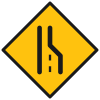
Question 1 of 25Road signs
Question 2 of 25Sharing the road
Question 3 of 25Parking and stopping
Question 4 of 25Turning, passing and lanes (Kansas)
Question 5 of 25Parking and stopping
Question 6 of 25Signals and pavement markings
Question 7 of 25Sharing the road
Question 8 of 25Licensing and insurance (Kansas)
Question 9 of 25Safe driving and hazards
Question 10 of 25Parking and stopping
Question 11 of 25Road signs
Question 12 of 25Safe driving and hazards
Question 13 of 25Safe driving and hazards (Kansas)
Question 14 of 25Road signs (Kansas)
Question 15 of 25Parking and stopping
Question 16 of 25Turning, passing and lanes
Question 17 of 25Signals and pavement markings
Question 18 of 25Road signs
Question 19 of 25Road signs
Question 20 of 25Parking and stopping (Kansas)
Question 21 of 25Right of way
Question 22 of 25Safe driving and hazards (Kansas)
Question 23 of 25Parking and stopping
Question 24 of 25Sharing the road
Question 25 of 25Road signs
The timer starts when you answer the first question. Keyboard: A–D or 1–4 to answer, N next, P previous.
The correct answer to each question above, why it is right, and where it comes from. Try the test first.
Question 1: D. The right lane ends ahead
The right edge line bends in toward the center, which means the right lane ends ahead and drivers in it must move left.
Handbook: Chapter: Traffic signs — Warning signs
Question 2: A. When its whole front shows in your mirror
Wait until you can see the whole front of the truck in your mirror before moving in front of it.
Handbook: Chapter: Sharing the road — Large trucks and buses
Question 3: A. As far off the road as you can
Pull as far off the road as you can, onto the shoulder, so you are out of the traffic lanes.
Handbook: Chapter: Parking and stopping — Stopping on highways
Question 4: C. 100 feet
Kansas law says signals must be given "at least 100 feet before making the actual move or turn," and in urban areas signal 100 feet ahead.
Handbook: SECTION 2- State/Provincial/Territory Laws and Rules of the Road — Signaling for Stops and Turns
Question 5: D. Fire crews need to reach it quickly
Fire crews need fast access to a hydrant, so do not park next to one; check your state for the exact distance.
Handbook: Chapter: Parking and stopping — Where not to park
Question 6: D. Follow the officer and go through with care
Directions from a police officer take the place of signals and signs, so follow the officer and go through with care.
Handbook: Chapter: Traffic signals and pavement markings — Traffic signals
Question 7: A. Let the cyclist pass, then turn
Yield to the cyclist in the bike lane. Let them go by, then make your turn behind them.
Handbook: Chapter: Sharing the road — Bicycles
Question 8: B. Within 90 days
A new resident must have a Kansas license "within 90 days of moving to Kansas."
Handbook: SECTION 1- The Driver’s License — About This Manual
Question 9: B. Slow down, and pull off the road to stop
Slow down with low beams on. If you must stop, pull fully off the road so cars behind do not hit you.
Handbook: Chapter: Safe driving and hazards — Night and weather
Question 10: A. Toward the edge of the road
With no curb, turn the wheels toward the edge of the road so the car rolls off the road, not into traffic.
Handbook: Chapter: Parking and stopping — Parking on hills
Question 11: B. Give directions and distances
Green horizontal signs are guide signs. They show directions, distances and exits.
Handbook: Chapter: Traffic signs — Sign shapes and colors
Question 12: C. Take a break and move your eyes often
Long, dull drives can make you drowsy. Take breaks and keep your eyes moving.
Handbook: Chapter: Safe driving and hazards — Fatigue
Question 13: A. Whenever your windshield wipers are in use
Kansas requires you "to turn on your headlights whenever the wipers are used," even in daytime.
Handbook: SECTION 7- Safe Driving Tips — Communicating
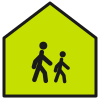
Question 14: B. Only while its lights are flashing
The school limit "is required only when flashing; otherwise obey the roadway's speed limit."
Handbook: SECTION 6- Rules of the Road — Traffic Signs
Question 15: C. Slowly, looking all around you
Back out slowly and look all around. Your view may be blocked by the cars next to you.
Handbook: Chapter: Parking and stopping — Angle parking
Question 16: D. It raises the chance of a crash
Weaving in and out of lanes surprises other drivers and raises the chance of a crash.
Handbook: Chapter: Turning, passing and lane use — Changing lanes
Question 17: B. Treat it as an all-way stop
In general, when signals are dark, treat the intersection as an all-way stop and take turns going.
Handbook: Chapter: Traffic signals and pavement markings — Traffic signals
Question 18: C. A hospital is nearby
A blue sign with a white "H" points the way to a nearby hospital.
Handbook: Chapter: Traffic signs — Guide and service signs
Question 19: D. The highway runs mostly north and south
Interstate routes with odd numbers usually run north and south; even numbers usually run east and west.
Handbook: Chapter: Traffic signs — Guide and service signs
Question 20: D. No closer than 30 feet
You may not park "within the 30 feet approaching" a stop sign at the side of the road.
Handbook: SECTION 2- State/Provincial/Territory Laws and Rules of the Road — Parking
Question 21: C. Clear the intersection, then pull over
Do not stop in an intersection. Clear it first, then pull to the right and stop.
Handbook: Chapter: Right of way — Emergency vehicles
Question 22: C. 15 to 20 minutes
To prevent a fatigue crash, "find a safe parking area to take a 15 to 20-minute nap."
Handbook: SECTION 3- Be in Shape to Drive — Fatigue
Question 23: B. No stopping or parking
In many states a red curb means no stopping or parking. Check your state for its curb colors.
Handbook: Chapter: Parking and stopping — Curb markings
Question 24: C. It needs much more distance to stop
A loaded truck needs much more distance to stop than a car, so it may not be able to stop for you.
Handbook: Chapter: Sharing the road — Large trucks and buses
Question 25: D. Directions, exits and distances
Green guide signs show directions, exits and how far it is to places ahead.
Handbook: Chapter: Traffic signs — Sign shapes and colors
Practice test 1 of 10 for the Knowledge Test (Class C instruction permit) (Kansas Department of Revenue): 25 questions · 20 of 25 (80%) to pass · 60 minutes.