Question 1 of 25Road signs
Practice test 2 of 10 — Maryland permit test
Practice test 2 questions
Question 2 of 25Sharing the road (Maryland)
According to the Maryland manual, how far does a large truck's right-side blind spot reach?
Question 3 of 25Alcohol, drugs and penalties (Maryland)
Maryland considers a driver to be under the influence of alcohol at what blood alcohol concentration?
Question 4 of 25Turning, passing and lanes
A long line of cars is behind you on a two-lane road. What should you do?
Question 5 of 25Safe driving and hazards
Your car starts to hydroplane on a wet road. What should you do?
Question 6 of 25Road signs
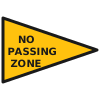
This pennant-shaped sign is on the left side of the road. What does it mark?
Question 7 of 25Road signs
Most diamond-shaped signs:
Question 8 of 25Signals and pavement markings
Yellow center lines on a road separate:
Question 9 of 25Emergencies and equipment
Your right wheels drift off the edge of the pavement. What should you do?
Question 10 of 25Safe driving and hazards
Strong winds are blowing across the road. What should you do?
Question 11 of 25Right of way (Maryland)
A Maryland funeral procession with its headlights on reaches a red light. What may vehicles in it do?
Question 12 of 25Parking and stopping
Why is it unsafe to stop or park on railroad tracks?
Question 13 of 25Speed and following distance (Maryland)
According to Maryland law, when may you drive faster than the posted speed limit?
Question 14 of 25Safe driving and hazards (Maryland)
In Maryland, may a 17-year-old use a hands-free phone while driving?
Question 15 of 25Safe driving and hazards
Water is flowing across the road ahead. What should you do?
Question 16 of 25Alcohol, drugs and penalties
What does eating a large meal before drinking do?
Question 17 of 25Turning, passing and lanes
Why should you not swing wide when you make a right turn?
Question 18 of 25Parking and stopping
Why should you not park in front of a fire station driveway?
Question 19 of 25Road signs
A speed sign on a highway shows "MINIMUM 40". What does it mean?
Question 20 of 25Road signs
You pass a sign that says "END ROAD WORK". What does it mean?
Question 21 of 25Right of way
Another car is passing you on a two-lane road. What should you do?
Question 22 of 25Signals and pavement markings (Maryland)
On a Maryland road, what does a single solid white line between lanes going the same way tell you?
Question 23 of 25Alcohol, drugs and penalties
You drank a lot late last night. Could you still be impaired the next morning?
Question 24 of 25Signals and pavement markings
The letters "RXR" painted on the road warn of:
Question 25 of 25Road signs
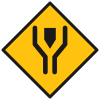
What does this sign tell you about the road ahead?
1 of 25
The timer starts when you answer the first question. Keyboard: A–D or 1–4 to answer, N next, P previous.
Answers and explanations (text version)
The correct answer to each question above, why it is right, and where it comes from. Try the test first.
Question 1: C. A regulatory sign
Regulatory signs, such as speed limit and stop signs, state rules you must obey by law.
Handbook: Chapter: Traffic signs — Regulatory signs
Question 2: B. The trailer's length and out three lanes
"The right-side blind spot runs the length of the truck's trailer and extends out three lanes."
Handbook: Section 7: Sharing the Road — C. Large Trucks and Buses
Question 3: B. .08 or higher
Maryland considers drivers under the influence "when their blood alcohol concentration is .08 or higher."
Handbook: Section 6: Dangerous Driving Behaviors — A. Alcohol, Drugs and Driving
Question 4: B. Pull over where safe and let them pass
If a long line forms behind you, pull over where it is safe and let them pass.
Handbook: Chapter: Turning, passing and lane use — Lane use
Question 5: A. Ease off the gas and keep the wheel straight
If you hydroplane, ease off the gas and keep the wheel straight until the tires grip again. Do not brake hard.
Handbook: Chapter: Safe driving and hazards — Skids and slippery roads
Question 6: C. The start of a no-passing zone
The pennant sign marks the start of a no-passing zone. Do not begin to pass from this point on.
Handbook: Chapter: Traffic signs — Warning signs
Question 7: B. Warn you of a hazard or change ahead
Diamond-shaped signs are warning signs. They tell you about a hazard or change in the road ahead.
Handbook: Chapter: Traffic signs — Sign shapes and colors
Question 8: A. Traffic moving in opposite directions
Yellow lines separate traffic moving in opposite directions.
Handbook: Chapter: Traffic signals and pavement markings — Pavement markings
Question 9: C. Ease off the gas and steer back gently
Ease off the gas, then steer back onto the pavement gently once you have slowed down.
Handbook: Chapter: Emergencies and vehicle equipment — Running off the road
Question 10: A. Slow down and grip the wheel firmly
Strong crosswinds can push your car. Slow down and keep a firm grip on the wheel.
Handbook: Chapter: Safe driving and hazards — Night and weather
Question 11: A. Keep going through the red light
You "may go through a red traffic signal if you are part of a funeral possession and have your lights on," and others must yield.
Handbook: Section 5: Driving Situations and Conditions — K. Funeral Processions
Question 12: A. A train could hit your car
Never stop or park on railroad tracks. A train cannot stop in time and could hit your car.
Handbook: Chapter: Parking and stopping — Where not to park
Question 13: A. Never; it is illegal to go faster
You may drive slower based on conditions, "but it is illegal to drive any faster than the posted speed limit."
Handbook: Section 3: Basic Driving — C. Understanding Vehicle Speed
Question 14: D. No, only to make a 911 call
"If you are under 18 years old, you may not use a cell phone while driving, even hands-free," except for a 911 emergency call.
Handbook: Section 6: Dangerous Driving Behaviors — C. Distracted Driving
Question 15: C. Turn around and find another way
Never drive into flowing water. Even shallow water can sweep a car away, so turn around.
Handbook: Chapter: Safe driving and hazards — Night and weather
Question 16: C. It slows how fast alcohol is absorbed
Food slows how fast alcohol is absorbed, but it does not stop you from becoming impaired.
Handbook: Chapter: Alcohol, drugs and penalties — How alcohol affects you
Question 17: B. Others may think you are turning left
Swinging wide confuses other drivers and can lead a car to pass on your right. Keep close to the curb.
Handbook: Chapter: Turning, passing and lane use — Turns
Question 18: C. Fire trucks must leave fast
Fire trucks need to leave the station fast, so never block its driveway.
Handbook: Chapter: Parking and stopping — Where not to park
Question 19: C. You should not drive below 40 in good conditions
A minimum speed sign means you should not go below 40 when conditions are good, because very slow cars can cause crashes.
Handbook: Chapter: Traffic signs — Regulatory signs
Question 20: B. You have left the work zone
The end road work sign tells you that you have left the work zone and normal rules apply again.
Handbook: Chapter: Traffic signs — Work zone signs
Question 21: D. Stay right and do not speed up
When you are being passed, keep to the right and hold or ease your speed so the other driver can finish passing safely.
Handbook: Chapter: Right of way — Right-of-way basics
Question 22: C. Lane changing across it is discouraged
A single solid white line "separates lanes where all vehicles are going in the same direction, but lane changing is discouraged."
Handbook: Section 4: Signs, Signals and Pavement Markings — C. Pavement Markings
Question 23: A. Yes, alcohol can still be in your blood
Yes. After heavy drinking, alcohol can still be in your blood the next morning, even after sleep.
Handbook: Chapter: Alcohol, drugs and penalties — How alcohol affects you
Question 24: B. A railroad crossing ahead
The letters RXR painted on the road warn of a railroad crossing ahead.
Handbook: Chapter: Traffic signals and pavement markings — Pavement markings
Question 25: B. A median will split the two directions
This sign warns that a divided highway begins, so a median will split the two directions of traffic.
Handbook: Chapter: Traffic signs — Warning signs
Practice test 2 of 10 for the Knowledge test (noncommercial Class C learner's permit) (Maryland MVA): 25 questions · 22 of 25 (88%) to pass · 20 minutes.