Question 1 of 40Road signs
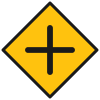
Question 1 of 40Road signs
Question 2 of 40Road signs (Minnesota)
Question 3 of 40Road signs
Question 4 of 40Road signs
Question 5 of 40Road signs
Question 6 of 40Parking and stopping
Question 7 of 40Emergencies and equipment (Minnesota)
Question 8 of 40Sharing the road
Question 9 of 40Sharing the road
Question 10 of 40Safe driving and hazards (Minnesota)
Question 11 of 40Sharing the road (Minnesota)
Question 12 of 40Road signs
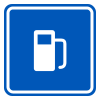
Question 13 of 40Parking and stopping (Minnesota)
Question 14 of 40Right of way
Question 15 of 40Turning, passing and lanes
Question 16 of 40Safe driving and hazards
Question 17 of 40Right of way
Question 18 of 40Parking and stopping
Question 19 of 40Right of way
Question 20 of 40Road signs
Question 21 of 40Emergencies and equipment
Question 22 of 40Alcohol, drugs and penalties
Question 23 of 40Parking and stopping
Question 24 of 40Signals and pavement markings
Question 25 of 40Right of way
Question 26 of 40Right of way (Minnesota)
Question 27 of 40Turning, passing and lanes (Minnesota)
Question 28 of 40Turning, passing and lanes
Question 29 of 40Sharing the road
Question 30 of 40Emergencies and equipment (Minnesota)
Question 31 of 40Road signs
Question 32 of 40Turning, passing and lanes
Question 33 of 40Speed and following distance
Question 34 of 40Right of way
Question 35 of 40Speed and following distance
Question 36 of 40Speed and following distance
Question 37 of 40Speed and following distance
Question 38 of 40Parking and stopping
Question 39 of 40Licensing and insurance (Minnesota)
Question 40 of 40Emergencies and equipment (Minnesota)
Answer each question to see the explanation. Keyboard: A–D or 1–4 to answer, N next, P previous.
The correct answer to each question above, why it is right, and where it comes from. Try the test first.
Question 1: B. Another road crosses yours
The cross symbol warns of a crossroad ahead. Watch for traffic coming from both sides.
Handbook: Chapter: Traffic signs — Warning signs
Question 2: C. 30 mph
The emblem "must be displayed on all vehicles that travel at speeds of 30 mph or less," such as farm implements.
Handbook: Chapter 5: Signs, signals and pavement markings — Warning signs
Question 3: C. Yield
The downward-pointing triangle is used only for the yield sign.
Handbook: Chapter: Traffic signs — Sign shapes and colors
Question 4: C. A hospital is nearby
A blue sign with a white "H" points the way to a nearby hospital.
Handbook: Chapter: Traffic signs — Guide and service signs
Question 5: B. A school zone or school crossing
The five-sided, house-shaped sign is used for a school zone or a school crossing.
Handbook: Chapter: Traffic signs — Sign shapes and colors
Question 6: B. Generally no, since it blocks cyclists
Generally you may not park in a bike lane, since it forces cyclists into traffic.
Handbook: Chapter: Parking and stopping — Where not to park
Question 7: C. Under 13
"Children under 13 must ride in the back if it is available."
Handbook: Chapter 3: Traffic laws and vehicle operation — Infant and child safety seat laws
Question 8: C. When the lane is too narrow to share safely
Cyclists may use the middle of a lane when it is too narrow for a car and bike to share it safely.
Handbook: Chapter: Sharing the road — Bicycles
Question 9: D. Move over a lane, or slow down
Every state has a move over law. Move over a lane if you can, or slow down if you cannot.
Handbook: Chapter: Sharing the road — Emergency and work vehicles
Question 10: D. 6 inches
"6 inches of water will reach the bottom of most passenger cars, causing loss of control or possible stalling."
Handbook: Chapter 6: Driving conditions — Flooded roadways
Question 11: A. At least 3 feet
"You must keep at least 3 feet between the side of your car and the bicyclist."
Handbook: Chapter 4: Sharing the road — Sharing the road with bicyclists
Question 12: A. Fuel is available at or near the next exit
Blue signs show services for drivers. A gas pump symbol means fuel is available near the next exit.
Handbook: Chapter: Traffic signs — Guide and service signs
Question 13: B. No closer than 50 feet
Parking is not allowed "Within 50 feet of the nearest rail of a railroad crossing."
Handbook: Chapter 3: Traffic laws and vehicle operation — Parking
Question 14: A. Yield and let them cross
Even when a pedestrian is crossing against the signal, you must yield to avoid hitting them.
Handbook: Chapter: Right of way — Pedestrians
Question 15: B. From the far left lane into the far left lane
Turning left from one one-way street onto another, start in the far left lane and end in the far left lane.
Handbook: Chapter: Turning, passing and lane use — Turns
Question 16: B. Toward the right edge of your lane
Look toward the right edge of your lane to keep your path in view until the car passes.
Handbook: Chapter: Safe driving and hazards — Night and weather
Question 17: C. The person crossing
A green light does not let you turn through a crosswalk in use. The person crossing has the right-of-way, so wait for them.
Handbook: Chapter: Right of way — Pedestrians
Question 18: C. Fire trucks must leave fast
Fire trucks need to leave the station fast, so never block its driveway.
Handbook: Chapter: Parking and stopping — Where not to park
Question 19: B. People crossing and cross traffic on green
When turning right on red, yield to people in the crosswalk and to cross traffic that has a green light.
Handbook: Chapter: Right of way — Turning at intersections
Question 20: D. Stop
Only the stop sign has eight sides, so you can know it by shape alone.
Handbook: Chapter: Traffic signs — Sign shapes and colors
Question 21: D. Level with the back of your head
Set the head restraint level with the back of your head to protect your neck in a crash.
Handbook: Chapter: Emergencies and vehicle equipment — Vehicle equipment
Question 22: A. It slows how fast your eyes recover from glare
Alcohol slows how fast your eyes recover from headlight glare, which makes night driving harder.
Handbook: Chapter: Alcohol, drugs and penalties — How alcohol affects you
Question 23: C. Set the parking brake
Always set the parking brake on a hill so the car will not roll away.
Handbook: Chapter: Parking and stopping — Parking on hills
Question 24: D. Go on through the intersection with care
Stop for a yellow light if you safely can. If you are too close to stop safely, go on through the intersection with care.
Handbook: Chapter: Traffic signals and pavement markings — Traffic signals
Question 25: D. All other traffic and pedestrians
A driver making a U-turn must yield to all other traffic and to pedestrians.
Handbook: Chapter: Right of way — Turning at intersections
Question 26: D. Move to the lane farthest from it, if safe
The Move Over rule also covers stopped service vehicles such as "postal vehicles" with warning lights: move to the lane farthest away, or slow down if you cannot.
Handbook: Chapter 4: Sharing the road — Passing parked emergency and service vehicles
Question 27: C. 100 feet
"Activate your signal at least 100 feet before turning," and keep signaling until the turn is complete.
Handbook: Chapter 3: Traffic laws and vehicle operation — Signaling
Question 28: A. When you can see its headlights in your mirror
Move back when you can see the car's headlights in your mirror, so you do not cut it off.
Handbook: Chapter: Turning, passing and lane use — Passing
Question 29: A. At dusk, at night, and in bad weather
Cyclists are small and easy to miss at dusk, at night and in bad weather, so look harder for them then.
Handbook: Chapter: Sharing the road — Bicycles
Question 30: C. Jump with both feet together and shuffle away
Stay inside unless it is on fire; if you must get out, "jump from the vehicle with both feet together and shuffle your feet."
Handbook: Chapter 6: Driving conditions — Vehicle crash with a utility pole or power box
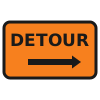
Question 31: C. Follow the signs around a closed road
A detour sign leads you around a closed road. Follow the detour signs to get back on your route.
Handbook: Chapter: Traffic signs — Work zone signs
Question 32: A. To speed up to match highway traffic
Use the acceleration lane to get up to the speed of highway traffic so you can merge smoothly.
Handbook: Chapter: Turning, passing and lane use — Highway driving
Question 33: D. Your tires cannot push water away fast enough
At higher speed, tires cannot clear the water fast enough and can ride up on a thin layer of it.
Handbook: Chapter: Speed and following distance — Speed and road conditions
Question 34: B. Let the cyclist go first
Cyclists follow the same right-of-way rules as cars, so the rider on your right goes first.
Handbook: Chapter: Right of way — Stop signs and intersections
Question 35: B. You may not be able to stop in time
Following too closely leaves too little time to react and stop if the car ahead stops suddenly.
Handbook: Chapter: Speed and following distance — Following distance
Question 36: B. Slow down and leave more space
Wet roads give your tires less grip, so slow down and leave more space ahead.
Handbook: Chapter: Speed and following distance — Speed and road conditions
Question 37: B. Being tired or distracted
Being tired or distracted slows how fast you notice and react, which adds to your stopping distance.
Handbook: Chapter: Speed and following distance — Stopping distance
Question 38: B. Close to and lined up with the curb
A parallel-parked car should sit close to the curb and lined up with it, not sticking out into traffic.
Handbook: Chapter: Parking and stopping — Parallel parking
Question 39: B. Two years
Your permit "is valid for two years of practice driving with a licensed supervising driver."
Handbook: Chapter 1: Your license to drive — Your instruction permit
Question 40: B. 4 to 9 years old
"A child from 4 to 9 years old must use a booster seat and be secured with a safety belt if they are too tall or too heavy for the car seat."
Handbook: Chapter 3: Traffic laws and vehicle operation — Infant and child safety seat laws
Practice test 1 of 10 for the Class D knowledge test (instruction permit) (Minnesota DVS): 40 questions, 32 to pass — the commonly reported format; Minnesota DVS does not publish the count. Official pass mark: 80%. Our practice tests are untimed.