Question 1 of 25Emergencies and equipment
Practice test 1 of 10 — Nebraska permit test
Practice test 1 questions
Question 2 of 25Turning, passing and lanes
Where should you not pass on a two-lane road?
Question 3 of 25Speed and following distance
How can you check your following distance?
Question 4 of 25Safe driving and hazards
Which headlights should you use in fog?
Question 5 of 25Right of way
At an intersection your signal is flashing yellow, and the cross street's is flashing red. Who should go first?
Question 6 of 25Alcohol, drugs and penalties
In general, about how fast does the body clear alcohol?
Question 7 of 25Emergencies and equipment
Your car breaks down on the highway. What should you do?
Question 8 of 25Road signs (Nebraska)
In Nebraska, a No Train Horn sign is mounted under a railroad crossing sign. What does it mean?
Question 9 of 25Parking and stopping (Nebraska)
In Nebraska, how close to a crosswalk at an intersection may you park?
Question 10 of 25Road signs
A sign shaped like a triangle with one point facing down means:
Question 11 of 25Signals and pavement markings
What does a flashing yellow light mean?
Question 12 of 25Alcohol, drugs and penalties (Nebraska)
Driving a commercial motor vehicle in Nebraska becomes unlawful starting at what BAC?
Question 13 of 25Right of way
Two cars reach an intersection with no signs or signals at the same time. Who should yield?
Question 14 of 25Right of way (Nebraska)
Which of these is covered by Nebraska's Move Over law when it is stopped with flashing lights?
Question 15 of 25Speed and following distance
When you are stopped behind another car, how much space should you leave?
Question 16 of 25Safe driving and hazards
When is a road often most slippery during rain?
Question 17 of 25Road signs
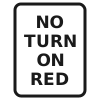
What does this sign mean while the light is red?
Question 18 of 25Safe driving and hazards
Where is ice most likely to form first?
Question 19 of 25Road signs (Nebraska)
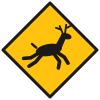
According to the Nebraska Driver's Manual, where may deer cross the road?
Question 20 of 25Road signs
Small green signs with numbers along a highway are mile markers. How can they help you?
Question 21 of 25Road signs
Which sign is the only one with eight sides?
Question 22 of 25Parking and stopping
Your car has a problem on the highway. Where should you stop?
Question 23 of 25Road signs
In most states, how are exit numbers on an Interstate chosen?
Question 24 of 25Sharing the road
After passing a large truck, when should you move back in front of it?
Question 25 of 25Turning, passing and lanes (Nebraska)
In a Nebraska dual-lane roundabout, which lane should you usually pick to turn left?
1 of 25
Answer each question to see the explanation. Keyboard: A–D or 1–4 to answer, N next, P previous.
Answers and explanations (text version)
The correct answer to each question above, why it is right, and where it comes from. Try the test first.
Question 1: A. Pull over, get out, and move away
Pull over, turn off the engine, get everyone out and move away. Call for help.
Handbook: Chapter: Emergencies and vehicle equipment — Vehicle fires
Question 2: D. Near a hill, curve, or intersection
Do not pass near a hill, curve, intersection or rail crossing, where you cannot see oncoming traffic.
Handbook: Chapter: Turning, passing and lane use — Passing
Question 3: B. Count the seconds to reach a point it passed
Pick a fixed point such as a sign. When the car ahead passes it, count the seconds until you reach it.
Handbook: Chapter: Speed and following distance — Following distance
Question 4: C. Low beams
Use low beams in fog. High beams reflect off the fog and make it harder to see.
Handbook: Chapter: Safe driving and hazards — Night and weather
Question 5: A. You go with care; cross traffic stops
Flashing red means the cross street must stop. Your flashing yellow means you may go on with care.
Handbook: Chapter: Right of way — Signals and right of way
Question 6: C. About one standard drink per hour
In general, the body clears about one standard drink per hour, and nothing speeds it up.
Handbook: Chapter: Alcohol, drugs and penalties — How alcohol affects you
Question 7: D. Pull off the road and turn on hazards
Pull off the road as far as you can and turn on your hazard lights so others can see you.
Handbook: Chapter: Emergencies and vehicle equipment — Breakdowns
Question 8: A. Trains do not sound the horn here
This sign marks a quiet zone, where "Trains do not blow the horn at this location," so look and listen with extra care.
Handbook: Section 3: Signs, Signals and Markings — 3B-4 Warning Signs
Question 9: D. No closer than 20 feet
Parking is not allowed "Within 20 feet of a crosswalk at an intersection" (20 feet).
Handbook: Section 4: Rules of the Road — 4F-2 Where Not to Park or Stop a Vehicle
Question 10: C. Yield
The downward-pointing triangle is used only for the yield sign.
Handbook: Chapter: Traffic signs — Sign shapes and colors
Question 11: B. Slow down and go on with care
A flashing yellow light is a warning. Slow down and go on with care.
Handbook: Chapter: Traffic signals and pavement markings — Traffic signals
Question 12: A. .04%
It is unlawful to drive with a BAC of ".04% or higher when operating a commercial motor vehicle" (.04%).
Handbook: Section 2: Important Driver Information — 2A Alcohol, Drugs, and Driving
Question 13: A. The driver on the left
At an intersection with no signs or signals, the driver on the left yields to the driver on the right.
Handbook: Chapter: Right of way — Uncontrolled intersections
Question 14: A. A garbage or recycling truck
The law covers stopped emergency, road assistance, utility, highway maintenance, "or solid waste or recycling collection" vehicles.
Handbook: Section 4: Rules of the Road — 4B-6 Nebraska Move Over Law
Question 15: A. Enough to see its rear tires touch the road
If you can see the rear tires of the car ahead touching the road, you have room to steer around it.
Handbook: Chapter: Speed and following distance — Managing space
Question 16: D. In the first few minutes of rain
In the first few minutes of rain, water mixes with oil on the road and makes it very slippery until more rain washes it away.
Handbook: Chapter: Safe driving and hazards — Skids and slippery roads
Question 17: D. You may not turn, even after you stop
This sign means no turn on red. You must stop and wait for a green light before you turn.
Handbook: Chapter: Traffic signs — Regulatory signs
Question 18: C. On bridges and overpasses
Bridges and overpasses lose heat from above and below, so ice forms on them first.
Handbook: Chapter: Safe driving and hazards — Skids and slippery roads
Question 19: B. Anywhere at all, with or without a sign
Deer Crossing signs go only in higher-conflict areas, but the manual warns that "The deer can cross anywhere."
Handbook: Section 3: Signs, Signals and Markings — 3B-4 Warning Signs
Question 20: D. They tell people where you are in an emergency
Mile markers show your place on the highway, which helps you tell police or rescue workers where you are.
Handbook: Chapter: Traffic signs — Guide and service signs
Question 21: D. Stop
Only the stop sign has eight sides, so you can know it by shape alone.
Handbook: Chapter: Traffic signs — Sign shapes and colors
Question 22: A. As far off the road as you can
Pull as far off the road as you can, onto the shoulder, so you are out of the traffic lanes.
Handbook: Chapter: Parking and stopping — Stopping on highways
Question 23: A. By the mile marker nearest the exit
In most states, exit numbers match the nearest mile marker, so you can tell how far apart two exits are.
Handbook: Chapter: Traffic signs — Guide and service signs
Question 24: A. When its whole front shows in your mirror
Wait until you can see the whole front of the truck in your mirror before moving in front of it.
Handbook: Chapter: Sharing the road — Large trucks and buses
Question 25: C. The lane shared by through and left-turn traffic
In general, "To make a left turn, choose the shared through/left-turn lane" before you enter the circle.
Handbook: Section 4: Rules of the Road — 4B-5 Rules for Driving Roundabouts
Practice test 1 of 10 for the Class O written test (learner's permit) (Nebraska DMV): 25 questions · 20 of 25 (80%) to pass · no time limit.