Question 1 of 25Sharing the road
Practice test 2 of 10 — Nebraska permit test
Practice test 2 questions
Question 2 of 25Turning, passing and lanes
On which side should you normally pass another vehicle?
Question 3 of 25Right of way
A person is crossing the middle of a block, not at a crosswalk. What is true?
Question 4 of 25Alcohol, drugs and penalties
Does drinking coffee make a person safe to drive after drinking alcohol?
Question 5 of 25Right of way
At a four-way stop, another driver waves you on, but it is their turn. What is the safest thing to do?
Question 6 of 25Parking and stopping
When you finish parallel parking, where should your car be?
Question 7 of 25Sharing the road
You are turning right and a cyclist is riding in the bike lane next to you. What should you do?
Question 8 of 25Signals and pavement markings (Nebraska)
According to the Nebraska Driver's Manual, when may you turn left on a steady red light after stopping?
Question 9 of 25Alcohol, drugs and penalties (Nebraska)
An officer takes a Nebraska driver's license after a failed alcohol test. How long is the temporary license good for?
Question 10 of 25Road signs
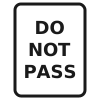
What does this sign mean?
Question 11 of 25Road signs
A white sign says "PASS WITH CARE". What does it mean?
Question 12 of 25Safe driving and hazards (Nebraska)
According to the Nebraska Driver's Manual, what is your safest action if you are about to hit a deer?
Question 13 of 25Signals and pavement markings
An officer at an intersection waves you on through a red light. What should you do?
Question 14 of 25Speed and following distance (Nebraska)
With no speed sign posted, what is the top speed on a Nebraska gravel road?
Question 15 of 25Right of way
A cyclist on your right and you arrive at an all-way stop together. What should you do?
Question 16 of 25Safe driving and hazards
Where should you look while you drive?
Question 17 of 25Road signs

You reach this sign as a car with the right-of-way is coming. What should you do?
Question 18 of 25Alcohol, drugs and penalties
How do the alcohol rules for drivers under 21 compare with those for adults?
Question 19 of 25Right of way (Nebraska)
On a Nebraska multi-lane interstate, you come up on a stopped tow truck with flashing lights. If it is safe, what must you do?
Question 20 of 25Road signs
On an Interstate route sign, what does an odd route number usually tell you?
Question 21 of 25Road signs
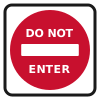
Where are you most likely to see this sign?
Question 22 of 25Turning, passing and lanes
How should you turn left from a one-way street onto another one-way street?
Question 23 of 25Road signs
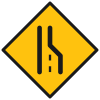
What does this sign mean?
Question 24 of 25Sharing the road
Many states require at least 3 feet of space when passing a cyclist. What is the main reason?
Question 25 of 25Speed and following distance (Nebraska)
Which rule does the Nebraska manual give for the least safe gap behind the car ahead?
1 of 25
Answer each question to see the explanation. Keyboard: A–D or 1–4 to answer, N next, P previous.
Answers and explanations (text version)
The correct answer to each question above, why it is right, and where it comes from. Try the test first.
Question 1: A. Wait behind until you can pass safely
Wait behind the cyclist until there is room to pass safely with plenty of space.
Handbook: Chapter: Sharing the road — Bicycles
Question 2: D. On the left
You should normally pass on the left. Passing on the right is allowed only in certain cases.
Handbook: Chapter: Turning, passing and lane use — Passing
Question 3: B. They should yield, but you must still avoid them
Pedestrians outside a crosswalk should yield to cars, but drivers must still take care not to hit anyone.
Handbook: Chapter: Right of way — Pedestrians
Question 4: B. No, it does not lower blood alcohol
Coffee may make you feel more awake, but it does not lower blood alcohol or make you safe to drive.
Handbook: Chapter: Alcohol, drugs and penalties — How alcohol affects you
Question 5: C. Look for other traffic, then go
A wave is not a promise that the way is clear. Look for other traffic and people before you go.
Handbook: Chapter: Right of way — Stop signs and intersections
Question 6: B. Close to and lined up with the curb
A parallel-parked car should sit close to the curb and lined up with it, not sticking out into traffic.
Handbook: Chapter: Parking and stopping — Parallel parking
Question 7: A. Let the cyclist pass, then turn
Yield to the cyclist in the bike lane. Let them go by, then make your turn behind them.
Handbook: Chapter: Sharing the road — Bicycles
Question 8: B. From a one-way street onto another one-way street
Turning left at a red light is allowed "only if traveling on a one-way street and turning onto another" one-way street.
Handbook: Section 3: Signs, Signals and Markings — 3A-2 Turning on Red
Question 9: B. 15 days
The driver is issued "a temporary license that is valid for 15 days," and then the license is revoked unless a hearing dismisses it.
Handbook: Section 1: Nebraska License to Drive — 1Q Suspensions, Revocations, Impoundments and Confiscations
Question 10: A. You may not pass other vehicles here
This sign means do not pass. You must not pass other vehicles on this part of the road.
Handbook: Chapter: Traffic signs — Regulatory signs
Question 11: A. The no-passing zone has ended
A pass with care sign marks the end of a no-passing zone. You may pass again, but only when it is safe.
Handbook: Chapter: Traffic signs — Regulatory signs
Question 12: B. Brake firmly, steer to keep control, and stop
If a deer crash is coming, "your safest action is to BRAKE (firmly), STEER" to keep control, and stop as safely as you can.
Handbook: Section 2: Important Driver Information — 2D "Don't Veer for Deer" – Driver Tips
Question 13: D. Follow the officer and go through with care
Directions from a police officer take the place of signals and signs, so follow the officer and go through with care.
Handbook: Chapter: Traffic signals and pavement markings — Traffic signals
Question 14: C. 50 mph
Unless otherwise posted, the limit is "50 MPH on any roadway that is gravel or not dustless" (50 mph).
Handbook: Section 4: Rules of the Road — 4C-1 Maximum Speed Limits – Unless Otherwise Posted
Question 15: B. Let the cyclist go first
Cyclists follow the same right-of-way rules as cars, so the rider on your right goes first.
Handbook: Chapter: Right of way — Stop signs and intersections
Question 16: D. Far ahead and all around you
Look well ahead and all around, not just at the car in front, so you spot hazards early.
Handbook: Chapter: Safe driving and hazards — Seeing and scanning
Question 17: B. Slow down or stop and let that car go first
At a yield sign you must give way. Slow down, or stop if needed, and let the car with the right-of-way pass first.
Handbook: Chapter: Traffic signs — Regulatory signs
Question 18: D. They are stricter, with a very low limit
Every state has a zero-tolerance law, so the limit for drivers under 21 is stricter: very low or zero.
Handbook: Chapter: Alcohol, drugs and penalties — Legal limits
Question 19: D. Move over so a full lane is between you and it
Drivers must "move into a lane at least one travel lane away" from stopped vehicles with flashing lights, including tow trucks.
Handbook: Section 4: Rules of the Road — 4B-6 Nebraska Move Over Law
Question 20: D. The highway runs mostly north and south
Interstate routes with odd numbers usually run north and south; even numbers usually run east and west.
Handbook: Chapter: Traffic signs — Guide and service signs
Question 21: C. At the end of a one-way road or exit ramp
Do not enter signs face drivers at the wrong end of a one-way road or a highway exit ramp, so no one drives in against traffic.
Handbook: Chapter: Traffic signs — Regulatory signs
Question 22: B. From the far left lane into the far left lane
Turning left from one one-way street onto another, start in the far left lane and end in the far left lane.
Handbook: Chapter: Turning, passing and lane use — Turns
Question 23: D. The right lane ends ahead
The right edge line bends in toward the center, which means the right lane ends ahead and drivers in it must move left.
Handbook: Chapter: Traffic signs — Warning signs
Question 24: B. A cyclist may swerve to avoid a hazard
Many states require at least 3 feet because a cyclist may swerve around potholes, glass or car doors.
Handbook: Chapter: Sharing the road — Bicycles
Question 25: A. The three-second rule
Nebraska drivers should "Use the three-second rule to determine safe following distance," and it is a minimum.
Handbook: Section 5: Special Driving Conditions — 5G-1 Techniques
Practice test 2 of 10 for the Class O written test (learner's permit) (Nebraska DMV): 25 questions · 20 of 25 (80%) to pass · no time limit.