Question 1 of 40Licensing and insurance (New Hampshire)
Practice test 1 of 10 — New Hampshire knowledge test
Practice test 1 questions
Question 2 of 40Road signs
A stop sign has a small plaque below it that says "ALL WAY". What does this mean?
Question 3 of 40Sharing the road
When may a cyclist ride in the middle of a traffic lane?
Question 4 of 40Parking and stopping (New Hampshire)
Across the street from a New Hampshire fire station driveway, you may not park within how many feet of it?
Question 5 of 40Turning, passing and lanes
After passing a car, when should you move back into its lane?
Question 6 of 40Turning, passing and lanes
You are passing a car and an oncoming car appears sooner than you thought. What is the best thing to do?
Question 7 of 40Sharing the road
A large truck ahead is signaling a right turn and has swung left. What should you do?
Question 8 of 40Road signs
Signs that are wider than they are tall, in green, usually:
Question 9 of 40Road signs
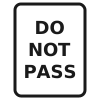
What does this sign mean?
Question 10 of 40Sharing the road
You are turning right and a cyclist is riding in the bike lane next to you. What should you do?
Question 11 of 40Road signs
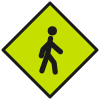
What does this sign warn you about?
Question 12 of 40Parking and stopping
You must leave your car on the roadside at night. What should you do?
Question 13 of 40Road signs
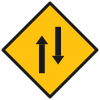
You are on a one-way street and see this sign. What does it mean?
Question 14 of 40Road signs
A sign shaped like a long sideways triangle (a pennant) warns of:
Question 15 of 40Right of way
A person starts to cross against a "DON'T WALK" signal in front of you. What should you do?
Question 16 of 40Signals and pavement markings
What does a steady yellow light mean?
Question 17 of 40Safe driving and hazards
A deer suddenly jumps onto the road in front of you. What is usually safest?
Question 18 of 40Right of way
You are pulling out of a driveway onto a street. Who must you yield to?
Question 19 of 40Turning, passing and lanes
What should you do after a turn if your signal is still on?
Question 20 of 40Speed and following distance
If you double your speed, how much more energy does a crash carry?
Question 21 of 40Parking and stopping
In general, may you park on a bridge or in a tunnel?
Question 22 of 40Road signs (New Hampshire)
On New Hampshire road signs, what does the color purple stand for?
Question 23 of 40Emergencies and equipment (New Hampshire)
If your car breaks down in New Hampshire, how far in front of and behind it should you place flares or reflectors?
Question 24 of 40Alcohol, drugs and penalties
What is a likely result of driving while your license is suspended?
Question 25 of 40Emergencies and equipment (New Hampshire)
New Hampshire's law requiring drivers to clear snow and ice off their vehicles is known by what name?
Question 26 of 40Alcohol, drugs and penalties
What kinds of tests are covered by implied consent laws?
Question 27 of 40Safe driving and hazards
Your car starts to hydroplane on a wet road. What should you do?
Question 28 of 40Right of way
You are joining a highway from an on-ramp. Who has the right-of-way?
Question 29 of 40Licensing and insurance (New Hampshire)
After moving to New Hampshire, how long does a new resident have to get a New Hampshire driver's license?
Question 30 of 40Road signs (New Hampshire)
According to the New Hampshire manual, where does a three-digit Interstate route with an odd first number lead?
Question 31 of 40Turning, passing and lanes
Where is a U-turn most likely to be unsafe or not allowed?
Question 32 of 40Parking and stopping (New Hampshire)

A train is coming to a New Hampshire railroad crossing. What is the closest you may stop to the nearest rail?
Question 33 of 40Safe driving and hazards
What is the main danger of driving when angry or upset?
Question 34 of 40Right of way
Your light turns green, but people are still in the crosswalk. What should you do?
Question 35 of 40Right of way
A person is crossing the middle of a block, not at a crosswalk. What is true?
Question 36 of 40Turning, passing and lanes
In general, how should you use a center two-way left-turn lane?
Question 37 of 40Parking and stopping (New Hampshire)
In New Hampshire, how close to a crosswalk at an intersection may you park?
Question 38 of 40Turning, passing and lanes
When joining a highway, what should you look for?
Question 39 of 40Safe driving and hazards
When is a road often most slippery during rain?
Question 40 of 40Alcohol, drugs and penalties (New Hampshire)
After a first DUI conviction in New Hampshire, how long may the driver lose their driving privileges?
1 of 40
The timer starts when you answer the first question. Keyboard: A–D or 1–4 to answer, N next, P previous.
Answers and explanations (text version)
The correct answer to each question above, why it is right, and where it comes from. Try the test first.
Question 1: D. One at most
In the first six months they may not drive "With more than one passenger less than 25 years of age" who is not family, so one at most.
Handbook: Section 2: Driver's License and Non-Driver ID Information — License Restrictions
Question 2: A. Traffic from every direction must stop
An all-way plaque means traffic from every direction must stop at the intersection.
Handbook: Chapter: Traffic signs — Regulatory signs
Question 3: C. When the lane is too narrow to share safely
Cyclists may use the middle of a lane when it is too narrow for a car and bike to share it safely.
Handbook: Chapter: Sharing the road — Bicycles
Question 4: B. 75 feet
Do not park within 20 feet of a fire station driveway "or within 75 feet on the opposite side of the street".
Handbook: Section 7: General Driving and Parking — Parking
Question 5: A. When you can see its headlights in your mirror
Move back when you can see the car's headlights in your mirror, so you do not cut it off.
Handbook: Chapter: Turning, passing and lane use — Passing
Question 6: A. Drop back behind the car you were passing
If you cannot finish the pass safely, slow down and drop back into your lane behind the car you were passing.
Handbook: Chapter: Turning, passing and lane use — Passing
Question 7: C. Stay back and do not pass on the right
Trucks swing wide to make right turns. Stay back and never try to pass on the right.
Handbook: Chapter: Sharing the road — Large trucks and buses
Question 8: B. Give directions and distances
Green horizontal signs are guide signs. They show directions, distances and exits.
Handbook: Chapter: Traffic signs — Sign shapes and colors
Question 9: A. You may not pass other vehicles here
This sign means do not pass. You must not pass other vehicles on this part of the road.
Handbook: Chapter: Traffic signs — Regulatory signs
Question 10: A. Let the cyclist pass, then turn
Yield to the cyclist in the bike lane. Let them go by, then make your turn behind them.
Handbook: Chapter: Sharing the road — Bicycles
Question 11: A. People may be crossing the road ahead
This pedestrian crossing sign warns that people may be crossing. Slow down and yield to anyone in the crosswalk.
Handbook: Chapter: Traffic signs — Warning signs
Question 12: A. Turn on your hazard or parking lights
At night, turn on your hazard or parking lights so other drivers can see your car.
Handbook: Chapter: Parking and stopping — Stopping on highways
Question 13: C. Traffic will soon come toward you on this road
The two-way traffic sign warns that oncoming traffic will soon use the same road as you.
Handbook: Chapter: Traffic signs — Warning signs
Question 14: A. A no-passing zone
The pennant shape is used only to mark the start of a no-passing zone.
Handbook: Chapter: Traffic signs — Sign shapes and colors
Question 15: A. Yield and let them cross
Even when a pedestrian is crossing against the signal, you must yield to avoid hitting them.
Handbook: Chapter: Right of way — Pedestrians
Question 16: A. The light is about to turn red
A steady yellow light warns that the light is about to turn red. Stop if you can do so safely.
Handbook: Chapter: Traffic signals and pavement markings — Traffic signals
Question 17: C. Brake firmly and stay in your lane
Brake firmly and stay in your lane. Swerving can send you into other traffic or off the road.
Handbook: Chapter: Safe driving and hazards — Animals
Question 18: C. All traffic and people walking
When entering a street from a driveway or alley, yield to all traffic on the street and to people on the sidewalk.
Handbook: Chapter: Right of way — Entering a roadway
Question 19: B. Turn it off
If your signal does not turn off by itself after a turn, turn it off so you do not confuse others.
Handbook: Chapter: Turning, passing and lane use — Signaling
Question 20: C. About four times as much
Crash energy grows with the square of speed, so at double the speed a crash carries about four times as much energy.
Handbook: Chapter: Speed and following distance — Stopping distance
Question 21: A. No, unless signs say you may
In general, parking on a bridge or in a tunnel is not allowed unless signs say you may.
Handbook: Chapter: Parking and stopping — Where not to park
Question 22: D. E-ZPass
In the manual's list of standard sign colors, purple means E-ZPass: "Purple EZPass".
Handbook: Section 6: Rules of the Road — Traffic Signs
Question 23: C. 200 feet
Place "emergency flares or reflectors 200 feet in front of and behind" the vehicle.
Handbook: Section 10: Driving Emergencies — Vehicle Malfunctions
Question 24: C. More fines and a longer suspension or jail
Driving while suspended usually leads to more fines, a longer suspension, and possibly jail.
Handbook: Chapter: Alcohol, drugs and penalties — Penalties
Question 25: D. Jessica's Law
The duty to clear snow and ice is "Jessica's Law", passed after ice from a truck killed a driver.
Handbook: Section 4: Before Driving — Snow and Ice Removal
Question 26: D. Breath, blood, or urine tests
Implied consent laws generally cover breath, blood and urine tests for alcohol or drugs.
Handbook: Chapter: Alcohol, drugs and penalties — Testing and implied consent
Question 27: A. Ease off the gas and keep the wheel straight
If you hydroplane, ease off the gas and keep the wheel straight until the tires grip again. Do not brake hard.
Handbook: Chapter: Safe driving and hazards — Skids and slippery roads
Question 28: B. Traffic already on the highway
When joining a highway, yield to traffic already on it and merge into a safe gap.
Handbook: Chapter: Right of way — Entering a roadway
Question 29: D. Up to 60 days
New residents "have up to 60 days to obtain a driver's license" after moving into the state.
Handbook: Section 1: Driving in New Hampshire — New Residents to NH
Question 30: A. Into a city
The manual says three "numbered routes with an odd first number are routes into a city."
Handbook: Section 6: Rules of the Road — Route Number Signs
Question 31: C. Near a curve or hill where others cannot see you
Do not make a U-turn near a curve or hill, where drivers cannot see you in time to stop.
Handbook: Chapter: Turning, passing and lane use — Turns
Question 32: D. 15 feet
Stop behind the stop line or "not less than 15 feet, nor more than 50 feet" from the nearest rail.
Handbook: Section 6: Rules of the Road — Railroad Crossing Warning Signs
Question 33: D. You may take more risks
Strong feelings make you take more risks and pay less attention, so wait until you are calm before you drive.
Handbook: Chapter: Safe driving and hazards — Defensive driving
Question 34: A. Wait until they have crossed
People who are still in the crosswalk when your light turns green have the right-of-way. Wait for them to cross.
Handbook: Chapter: Right of way — Pedestrians
Question 35: B. They should yield, but you must still avoid them
Pedestrians outside a crosswalk should yield to cars, but drivers must still take care not to hit anyone.
Handbook: Chapter: Right of way — Pedestrians
Question 36: B. Enter it only just before your left turn
Enter a two-way left-turn lane just before you turn left and never use it to pass; how far you may drive in it varies by state.
Handbook: Chapter: Turning, passing and lane use — Lane use
Question 37: A. No closer than 20 feet
Even where it is not marked, it is illegal to park "Within 20 feet of a crosswalk at an intersection".
Handbook: Section 7: General Driving and Parking — Parking
Question 38: C. A gap in traffic to merge into
Look for a safe gap in traffic, signal, and match your speed to merge into it.
Handbook: Chapter: Turning, passing and lane use — Highway driving
Question 39: D. In the first few minutes of rain
In the first few minutes of rain, water mixes with oil on the road and makes it very slippery until more rain washes it away.
Handbook: Chapter: Safe driving and hazards — Skids and slippery roads
Question 40: C. 9 months to 2 years
A first offense may bring a loss of privileges "for a period of 9 months to 2 years".
Handbook: Section 3: Dangerous Driving — Alcohol, Other Drugs and Driving
Practice test 1 of 10 for the Driver License Knowledge Test (first driver license, no learner's permit in New Hampshire) (New Hampshire Division of Motor Vehicles): 40 questions · 32 of 40 (80%) to pass · 40 minutes.