Question 1 of 40Safe driving and hazards (New Hampshire)
Practice test 2 of 10 — New Hampshire knowledge test
Practice test 2 questions
Question 2 of 40Road signs
Signs that are taller than they are wide, in white with black letters, usually:
Question 3 of 40Emergencies and equipment
When should you adjust your seat and mirrors?
Question 4 of 40Parking and stopping (New Hampshire)
In New Hampshire, you may not park within how many feet of a stop sign, yield sign or traffic signal?
Question 5 of 40Turning, passing and lanes
You turn left from a two-way street onto another two-way street. Which lane should you end in?
Question 6 of 40Parking and stopping
Why should you not park next to a fire hydrant?
Question 7 of 40Sharing the road
Where should you take extra care to watch for children?
Question 8 of 40Road signs
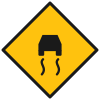
What does this sign warn you about?
Question 9 of 40Road signs
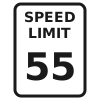
You pass this sign, but rain is falling hard and you cannot see well. What should you do?
Question 10 of 40Sharing the road
An orange triangle with a red border on the back of a vehicle means:
Question 11 of 40Road signs

A crossing has only this sign, with no lights or gates. What should you do?
Question 12 of 40Alcohol, drugs and penalties
How do the alcohol rules for drivers under 21 compare with those for adults?
Question 13 of 40Road signs
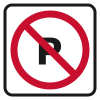
What does this sign mean?
Question 14 of 40Road signs
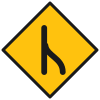
You are on the main road and see this sign. What is the best thing to do?
Question 15 of 40Signals and pavement markings
Arrows painted in your lane show:
Question 16 of 40Road signs
Green signs on a highway show:
Question 17 of 40Safe driving and hazards
Where is it now advised that you place your hands on the wheel?
Question 18 of 40Road signs
A sign says "SLOWER TRAFFIC KEEP RIGHT". What does it mean?
Question 19 of 40Turning, passing and lanes
What is the acceleration lane on a highway on-ramp for?
Question 20 of 40Right of way
At a four-way stop, another driver waves you on, but it is their turn. What is the safest thing to do?
Question 21 of 40Parking and stopping
Which way should your car face when you park on a two-way street?
Question 22 of 40Right of way (New Hampshire)
In New Hampshire, how far from a stopped school bus with red lights flashing must you stop?
Question 23 of 40Sharing the road (New Hampshire)
In New Hampshire, how much space should you leave when passing a bicycle at 50 mph?
Question 24 of 40Alcohol, drugs and penalties
What usually happens if you refuse a lawful breath or blood test?
Question 25 of 40Sharing the road (New Hampshire)
When you pass a bicycle at 30 mph or less in New Hampshire, what space is presumed safe?
Question 26 of 40Alcohol, drugs and penalties
Marijuana is legal for adults in some states. Is it legal to drive while impaired by it?
Question 27 of 40Alcohol, drugs and penalties
How does a conviction for driving under the influence usually affect insurance?
Question 28 of 40Road signs
You pass a sign that says "END ROAD WORK". What does it mean?
Question 29 of 40Safe driving and hazards (New Hampshire)
According to the New Hampshire manual, if you get too tired while driving, how long a nap should you take at a rest area?
Question 30 of 40Speed and following distance (New Hampshire)
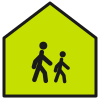
In a posted New Hampshire school zone, near school opening and closing times, what is the speed limit?
Question 31 of 40Speed and following distance
Why should you drive slower on a gravel road?
Question 32 of 40Parking and stopping (New Hampshire)
A New Hampshire fire truck has stopped to answer a fire alarm. Where may you not drive or park?
Question 33 of 40Safe driving and hazards
You see children playing near the road ahead. What is a good step to take?
Question 34 of 40Right of way
In general, how should you treat a funeral procession?
Question 35 of 40Right of way
Which statement about the right-of-way is true?
Question 36 of 40Turning, passing and lanes
On which side should you normally pass another vehicle?
Question 37 of 40Turning, passing and lanes (New Hampshire)
According to the New Hampshire manual, when should you use a three-point turn?
Question 38 of 40Parking and stopping
May you park on a crosswalk?
Question 39 of 40Alcohol, drugs and penalties
How do the laws treat driving under the influence of illegal drugs?
Question 40 of 40Alcohol, drugs and penalties (New Hampshire)
According to the New Hampshire manual, how long is the suspension for a first offense under the Youth Operator "Under 20" law?
1 of 40
The timer starts when you answer the first question. Keyboard: A–D or 1–4 to answer, N next, P previous.
Answers and explanations (text version)
The correct answer to each question above, why it is right, and where it comes from. Try the test first.
Question 1: A. Anyone under the age of 18
The manual says "safety restraints are required for anyone under the age of 18".
Handbook: Section 4: Before Driving — Using Safety Belts
Question 2: C. Give a rule you must obey
Upright white rectangles are regulatory signs, such as speed limits. They give a rule you must obey.
Handbook: Chapter: Traffic signs — Sign shapes and colors
Question 3: B. Before you start to drive
Adjust your seat and mirrors before you start to drive, so you can see well and are not distracted on the road.
Handbook: Chapter: Emergencies and vehicle equipment — Vehicle equipment
Question 4: B. 30 feet
It is illegal to park within "30 feet of a stop sign, yield sign or traffic control signal".
Handbook: Section 7: General Driving and Parking — Parking
Question 5: C. The lane just right of the center line
When turning left onto a two-way street, finish in the lane just to the right of the center line.
Handbook: Chapter: Turning, passing and lane use — Turns
Question 6: D. Fire crews need to reach it quickly
Fire crews need fast access to a hydrant, so do not park next to one; check your state for the exact distance.
Handbook: Chapter: Parking and stopping — Where not to park
Question 7: C. Near schools, parks, and playgrounds
Children near schools, parks and playgrounds may run into the road without looking.
Handbook: Chapter: Sharing the road — Pedestrians
Question 8: B. The road may be slick when it is wet
This slippery when wet sign means the road gets slick in rain. Slow down and avoid sudden braking or steering.
Handbook: Chapter: Traffic signs — Warning signs
Question 9: D. Drive slower than the posted speed
The posted speed is the most you may drive in good conditions. In heavy rain you must drive slower than that to stay safe.
Handbook: Chapter: Traffic signs — Regulatory signs
Question 10: B. It is a slow-moving vehicle
An orange triangle with a red border marks a slow-moving vehicle, such as a tractor.
Handbook: Chapter: Sharing the road — Slow-moving vehicles
Question 11: D. Look both ways and stop if a train is near
Treat a crossbuck like a yield sign. Slow down, look and listen, and stop if a train is near.
Handbook: Chapter: Traffic signs — Regulatory signs
Question 12: D. They are stricter, with a very low limit
Every state has a zero-tolerance law, so the limit for drivers under 21 is stricter: very low or zero.
Handbook: Chapter: Alcohol, drugs and penalties — Legal limits
Question 13: D. You may not park here
This is a no parking sign. You may not leave your car parked in the area it covers.
Handbook: Chapter: Traffic signs — Regulatory signs
Question 14: A. Watch for cars joining and adjust your speed
At a merge, both drivers share the job. Watch for cars joining and adjust your speed or lane to help them merge.
Handbook: Chapter: Traffic signs — Warning signs
Question 15: C. Which way traffic in that lane may go
Lane arrows show which way traffic in that lane may go, such as straight or left only.
Handbook: Chapter: Traffic signals and pavement markings — Pavement markings
Question 16: D. Directions, exits and distances
Green guide signs show directions, exits and how far it is to places ahead.
Handbook: Chapter: Traffic signs — Sign shapes and colors
Question 17: D. At about 9 and 3 o'clock
Holding the wheel at about 9 and 3 o'clock gives good control and keeps your arms clear of the airbag.
Handbook: Chapter: Safe driving and hazards — Vehicle control
Question 18: B. Slower drivers should use the right lane
If you are driving slower than other traffic, keep to the right lane so faster cars can pass on the left.
Handbook: Chapter: Traffic signs — Regulatory signs
Question 19: A. To speed up to match highway traffic
Use the acceleration lane to get up to the speed of highway traffic so you can merge smoothly.
Handbook: Chapter: Turning, passing and lane use — Highway driving
Question 20: C. Look for other traffic, then go
A wave is not a promise that the way is clear. Look for other traffic and people before you go.
Handbook: Chapter: Right of way — Stop signs and intersections
Question 21: D. The same way as traffic on that side
Park on the right side facing the same way as traffic, so you can pull out safely.
Handbook: Chapter: Parking and stopping — Where not to park
Question 22: B. At least 25 feet
Drivers "must stop at least 25-feet in any direction" for a school bus with flashing red lights.
Handbook: Section 7: General Driving and Parking — Rules for School Buses
Question 23: B. At least 5 feet
Add one "foot of clearance required for every 10 miles per hour" over 30, so 5 feet at 50 mph.
Handbook: Section 11: Sharing the Road — Bicyclists
Question 24: B. Your license can be suspended
Under implied consent laws, refusing a lawful test usually leads to a license suspension.
Handbook: Chapter: Alcohol, drugs and penalties — Testing and implied consent
Question 25: D. At least 3 feet
The space is presumed reasonable "if it is at least 3 feet" at 30 mph or less.
Handbook: Section 11: Sharing the Road — Bicyclists
Question 26: D. No, impaired driving is illegal everywhere
Even where marijuana is legal, driving while impaired by it is illegal everywhere.
Handbook: Chapter: Alcohol, drugs and penalties — Drugs and medicine
Question 27: B. Insurance costs go up
Insurance costs usually go up a lot after a conviction for driving under the influence.
Handbook: Chapter: Alcohol, drugs and penalties — Penalties
Question 28: B. You have left the work zone
The end road work sign tells you that you have left the work zone and normal rules apply again.
Handbook: Chapter: Traffic signs — Work zone signs
Question 29: C. 15 to 20 minutes
Before getting too tired, pull off at an exit or rest area "to take a 15 to 20 minute nap".
Handbook: Section 3: Dangerous Driving — Fatigue
Question 30: A. 10 mph below the usual posted limit
The school zone limit "is 10 miles per hour (mph) below the usual posted speed limit".
Handbook: Section 5: Basic Driving — Speed Management
Question 31: A. Gravel gives less grip for stopping and turning
Loose gravel gives your tires less grip, so stopping and steering take more care and lower speed.
Handbook: Chapter: Speed and following distance — Speed and road conditions
Question 32: D. Within the block where it stopped
Drivers "must not drive or park a vehicle within the block" where a fire truck stopped for an alarm.
Handbook: Section 11: Sharing the Road — Emergency Vehicles
Question 33: D. Cover the brake so you can stop fast
Taking your foot off the gas and covering the brake cuts the time it takes to stop if a child runs out.
Handbook: Chapter: Safe driving and hazards — Defensive driving
Question 34: B. Yield and do not cut into the line
In general, yield to a funeral procession and do not cut into it, even if your light is green.
Handbook: Chapter: Right of way — Special situations
Question 35: A. No driver should insist on taking it
The law says who must yield, but no driver should insist on the right-of-way if it could cause a crash.
Handbook: Chapter: Right of way — Right-of-way basics
Question 36: D. On the left
You should normally pass on the left. Passing on the right is allowed only in certain cases.
Handbook: Chapter: Turning, passing and lane use — Passing
Question 37: C. Only when the road is too narrow for a U-turn
Use it only "when the road or street is too narrow to make a U-turn", on a two-lane road.
Handbook: Section 7: General Driving and Parking — Reversing Direction
Question 38: A. No, never
Never park on a crosswalk. It blocks people who need to cross.
Handbook: Chapter: Parking and stopping — Where not to park
Question 39: C. It is as illegal as driving drunk
Driving under the influence of drugs is treated as seriously as driving under the influence of alcohol.
Handbook: Chapter: Alcohol, drugs and penalties — Drugs and medicine
Question 40: B. 20 to 40 days
The manual lists "A minimum of 20 days, but not more than 40 days" for a first offense; 45 to 90 days is for a second.
Handbook: Section 2: Driver's License and Non-Driver ID Information — Youth Operator "Under 20" Law
Practice test 2 of 10 for the Driver License Knowledge Test (first driver license, no learner's permit in New Hampshire) (New Hampshire Division of Motor Vehicles): 40 questions · 32 of 40 (80%) to pass · 40 minutes.