Question 1 of 50Sharing the road
Practice test 1 of 10 — New Jersey permit test
Practice test 1 questions
Question 2 of 50Emergencies and equipment (New Jersey)
Under the New Jersey Move Over law, you cannot safely change lanes. What must you do?
Question 3 of 50Parking and stopping (New Jersey)
When parked at a curb in New Jersey, how far from the curb may your car be?
Question 4 of 50Signals and pavement markings
What does a flashing yellow arrow pointing left mean?
Question 5 of 50Safe driving and hazards
When should you use your horn?
Question 6 of 50Right of way (New Jersey)
A school bus is stopped right in front of a New Jersey school to load children. How may you pass it?
Question 7 of 50Safe driving and hazards (New Jersey)
How can you report an aggressive driver from a cell phone in New Jersey?
Question 8 of 50Speed and following distance
If you double your speed, how much more energy does a crash carry?
Question 9 of 50Safe driving and hazards
Why should you keep your windshield clean?
Question 10 of 50Speed and following distance
Can you get a ticket for driving at the posted limit?
Question 11 of 50Road signs
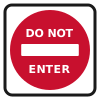
What does this sign mean?
Question 12 of 50Road signs
A red circle with a slash through a symbol means:
Question 13 of 50Sharing the road
A large truck passes you in the rain. What should you expect?
Question 14 of 50Licensing and insurance (New Jersey)
A New Jersey driver under 21 with a permit or probationary license must show what on the car?
Question 15 of 50Parking and stopping
How should you drive in a parking lot?
Question 16 of 50Road signs

When you reach this sign, what must you do?
Question 17 of 50Road signs
A speed sign on a highway shows "MINIMUM 40". What does it mean?
Question 18 of 50Alcohol, drugs and penalties (New Jersey)
A New Jersey driver refuses a breath test. What surcharge do they face?
Question 19 of 50Safe driving and hazards
When is a road often most slippery during rain?
Question 20 of 50Signals and pavement markings
A traffic light shows a steady red light and a green arrow pointing right. What may you do?
Question 21 of 50Safe driving and hazards
Why should you wear your seat belt?
Question 22 of 50Signals and pavement markings
A center lane is marked with a solid yellow line and a broken yellow line on each side. What is it for?
Question 23 of 50Road signs
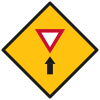
What does this sign warn you about?
Question 24 of 50Signals and pavement markings
A wide white line across your lane at an intersection shows:
Question 25 of 50Licensing and insurance (New Jersey)
You cancel the insurance on your New Jersey car. What must you do with the license plates?
Question 26 of 50Alcohol, drugs and penalties (New Jersey)
In New Jersey, what is the fine for a first offense of having an open alcohol container in the passenger area?
Question 27 of 50Road signs
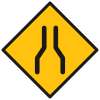
What is this sign warning you about?
Question 28 of 50Signals and pavement markings (New Jersey)
In New Jersey, a single solid white line runs across your lane at an intersection. What does it mean?
Question 29 of 50Signals and pavement markings (New Jersey)
A New Jersey traffic light is dark because of a power failure. How must you treat it?
Question 30 of 50Signals and pavement markings
A solid white line runs along the right edge of the road. What does it mark?
Question 31 of 50Safe driving and hazards (New Jersey)
New Jersey law requires your headlights to be on whenever you use what?
Question 32 of 50Parking and stopping
Before you back out of a driveway, what is the safest step?
Question 33 of 50Road signs
Orange signs are used for:
Question 34 of 50Alcohol, drugs and penalties
What is a likely result of driving while your license is suspended?
Question 35 of 50Parking and stopping
You park a car with an automatic gearbox. What gear should it be in?
Question 36 of 50Road signs
Brown signs point out:
Question 37 of 50Speed and following distance (New Jersey)
New Jersey gives a rule of thumb of one car length for each 10 mph. How far back should you follow at 40 mph?
Question 38 of 50Right of way
Which statement about the right-of-way is true?
Question 39 of 50Road signs
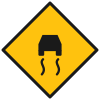
What does this sign warn you about?
Question 40 of 50Safe driving and hazards
Bright sun is shining in your eyes. What can help?
Question 41 of 50Sharing the road
Why is it dangerous to cut in front of a large truck?
Question 42 of 50Turning, passing and lanes
You are in a lane with a straight-only arrow but want to turn right. What should you do?
Question 43 of 50Alcohol, drugs and penalties
Which drinks hold about the same amount of alcohol?
Question 44 of 50Emergencies and equipment
You are in a crash and someone is hurt. What should you do?
Question 45 of 50Turning, passing and lanes
You turn left from a two-way street onto another two-way street. Which lane should you end in?
Question 46 of 50Road signs
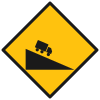
This sign shows a truck on a downward slope. What does it warn you about?
Question 47 of 50Right of way (New Jersey)
In New Jersey, a blind person with a white cane is at the curb, about to cross. What must you do?
Question 48 of 50Right of way
At a corner with no painted lines, is there a crosswalk?
Question 49 of 50Road signs
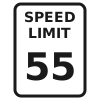
What does this sign tell you?
Question 50 of 50Road signs
Green signs on a highway show:
1 of 50
Answer each question to see the explanation. Keyboard: A–D or 1–4 to answer, N next, P previous.
Answers and explanations (text version)
The correct answer to each question above, why it is right, and where it comes from. Try the test first.
Question 1: B. A cyclist may swerve to avoid a hazard
Many states require at least 3 feet because a cyclist may swerve around potholes, glass or car doors.
Handbook: Chapter: Sharing the road — Bicycles
Question 2: D. Slow below the posted limit and be ready to stop
If a lane change is not possible or safe, New Jersey's Move Over law says to slow below the posted limit and be prepared to stop.
Handbook: Chapter 4: Safe Driving Rules and Regulations — Stopping Regulations
Question 3: B. No more than 6 inches
The New Jersey manual says "It is illegal for a vehicle to be parked more than six inches from the curb" (6 inches).
Handbook: Chapter 4: Safe Driving Rules and Regulations — Parking Regulations
Question 4: A. You may turn left after yielding
A flashing yellow arrow means turns are allowed, but you must first yield to oncoming traffic and pedestrians.
Handbook: Chapter: Traffic signals and pavement markings — Traffic signals
Question 5: D. To warn others of danger
Use your horn to warn other people of danger, not to show anger.
Handbook: Chapter: Safe driving and hazards — Defensive driving
Question 6: C. From either way, at no more than 10 mph
If a school bus is stopped directly in front of a school, New Jersey lets you pass from either direction at no more than 10 mph.
Handbook: Chapter 4: Safe Driving Rules and Regulations — Stopping Regulations
Question 7: D. Dial #77
To report an aggressive driver in New Jersey, call (888) SAF-ROAD or dial #77 from a cell phone.
Handbook: Chapter 5: Defensive Driving — Aggressive Driving/Road Rage
Question 8: C. About four times as much
Crash energy grows with the square of speed, so at double the speed a crash carries about four times as much energy.
Handbook: Chapter: Speed and following distance — Stopping distance
Question 9: A. Dirt and glare make it harder to see
A dirty windshield adds glare and makes it harder to see, most of all at night.
Handbook: Chapter: Safe driving and hazards — Night and weather
Question 10: C. Yes, if that speed is unsafe for conditions
Yes. Under the basic speed rule you can be ticketed for driving at the limit when conditions make that speed unsafe.
Handbook: Chapter: Speed and following distance — Basic speed rule
Question 11: B. You must not drive onto this road from here
This sign means do not enter. You must not drive onto the road or ramp from this direction.
Handbook: Chapter: Traffic signs — Regulatory signs
Question 12: B. The action shown is not allowed
A red circle with a slash means the action in the symbol is not allowed, such as no left turn.
Handbook: Chapter: Traffic signs — Sign shapes and colors
Question 13: C. Spray and a push of wind
A passing truck can throw spray and push your car with wind, so hold the wheel firmly.
Handbook: Chapter: Sharing the road — Large trucks and buses
Question 14: A. Two red reflective decals on the plates
New Jersey GDL drivers under 21 must display two red reflective decals, one on the top left corner of each license plate.
Handbook: Chapter 1: The New Jersey Driver License System — Graduated Driver License (GDL)
Question 15: D. Slowly, watching for people
Drive slowly in a parking lot and watch for people walking and cars backing out.
Handbook: Chapter: Parking and stopping — Parking lots
Question 16: C. Stop completely, then go when it is safe
This is a stop sign. You must come to a full stop and move on only when the way is clear.
Handbook: Chapter: Traffic signs — Regulatory signs
Question 17: C. You should not drive below 40 in good conditions
A minimum speed sign means you should not go below 40 when conditions are good, because very slow cars can cause crashes.
Handbook: Chapter: Traffic signs — Regulatory signs
Question 18: D. $1,000 a year for three years
Refusing a breath test in New Jersey brings a violation surcharge of $1,000 a year for three years.
Handbook: Chapter 7: Driver Privilege and Penalties — Breath Test
Question 19: D. In the first few minutes of rain
In the first few minutes of rain, water mixes with oil on the road and makes it very slippery until more rain washes it away.
Handbook: Chapter: Safe driving and hazards — Skids and slippery roads
Question 20: A. Turn right with care, yielding to people crossing
A green arrow lets you turn right even while the red light is on, but you must still yield to people crossing and cars already in the intersection.
Handbook: Chapter: Traffic signals and pavement markings — Traffic signals
Question 21: B. It keeps you in your seat in a crash
A seat belt keeps you in your seat and lowers the chance of serious injury in a crash.
Handbook: Chapter: Safe driving and hazards — Seat belts and airbags
Question 22: C. Left turns by traffic from both directions
This is a two-way left-turn lane. Drivers from both directions use it only to make left turns.
Handbook: Chapter: Traffic signals and pavement markings — Pavement markings
Question 23: A. A yield sign is coming up
This sign warns of a yield sign ahead, so slow down and be ready to give way.
Handbook: Chapter: Traffic signs — Warning signs
Question 24: D. Where to stop for a sign or signal
A stop line shows where you must stop for a stop sign or a red light.
Handbook: Chapter: Traffic signals and pavement markings — Pavement markings
Question 25: A. Return them to the MVC
If a New Jersey motorist ends the vehicle insurance, the license plates must be returned to the MVC.
Handbook: Chapter 9: Vehicle Information — License Plates
Question 26: C. $200
New Jersey fines a driver $200 for a first offense of carrying an open or unsealed alcohol container in the passenger area.
Handbook: Chapter 7: Driver Privilege and Penalties — Motor Vehicle Violations
Question 27: D. The bridge ahead is narrower than the road
The narrow bridge sign means the bridge is narrower than the road. Slow down and watch for oncoming vehicles.
Handbook: Chapter: Traffic signs — Warning signs
Question 28: D. Stop behind it for the sign or signal
A single solid white line across the road at a New Jersey intersection shows where you must stop for a traffic signal or sign.
Handbook: Chapter 4: Safe Driving Rules and Regulations — Intersections
Question 29: D. As a four-way stop
When a New Jersey traffic signal is not lit because of a power failure, drivers must treat it as a four-way stop.
Handbook: Chapter 4: Safe Driving Rules and Regulations — Intersections
Question 30: A. The edge of the road
A solid white edge line marks the right edge of the road and helps you stay on it at night and in fog.
Handbook: Chapter: Traffic signals and pavement markings — Pavement markings
Question 31: A. Your windshield wipers
New Jersey law requires headlights to be on when windshield wipers are in use, such as in rain, snow and ice.
Handbook: Chapter 4: Safe Driving Rules and Regulations — Using Headlights
Question 32: A. Walk around the car to check for children
Small children can be hidden behind a car. Walk around it to check before you back out.
Handbook: Chapter: Parking and stopping — Leaving a parked car
Question 33: D. Work zones and road work
Orange signs mark work zones. Expect lower speeds, lane changes and workers on the road.
Handbook: Chapter: Traffic signs — Sign shapes and colors
Question 34: C. More fines and a longer suspension or jail
Driving while suspended usually leads to more fines, a longer suspension, and possibly jail.
Handbook: Chapter: Alcohol, drugs and penalties — Penalties
Question 35: B. Park
Put an automatic car in park and set the parking brake before you get out.
Handbook: Chapter: Parking and stopping — Parking on hills
Question 36: C. Parks, recreation and places of interest
Brown signs guide you to parks, recreation areas and places of cultural or historic interest.
Handbook: Chapter: Traffic signs — Sign shapes and colors
Question 37: C. 4 car lengths
The New Jersey rule of thumb is one car length, about 20 feet, for each 10 mph, so 40 mph calls for 4 car lengths.
Handbook: Chapter 5: Defensive Driving — Keep a Safe Distance/Do Not Tailgate
Question 38: A. No driver should insist on taking it
The law says who must yield, but no driver should insist on the right-of-way if it could cause a crash.
Handbook: Chapter: Right of way — Right-of-way basics
Question 39: B. The road may be slick when it is wet
This slippery when wet sign means the road gets slick in rain. Slow down and avoid sudden braking or steering.
Handbook: Chapter: Traffic signs — Warning signs
Question 40: C. Use the sun visor and slow down
Use the sun visor or sunglasses and slow down until you can see clearly.
Handbook: Chapter: Safe driving and hazards — Night and weather
Question 41: C. It needs much more distance to stop
A loaded truck needs much more distance to stop than a car, so it may not be able to stop for you.
Handbook: Chapter: Sharing the road — Large trucks and buses
Question 42: B. Go straight and find another way
Lane arrows must be followed. If you are in the wrong lane, go straight and find another route.
Handbook: Chapter: Turning, passing and lane use — Lane use
Question 43: A. A 12 oz beer, a 5 oz glass of wine, and a 1.5 oz shot
A standard 12 oz beer, 5 oz glass of wine and 1.5 oz shot of liquor each hold about the same alcohol.
Handbook: Chapter: Alcohol, drugs and penalties — How alcohol affects you
Question 44: D. Stop, call 911, and help if you can
Stop, call 911, and give help you are able to give. Do not move injured people unless they are in danger.
Handbook: Chapter: Emergencies and vehicle equipment — Crashes
Question 45: C. The lane just right of the center line
When turning left onto a two-way street, finish in the lane just to the right of the center line.
Handbook: Chapter: Turning, passing and lane use — Turns
Question 46: C. A steep downhill grade ahead
The truck on a downward slope warns of a steep downhill grade. Check your speed and use a lower gear.
Handbook: Chapter: Traffic signs — Warning signs
Question 47: B. Stop for them
New Jersey drivers must stop for a blind pedestrian using a white or metallic cane or a trained guide dog.
Handbook: Chapter 4: Safe Driving Rules and Regulations — Stopping Regulations
Question 48: A. Yes, there is usually an unmarked crosswalk
At most intersections there is an unmarked crosswalk even with no painted lines, and you must yield to people using it.
Handbook: Chapter: Right of way — Pedestrians
Question 49: D. The top legal speed when conditions are good
A speed limit sign shows the highest legal speed in good conditions. You may need to go slower when conditions are poor.
Handbook: Chapter: Traffic signs — Regulatory signs
Question 50: D. Directions, exits and distances
Green guide signs show directions, exits and how far it is to places ahead.
Handbook: Chapter: Traffic signs — Sign shapes and colors
Practice test 1 of 10 for the Knowledge Test (NJ MVC): 50 questions · 40 of 50 (80%) to pass · no time limit.