Question 1 of 25Safe driving and hazards
Practice test 1 of 10 — New Mexico permit test
Practice test 1 questions
Question 2 of 25Safe driving and hazards
Where is it safest for children under 13 to ride?
Question 3 of 25Road signs
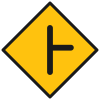
What should you expect after you pass this sign?
Question 4 of 25Right of way
Two lanes merge into one. What is the best way to handle it?
Question 5 of 25Speed and following distance
You see brake lights far ahead on the highway. What should you do?
Question 6 of 25Parking and stopping
May you park on a sidewalk if part of your car stays on the street?
Question 7 of 25Parking and stopping
May you park on a crosswalk?
Question 8 of 25Safe driving and hazards
Your car starts to hydroplane on a wet road. What should you do?
Question 9 of 25Road signs

Where would you expect to see this sign?
Question 10 of 25Emergencies and equipment (New Mexico)
You are about to be hit from the front in New Mexico. What does the manual say to try for?
Question 11 of 25Speed and following distance
Why is it unsafe to drive faster than your lights can show at night?
Question 12 of 25Right of way
You turn right on a green light. A person is crossing the street you are turning onto. Who has the right-of-way?
Question 13 of 25Speed and following distance (New Mexico)
According to the New Mexico Driver Manual, about how much should you slow down on a wet road?
Question 14 of 25Sharing the road (New Mexico)
On which side should you pass a large truck or RV in New Mexico?
Question 15 of 25Road signs
Signs that are wider than they are tall, in green, usually:
Question 16 of 25Speed and following distance
Why should you drive slower on a gravel road?
Question 17 of 25Right of way
You are at a stop sign. A car on the cross street is signaling a turn onto your road but has not slowed down yet. What is safest?
Question 18 of 25Speed and following distance
How does higher speed affect what you can see?
Question 19 of 25Turning, passing and lanes
What is a blind spot?
Question 20 of 25Safe driving and hazards (New Mexico)
According to the New Mexico Driver Manual, where should you watch for elk?
Question 21 of 25Speed and following distance
If you double your speed, about how much farther do you travel once you brake?
Question 22 of 25Speed and following distance (New Mexico)
Unless posted otherwise, what is the speed limit on New Mexico rural interstate highways?
Question 23 of 25Signals and pavement markings
What must you do at a steady red traffic light?
Question 24 of 25Licensing and insurance (New Mexico)
Under New Mexico law, what is the minimum liability coverage for injury to one person in one crash?
Question 25 of 25Road signs
Signs that are taller than they are wide, in white with black letters, usually:
1 of 25
Answer each question to see the explanation. Keyboard: A–D or 1–4 to answer, N next, P previous.
Answers and explanations (text version)
The correct answer to each question above, why it is right, and where it comes from. Try the test first.
Question 1: C. Turn around and find another way
Never drive into flowing water. Even shallow water can sweep a car away, so turn around.
Handbook: Chapter: Safe driving and hazards — Night and weather
Question 2: C. In the back seat
Children under 13 are safest in the back seat, away from the front airbags.
Handbook: Chapter: Safe driving and hazards — Seat belts and airbags
Question 3: A. Cars may enter from a road on the right
This side road sign warns that a road joins from the right, so cars may enter your road.
Handbook: Chapter: Traffic signs — Warning signs
Question 4: D. Take turns and let one car in at a time
When lanes merge, take turns and leave room so each driver can merge smoothly and safely.
Handbook: Chapter: Right of way — Right-of-way basics
Question 5: C. Ease off the gas and get ready to slow
Brake lights far ahead warn of slowing traffic. Ease off the gas early so you can slow smoothly.
Handbook: Chapter: Speed and following distance — Managing space
Question 6: A. No, it is not allowed
Parking on a sidewalk, even partly, is not allowed. It blocks people walking and those who use wheelchairs.
Handbook: Chapter: Parking and stopping — Where not to park
Question 7: A. No, never
Never park on a crosswalk. It blocks people who need to cross.
Handbook: Chapter: Parking and stopping — Where not to park
Question 8: A. Ease off the gas and keep the wheel straight
If you hydroplane, ease off the gas and keep the wheel straight until the tires grip again. Do not brake hard.
Handbook: Chapter: Safe driving and hazards — Skids and slippery roads
Question 9: A. On the outside edge of a sharp curve
Chevron signs are placed on the outside of a sharp curve and point the way to steer.
Handbook: Chapter: Traffic signs — Warning signs
Question 10: D. A glancing blow, by turning
Try to turn the vehicle so you take a glancing blow "rather than being struck head on."
Handbook: Protect Yourself in Collisions — Hit From the Front
Question 11: A. You may not see a hazard in time to stop
If you drive faster than your lights reach, you may not see a hazard in time to stop.
Handbook: Chapter: Speed and following distance — Speed and road conditions
Question 12: C. The person crossing
A green light does not let you turn through a crosswalk in use. The person crossing has the right-of-way, so wait for them.
Handbook: Chapter: Right of way — Pedestrians
Question 13: A. About 10 mph
"On a wet road you should reduce your speed about 10 mph," and slow more on snow or ice.
Handbook: Safe Driving Tips — Adjusting to Road Conditions
Question 14: D. The left side
"Always pass a large truck or RV on the left side," then move ahead of it.
Handbook: Sharing the Road — Large Trucks and RVs
Question 15: B. Give directions and distances
Green horizontal signs are guide signs. They show directions, distances and exits.
Handbook: Chapter: Traffic signs — Sign shapes and colors
Question 16: A. Gravel gives less grip for stopping and turning
Loose gravel gives your tires less grip, so stopping and steering take more care and lower speed.
Handbook: Chapter: Speed and following distance — Speed and road conditions
Question 17: C. Wait until it clearly starts to turn
A turn signal is not a promise. Wait until the car clearly starts to turn before you pull out in front of it.
Handbook: Chapter: Right of way — Stop signs and intersections
Question 18: A. Your side vision narrows
The faster you go, the more your field of view narrows, so you may miss hazards to the side.
Handbook: Chapter: Speed and following distance — Speed and road conditions
Question 19: D. An area near your car your mirrors do not show
A blind spot is an area near your car that your mirrors do not show, so you must turn your head to check it.
Handbook: Chapter: Turning, passing and lane use — Changing lanes
Question 20: D. In the western three-quarters of the state
"Watch for elk in the western three-quarters of the state," and for bears in the mountains.
Handbook: Safe Driving Tips — Adjusting to Road Conditions (Wildlife on the roadway)
Question 21: A. About four times as far
Braking distance grows with the square of speed, so doubling your speed makes it about four times as far.
Handbook: Chapter: Speed and following distance — Stopping distance
Question 22: C. 75 mph
The maximum is "75 mph on rural interstate highways, unless, posted otherwise."
Handbook: Rules of the Road — Speed Limits
Question 23: D. Stop and wait behind the stop line
A steady red light means stop. Wait behind the stop line or crosswalk until you may legally go.
Handbook: Chapter: Traffic signals and pavement markings — Traffic signals
Question 24: C. $25,000
The minimum is "$25,000 Bodily injury to or death of one person"; $50,000 for two or more, $10,000 for property.
Handbook: Accidents and the Financial Responsibility Law — Financial Responsibility Law (66-5-205/208)— Motor Vehicle Insurance
Question 25: C. Give a rule you must obey
Upright white rectangles are regulatory signs, such as speed limits. They give a rule you must obey.
Handbook: Chapter: Traffic signs — Sign shapes and colors
Practice test 1 of 10 for the Knowledge (written) test (Class D instructional permit) (the New Mexico MVD): 25 questions, 18 to pass — the commonly reported format; the New Mexico MVD does not publish the count. Official pass mark: 70%. Our practice tests are untimed.