Question 1 of 25Sharing the road
Practice test 2 of 10 — New Mexico permit test
Practice test 2 questions
Question 2 of 25Safe driving and hazards
How can you let other drivers know what you plan to do?
Question 3 of 25Road signs
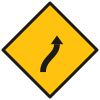
What does this sign warn you about?
Question 4 of 25Right of way
Your light turns green, but an ambulance with flashing lights and a siren is coming. What should you do?
Question 5 of 25Turning, passing and lanes
You turn left from a two-way street onto another two-way street. Which lane should you end in?
Question 6 of 25Parking and stopping
Before you open your door on the street side, what should you do?
Question 7 of 25Parking and stopping
When you finish parallel parking, where should your car be?
Question 8 of 25Safe driving and hazards
It starts to rain during the day. What should you do with your headlights?
Question 9 of 25Road signs
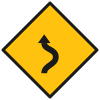
What lies ahead when you see this sign?
Question 10 of 25Safe driving and hazards (New Mexico)
According to the New Mexico Driver Manual, when you turn on your wipers, what else should you turn on?
Question 11 of 25Speed and following distance
Why should you slow down as you near the top of a hill?
Question 12 of 25Emergencies and equipment
A front tire blows out. What should you do?
Question 13 of 25Right of way (New Mexico)
A New Mexico school bus is stopped with red lights flashing at an intersection you are coming to. What must you do?
Question 14 of 25Alcohol, drugs and penalties (New Mexico)
According to the New Mexico Driver Manual, how soon does alcohol reach your brain?
Question 15 of 25Road signs
A speed sign on a highway shows "MINIMUM 40". What does it mean?
Question 16 of 25Right of way
You are pulling into a driveway and a person is walking on the sidewalk. What should you do?
Question 17 of 25Emergencies and equipment
When should you use your hazard warning lights?
Question 18 of 25Right of way
A cyclist on your right and you arrive at an all-way stop together. What should you do?
Question 19 of 25Parking and stopping
You park on a hill with no curb, facing up or down. Which way should you turn your wheels?
Question 20 of 25Parking and stopping (New Mexico)
In New Mexico, how close to a fire hydrant may you park?
Question 21 of 25Right of way
Why must drivers always yield to trains at a crossing?
Question 22 of 25Signals and pavement markings (New Mexico)
At some New Mexico signals, a small, very bright light blinks in the middle of the red light. What is it for?
Question 23 of 25Signals and pavement markings
A flashing "DON'T WALK" or raised hand signal means people on foot should:
Question 24 of 25Turning, passing and lanes (New Mexico)
After passing on a New Mexico road, when is it safe to return to your lane?
Question 25 of 25Road signs
Green signs on a highway show:
1 of 25
Answer each question to see the explanation. Keyboard: A–D or 1–4 to answer, N next, P previous.
Answers and explanations (text version)
The correct answer to each question above, why it is right, and where it comes from. Try the test first.
Question 1: B. It throws snow and may stop suddenly
Snowplows throw snow, move slowly and may stop or turn suddenly, so stay well back.
Handbook: Chapter: Sharing the road — Emergency and work vehicles
Question 2: D. Use your signals and brake lights
Signals, brake lights and eye contact tell other drivers and people walking what you plan to do.
Handbook: Chapter: Safe driving and hazards — Defensive driving
Question 3: B. The road curves to the right ahead
This curve sign means the road bends to the right ahead. Slow down before you reach the curve.
Handbook: Chapter: Traffic signs — Warning signs
Question 4: A. Stay stopped and let it go by
A green light does not let you go when an emergency vehicle with a siren is coming. Stay where you are and let it pass.
Handbook: Chapter: Right of way — Emergency vehicles
Question 5: C. The lane just right of the center line
When turning left onto a two-way street, finish in the lane just to the right of the center line.
Handbook: Chapter: Turning, passing and lane use — Turns
Question 6: C. Check for cars and bikes behind you
Look for cars and bikes before you open your door, so you do not open it in someone's path.
Handbook: Chapter: Parking and stopping — Leaving a parked car
Question 7: B. Close to and lined up with the curb
A parallel-parked car should sit close to the curb and lined up with it, not sticking out into traffic.
Handbook: Chapter: Parking and stopping — Parallel parking
Question 8: D. Turn them on so others can see you
Turn on your headlights in rain so other drivers can see you; many states require it.
Handbook: Chapter: Safe driving and hazards — Night and weather
Question 9: C. A series of curves
The wavy arrow means a winding road with a series of curves. Keep your speed down until it straightens.
Handbook: Chapter: Traffic signs — Warning signs
Question 10: B. Your headlights
"Remember, if you turn on your wipers, turn on your headlights."
Handbook: Communicating — Letting Others Know You Are There
Question 11: B. You cannot see what is over the top
You cannot see past the top of a hill, so slow down in case a car or object is stopped on the other side.
Handbook: Chapter: Speed and following distance — Speed and road conditions
Question 12: B. Hold the wheel firmly and ease off the gas
Hold the wheel firmly, ease off the gas and let the car slow down before you brake gently.
Handbook: Chapter: Emergencies and vehicle equipment — Tire failure
Question 13: A. Stop
You must stop for the bus "whether it is on your side of the road, the opposite side of the road or at an intersection you are approaching."
Handbook: Rules of the Road — Right-of-Way
Question 14: D. In 20 to 40 minutes
Alcohol goes from your stomach into your blood, and "It reaches your brain in 20 to 40 minutes."
Handbook: Be in Shape to Drive — Why is Drinking and Driving So Dangerous?
Question 15: C. You should not drive below 40 in good conditions
A minimum speed sign means you should not go below 40 when conditions are good, because very slow cars can cause crashes.
Handbook: Chapter: Traffic signs — Regulatory signs
Question 16: B. Stop and let them pass first
People on the sidewalk have the right-of-way at a driveway. Stop and let them pass.
Handbook: Chapter: Right of way — Pedestrians
Question 17: B. When your stopped car could be a hazard
Use hazard lights when your car is stopped or very slow and could be a hazard to others.
Handbook: Chapter: Emergencies and vehicle equipment — Breakdowns
Question 18: B. Let the cyclist go first
Cyclists follow the same right-of-way rules as cars, so the rider on your right goes first.
Handbook: Chapter: Right of way — Stop signs and intersections
Question 19: A. Toward the edge of the road
With no curb, turn the wheels toward the edge of the road so the car rolls off the road, not into traffic.
Handbook: Chapter: Parking and stopping — Parking on hills
Question 20: D. No closer than 15 feet
Fire crews need room, so do not park "within 15 ft. of a fire hydrant."
Handbook: Rules of the Road — Parking (No-Parking Zones)
Question 21: B. Trains cannot stop quickly or steer away
A train cannot steer and may need a mile or more to stop, so you must always yield to it.
Handbook: Chapter: Right of way — Railroad crossings
Question 22: D. To alert you that the light is red and you must stop
The blinking light inside the red is there "to alert you of the red light and that you must stop."
Handbook: Rules of the Road — Traffic Signals
Question 23: D. Not start, but finish if already crossing
A flashing don't walk or raised hand means do not start to cross; those already crossing should finish.
Handbook: Chapter: Traffic signals and pavement markings — Traffic signals
Question 24: A. When you see both headlights of the passed car in your mirror
"When you can see both headlights of the vehicle you just passed in your rear-view mirror, it is safe to return."
Handbook: Sharing Space — Space to Pass
Question 25: D. Directions, exits and distances
Green guide signs show directions, exits and how far it is to places ahead.
Handbook: Chapter: Traffic signs — Sign shapes and colors
Practice test 2 of 10 for the Knowledge (written) test (Class D instructional permit) (the New Mexico MVD): 25 questions, 18 to pass — the commonly reported format; the New Mexico MVD does not publish the count. Official pass mark: 70%. Our practice tests are untimed.