Question 1 of 20Road signs
Practice test 2 of 10 — New York permit test
Practice test 2 questions
Question 2 of 20Road signs
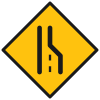
You are in the lane that this sign says will end. What should you do?
Question 3 of 20Road signs
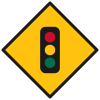
What does this sign tell you?
Question 4 of 20Road signs
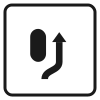
What does this sign tell you to do?
Question 5 of 20Rules of the road · Safe driving and hazards
How far should you sit from the airbag in the steering wheel?
Question 6 of 20Rules of the road · Safe driving and hazards
Rain is so heavy you cannot see the road. What should you do?
Question 7 of 20Rules of the road · Speed and following distance
Why do you need more following distance behind a motorcycle?
Question 8 of 20Rules of the road · Signals and pavement markings
There is a solid yellow line on your side of the center and a broken yellow line on the far side. May you pass?
Question 9 of 20Rules of the road · Right of way
At an intersection with no signs, you want to turn left. An oncoming car is going straight. What should you do?
Question 10 of 20Rules of the road · Sharing the road
On a road with no sidewalk, where should people walk?
Question 11 of 20Rules of the road · Turning, passing and lanes
You are in a lane with a straight-only arrow but want to turn right. What should you do?
Question 12 of 20Rules of the road · Parking and stopping
In New York, you may not park or stand within how far of a traffic light, stop sign or yield sign?
Question 13 of 20Rules of the road · Emergencies and equipment
How should you set your head restraint?
Question 14 of 20Rules of the road · Right of way
Your light turns green, but an ambulance with flashing lights and a siren is coming. What should you do?
Question 15 of 20Rules of the road · Alcohol, drugs and penalties
Marijuana is legal for adults in some states. Is it legal to drive while impaired by it?
Question 16 of 20Rules of the road · Alcohol, drugs and penalties
You drank a lot late last night. Could you still be impaired the next morning?
Question 17 of 20Rules of the road · Emergencies and equipment
You hit a parked car and cannot find the owner. What should you do?
Question 18 of 20Rules of the road · Turning, passing and lanes
Your left arm is bent up at the elbow. What does it mean?
Question 19 of 20Rules of the road · Signals and pavement markings
The light turns yellow just as you reach the stop line at speed and cannot stop safely. What should you do?
Question 20 of 20Rules of the road · Turning, passing and lanes
When joining a highway, what should you look for?
1 of 20
Answer each question to see the explanation. Keyboard: A–D or 1–4 to answer, N next, P previous.
Answers and explanations (text version)
The correct answer to each question above, why it is right, and where it comes from. Try the test first.
Question 1: C. A hospital is nearby
A blue sign with a white "H" points the way to a nearby hospital.
Handbook: Chapter: Traffic signs — Guide and service signs
Question 2: C. Signal and merge when there is a safe gap
When your lane ends, signal early and merge into the next lane when there is a safe gap.
Handbook: Chapter: Traffic signs — Warning signs
Question 3: D. There is a traffic light ahead
This sign warns of a traffic light ahead. Be ready to stop if it is yellow or red.
Handbook: Chapter: Traffic signs — Warning signs
Question 4: C. Pass to the right of the island ahead
A keep right sign means you must pass to the right of the island, divider or object ahead.
Handbook: Chapter: Traffic signs — Regulatory signs
Question 5: D. At least 10 inches
Sit at least 10 inches from the steering wheel so a deploying airbag does not hurt you.
Handbook: Chapter: Safe driving and hazards — Seat belts and airbags
Question 6: C. Pull off the road safely and wait
If you cannot see the road, pull off safely, turn on your hazard lights, and wait for the rain to ease.
Handbook: Chapter: Safe driving and hazards — Night and weather
Question 7: A. It can often stop in a shorter distance
A motorcycle can often stop in a shorter distance than a car, so leave more space behind it.
Handbook: Chapter: Speed and following distance — Following distance
Question 8: C. No; only oncoming drivers may pass here
A solid yellow line on your side means you may not cross it to pass. The broken line lets oncoming drivers pass.
Handbook: Chapter: Traffic signals and pavement markings — Pavement markings
Question 9: D. Yield to the oncoming car
A driver turning left must yield to oncoming traffic that is close enough to be a hazard.
Handbook: Chapter: Right of way — Uncontrolled intersections
Question 10: B. On the left side, facing traffic
With no sidewalk, people should walk on the left, facing traffic, so they can see cars coming.
Handbook: Chapter: Sharing the road — Pedestrians
Question 11: B. Go straight and find another way
Lane arrows must be followed. If you are in the wrong lane, go straight and find another route.
Handbook: Chapter: Turning, passing and lane use — Lane use
Question 12: C. 30 feet
New York does not allow parking or standing within 30 feet of a traffic light, STOP sign or YIELD sign.
Handbook: Chapter 7: Parallel Parking — Parking Regulations
Question 13: D. Level with the back of your head
Set the head restraint level with the back of your head to protect your neck in a crash.
Handbook: Chapter: Emergencies and vehicle equipment — Vehicle equipment
Question 14: A. Stay stopped and let it go by
A green light does not let you go when an emergency vehicle with a siren is coming. Stay where you are and let it pass.
Handbook: Chapter: Right of way — Emergency vehicles
Question 15: D. No, impaired driving is illegal everywhere
Even where marijuana is legal, driving while impaired by it is illegal everywhere.
Handbook: Chapter: Alcohol, drugs and penalties — Drugs and medicine
Question 16: A. Yes, alcohol can still be in your blood
Yes. After heavy drinking, alcohol can still be in your blood the next morning, even after sleep.
Handbook: Chapter: Alcohol, drugs and penalties — How alcohol affects you
Question 17: A. Leave a note with your contact details
Leave a note with your name and contact details where the owner will find it, and report it as your state requires.
Handbook: Chapter: Emergencies and vehicle equipment — Crashes
Question 18: C. You are turning right
A left arm bent upward at the elbow is the hand signal for a right turn.
Handbook: Chapter: Turning, passing and lane use — Signaling
Question 19: D. Go on through the intersection with care
Stop for a yellow light if you safely can. If you are too close to stop safely, go on through the intersection with care.
Handbook: Chapter: Traffic signals and pavement markings — Traffic signals
Question 20: C. A gap in traffic to merge into
Look for a safe gap in traffic, signal, and match your speed to merge into it.
Handbook: Chapter: Turning, passing and lane use — Highway driving
Practice test 2 of 10 for the Written test (Class D learner permit knowledge test) (NYS DMV): 20 questions · 14 of 20, including at least 2 of the 4 road sign questions to pass · no time limit.