Question 1 of 35Turning, passing and lanes
Practice test 1 of 10 — Oregon permit test
Practice test 1 questions
Question 2 of 35Parking and stopping
May you park so that you block a driveway?
Question 3 of 35Emergencies and equipment
Your car stalls on the railroad tracks and a train is coming. What should you do?
Question 4 of 35Parking and stopping (Oregon)
In Oregon, what fines can you face for parking in a disabled space without a permit?
Question 5 of 35Right of way
Which statement about the right-of-way is true?
Question 6 of 35Licensing and insurance (Oregon)
How much personal injury protection must an Oregon auto policy include?
Question 7 of 35Road signs
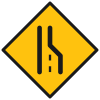
What does this sign mean?
Question 8 of 35Signals and pavement markings (Oregon)
According to the Oregon manual, when may a driver cross a bike lane marked with a wide white line?
Question 9 of 35Sharing the road
You stop behind a large truck on an uphill slope. Why should you leave extra space?
Question 10 of 35Signals and pavement markings
What do two solid yellow lines down the center of the road mean?
Question 11 of 35Speed and following distance
Why does the risk of hydroplaning go up as you drive faster?
Question 12 of 35Speed and following distance
If you double your speed, about how much farther do you travel once you brake?
Question 13 of 35Road signs
A round yellow sign is used to warn of:
Question 14 of 35Turning, passing and lanes
In general, when may you pass another car on the right?
Question 15 of 35Right of way
An emergency vehicle without its siren or lights on is behind you. Must you pull over?
Question 16 of 35Turning, passing and lanes
Where should you slow down when leaving a highway?
Question 17 of 35Right of way
You want to make a U-turn where it is legal. Who must you yield to?
Question 18 of 35Signals and pavement markings
White lines between lanes separate:
Question 19 of 35Right of way
A school bus is stopped with red lights flashing and its stop arm out on a two-lane road. What must you do?
Question 20 of 35Alcohol, drugs and penalties (Oregon)
Which of these does the Oregon manual list as a reason you can lose your driving privilege?
Question 21 of 35Licensing and insurance (Oregon)
What is the least bodily injury coverage Oregon requires for one person in a crash?
Question 22 of 35Safe driving and hazards
You need to make a phone call while driving. What is the safest choice?
Question 23 of 35Parking and stopping
Before you back out of a driveway, what is the safest step?
Question 24 of 35Road signs
Blue signs along a highway point out:
Question 25 of 35Speed and following distance (Oregon)
An Oregon road has no speed sign and fits no other speed category in the law. What is its limit?
Question 26 of 35Signals and pavement markings (Oregon)
At an Oregon freeway ramp meter, what should you do?
Question 27 of 35Right of way (Oregon)
At an Oregon intersection with no traffic signal, a person is in the crosswalk where you want to turn. When may you start your turn?
Question 28 of 35Signals and pavement markings (Oregon)
Along an Oregon red transit-only lane, what do striped red lines show?
Question 29 of 35Road signs
A white sign says "PASS WITH CARE". What does it mean?
Question 30 of 35Road signs
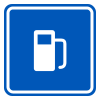
What does this blue sign beside the highway tell you?
Question 31 of 35Alcohol, drugs and penalties
You see a car weaving across lanes ahead. What should you do?
Question 32 of 35Parking and stopping
How should you drive in a parking lot?
Question 33 of 35Right of way
Why must drivers always yield to trains at a crossing?
Question 34 of 35Signals and pavement markings
What must you do at a steady red traffic light?
Question 35 of 35Sharing the road
You are turning right and a cyclist is riding in the bike lane next to you. What should you do?
1 of 35
Answer each question to see the explanation. Keyboard: A–D or 1–4 to answer, N next, P previous.
Answers and explanations (text version)
The correct answer to each question above, why it is right, and where it comes from. Try the test first.
Question 1: C. You are turning right
A left arm bent upward at the elbow is the hand signal for a right turn.
Handbook: Chapter: Turning, passing and lane use — Signaling
Question 2: A. No, it is not allowed
Do not park across a driveway. It keeps people from getting in or out.
Handbook: Chapter: Parking and stopping — Where not to park
Question 3: A. Get out and walk away at an angle toward the train
Get out at once and walk away from the tracks at an angle toward the train, so debris thrown forward in the crash will not hit you.
Handbook: Chapter: Emergencies and vehicle equipment — Railroad emergencies
Question 4: C. $165 up to $1,000
Oregon fines for this "begin at $165 and go up to $1,000," even for parking just a few minutes.
Handbook: Parking & Stopping — Parking Spaces for Persons with Disabilities
Question 5: A. No driver should insist on taking it
The law says who must yield, but no driver should insist on the right-of-way if it could cause a crash.
Handbook: Chapter: Right of way — Right-of-way basics
Question 6: C. $15,000 per person
Oregon requires Personal Injury Protection of "$15,000 per person" for needed expenses within two years of an injury.
Handbook: Other Important Information — Mandatory Insurance
Question 7: D. The right lane ends ahead
The right edge line bends in toward the center, which means the right lane ends ahead and drivers in it must move left.
Handbook: Chapter: Traffic signs — Warning signs
Question 8: C. When turning or entering or leaving a driveway
Driving or parking in a bike lane is not allowed, but the manual says "You may cross a bike lane when turning or when entering" or leaving an alley, driveway or private road.
Handbook: Sharing the Road — Bicycles
Question 9: A. It may roll back when it starts to move
A large truck may roll back a little as it starts on a hill, so leave extra space in front of you.
Handbook: Chapter: Sharing the road — Large trucks and buses
Question 10: D. No passing from either side
Two solid yellow lines down the center of the road mean no passing from either side.
Handbook: Chapter: Traffic signals and pavement markings — Pavement markings
Question 11: D. Your tires cannot push water away fast enough
At higher speed, tires cannot clear the water fast enough and can ride up on a thin layer of it.
Handbook: Chapter: Speed and following distance — Speed and road conditions
Question 12: A. About four times as far
Braking distance grows with the square of speed, so doubling your speed makes it about four times as far.
Handbook: Chapter: Speed and following distance — Stopping distance
Question 13: A. A railroad crossing ahead
The round yellow sign is used to give advance warning of a railroad crossing.
Handbook: Chapter: Traffic signs — Sign shapes and colors
Question 14: C. When it is turning left and there is room
You may pass on the right when the car ahead is turning left or on a road with two or more lanes your way, if it is safe.
Handbook: Chapter: Turning, passing and lane use — Passing
Question 15: B. No, treat it like other traffic
You must pull over for an emergency vehicle using its siren and lights. Without them, it is treated like other traffic.
Handbook: Chapter: Right of way — Emergency vehicles
Question 16: A. In the exit lane, after leaving the main lanes
Keep your speed in the main lanes and slow down once you are in the exit lane.
Handbook: Chapter: Turning, passing and lane use — Highway driving
Question 17: D. All other traffic and pedestrians
A driver making a U-turn must yield to all other traffic and to pedestrians.
Handbook: Chapter: Right of way — Turning at intersections
Question 18: B. Lanes of traffic moving the same way
White lane lines separate lanes of traffic moving in the same direction.
Handbook: Chapter: Traffic signals and pavement markings — Pavement markings
Question 19: D. Stop, whichever way you are going
On a two-lane road, traffic going both ways must stop for a school bus with flashing red lights and its stop arm out.
Handbook: Chapter: Right of way — School buses
Question 20: D. Failing to report a vehicle crash
Oregon lists reasons such as DUII, driving uninsured and "Failing to report a vehicle collision."
Handbook: Other Important Information — Loss of Driving Privileges
Question 21: B. $25,000
Oregon requires bodily injury coverage of at least "$25,000 per collision for one person."
Handbook: Other Important Information — Mandatory Insurance
Question 22: A. Pull over to a safe place first
Pull over to a safe place before using your phone, since calls take your mind off driving.
Handbook: Chapter: Safe driving and hazards — Distracted driving
Question 23: A. Walk around the car to check for children
Small children can be hidden behind a car. Walk around it to check before you back out.
Handbook: Chapter: Parking and stopping — Leaving a parked car
Question 24: A. Services such as gas, food and lodging
Blue signs show services for drivers, such as gas, food, lodging and hospitals.
Handbook: Chapter: Traffic signs — Sign shapes and colors
Question 25: B. 55 mph
Oregon sets 55 mph "On all roads and highways not meeting any other definition" unless posted.
Handbook: Speed Regulations — Speed Limits
Question 26: A. Wait for the green, then one car goes
The Oregon manual says "Only one vehicle can proceed each time the green light comes on."
Handbook: Freeway Driving — Entering a Freeway
Question 27: D. When they are past your new lane and the next lane
Without a signal, Oregon says the person must be "past the lane you are turning into, plus the next lane."
Handbook: Sharing the Road — Pedestrians
Question 28: B. Where you may enter it to turn or park
Oregon says striped red lines show where you "may enter the Transit Only lane to turn, park" or enter a driveway.
Handbook: Pavement Markings — Red Markings
Question 29: A. The no-passing zone has ended
A pass with care sign marks the end of a no-passing zone. You may pass again, but only when it is safe.
Handbook: Chapter: Traffic signs — Regulatory signs
Question 30: A. Fuel is available at or near the next exit
Blue signs show services for drivers. A gas pump symbol means fuel is available near the next exit.
Handbook: Chapter: Traffic signs — Guide and service signs
Question 31: A. Keep well back and report it when safe
Weaving may mean an impaired driver. Keep well back and report it to police when it is safe to do so.
Handbook: Chapter: Alcohol, drugs and penalties — Making safe choices
Question 32: D. Slowly, watching for people
Drive slowly in a parking lot and watch for people walking and cars backing out.
Handbook: Chapter: Parking and stopping — Parking lots
Question 33: B. Trains cannot stop quickly or steer away
A train cannot steer and may need a mile or more to stop, so you must always yield to it.
Handbook: Chapter: Right of way — Railroad crossings
Question 34: D. Stop and wait behind the stop line
A steady red light means stop. Wait behind the stop line or crosswalk until you may legally go.
Handbook: Chapter: Traffic signals and pavement markings — Traffic signals
Question 35: A. Let the cyclist pass, then turn
Yield to the cyclist in the bike lane. Let them go by, then make your turn behind them.
Handbook: Chapter: Sharing the road — Bicycles
Practice test 1 of 10 for the Class C Knowledge Test (instruction permit) (Oregon DMV): 35 questions · 28 of 35 (80%) to pass · no time limit.