Question 1 of 35Parking and stopping
Practice test 2 of 10 — Oregon permit test
Practice test 2 questions
Question 2 of 35Alcohol, drugs and penalties
Your doctor gives you a new medicine. What should you do before driving?
Question 3 of 35Signals and pavement markings
A bicycle symbol with two V-shaped chevrons above it is painted in the middle of a traffic lane. What does it tell you?
Question 4 of 35Turning, passing and lanes (Oregon)
Outside Oregon city limits, a U-turn is banned where traffic from either way cannot see your car from how far?
Question 5 of 35Speed and following distance
School zone lights are flashing and children are near. What should you do?
Question 6 of 35Licensing and insurance (Oregon)
For an Oregon teen's practice hours to count, who must supervise the driving?
Question 7 of 35Road signs
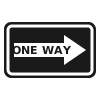
What does this sign tell you about the road?
Question 8 of 35Sharing the road (Oregon)
In Oregon, you want to pass a bike rider in your lane at a speed over 35 mph. How much room must you leave?
Question 9 of 35Sharing the road
Many states require at least 3 feet of space when passing a cyclist. What is the main reason?
Question 10 of 35Speed and following distance
What does it mean to "overdrive" your headlights?
Question 11 of 35Turning, passing and lanes
On a two-lane road you are passing a car, and a no-passing zone starts ahead. When must your pass be complete?
Question 12 of 35Turning, passing and lanes
Where is a U-turn most likely to be unsafe or not allowed?
Question 13 of 35Road signs
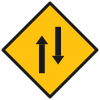
You are on a one-way street and see this sign. What does it mean?
Question 14 of 35Parking and stopping
Your car has a problem on the highway. Where should you stop?
Question 15 of 35Turning, passing and lanes
You turn left from a two-way street onto another two-way street. Which lane should you end in?
Question 16 of 35Parking and stopping
You must leave your car on the roadside at night. What should you do?
Question 17 of 35Turning, passing and lanes
To make a right turn, where should your car be?
Question 18 of 35Right of way
At a four-way stop, you and an oncoming car stop at the same time. You want to turn left; they are going straight. Who goes first?
Question 19 of 35Speed and following distance
A tailgater is behind you and you need to stop ahead. What should you do?
Question 20 of 35Parking and stopping (Oregon)
In Oregon, how close may you park to a crosswalk at an intersection?
Question 21 of 35Licensing and insurance (Oregon)
An Oregon teen under 18 takes an ODOT-approved traffic safety course. How many hours of supervised driving are needed?
Question 22 of 35Safe driving and hazards
Another driver makes a rude gesture at you. What should you do?
Question 23 of 35Safe driving and hazards
How often should you check your mirrors?
Question 24 of 35Road signs
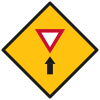
What does this sign warn you about?
Question 25 of 35Right of way (Oregon)
On an Oregon divided highway with an unpaved median, a school bus with flashing red lights stops on the other side. What must you do?
Question 26 of 35Safe driving and hazards (Oregon)
Oregon law bars anyone under what age from riding in a pickup bed or on the outside of a car?
Question 27 of 35Signals and pavement markings (Oregon)
An Oregon road has a painted median with double yellow lines on both sides. What may you do?
Question 28 of 35Road signs (Oregon)
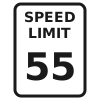
An Oregon black-and-white digital sign says "speed limit" and changes with the weather. How is it enforced?
Question 29 of 35Road signs
In most states, how are exit numbers on an Interstate chosen?
Question 30 of 35Road signs
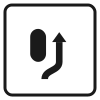
What does this sign tell you to do?
Question 31 of 35Safe driving and hazards
Which headlights should you use in fog?
Question 32 of 35Safe driving and hazards
Where should you look while you drive?
Question 33 of 35Speed and following distance
Why do you need more following distance behind a motorcycle?
Question 34 of 35Signals and pavement markings
On a divided highway, what does the solid yellow line on your left mark?
Question 35 of 35Sharing the road
You are behind a truck and cannot see its side mirrors. What does this mean?
1 of 35
Answer each question to see the explanation. Keyboard: A–D or 1–4 to answer, N next, P previous.
Answers and explanations (text version)
The correct answer to each question above, why it is right, and where it comes from. Try the test first.
Question 1: C. No, it is not allowed
Disability spaces are only for vehicles with a valid placard or plate. Others may not park there.
Handbook: Chapter: Parking and stopping — Where not to park
Question 2: D. Read the label and ask if it affects driving
Many medicines can make you drowsy. Read the label and ask your doctor or pharmacist if it affects driving.
Handbook: Chapter: Alcohol, drugs and penalties — Drugs and medicine
Question 3: B. Bikes may use the full lane, so expect them in it
This shared-lane marking means bikes may use the full lane, so expect cyclists in it and pass only when safe.
Handbook: Chapter: Traffic signals and pavement markings — Pavement markings
Question 4: C. 1,000 feet
Outside city limits, Oregon bans a U-turn where your car cannot be seen by traffic from either direction "within 1,000 feet."
Handbook: Turns & Intersections — U-Turns
Question 5: D. Slow to the school limit and watch for children
In an active school zone, slow to the posted school zone limit and watch closely for children.
Handbook: Chapter: Speed and following distance — Special speed zones
Question 6: A. Someone 21 or older, licensed at least 3 years
Hours count only if supervised "by someone at least 21 years of age" who has held valid driving privileges for at least 3 years.
Handbook: Other Important Information — How to Apply
Question 7: C. All traffic moves the way the arrow points
A one way sign means all traffic on that road moves only in the direction the arrow shows.
Handbook: Chapter: Traffic signs — Regulatory signs
Question 8: B. Enough that you would not hit them if they fall
Above 35 mph, Oregon says to leave "enough distance to prevent contact" with the rider "if they were to fall."
Handbook: Sharing the Road — Bicycles
Question 9: B. A cyclist may swerve to avoid a hazard
Many states require at least 3 feet because a cyclist may swerve around potholes, glass or car doors.
Handbook: Chapter: Sharing the road — Bicycles
Question 10: B. Going too fast to stop within your lights' reach
You overdrive your headlights when you drive too fast to stop within the distance your lights show.
Handbook: Chapter: Speed and following distance — Speed and road conditions
Question 11: D. Before the no-passing zone begins
You must complete a pass and be back in your lane before a no-passing zone begins.
Handbook: Chapter: Turning, passing and lane use — Passing
Question 12: C. Near a curve or hill where others cannot see you
Do not make a U-turn near a curve or hill, where drivers cannot see you in time to stop.
Handbook: Chapter: Turning, passing and lane use — Turns
Question 13: C. Traffic will soon come toward you on this road
The two-way traffic sign warns that oncoming traffic will soon use the same road as you.
Handbook: Chapter: Traffic signs — Warning signs
Question 14: A. As far off the road as you can
Pull as far off the road as you can, onto the shoulder, so you are out of the traffic lanes.
Handbook: Chapter: Parking and stopping — Stopping on highways
Question 15: C. The lane just right of the center line
When turning left onto a two-way street, finish in the lane just to the right of the center line.
Handbook: Chapter: Turning, passing and lane use — Turns
Question 16: A. Turn on your hazard or parking lights
At night, turn on your hazard or parking lights so other drivers can see your car.
Handbook: Chapter: Parking and stopping — Stopping on highways
Question 17: D. In the right lane, close to the curb
Start a right turn from the right lane, close to the curb, and turn into the right lane of the new road.
Handbook: Chapter: Turning, passing and lane use — Turns
Question 18: B. The car going straight
A driver turning left yields to an oncoming car going straight, so let it go first.
Handbook: Chapter: Right of way — Stop signs and intersections
Question 19: A. Brake early and gently
Brake early and gently to give the tailgater time to notice and slow down.
Handbook: Chapter: Speed and following distance — Following distance
Question 20: A. No closer than 20 feet
Oregon bans parking "Within 20 feet of a marked or unmarked crosswalk at an intersection."
Handbook: Parking & Stopping — No Parking
Question 21: C. 50 hours
Teens need 100 supervised hours, or "50 hours of supervised driving experience" plus an approved traffic safety course.
Handbook: Other Important Information — How to Apply
Question 22: C. Stay calm and let it go
Do not respond to an angry driver. Stay calm, avoid eye contact, and give them room.
Handbook: Chapter: Safe driving and hazards — Road rage
Question 23: B. Every few seconds
Check your mirrors every few seconds so you always know what is behind and beside you.
Handbook: Chapter: Safe driving and hazards — Seeing and scanning
Question 24: A. A yield sign is coming up
This sign warns of a yield sign ahead, so slow down and be ready to give way.
Handbook: Chapter: Traffic signs — Warning signs
Question 25: D. Keep going, since you are not on its side
With an unpaved median or barrier, you must stop "only if you are on the same side" of the road as the bus, so keep going.
Handbook: School, Places of Worship or Worker and Public Transit Buses — School Buses
Question 26: C. 18
Oregon law "prohibits anyone under 18 years of age" from riding on an external part of a vehicle, including a pickup bed.
Handbook: Dangerous Driving Behaviors — External Passengers
Question 27: C. Turn left across it once oncoming traffic clears
You may turn left across a painted median after oncoming traffic clears, but "You may not use a painted median as a turn lane."
Handbook: Pavement Markings — Yellow Markings
Question 28: A. Like any other speed limit sign
Oregon variable speed limit signs change with conditions, and police may enforce them "like any other speed limit sign."
Handbook: Speed Regulations — Variable Speed Signs
Question 29: A. By the mile marker nearest the exit
In most states, exit numbers match the nearest mile marker, so you can tell how far apart two exits are.
Handbook: Chapter: Traffic signs — Guide and service signs
Question 30: C. Pass to the right of the island ahead
A keep right sign means you must pass to the right of the island, divider or object ahead.
Handbook: Chapter: Traffic signs — Regulatory signs
Question 31: C. Low beams
Use low beams in fog. High beams reflect off the fog and make it harder to see.
Handbook: Chapter: Safe driving and hazards — Night and weather
Question 32: D. Far ahead and all around you
Look well ahead and all around, not just at the car in front, so you spot hazards early.
Handbook: Chapter: Safe driving and hazards — Seeing and scanning
Question 33: A. It can often stop in a shorter distance
A motorcycle can often stop in a shorter distance than a car, so leave more space behind it.
Handbook: Chapter: Speed and following distance — Following distance
Question 34: D. The left edge of the road
On a divided highway or one-way road, a solid yellow line marks the left edge of the road.
Handbook: Chapter: Traffic signals and pavement markings — Pavement markings
Question 35: C. The truck driver cannot see you
If you cannot see the truck's mirrors, the driver cannot see you. Drop back so you can.
Handbook: Chapter: Sharing the road — Large trucks and buses
Practice test 2 of 10 for the Class C Knowledge Test (instruction permit) (Oregon DMV): 35 questions · 28 of 35 (80%) to pass · no time limit.