Question 1 of 40Signals and pavement markings
Practice test 1 of 10 — Rhode Island permit test
Practice test 1 questions
Question 2 of 40Alcohol, drugs and penalties (Rhode Island)
According to the Rhode Island manual, a 12-ounce beer has about the same alcohol as how much wine?
Question 3 of 40Parking and stopping
Your car has a problem on the highway. Where should you stop?
Question 4 of 40Licensing and insurance (Rhode Island)
In the first 12 months of a Rhode Island provisional license, how many passengers under 21 may ride along (family aside)?
Question 5 of 40Alcohol, drugs and penalties
What usually happens if you refuse a lawful breath or blood test?
Question 6 of 40Road signs
A sign shaped like a long sideways triangle (a pennant) warns of:
Question 7 of 40Sharing the road
How should you pass a person riding a horse?
Question 8 of 40Sharing the road (Rhode Island)
According to the Rhode Island Driver’s Manual, when may a car cross a bicycle lane?
Question 9 of 40Turning, passing and lanes
At an intersection with two left-turn lanes, how should you turn?
Question 10 of 40Turning, passing and lanes
Where should you slow down when leaving a highway?
Question 11 of 40Parking and stopping
Traffic is backed up and you are about to cross railroad tracks. What should you do?
Question 12 of 40Alcohol, drugs and penalties (Rhode Island)
Under R.I.G.L. 3-8-9, a driver under 21 is caught transporting alcohol (opened or not) without a parent or guardian along. What is the license penalty?
Question 13 of 40Road signs (Rhode Island)
In a Rhode Island work zone, may a flagger legally direct you to slow down or stop?
Question 14 of 40Signals and pavement markings
A crossing signal shows a white walking person. What does it mean for people on foot?
Question 15 of 40Alcohol, drugs and penalties
What does eating a large meal before drinking do?
Question 16 of 40Parking and stopping
You park on a hill with no curb, facing up or down. Which way should you turn your wheels?
Question 17 of 40Right of way
At a four-way stop, you and an oncoming car stop at the same time. You want to turn left; they are going straight. Who goes first?
Question 18 of 40Safe driving and hazards
A deer suddenly jumps onto the road in front of you. What is usually safest?
Question 19 of 40Road signs
A "LOW CLEARANCE" sign shows a height. What does it warn you about?
Question 20 of 40Safe driving and hazards
On a long, dull highway drive, you start to feel drowsy and stare blankly ahead. What should you do?
Question 21 of 40Alcohol, drugs and penalties
Marijuana is legal for adults in some states. Is it legal to drive while impaired by it?
Question 22 of 40Turning, passing and lanes
On a highway with several lanes, what is the left lane mainly for?
Question 23 of 40Right of way
You are in the middle of an intersection when an ambulance with a siren comes up behind you. What should you do?
Question 24 of 40Road signs
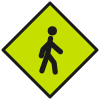
What does this sign warn you about?
Question 25 of 40Road signs
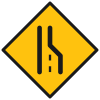
What does this sign mean?
Question 26 of 40Safe driving and hazards
The headlights of an oncoming car are blinding you. Where should you look?
Question 27 of 40Safe driving and hazards
Strong winds are blowing across the road. What should you do?
Question 28 of 40Right of way (Rhode Island)
According to the Rhode Island Driver’s Manual, how far behind an emergency vehicle should you always drive?
Question 29 of 40Signals and pavement markings
What must you do at a steady red traffic light?
Question 30 of 40Right of way
A person is walking across the street in a crosswalk ahead of you. What must you do?
Question 31 of 40Speed and following distance
Why does it usually take longer to stop when you are going downhill?
Question 32 of 40Right of way
You are pulling into a driveway and a person is walking on the sidewalk. What should you do?
Question 33 of 40Licensing and insurance (Rhode Island)
What is the youngest age for a Rhode Island Full Operator’s License?
Question 34 of 40Parking and stopping (Rhode Island)
According to the Rhode Island Driver’s Manual, how close to a fire hydrant may you park or stop?
Question 35 of 40Parking and stopping
Why should you not park in front of a fire station driveway?
Question 36 of 40Road signs
Brown signs point out:
Question 37 of 40Parking and stopping (Rhode Island)
Your car breaks down on a Rhode Island highway and you need help. What does the manual tell you to do?
Question 38 of 40Road signs
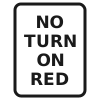
What does this sign mean while the light is red?
Question 39 of 40Road signs
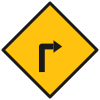
What does this sign warn of?
Question 40 of 40Emergencies and equipment (Rhode Island)
Your brake pedal goes to the floor in Rhode Island. After how many pumps will you know if the brakes will hold?
1 of 40
The timer starts when you answer the first question. Keyboard: A–D or 1–4 to answer, N next, P previous.
Answers and explanations (text version)
The correct answer to each question above, why it is right, and where it comes from. Try the test first.
Question 1: B. Wait until there is room to clear the intersection
Do not enter an intersection unless there is room to clear it, even on green. Blocking it holds up cross traffic.
Handbook: Chapter: Traffic signals and pavement markings — Traffic signals
Question 2: B. A 4-to-5-ounce glass
"A 12-ounce container of beer, a 4-to-5-ounce glass of wine" and a 1 to 1 1/2 ounce shot have about the same alcohol.
Handbook: X. Drinking / Drugs and Driving — A. Effects of Alcohol and Other Drugs on the Body
Question 3: A. As far off the road as you can
Pull as far off the road as you can, onto the shoulder, so you are out of the traffic lanes.
Handbook: Chapter: Parking and stopping — Stopping on highways
Question 4: C. Only one
In the first twelve months "no more than one (1) passenger younger than twenty-one (21) years of age is allowed," so only one.
Handbook: I. Applying For a Rhode Island Driver’s License — Learner Provisional License
Question 5: B. Your license can be suspended
Under implied consent laws, refusing a lawful test usually leads to a license suspension.
Handbook: Chapter: Alcohol, drugs and penalties — Testing and implied consent
Question 6: A. A no-passing zone
The pennant shape is used only to mark the start of a no-passing zone.
Handbook: Chapter: Traffic signs — Sign shapes and colors
Question 7: B. Slowly, with plenty of room and no horn
Pass a horse slowly and give it plenty of room. Do not honk, as noise can scare it.
Handbook: Chapter: Sharing the road — Slow-moving vehicles
Question 8: C. To turn or use a driveway, after yielding
You "may cross a bicycle lane when you are turning a corner or entering or leaving an alley, private road, or driveway," yielding first.
Handbook: VIII. Sharing the Road Safely — Bicycle Riders
Question 9: C. Stay in your own lane through the turn
With two turn lanes, stay in your lane through the turn and end up in the matching lane.
Handbook: Chapter: Turning, passing and lane use — Turns
Question 10: A. In the exit lane, after leaving the main lanes
Keep your speed in the main lanes and slow down once you are in the exit lane.
Handbook: Chapter: Turning, passing and lane use — Highway driving
Question 11: D. Wait until there is room past the tracks
Never stop on railroad tracks. Wait before the tracks until there is room for your whole car on the far side.
Handbook: Chapter: Parking and stopping — Stopping at railroad tracks
Question 12: C. Suspension of up to 30 days
Transporting alcohol under 21 (3-8-9) brings a suspension "for a period of not more than thirty (30) days"; possession (3-8-10) is a separate rule.
Handbook: X. Drinking / Drugs and Driving — E. Penalties
Question 13: C. Yes, flaggers have the legal authority
Flaggers use hand signals or signs to direct drivers, and "Flaggers have the legal authority to control traffic."
Handbook: XVII. Appendices — Construction and Work Zone Safety Requirements
Question 14: B. They may start to cross, watching for turning cars
The walking person means people may start to cross, but they should still watch for cars that are turning.
Handbook: Chapter: Traffic signals and pavement markings — Traffic signals
Question 15: C. It slows how fast alcohol is absorbed
Food slows how fast alcohol is absorbed, but it does not stop you from becoming impaired.
Handbook: Chapter: Alcohol, drugs and penalties — How alcohol affects you
Question 16: A. Toward the edge of the road
With no curb, turn the wheels toward the edge of the road so the car rolls off the road, not into traffic.
Handbook: Chapter: Parking and stopping — Parking on hills
Question 17: B. The car going straight
A driver turning left yields to an oncoming car going straight, so let it go first.
Handbook: Chapter: Right of way — Stop signs and intersections
Question 18: C. Brake firmly and stay in your lane
Brake firmly and stay in your lane. Swerving can send you into other traffic or off the road.
Handbook: Chapter: Safe driving and hazards — Animals
Question 19: D. An overpass or bridge with limited space above
A low clearance sign shows how much space there is under an overpass or bridge, so tall vehicles can avoid it.
Handbook: Chapter: Traffic signs — Warning signs
Question 20: C. Take a break and move your eyes often
Long, dull drives can make you drowsy. Take breaks and keep your eyes moving.
Handbook: Chapter: Safe driving and hazards — Fatigue
Question 21: D. No, impaired driving is illegal everywhere
Even where marijuana is legal, driving while impaired by it is illegal everywhere.
Handbook: Chapter: Alcohol, drugs and penalties — Drugs and medicine
Question 22: D. Passing
Keep right except to pass. The left lane is mainly for passing.
Handbook: Chapter: Turning, passing and lane use — Lane use
Question 23: C. Clear the intersection, then pull over
Do not stop in an intersection. Clear it first, then pull to the right and stop.
Handbook: Chapter: Right of way — Emergency vehicles
Question 24: A. People may be crossing the road ahead
This pedestrian crossing sign warns that people may be crossing. Slow down and yield to anyone in the crosswalk.
Handbook: Chapter: Traffic signs — Warning signs
Question 25: D. The right lane ends ahead
The right edge line bends in toward the center, which means the right lane ends ahead and drivers in it must move left.
Handbook: Chapter: Traffic signs — Warning signs
Question 26: B. Toward the right edge of your lane
Look toward the right edge of your lane to keep your path in view until the car passes.
Handbook: Chapter: Safe driving and hazards — Night and weather
Question 27: A. Slow down and grip the wheel firmly
Strong crosswinds can push your car. Slow down and keep a firm grip on the wheel.
Handbook: Chapter: Safe driving and hazards — Night and weather
Question 28: C. 500 feet
"Always drive 500 feet behind emergency vehicles," and pull over to let them pass.
Handbook: III. Basic Driving Skills and Safety Rules — Safe Driving on the Highway
Question 29: D. Stop and wait behind the stop line
A steady red light means stop. Wait behind the stop line or crosswalk until you may legally go.
Handbook: Chapter: Traffic signals and pavement markings — Traffic signals
Question 30: A. Stop and let the person cross
Pedestrians in a crosswalk have the right-of-way. Stop and let them finish crossing.
Handbook: Chapter: Right of way — Pedestrians
Question 31: A. Gravity keeps pulling the car forward
Going downhill, gravity keeps pulling the car forward, so it takes longer to stop; slow down and leave more space.
Handbook: Chapter: Speed and following distance — Stopping distance
Question 32: B. Stop and let them pass first
People on the sidewalk have the right-of-way at a driveway. Stop and let them pass.
Handbook: Chapter: Right of way — Pedestrians
Question 33: B. 17 years and 6 months
You must "Be at least seventeen (17) years, six (6) months old" and have held a provisional license for 12 months.
Handbook: I. Applying For a Rhode Island Driver’s License — Full Operator’s License
Question 34: C. No closer than 8 feet
The manual’s list of places you may not park or stop includes "10. Within 8 feet of a fire hydrant."
Handbook: III. Basic Driving Skills and Safety Rules — Stopping and Parking
Question 35: C. Fire trucks must leave fast
Fire trucks need to leave the station fast, so never block its driveway.
Handbook: Chapter: Parking and stopping — Where not to park
Question 36: C. Parks, recreation and places of interest
Brown signs guide you to parks, recreation areas and places of cultural or historic interest.
Handbook: Chapter: Traffic signs — Sign shapes and colors
Question 37: A. Raise the hood, tie a white cloth on, stay inside
"If you need help, raise the hood of your vehicle, tie a white cloth on the door handle and stay in your locked vehicle."
Handbook: III. Basic Driving Skills and Safety Rules — Safe Driving on the Highway
Question 38: D. You may not turn, even after you stop
This sign means no turn on red. You must stop and wait for a green light before you turn.
Handbook: Chapter: Traffic signs — Regulatory signs
Question 39: A. A sharp right turn that needs a low speed
The bent arrow means a sharp turn to the right, which needs a much lower speed than a gentle curve.
Handbook: Chapter: Traffic signs — Warning signs
Question 40: A. Three or four
Pump the pedal even with ABS; "You will know after three (3) or four (4) pumps if your brakes are going to hold."
Handbook: V. Driving Emergencies — Total Brake Failure
Practice test 1 of 10 for the Computerized knowledge exam (learner's permit); given at DMV headquarters in Cranston or through the CCRI driver education course (the Rhode Island DMV): Our practice tests use 40 questions, 32 of 40 (80%) to pass (the Rhode Island DMV does not publish a fixed format). Our practice timer: 90 minutes.