Question 1 of 40Right of way
Practice test 2 of 10 — Rhode Island permit test
Practice test 2 questions
Question 2 of 40Licensing and insurance (Rhode Island)
How many hours of classroom driver education must a Rhode Island teen pass before getting a permit?
Question 3 of 40Turning, passing and lanes
What should you do after a turn if your signal is still on?
Question 4 of 40Safe driving and hazards (Rhode Island)
According to the Rhode Island manual, your car is in water and still floating. What should you do after opening a window?
Question 5 of 40Parking and stopping
When you leave your car parked, what should you do?
Question 6 of 40Road signs
A sign says "REDUCED SPEED AHEAD". What should you do?
Question 7 of 40Sharing the road
Why do buses and large trucks need extra room when they turn?
Question 8 of 40Safe driving and hazards (Rhode Island)
Under Rhode Island’s 500/200 rule, when should you dim your high beams for an oncoming car?
Question 9 of 40Speed and following distance
Compared to dry pavement, stopping on ice takes:
Question 10 of 40Speed and following distance
Driving well over the limit on a short trip usually:
Question 11 of 40Turning, passing and lanes
You are pulling away from the curb. What should you do first?
Question 12 of 40Safe driving and hazards (Rhode Island)
Rhode Island law also requires headlights whenever you cannot see how far ahead?
Question 13 of 40Signals and pavement markings (Rhode Island)
Rhode Island allows right turns on red after a full stop. Must you turn right on red when it is allowed?
Question 14 of 40Right of way
You are turning left into a driveway across the oncoming lane. Who must you yield to?
Question 15 of 40Safe driving and hazards
You need to make a phone call while driving. What is the safest choice?
Question 16 of 40Turning, passing and lanes
Your left arm is bent down at the elbow. What does it mean?
Question 17 of 40Right of way
You want to make a U-turn where it is legal. Who must you yield to?
Question 18 of 40Sharing the road
An orange triangle with a red border on the back of a vehicle means:
Question 19 of 40Signals and pavement markings
What should you do at a flashing red light?
Question 20 of 40Sharing the road
Why might a motorcyclist suddenly change position in their lane?
Question 21 of 40Alcohol, drugs and penalties
Some cold medicines warn they may cause drowsiness. What does this mean for driving?
Question 22 of 40Speed and following distance
The road is wet from rain. What should you do?
Question 23 of 40Right of way
A car is already in the intersection when you arrive. What should you do?
Question 24 of 40Road signs
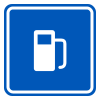
What does this blue sign beside the highway tell you?
Question 25 of 40Road signs
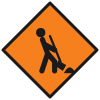
This orange sign shows a person with a shovel. What does it warn you about?
Question 26 of 40Sharing the road
When are cyclists hardest for drivers to see?
Question 27 of 40Sharing the road
On a road with no sidewalk, where should people walk?
Question 28 of 40Signals and pavement markings (Rhode Island)
At a flashing yellow light, the Rhode Island manual says to "cover the brake." What does that mean?
Question 29 of 40Signals and pavement markings
A center lane is marked with a solid yellow line and a broken yellow line on each side. What is it for?
Question 30 of 40Right of way
Your road ends at a T-intersection with no signs. A car is coming on the through road. Who has the right-of-way?
Question 31 of 40Right of way
You turn right on a green light. A person is crossing the street you are turning onto. Who has the right-of-way?
Question 32 of 40Right of way
A bus has stopped at a crosswalk to let people cross. You are in the next lane. What should you do?
Question 33 of 40Sharing the road (Rhode Island)
According to the Rhode Island manual, how can you tell you are far enough behind a truck?
Question 34 of 40Speed and following distance (Rhode Island)
The Rhode Island manual’s visual search pattern has you check a target area how far ahead in time?
Question 35 of 40Turning, passing and lanes
Before turning right, what should you watch for on your right?
Question 36 of 40Road signs
An Interstate route has three digits, and the first digit is even. What does that usually mean?
Question 37 of 40Turning, passing and lanes (Rhode Island)
In Rhode Island, when may you pass another vehicle on the right?
Question 38 of 40Road signs
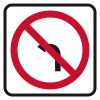
What is not allowed where this sign is posted?
Question 39 of 40Road signs
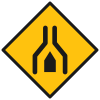
What should you expect after this sign?
Question 40 of 40Signals and pavement markings (Rhode Island)
In Rhode Island, what does a solid white line between two lanes going the same way tell you?
1 of 40
The timer starts when you answer the first question. Keyboard: A–D or 1–4 to answer, N next, P previous.
Answers and explanations (text version)
The correct answer to each question above, why it is right, and where it comes from. Try the test first.
Question 1: C. Traffic already in the roundabout
Yield to traffic already in the roundabout, and enter when there is a safe gap.
Handbook: Chapter: Right of way — Roundabouts
Question 2: B. 33 hours
You must pass "an accredited thirty-three (33) hour classroom driver education class."
Handbook: I. Applying For a Rhode Island Driver’s License — Before Getting a Limited Learner Permit
Question 3: B. Turn it off
If your signal does not turn off by itself after a turn, turn it off so you do not confuse others.
Handbook: Chapter: Turning, passing and lane use — Signaling
Question 4: A. Get out and move onto the roof
Exit "and move to the roof"; avoid opening the door, since water could flip the vehicle onto its roof.
Handbook: V. Driving Emergencies — Vehicle in Water
Question 5: B. Turn off the engine, take the keys, and lock it
Turn off the engine, take the keys and lock the car so no one can drive it away and it cannot roll.
Handbook: Chapter: Parking and stopping — Leaving a parked car
Question 6: B. Get ready to slow down to a lower limit
This sign means a lower speed limit is coming up. Get ready to slow down to the new limit.
Handbook: Chapter: Traffic signs — Regulatory signs
Question 7: A. The back wheels take a tighter path
The back wheels of a long vehicle follow a tighter path than the front, so it needs extra room to turn.
Handbook: Chapter: Sharing the road — Large trucks and buses
Question 8: A. When it is at least 500 feet away
"Dim your high beam headlights promptly at a distance of at least 500 feet ahead when approaching another vehicle."
Handbook: VIII. Sharing the Road Safely — Night Driving
Question 9: A. Much longer
Ice gives your tires very little grip, so stopping takes much longer than on dry pavement.
Handbook: Chapter: Speed and following distance — Speed and road conditions
Question 10: A. Saves very little time and adds a lot of risk
Speeding on most trips saves only a few minutes but raises the chance and harm of a crash.
Handbook: Chapter: Speed and following distance — Basic speed rule
Question 11: A. Signal and check for traffic
Signal and check mirrors and your blind spot before pulling away from the curb.
Handbook: Chapter: Turning, passing and lane use — Signaling
Question 12: C. 500 feet
Headlights are required from sunset to sunrise and "any time you cannot see 500 feet ahead of you."
Handbook: IX. Laws You Must Know — Laws You Must Know
Question 13: A. No, it is allowed but not required
Drivers "are permitted, but not required, to turn right at a red light after a full stop."
Handbook: IX. Laws You Must Know — Laws You Must Know
Question 14: C. Oncoming traffic and people on the sidewalk
When you turn left across traffic into a driveway, yield to oncoming traffic and to people on the sidewalk you will cross.
Handbook: Chapter: Right of way — Turning at intersections
Question 15: A. Pull over to a safe place first
Pull over to a safe place before using your phone, since calls take your mind off driving.
Handbook: Chapter: Safe driving and hazards — Distracted driving
Question 16: B. You are slowing or stopping
A left arm bent downward is the hand signal for slowing or stopping.
Handbook: Chapter: Turning, passing and lane use — Signaling
Question 17: D. All other traffic and pedestrians
A driver making a U-turn must yield to all other traffic and to pedestrians.
Handbook: Chapter: Right of way — Turning at intersections
Question 18: B. It is a slow-moving vehicle
An orange triangle with a red border marks a slow-moving vehicle, such as a tractor.
Handbook: Chapter: Sharing the road — Slow-moving vehicles
Question 19: C. Stop fully, then go when it is safe
Treat a flashing red light like a stop sign. Stop fully, then go when it is safe.
Handbook: Chapter: Traffic signals and pavement markings — Traffic signals
Question 20: D. To avoid hazards like potholes or gravel
Potholes, gravel and wet patches are more dangerous on a motorcycle, so riders may move to avoid them.
Handbook: Chapter: Sharing the road — Motorcycles
Question 21: C. They can make driving unsafe
Medicines that cause drowsiness can slow your reactions and make driving unsafe.
Handbook: Chapter: Alcohol, drugs and penalties — Drugs and medicine
Question 22: B. Slow down and leave more space
Wet roads give your tires less grip, so slow down and leave more space ahead.
Handbook: Chapter: Speed and following distance — Speed and road conditions
Question 23: D. Let it go through first
Yield to vehicles already in the intersection. Wait for them to clear it before you go.
Handbook: Chapter: Right of way — Stop signs and intersections
Question 24: A. Fuel is available at or near the next exit
Blue signs show services for drivers. A gas pump symbol means fuel is available near the next exit.
Handbook: Chapter: Traffic signs — Guide and service signs
Question 25: B. People working on or near the road
This sign warns of workers on or near the road. Slow down and give them space.
Handbook: Chapter: Traffic signs — Work zone signs
Question 26: A. At dusk, at night, and in bad weather
Cyclists are small and easy to miss at dusk, at night and in bad weather, so look harder for them then.
Handbook: Chapter: Sharing the road — Bicycles
Question 27: B. On the left side, facing traffic
With no sidewalk, people should walk on the left, facing traffic, so they can see cars coming.
Handbook: Chapter: Sharing the road — Pedestrians
Question 28: D. Foot off the gas, held over the brake
Covering the brake means "taking your foot off the accelerator pedal and hovering it over the brake pedal without touching it."
Handbook: IV. Signals and Roadway Markings — Traffic Lights/Signals
Question 29: C. Left turns by traffic from both directions
This is a two-way left-turn lane. Drivers from both directions use it only to make left turns.
Handbook: Chapter: Traffic signals and pavement markings — Pavement markings
Question 30: D. The car on the through road
At a T-intersection with no signs, traffic on the ending road yields to traffic on the through road.
Handbook: Chapter: Right of way — Uncontrolled intersections
Question 31: C. The person crossing
A green light does not let you turn through a crosswalk in use. The person crossing has the right-of-way, so wait for them.
Handbook: Chapter: Right of way — Pedestrians
Question 32: A. Stop, and do not pass the bus
When a vehicle has stopped at a crosswalk for people crossing, stop too and do not pass it; it can hide people in front of it.
Handbook: Chapter: Right of way — Pedestrians
Question 33: A. You can see the truck’s side-view mirrors
You have enough distance "when you can see the side-view mirrors of the truck you are following."
Handbook: VIII. Sharing the Road Safely — Sharing The Road With Large Trucks
Question 34: D. 12-15 seconds
Evaluate your front zones "in the 12-15 second target area" and your 4-6 second range.
Handbook: VII. Systems for Safe, Courteous, and Defensive Driving — Systems for Safe, Courteous, and Defensive Driving
Question 35: C. Cyclists and people walking
Cyclists and people walking may be on your right as you turn, so check for them before turning right.
Handbook: Chapter: Turning, passing and lane use — Turns
Question 36: D. It loops around a city or links two Interstates
A three-digit Interstate with an even first digit usually loops around a city or links two Interstates; an odd one is usually a spur.
Handbook: Chapter: Traffic signs — Guide and service signs
Question 37: B. When it is making a left turn
You may pass on the right "When the motor vehicle ahead is making or about to make a left turn," or on wide multi-lane roads.
Handbook: III. Basic Driving Skills and Safety Rules — Passing Another Vehicle
Question 38: D. Turning left
This sign bans left turns. You may go straight or turn right if those moves are allowed.
Handbook: Chapter: Traffic signs — Regulatory signs
Question 39: A. Oncoming traffic with no median between you
This sign warns that the divided highway ends. Oncoming traffic will share the road with no median between you.
Handbook: Chapter: Traffic signs — Warning signs
Question 40: C. Do not change lanes except in special cases
At solid lines "Motorists are not permitted to pass other vehicles nor change lanes," except in emergencies such as a breakdown.
Handbook: IV. Signals and Roadway Markings — Roadway Markings
Practice test 2 of 10 for the Computerized knowledge exam (learner's permit); given at DMV headquarters in Cranston or through the CCRI driver education course (the Rhode Island DMV): Our practice tests use 40 questions, 32 of 40 (80%) to pass (the Rhode Island DMV does not publish a fixed format). Our practice timer: 90 minutes.