Question 1 of 30Emergencies and equipment
Practice test 1 of 10 — South Carolina permit test
Practice test 1 questions
Question 2 of 30Alcohol, drugs and penalties (South Carolina)
In South Carolina, what happens to the points from a traffic ticket one year after the violation date?
Question 3 of 30Road signs
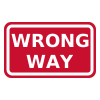
At night you pass this sign just after you turn onto a ramp. What is the best thing to do?
Question 4 of 30Right of way
You are joining a highway from an on-ramp. Who has the right-of-way?
Question 5 of 30Signals and pavement markings
An officer at an intersection waves you on through a red light. What should you do?
Question 6 of 30Emergencies and equipment
When should you adjust your seat and mirrors?
Question 7 of 30Road signs
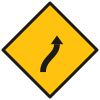
What does this sign warn you about?
Question 8 of 30Safe driving and hazards
What does it mean to drive defensively?
Question 9 of 30Alcohol, drugs and penalties (South Carolina)
To get a South Carolina Temporary Alcohol License (TAL), within how many days must you have asked for an administrative hearing?
Question 10 of 30Alcohol, drugs and penalties
In most states, what must you be able to show if police ask after a crash or stop?
Question 11 of 30Emergencies and equipment (South Carolina)
Your car breaks down on a South Carolina highway. How far behind it does the manual say to place flares?
Question 12 of 30Turning, passing and lanes
Before turning right, what should you watch for on your right?
Question 13 of 30Signals and pavement markings
Generally, when may you turn right on a steady red light?
Question 14 of 30Road signs

What does this white X-shaped sign mark?
Question 15 of 30Speed and following distance
Why does it usually take longer to stop when you are going downhill?
Question 16 of 30Road signs
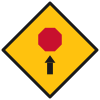
What should you do when you see this sign?
Question 17 of 30Road signs (South Carolina)
In South Carolina, an orange and red triangle on the back of farm equipment means it is going slower than what speed?
Question 18 of 30Road signs
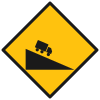
This sign shows a truck on a downward slope. What does it warn you about?
Question 19 of 30Licensing and insurance (South Carolina)
A South Carolina beginner’s permit holder is 18 or older. How long must the permit be held before applying for a license?
Question 20 of 30Safe driving and hazards
What is the main danger of driving when angry or upset?
Question 21 of 30Safe driving and hazards
When is a road often most slippery during rain?
Question 22 of 30Emergencies and equipment
Your car stalls on the railroad tracks and a train is coming. What should you do?
Question 23 of 30Sharing the road
A large truck ahead is signaling a right turn and has swung left. What should you do?
Question 24 of 30Licensing and insurance (South Carolina)
In South Carolina, how often may points be cut by taking a defensive driving course?
Question 25 of 30Speed and following distance
Why is it unsafe to drive faster than your lights can show at night?
Question 26 of 30Emergencies and equipment
Your hood flies up while you are driving. What should you do?
Question 27 of 30Safe driving and hazards
When should you turn on your headlights?
Question 28 of 30Signals and pavement markings (South Carolina)
In some South Carolina cities the traffic lights are hung sideways. Where is the red light?
Question 29 of 30Turning, passing and lanes (South Carolina)
According to the South Carolina manual, what should you do instead of a three-point turnabout on a busy street?
Question 30 of 30Turning, passing and lanes
What is the acceleration lane on a highway on-ramp for?
1 of 30
Answer each question to see the explanation. Keyboard: A–D or 1–4 to answer, N next, P previous.
Answers and explanations (text version)
The correct answer to each question above, why it is right, and where it comes from. Try the test first.
Question 1: B. When your stopped car could be a hazard
Use hazard lights when your car is stopped or very slow and could be a hazard to others.
Handbook: Chapter: Emergencies and vehicle equipment — Breakdowns
Question 2: B. They are cut in half
"Points are reduced by half after one year from the violation date on the ticket."
Handbook: Section 1: The Driver’s License — Loss of Driving Privileges
Question 3: A. Pull over, then turn around safely
The wrong way sign means you are heading into oncoming traffic. Pull to the side right away, then turn around safely.
Handbook: Chapter: Traffic signs — Regulatory signs
Question 4: B. Traffic already on the highway
When joining a highway, yield to traffic already on it and merge into a safe gap.
Handbook: Chapter: Right of way — Entering a roadway
Question 5: D. Follow the officer and go through with care
Directions from a police officer take the place of signals and signs, so follow the officer and go through with care.
Handbook: Chapter: Traffic signals and pavement markings — Traffic signals
Question 6: B. Before you start to drive
Adjust your seat and mirrors before you start to drive, so you can see well and are not distracted on the road.
Handbook: Chapter: Emergencies and vehicle equipment — Vehicle equipment
Question 7: B. The road curves to the right ahead
This curve sign means the road bends to the right ahead. Slow down before you reach the curve.
Handbook: Chapter: Traffic signs — Warning signs
Question 8: D. Expect others to make mistakes and be ready
Defensive driving means you expect other drivers to make mistakes and are ready to avoid them.
Handbook: Chapter: Safe driving and hazards — Defensive driving
Question 9: C. 30 days
You may be eligible for a TAL if you "have filed for an administrative hearing within 30 days."
Handbook: Section 1: The Driver’s License — Temporary Alcohol License
Question 10: B. Proof of insurance
In most states you must carry proof of insurance or financial responsibility and show it when asked.
Handbook: Chapter: Alcohol, drugs and penalties — Licensing rules
Question 11: D. About 200 to 300 feet
If you have flares, "place them about 200 to 300 feet behind the vehicle" so others can change lanes.
Handbook: Section 9: Emergency Situations and Avoiding Collisions — Vehicle Malfunctions
Question 12: C. Cyclists and people walking
Cyclists and people walking may be on your right as you turn, so check for them before turning right.
Handbook: Chapter: Turning, passing and lane use — Turns
Question 13: A. After a full stop, unless a sign forbids it
Generally you may turn right on red after a full stop if no sign forbids it and you yield to people and traffic.
Handbook: Chapter: Traffic signals and pavement markings — Traffic signals
Question 14: B. A railroad crossing
The white X-shaped crossbuck marks the place where the road crosses railroad tracks.
Handbook: Chapter: Traffic signs — Regulatory signs
Question 15: A. Gravity keeps pulling the car forward
Going downhill, gravity keeps pulling the car forward, so it takes longer to stop; slow down and leave more space.
Handbook: Chapter: Speed and following distance — Stopping distance
Question 16: B. Slow down and get ready to stop
This sign warns of a stop sign ahead. Slow down so you can stop at it.
Handbook: Chapter: Traffic signs — Warning signs
Question 17: B. 25 mph
The orange and red triangle "means the vehicle is traveling less than 25 mph," so be sure it is safe before you pass.
Handbook: Section 10: Sharing the Road — Slow-Moving Vehicles
Question 18: C. A steep downhill grade ahead
The truck on a downward slope warns of a steep downhill grade. Check your speed and use a lower gear.
Handbook: Chapter: Traffic signs — Warning signs
Question 19: D. At least 30 days
If you are 18 or older, "you must hold your beginner’s permit for at least 30 days" before you apply.
Handbook: Section 1: The Driver’s License — Beginner’s Permit
Question 20: D. You may take more risks
Strong feelings make you take more risks and pay less attention, so wait until you are calm before you drive.
Handbook: Chapter: Safe driving and hazards — Defensive driving
Question 21: D. In the first few minutes of rain
In the first few minutes of rain, water mixes with oil on the road and makes it very slippery until more rain washes it away.
Handbook: Chapter: Safe driving and hazards — Skids and slippery roads
Question 22: A. Get out and walk away at an angle toward the train
Get out at once and walk away from the tracks at an angle toward the train, so debris thrown forward in the crash will not hit you.
Handbook: Chapter: Emergencies and vehicle equipment — Railroad emergencies
Question 23: C. Stay back and do not pass on the right
Trucks swing wide to make right turns. Stay back and never try to pass on the right.
Handbook: Chapter: Sharing the road — Large trucks and buses
Question 24: D. Only once in a three-year period
"A reduction in points may only be made one time in a three-year period."
Handbook: Section 1: The Driver’s License — Loss of Driving Privileges
Question 25: A. You may not see a hazard in time to stop
If you drive faster than your lights reach, you may not see a hazard in time to stop.
Handbook: Chapter: Speed and following distance — Speed and road conditions
Question 26: B. Look through the gap and pull over
Look through the gap under the hood or out the side window, slow down and pull off the road.
Handbook: Chapter: Emergencies and vehicle equipment — Vehicle failures
Question 27: B. Any time it is hard to see
Turn on your headlights any time it is hard to see, such as at dusk, in rain or in fog.
Handbook: Chapter: Safe driving and hazards — Night and weather
Question 28: D. On the left
Where lights are horizontal, "the red light is on the left, the yellow light is in the middle, and the green light is on the right."
Handbook: Section 6: Rules of the Road — Traffic Signals
Question 29: B. Drive around the whole block
The three-point turnabout is for quiet two-lane roads; "It is better to circle an entire city block if the street is busy."
Handbook: Section 7: General Driving — Turning and Turnabouts
Question 30: A. To speed up to match highway traffic
Use the acceleration lane to get up to the speed of highway traffic so you can merge smoothly.
Handbook: Chapter: Turning, passing and lane use — Highway driving
Practice test 1 of 10 for the Knowledge test (beginner's permit) (SCDMV): 30 questions, 24 to pass — the commonly reported format; SCDMV does not publish the count or a pass mark. Our practice tests are untimed.