Question 1 of 25Signals and pavement markings
Practice test 1 of 10 — South Dakota permit test
Practice test 1 questions
Question 2 of 25Road signs
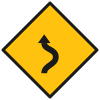
What lies ahead when you see this sign?
Question 3 of 25Turning, passing and lanes
Why should you avoid changing lanes in an intersection?
Question 4 of 25Safe driving and hazards (South Dakota)
Under South Dakota law, front side windows may not be tinted to let in less than what share of light?
Question 5 of 25Road signs

Where would you expect to see this sign?
Question 6 of 25Sharing the road
You are turning right and a cyclist is riding in the bike lane next to you. What should you do?
Question 7 of 25Safe driving and hazards (South Dakota)
What does South Dakota law say about texting while driving?
Question 8 of 25Road signs
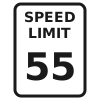
You pass this sign, but rain is falling hard and you cannot see well. What should you do?
Question 9 of 25Turning, passing and lanes
When you back up, where should you look?
Question 10 of 25Speed and following distance
Driving well over the limit on a short trip usually:
Question 11 of 25Safe driving and hazards
Where is ice most likely to form first?
Question 12 of 25Licensing and insurance (South Dakota)
In South Dakota, what decides the month in which your vehicle registration is renewed?
Question 13 of 25Alcohol, drugs and penalties
In nearly every state, what is the legal blood alcohol limit for drivers 21 and over?
Question 14 of 25Turning, passing and lanes
What is the acceleration lane on a highway on-ramp for?
Question 15 of 25Signals and pavement markings
What does a steady yellow light mean?
Question 16 of 25Safe driving and hazards
The back of your car starts to skid. What should you do?
Question 17 of 25Parking and stopping
How should you pull out of a parallel parking space?
Question 18 of 25Speed and following distance
Can you get a ticket for driving at the posted limit?
Question 19 of 25Speed and following distance
A tailgater is behind you and you need to stop ahead. What should you do?
Question 20 of 25Sharing the road
Where should you take extra care to watch for children?
Question 21 of 25Alcohol, drugs and penalties (South Dakota)
How long is a driver's first suspension under the South Dakota point system?
Question 22 of 25Safe driving and hazards (South Dakota)
You drive onto a closed South Dakota road in winter and get stuck. What may happen?
Question 23 of 25Right of way (South Dakota)
According to the South Dakota manual, on a two-lane highway posted at 65 mph, what is the fastest you may pass a stopped car with amber lights?
Question 24 of 25Safe driving and hazards
What is the main danger of driving when angry or upset?
Question 25 of 25Signals and pavement markings
Lights are flashing red at a railroad crossing but you see no train. What should you do?
1 of 25
Answer each question to see the explanation. Keyboard: A–D or 1–4 to answer, N next, P previous.
Answers and explanations (text version)
The correct answer to each question above, why it is right, and where it comes from. Try the test first.
Question 1: B. A railroad crossing ahead
The letters RXR painted on the road warn of a railroad crossing ahead.
Handbook: Chapter: Traffic signals and pavement markings — Pavement markings
Question 2: C. A series of curves
The wavy arrow means a winding road with a series of curves. Keep your speed down until it straightens.
Handbook: Chapter: Traffic signs — Warning signs
Question 3: B. Others may not expect it, and it can cause a crash
Changing lanes in an intersection surprises other drivers and people crossing, so it often causes crashes.
Handbook: Chapter: Turning, passing and lane use — Changing lanes
Question 4: C. 35%
Front side windows may not reduce "the light transmittance to a level below 35%".
Handbook: Before You Drive — Windshield & Windows
Question 5: A. On the outside edge of a sharp curve
Chevron signs are placed on the outside of a sharp curve and point the way to steer.
Handbook: Chapter: Traffic signs — Warning signs
Question 6: A. Let the cyclist pass, then turn
Yield to the cyclist in the bike lane. Let them go by, then make your turn behind them.
Handbook: Chapter: Sharing the road — Bicycles
Question 7: B. It is prohibited
The manual says "Texting, reading texts, and social networking is prohibited by state law."
Handbook: Be in Shape to Drive — Driver Distractions
Question 8: D. Drive slower than the posted speed
The posted speed is the most you may drive in good conditions. In heavy rain you must drive slower than that to stay safe.
Handbook: Chapter: Traffic signs — Regulatory signs
Question 9: D. Over your right shoulder through the rear window
Turn and look over your right shoulder through the rear window, and check all around, not just your mirrors.
Handbook: Chapter: Turning, passing and lane use — Backing
Question 10: A. Saves very little time and adds a lot of risk
Speeding on most trips saves only a few minutes but raises the chance and harm of a crash.
Handbook: Chapter: Speed and following distance — Basic speed rule
Question 11: C. On bridges and overpasses
Bridges and overpasses lose heat from above and below, so ice forms on them first.
Handbook: Chapter: Safe driving and hazards — Skids and slippery roads
Question 12: B. The first letter of your last name
Renewals use a staggered system "based on the first letter in your last name".
Handbook: The Driver’s License — Vehicle Registration and Titles
Question 13: A. 0.08 percent
In nearly every state the limit for drivers 21 and over is 0.08 percent; a state may set it lower.
Handbook: Chapter: Alcohol, drugs and penalties — Legal limits
Question 14: A. To speed up to match highway traffic
Use the acceleration lane to get up to the speed of highway traffic so you can merge smoothly.
Handbook: Chapter: Turning, passing and lane use — Highway driving
Question 15: A. The light is about to turn red
A steady yellow light warns that the light is about to turn red. Stop if you can do so safely.
Handbook: Chapter: Traffic signals and pavement markings — Traffic signals
Question 16: A. Ease off the gas and steer where you want to go
In a skid, ease off the gas and steer gently where you want the car to go.
Handbook: Chapter: Safe driving and hazards — Skids and slippery roads
Question 17: D. Signal, check your blind spot, and yield
Signal, check your mirrors and blind spot, and yield to traffic before pulling out.
Handbook: Chapter: Parking and stopping — Parallel parking
Question 18: C. Yes, if that speed is unsafe for conditions
Yes. Under the basic speed rule you can be ticketed for driving at the limit when conditions make that speed unsafe.
Handbook: Chapter: Speed and following distance — Basic speed rule
Question 19: A. Brake early and gently
Brake early and gently to give the tailgater time to notice and slow down.
Handbook: Chapter: Speed and following distance — Following distance
Question 20: C. Near schools, parks, and playgrounds
Children near schools, parks and playgrounds may run into the road without looking.
Handbook: Chapter: Sharing the road — Pedestrians
Question 21: D. 60 days
The table lists "First Suspension 60 days", then 6 months, then 1 year for later ones.
Handbook: The Driver’s License — South Dakota Point System
Question 22: B. You may be ticketed and charged rescue costs
On a closed road "you could also be given a ticket and be held accountable" for rescue costs.
Handbook: Special Driving Situations — Winter Driving Safety Tips
Question 23: A. 45 mph
You must slow to "at least twenty miles per hour less than the posted speed limit", so 45 mph at most.
Handbook: Attention — South Dakota Codified Law 32-31-6.1
Question 24: D. You may take more risks
Strong feelings make you take more risks and pay less attention, so wait until you are calm before you drive.
Handbook: Chapter: Safe driving and hazards — Defensive driving
Question 25: A. Stop and wait until the lights stop flashing
Flashing red lights at a crossing mean a train is coming. Stop and wait until the lights stop flashing, even if you see no train.
Handbook: Chapter: Traffic signals and pavement markings — Railroad crossing signals
Practice test 1 of 10 for the Knowledge test (instruction permit) (the South Dakota Department of Public Safety): 25 questions, 20 to pass — the commonly reported format; the South Dakota Department of Public Safety does not publish the count. Official pass mark: 80%. Our practice tests are untimed.