Question 1 of 25Signals and pavement markings
Practice test 2 of 10 — South Dakota permit test
Practice test 2 questions
Question 2 of 25Road signs
Yellow signs with black symbols are used to:
Question 3 of 25Speed and following distance
Total stopping distance is made up of:
Question 4 of 25Alcohol, drugs and penalties (South Dakota)
In South Dakota, what type of crime is a third DWI offense?
Question 5 of 25Road signs
A stop sign has a small plaque below it that says "ALL WAY". What does this mean?
Question 6 of 25Emergencies and equipment
Your hood flies up while you are driving. What should you do?
Question 7 of 25Speed and following distance (South Dakota)
You drive through a South Dakota work zone, but no workers are present. What should you do?
Question 8 of 25Road signs
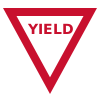
What does this sign tell you to do?
Question 9 of 25Turning, passing and lanes
At an intersection with two left-turn lanes, how should you turn?
Question 10 of 25Right of way
Another car is passing you on a two-lane road. What should you do?
Question 11 of 25Safe driving and hazards
You feel very sleepy while driving. What should you do?
Question 12 of 25Turning, passing and lanes (South Dakota)
Where does the South Dakota manual say you may not make a U-turn?
Question 13 of 25Parking and stopping
In many states, what does a curb painted red mean?
Question 14 of 25Turning, passing and lanes
On which side should you normally pass another vehicle?
Question 15 of 25Signals and pavement markings
What does a flashing yellow light mean?
Question 16 of 25Safe driving and hazards
Your car starts to hydroplane on a wet road. What should you do?
Question 17 of 25Turning, passing and lanes
How should you turn left from a one-way street onto another one-way street?
Question 18 of 25Right of way
You and a driver on your right stop at a four-way stop at the same time. Who goes first?
Question 19 of 25Right of way
You are in a roundabout and an emergency vehicle with a siren comes up. What should you do?
Question 20 of 25Sharing the road
Why is it dangerous to cut in front of a large truck?
Question 21 of 25Right of way (South Dakota)
You reach a single-lane bridge on a rural South Dakota road. Who generally has the right-of-way?
Question 22 of 25Turning, passing and lanes (South Dakota)
According to the South Dakota manual, about how long does it take to pass another car at 55 mph?
Question 23 of 25Road signs (South Dakota)
According to the South Dakota manual, when is a "THINK" sign by the road taken down right away?
Question 24 of 25Sharing the road
What are the "no zones" around a large truck?
Question 25 of 25Signals and pavement markings
A broken yellow line is on your side of the center. What does it mean?
1 of 25
Answer each question to see the explanation. Keyboard: A–D or 1–4 to answer, N next, P previous.
Answers and explanations (text version)
The correct answer to each question above, why it is right, and where it comes from. Try the test first.
Question 1: C. No; only oncoming drivers may pass here
A solid yellow line on your side means you may not cross it to pass. The broken line lets oncoming drivers pass.
Handbook: Chapter: Traffic signals and pavement markings — Pavement markings
Question 2: B. Warn you about the road ahead
Yellow is the color of general warning signs. They tell you about curves, crossings and other hazards ahead.
Handbook: Chapter: Traffic signs — Sign shapes and colors
Question 3: A. Reaction distance plus braking distance
Total stopping distance is the distance covered while you see and react plus the distance covered while braking.
Handbook: Chapter: Speed and following distance — Stopping distance
Question 4: B. A Class 6 felony
The manual says the "Third offense is a Class 6 felony", with prison of up to two years.
Handbook: Be in Shape to Drive — Alcohol and the Law
Question 5: A. Traffic from every direction must stop
An all-way plaque means traffic from every direction must stop at the intersection.
Handbook: Chapter: Traffic signs — Regulatory signs
Question 6: B. Look through the gap and pull over
Look through the gap under the hood or out the side window, slow down and pull off the road.
Handbook: Chapter: Emergencies and vehicle equipment — Vehicle failures
Question 7: D. Still reduce your speed
Reduce your speed in a work zone "even if there are no workers present".
Handbook: Special Driving Situations — Work Zones
Question 8: A. Let traffic with the right-of-way go first
A yield sign means you slow down and let traffic and people with the right-of-way go first, stopping if you need to.
Handbook: Chapter: Traffic signs — Regulatory signs
Question 9: C. Stay in your own lane through the turn
With two turn lanes, stay in your lane through the turn and end up in the matching lane.
Handbook: Chapter: Turning, passing and lane use — Turns
Question 10: D. Stay right and do not speed up
When you are being passed, keep to the right and hold or ease your speed so the other driver can finish passing safely.
Handbook: Chapter: Right of way — Right-of-way basics
Question 11: B. Stop in a safe place and rest
The only cure for being drowsy is rest. Stop in a safe place and sleep or switch drivers.
Handbook: Chapter: Safe driving and hazards — Fatigue
Question 12: A. Mid-block on a street in a business district
Do not make a U-turn "Mid-block on any street in a business district".
Handbook: General Driving — U-Turns
Question 13: B. No stopping or parking
In many states a red curb means no stopping or parking. Check your state for its curb colors.
Handbook: Chapter: Parking and stopping — Curb markings
Question 14: D. On the left
You should normally pass on the left. Passing on the right is allowed only in certain cases.
Handbook: Chapter: Turning, passing and lane use — Passing
Question 15: B. Slow down and go on with care
A flashing yellow light is a warning. Slow down and go on with care.
Handbook: Chapter: Traffic signals and pavement markings — Traffic signals
Question 16: A. Ease off the gas and keep the wheel straight
If you hydroplane, ease off the gas and keep the wheel straight until the tires grip again. Do not brake hard.
Handbook: Chapter: Safe driving and hazards — Skids and slippery roads
Question 17: B. From the far left lane into the far left lane
Turning left from one one-way street onto another, start in the far left lane and end in the far left lane.
Handbook: Chapter: Turning, passing and lane use — Turns
Question 18: B. The driver on your right
When two drivers stop at the same time, the driver on the left yields to the driver on the right.
Handbook: Chapter: Right of way — Stop signs and intersections
Question 19: B. Leave at the next exit, then pull over
Do not stop inside a roundabout. Leave at your exit or the next one, then pull over to let the vehicle pass.
Handbook: Chapter: Right of way — Emergency vehicles
Question 20: C. It needs much more distance to stop
A loaded truck needs much more distance to stop than a car, so it may not be able to stop for you.
Handbook: Chapter: Sharing the road — Large trucks and buses
Question 21: A. The first driver to reach the bridge
Take turns crossing; "the first driver to the bridge has the right-of-way".
Handbook: Special Driving Situations — Rural Road Driving
Question 22: B. About 10 seconds
At a speed of 55 mph, "you need about 10 seconds to pass", so you need a 10-second gap.
Handbook: Safe Driving Tips — Space to Pass
Question 23: D. When a close family member of the victim objects
The sign is removed quickly when "An immediate family member of the crash victim objects to the sign".
Handbook: Be in Shape to Drive — Along South Dakota’s Roadsides
Question 24: D. Blind spots where the driver cannot see you
No zones are the large blind spots around a truck where the driver cannot see you.
Handbook: Chapter: Sharing the road — Large trucks and buses
Question 25: D. You may pass when it is safe
A broken yellow line on your side means you may cross it to pass when it is safe to do so.
Handbook: Chapter: Traffic signals and pavement markings — Pavement markings
Practice test 2 of 10 for the Knowledge test (instruction permit) (the South Dakota Department of Public Safety): 25 questions, 20 to pass — the commonly reported format; the South Dakota Department of Public Safety does not publish the count. Official pass mark: 80%. Our practice tests are untimed.