Question 1 of 30Safe driving and hazards
Practice test 1 of 10 — Tennessee permit test
Practice test 1 questions
Question 2 of 30Signals and pavement markings
Yellow center lines on a road separate:
Question 3 of 30Parking and stopping (Tennessee)
In Tennessee, what is the fine for parking in a disabled space without a valid placard or plate?
Question 4 of 30Alcohol, drugs and penalties (Tennessee)
A Tennessee driver aged 16 to 20 drives with what BAC to be guilty of underage driving while impaired?
Question 5 of 30Turning, passing and lanes
Why should you avoid changing lanes in an intersection?
Question 6 of 30Parking and stopping (Tennessee)
A Tennessee driver wants to park near a crosswalk. How much space must be left?
Question 7 of 30Alcohol, drugs and penalties
What happens when you mix alcohol with other drugs?
Question 8 of 30Road signs
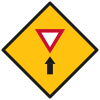
What does this sign warn you about?
Question 9 of 30Road signs
What does the color red on a sign usually mean?
Question 10 of 30Alcohol, drugs and penalties
Which drinks hold about the same amount of alcohol?
Question 11 of 30Speed and following distance (Tennessee)
At night, in bad weather or at high interstate speeds, what following gap does the Tennessee manual advise?
Question 12 of 30Road signs
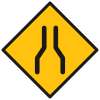
What is this sign warning you about?
Question 13 of 30Parking and stopping
May you park in a disability space without a valid placard or plate?
Question 14 of 30Right of way
At a four-way stop, another driver waves you on, but it is their turn. What is the safest thing to do?
Question 15 of 30Alcohol, drugs and penalties
In nearly every state, what is the legal blood alcohol limit for drivers 21 and over?
Question 16 of 30Sharing the road
Many states require at least 3 feet of space when passing a cyclist. What is the main reason?
Question 17 of 30Road signs
Yellow signs with black symbols are used to:
Question 18 of 30Alcohol, drugs and penalties
Does drinking coffee make a person safe to drive after drinking alcohol?
Question 19 of 30Safe driving and hazards (Tennessee)
Under Tennessee law, up to what age is the driver responsible for making sure children are buckled in?
Question 20 of 30Speed and following distance
What does it mean to "overdrive" your headlights?
Question 21 of 30Road signs
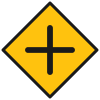
What does this sign tell you is ahead?
Question 22 of 30Signals and pavement markings
What should you do at a flashing red light?
Question 23 of 30Alcohol, drugs and penalties
You drank a lot late last night. Could you still be impaired the next morning?
Question 24 of 30Parking and stopping
In many states, what does a curb painted red mean?
Question 25 of 30Speed and following distance (Tennessee)
In good conditions, what is the least following gap the Tennessee manual gives?
Question 26 of 30Right of way (Tennessee)
A Tennessee fire truck has stopped to deal with an emergency. Where may you not drive your car?
Question 27 of 30Speed and following distance
The best way to avoid hitting a car that stops suddenly in front of you is to:
Question 28 of 30Emergencies and equipment
Your gas pedal sticks down. What should you do?
Question 29 of 30Sharing the road
On a road with no sidewalk, where should people walk?
Question 30 of 30Alcohol, drugs and penalties (Tennessee)
After a DUI conviction in Tennessee, what must the offender do as a term of probation?
1 of 30
The timer starts when you answer the first question. Keyboard: A–D or 1–4 to answer, N next, P previous.
Answers and explanations (text version)
The correct answer to each question above, why it is right, and where it comes from. Try the test first.
Question 1: A. Ease off the gas and keep the wheel straight
If you hydroplane, ease off the gas and keep the wheel straight until the tires grip again. Do not brake hard.
Handbook: Chapter: Safe driving and hazards — Skids and slippery roads
Question 2: A. Traffic moving in opposite directions
Yellow lines separate traffic moving in opposite directions.
Handbook: Chapter: Traffic signals and pavement markings — Pavement markings
Question 3: C. $100 fine
Parking in a reserved disabled space without the right placard or plate is a misdemeanor with a $100 fine, and the car may be towed.
Handbook: Section B, Chapter 4: Rules of the Road — Backing and Parking
Question 4: A. 0.02 percent
A Tennessee driver at least 16 but under 21 who drives with a BAC of 0.02 percent is convicted of underage driving while impaired.
Handbook: Section B, Chapter 7: Alcohol, Other Drugs and Driving — Young Driver Risks and Laws
Question 5: B. Others may not expect it, and it can cause a crash
Changing lanes in an intersection surprises other drivers and people crossing, so it often causes crashes.
Handbook: Chapter: Turning, passing and lane use — Changing lanes
Question 6: C. 20 feet
In Tennessee you may not park in a crosswalk or within 20 feet of one.
Handbook: Section B, Chapter 4: Rules of the Road — Backing and Parking
Question 7: D. The effects can be much stronger
Alcohol mixed with other drugs can make the effects much stronger and more dangerous.
Handbook: Chapter: Alcohol, drugs and penalties — Drugs and medicine
Question 8: A. A yield sign is coming up
This sign warns of a yield sign ahead, so slow down and be ready to give way.
Handbook: Chapter: Traffic signs — Warning signs
Question 9: C. Stop, yield, or something is not allowed
Red is used for stop, yield and signs that ban an action, such as do not enter.
Handbook: Chapter: Traffic signs — Sign shapes and colors
Question 10: A. A 12 oz beer, a 5 oz glass of wine, and a 1.5 oz shot
A standard 12 oz beer, 5 oz glass of wine and 1.5 oz shot of liquor each hold about the same alcohol.
Handbook: Chapter: Alcohol, drugs and penalties — How alcohol affects you
Question 11: D. At least 4 seconds
In bad weather, at night and at higher interstate speeds, increase the two-second gap to a minimum of 4 seconds.
Handbook: Section B, Chapter 4: Rules of the Road — The Two Second Rule
Question 12: D. The bridge ahead is narrower than the road
The narrow bridge sign means the bridge is narrower than the road. Slow down and watch for oncoming vehicles.
Handbook: Chapter: Traffic signs — Warning signs
Question 13: C. No, it is not allowed
Disability spaces are only for vehicles with a valid placard or plate. Others may not park there.
Handbook: Chapter: Parking and stopping — Where not to park
Question 14: C. Look for other traffic, then go
A wave is not a promise that the way is clear. Look for other traffic and people before you go.
Handbook: Chapter: Right of way — Stop signs and intersections
Question 15: A. 0.08 percent
In nearly every state the limit for drivers 21 and over is 0.08 percent; a state may set it lower.
Handbook: Chapter: Alcohol, drugs and penalties — Legal limits
Question 16: B. A cyclist may swerve to avoid a hazard
Many states require at least 3 feet because a cyclist may swerve around potholes, glass or car doors.
Handbook: Chapter: Sharing the road — Bicycles
Question 17: B. Warn you about the road ahead
Yellow is the color of general warning signs. They tell you about curves, crossings and other hazards ahead.
Handbook: Chapter: Traffic signs — Sign shapes and colors
Question 18: B. No, it does not lower blood alcohol
Coffee may make you feel more awake, but it does not lower blood alcohol or make you safe to drive.
Handbook: Chapter: Alcohol, drugs and penalties — How alcohol affects you
Question 19: C. Under 16
Tennessee law makes the driver responsible for properly restraining children under 16, with a $50 fine for a violation.
Handbook: Section B, Chapter 2: Tennessee Safety Belt Laws — Tennessee Safety Belt Laws
Question 20: B. Going too fast to stop within your lights' reach
You overdrive your headlights when you drive too fast to stop within the distance your lights show.
Handbook: Chapter: Speed and following distance — Speed and road conditions
Question 21: B. Another road crosses yours
The cross symbol warns of a crossroad ahead. Watch for traffic coming from both sides.
Handbook: Chapter: Traffic signs — Warning signs
Question 22: C. Stop fully, then go when it is safe
Treat a flashing red light like a stop sign. Stop fully, then go when it is safe.
Handbook: Chapter: Traffic signals and pavement markings — Traffic signals
Question 23: A. Yes, alcohol can still be in your blood
Yes. After heavy drinking, alcohol can still be in your blood the next morning, even after sleep.
Handbook: Chapter: Alcohol, drugs and penalties — How alcohol affects you
Question 24: B. No stopping or parking
In many states a red curb means no stopping or parking. Check your state for its curb colors.
Handbook: Chapter: Parking and stopping — Curb markings
Question 25: B. 2 seconds
Count as the car ahead passes a fixed point; in good conditions you should not reach that point in less than 2 seconds.
Handbook: Section B, Chapter 4: Rules of the Road — The Two Second Rule
Question 26: D. Into the block where it has stopped
Tennessee makes it illegal to take your vehicle into the block where an emergency vehicle has stopped to handle an emergency.
Handbook: Section B, Chapter 4: Rules of the Road — The Right-Of-Way Procedures
Question 27: D. Keep a safe following distance
A safe following distance gives you time to react and stop if the car ahead stops suddenly.
Handbook: Chapter: Speed and following distance — Following distance
Question 28: C. Shift to neutral and brake
Shift to neutral to cut power to the wheels, brake, and pull off the road when safe.
Handbook: Chapter: Emergencies and vehicle equipment — Stuck gas pedal
Question 29: B. On the left side, facing traffic
With no sidewalk, people should walk on the left, facing traffic, so they can see cars coming.
Handbook: Chapter: Sharing the road — Pedestrians
Question 30: A. Pick up litter in a vest that says "I am a DRUNK DRIVER"
Every Tennessee DUI conviction requires litter pick-up for three eight-hour shifts while wearing a vest that says "I am a DRUNK DRIVER."
Handbook: Section B, Chapter 7: Alcohol, Other Drugs and Driving — Penalties Applying to any DUI Conviction
Practice test 1 of 10 for the Driver License Knowledge Test (Class PD learner permit) (TDOSHS): 30 questions · 24 of 30 (80%) to pass · 60 minutes.