Question 1 of 30Road signs
Question 1 of 30Road signs
Question 2 of 30Turning, passing and lanes
Question 3 of 30Safe driving and hazards
Question 4 of 30Turning, passing and lanes
Question 5 of 30Speed and following distance
Question 6 of 30Alcohol, drugs and penalties (Texas)
Question 7 of 30Road signs
Question 8 of 30Safe driving and hazards
Question 9 of 30Alcohol, drugs and penalties (Texas)
Question 10 of 30Road signs
Question 11 of 30Road signs
Question 12 of 30Safe driving and hazards
Question 13 of 30Road signs (Texas)
Question 14 of 30Road signs
Question 15 of 30Parking and stopping
Question 16 of 30Emergencies and equipment
Question 17 of 30Parking and stopping
Question 18 of 30Signals and pavement markings
Question 19 of 30Right of way (Texas)
Question 20 of 30Turning, passing and lanes
Question 21 of 30Parking and stopping
Question 22 of 30Alcohol, drugs and penalties
Question 23 of 30Licensing and insurance (Texas)
Question 24 of 30Alcohol, drugs and penalties
Question 25 of 30Road signs
Question 26 of 30Speed and following distance
Question 27 of 30Road signs

Question 28 of 30Safe driving and hazards (Texas)
Question 29 of 30Alcohol, drugs and penalties (Texas)
Question 30 of 30Safe driving and hazards (Texas)
Answer each question to see the explanation. Keyboard: A–D or 1–4 to answer, N next, P previous.
The correct answer to each question above, why it is right, and where it comes from. Try the test first.
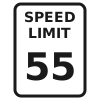
Question 1: D. Drive slower than the posted speed
The posted speed is the most you may drive in good conditions. In heavy rain you must drive slower than that to stay safe.
Handbook: Chapter: Traffic signs — Regulatory signs
Question 2: B. Others may think you are turning left
Swinging wide confuses other drivers and can lead a car to pass on your right. Keep close to the curb.
Handbook: Chapter: Turning, passing and lane use — Turns
Question 3: B. It keeps you in your seat in a crash
A seat belt keeps you in your seat and lowers the chance of serious injury in a crash.
Handbook: Chapter: Safe driving and hazards — Seat belts and airbags
Question 4: C. When it is turning left and there is room
You may pass on the right when the car ahead is turning left or on a road with two or more lanes your way, if it is safe.
Handbook: Chapter: Turning, passing and lane use — Passing
Question 5: A. Never drive faster than is safe for conditions
The basic speed rule means you must never drive faster than is safe for the road, weather and traffic, whatever the posted limit.
Handbook: Chapter: Speed and following distance — Basic speed rule
Question 6: B. 2 or more
DPS may suspend a driver under 18 who has 2 or more separate traffic convictions within any 12 month period.
Handbook: Chapter 1: Your License to Drive — Suspensions and Revocations (Under 21)
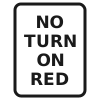
Question 7: D. You may not turn, even after you stop
This sign means no turn on red. You must stop and wait for a green light before you turn.
Handbook: Chapter: Traffic signs — Regulatory signs
Question 8: D. At least 10 inches
Sit at least 10 inches from the steering wheel so a deploying airbag does not hurt you.
Handbook: Chapter: Safe driving and hazards — Seat belts and airbags
Question 9: D. 90 days to 365 days
A first adult DWI can bring a fine up to $2,000, 72 hours to 180 days in jail, and a suspension of 90 days to 365 days.
Handbook: Chapter 10: Alcohol and Drug Impact on the Driving Ability — Texas Alcohol-Related Laws for Adults
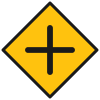
Question 10: B. Another road crosses yours
The cross symbol warns of a crossroad ahead. Watch for traffic coming from both sides.
Handbook: Chapter: Traffic signs — Warning signs
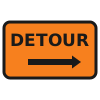
Question 11: C. Follow the signs around a closed road
A detour sign leads you around a closed road. Follow the detour signs to get back on your route.
Handbook: Chapter: Traffic signs — Work zone signs
Question 12: C. Turn around and find another way
Never drive into flowing water. Even shallow water can sweep a car away, so turn around.
Handbook: Chapter: Safe driving and hazards — Night and weather
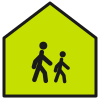
Question 13: B. While the yellow lights are flashing
The school zone speed shown on the sign is in effect while its yellow lights are flashing.
Handbook: Chapter 5: Signals, Signs, and Markers — Regulatory and Warning Signs
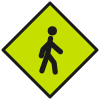
Question 14: A. People may be crossing the road ahead
This pedestrian crossing sign warns that people may be crossing. Slow down and yield to anyone in the crosswalk.
Handbook: Chapter: Traffic signs — Warning signs
Question 15: A. As far off the road as you can
Pull as far off the road as you can, onto the shoulder, so you are out of the traffic lanes.
Handbook: Chapter: Parking and stopping — Stopping on highways
Question 16: C. Ease off the gas and steer back gently
Ease off the gas, then steer back onto the pavement gently once you have slowed down.
Handbook: Chapter: Emergencies and vehicle equipment — Running off the road
Question 17: C. Slowly, looking all around you
Back out slowly and look all around. Your view may be blocked by the cars next to you.
Handbook: Chapter: Parking and stopping — Angle parking
Question 18: C. Left turns by traffic from both directions
This is a two-way left-turn lane. Drivers from both directions use it only to make left turns.
Handbook: Chapter: Traffic signals and pavement markings — Pavement markings
Question 19: A. You, the driver already on the frontage road
The Texas handbook says the frontage-road driver "must yield the right-of-way" to vehicles entering the frontage road from the highway, so you yield.
Handbook: Chapter 4: Right-of-Way — Enter or Leave Controlled-Access Highway
Question 20: C. Early, before you slow down or turn
Signal early, before you slow down or turn, so other drivers know what you plan to do.
Handbook: Chapter: Turning, passing and lane use — Signaling
Question 21: A. No, never
Never park on a crosswalk. It blocks people who need to cross.
Handbook: Chapter: Parking and stopping — Where not to park
Question 22: D. The effects can be much stronger
Alcohol mixed with other drugs can make the effects much stronger and more dangerous.
Handbook: Chapter: Alcohol, drugs and penalties — Drugs and medicine
Question 23: B. $175 to $350
A first conviction for driving without evidence of financial responsibility brings a fine of $175 to $350.
Handbook: Chapter 3: Safety Responsibility — Failure to Provide Evidence of Financial Responsibility
Question 24: D. No, you must stop
You must stop after any crash you are in. Leaving the scene is a serious offense.
Handbook: Chapter: Alcohol, drugs and penalties — Penalties
Question 25: A. A no-passing zone
The pennant shape is used only to mark the start of a no-passing zone.
Handbook: Chapter: Traffic signs — Sign shapes and colors
Question 26: A. About four times as far
Braking distance grows with the square of speed, so doubling your speed makes it about four times as far.
Handbook: Chapter: Speed and following distance — Stopping distance
Question 27: A. On the outside edge of a sharp curve
Chevron signs are placed on the outside of a sharp curve and point the way to steer.
Handbook: Chapter: Traffic signs — Warning signs
Question 28: C. When it is within 500 feet
Texas requires low beams when you are within 500 feet of an approaching vehicle.
Handbook: Chapter 9: Some Special Driving Situations — Headlights
Question 29: C. 90 days
A first test result of 0.08 or more can bring a 90 day suspension, and up to 365 days for later offenses.
Handbook: Chapter 10: Alcohol and Drug Impact on the Driving Ability — Texas Alcohol-Related Laws for Adults
Question 30: D. The driver
The driver is cited, with a fine of $100 to $200, when a passenger under 17 is not belted.
Handbook: Chapter 14: Additional Safety Tips — Safety Belts
Practice test 1 of 10 for the Class C knowledge exam (learner license knowledge exam) (Texas DPS): 30 questions, 21 to pass — the commonly reported format; Texas DPS does not publish the count. Official pass mark: 70%. Our practice tests are untimed.