Question 1 of 50Alcohol, drugs and penalties
Practice test 1 of 10 — Utah permit test
Practice test 1 questions
Question 2 of 50Emergencies and equipment
Your gas pedal sticks down. What should you do?
Question 3 of 50Road signs
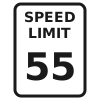
What does this sign tell you?
Question 4 of 50Turning, passing and lanes
Where should you slow down when leaving a highway?
Question 5 of 50Road signs
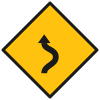
What lies ahead when you see this sign?
Question 6 of 50Sharing the road
How should you pass a person riding a horse?
Question 7 of 50Right of way
A person is walking across the street in a crosswalk ahead of you. What must you do?
Question 8 of 50Speed and following distance
A driver is following you too closely. What is the safest thing to do?
Question 9 of 50Road signs
A sign shaped like a triangle with one point facing down means:
Question 10 of 50Speed and following distance
Why should you drive slower on a gravel road?
Question 11 of 50Right of way
You are pulling into a driveway and a person is walking on the sidewalk. What should you do?
Question 12 of 50Road signs
Warning signs are usually placed:
Question 13 of 50Road signs
A school zone sign has a plaque that says "WHEN FLASHING". What does it mean?
Question 14 of 50Parking and stopping
When you leave your car parked, what should you do?
Question 15 of 50Safe driving and hazards
How should you use the gas and brakes on snow?
Question 16 of 50Alcohol, drugs and penalties
What kinds of tests are covered by implied consent laws?
Question 17 of 50Speed and following distance
Why does it usually take longer to stop when you are going downhill?
Question 18 of 50Road signs
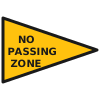
This pennant-shaped sign is on the left side of the road. What does it mark?
Question 19 of 50Parking and stopping
In general, may you park on a bridge or in a tunnel?
Question 20 of 50Right of way
A bus has stopped at a crosswalk to let people cross. You are in the next lane. What should you do?
Question 21 of 50Safe driving and hazards
When should you turn on your headlights?
Question 22 of 50Turning, passing and lanes (Utah)
After passing on a Utah two-lane road, how far from oncoming cars must you be when you move back right?
Question 23 of 50Licensing and insurance (Utah)
A 16-year-old just got a Utah driver license. For the first six months, who may ride along, unless an exception applies?
Question 24 of 50Road signs
A white sign says "PASS WITH CARE". What does it mean?
Question 25 of 50Road signs
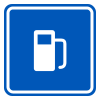
What does this blue sign beside the highway tell you?
Question 26 of 50Right of way (Utah)
A Utah fire truck is answering an alarm. Unless you are on official business, how close may you follow it?
Question 27 of 50Right of way
At an intersection your signal is flashing yellow, and the cross street's is flashing red. Who should go first?
Question 28 of 50Signals and pavement markings (Utah)
At a Utah ramp meter with red and green lights, what should you do?
Question 29 of 50Safe driving and hazards (Utah)
A Utah driver age 30 wants to make a phone call while driving. What does the law allow?
Question 30 of 50Parking and stopping (Utah)
You must stop at a Utah railroad crossing. How far from the nearest rail should you stop?
Question 31 of 50Turning, passing and lanes
You turn left from a two-way street onto another two-way street. Which lane should you end in?
Question 32 of 50Road signs
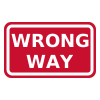
At night you pass this sign just after you turn onto a ramp. What is the best thing to do?
Question 33 of 50Alcohol, drugs and penalties (Utah)
Under the Utah point system, a driver younger than 21 faces a hearing at what point total in three years?
Question 34 of 50Sharing the road
How much of the lane does a motorcycle need?
Question 35 of 50Turning, passing and lanes
Where should you not pass on a two-lane road?
Question 36 of 50Licensing and insurance (Utah)
A Utah teen in driver education must also practice with a parent. How much driving is required?
Question 37 of 50Turning, passing and lanes (Utah)
In a Utah work zone, two lanes must merge into one. What is the zipper method?
Question 38 of 50Safe driving and hazards (Utah)
In Utah, when must you dim your high beams for an oncoming car?
Question 39 of 50Turning, passing and lanes
How should you turn left from a one-way street onto another one-way street?
Question 40 of 50Turning, passing and lanes
What is the acceleration lane on a highway on-ramp for?
Question 41 of 50Safe driving and hazards (Utah)
The flashing lights at a Utah railroad crossing seem broken. After a full stop, when may you cross?
Question 42 of 50Alcohol, drugs and penalties
What usually happens if you refuse a lawful breath or blood test?
Question 43 of 50Speed and following distance
Compared to dry pavement, stopping on ice takes:
Question 44 of 50Alcohol, drugs and penalties
How do the laws treat driving under the influence of illegal drugs?
Question 45 of 50Right of way
You turn right on a green light. A person is crossing the street you are turning onto. Who has the right-of-way?
Question 46 of 50Road signs
A "LOW CLEARANCE" sign shows a height. What does it warn you about?
Question 47 of 50Alcohol, drugs and penalties
In most states, where is an open container of alcohol not allowed?
Question 48 of 50Licensing and insurance (Utah)
A 16-year-old Utah driver has a license, not a permit. Unless an exception applies, when may the teen not drive?
Question 49 of 50Sharing the road (Utah)
A Utah snowplow with flashing yellow lights has its plow blade out on one side. What is the rule?
Question 50 of 50Road signs
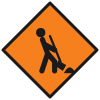
This orange sign shows a person with a shovel. What does it warn you about?
1 of 50
Answer each question to see the explanation. Keyboard: A–D or 1–4 to answer, N next, P previous.
Answers and explanations (text version)
The correct answer to each question above, why it is right, and where it comes from. Try the test first.
Question 1: A. 0.08 percent
In nearly every state the limit for drivers 21 and over is 0.08 percent; a state may set it lower.
Handbook: Chapter: Alcohol, drugs and penalties — Legal limits
Question 2: C. Shift to neutral and brake
Shift to neutral to cut power to the wheels, brake, and pull off the road when safe.
Handbook: Chapter: Emergencies and vehicle equipment — Stuck gas pedal
Question 3: D. The top legal speed when conditions are good
A speed limit sign shows the highest legal speed in good conditions. You may need to go slower when conditions are poor.
Handbook: Chapter: Traffic signs — Regulatory signs
Question 4: A. In the exit lane, after leaving the main lanes
Keep your speed in the main lanes and slow down once you are in the exit lane.
Handbook: Chapter: Turning, passing and lane use — Highway driving
Question 5: C. A series of curves
The wavy arrow means a winding road with a series of curves. Keep your speed down until it straightens.
Handbook: Chapter: Traffic signs — Warning signs
Question 6: B. Slowly, with plenty of room and no horn
Pass a horse slowly and give it plenty of room. Do not honk, as noise can scare it.
Handbook: Chapter: Sharing the road — Slow-moving vehicles
Question 7: A. Stop and let the person cross
Pedestrians in a crosswalk have the right-of-way. Stop and let them finish crossing.
Handbook: Chapter: Right of way — Pedestrians
Question 8: D. Leave more space ahead and let them pass
With a tailgater behind you, leave more space in front so you can slow gently, and let them pass when you can.
Handbook: Chapter: Speed and following distance — Following distance
Question 9: C. Yield
The downward-pointing triangle is used only for the yield sign.
Handbook: Chapter: Traffic signs — Sign shapes and colors
Question 10: A. Gravel gives less grip for stopping and turning
Loose gravel gives your tires less grip, so stopping and steering take more care and lower speed.
Handbook: Chapter: Speed and following distance — Speed and road conditions
Question 11: B. Stop and let them pass first
People on the sidewalk have the right-of-way at a driveway. Stop and let them pass.
Handbook: Chapter: Right of way — Pedestrians
Question 12: A. Ahead of the hazard, to give you time
Warning signs are placed ahead of the hazard so you have time to see it and slow down.
Handbook: Chapter: Traffic signs — Warning signs
Question 13: C. The lower limit applies while lights flash
With a "when flashing" plaque, the lower school speed limit applies while the yellow lights are flashing.
Handbook: Chapter: Traffic signs — Regulatory signs
Question 14: B. Turn off the engine, take the keys, and lock it
Turn off the engine, take the keys and lock the car so no one can drive it away and it cannot roll.
Handbook: Chapter: Parking and stopping — Leaving a parked car
Question 15: A. Gently and smoothly
Use the gas and brakes gently and smoothly on snow so the tires keep their grip.
Handbook: Chapter: Safe driving and hazards — Skids and slippery roads
Question 16: D. Breath, blood, or urine tests
Implied consent laws generally cover breath, blood and urine tests for alcohol or drugs.
Handbook: Chapter: Alcohol, drugs and penalties — Testing and implied consent
Question 17: A. Gravity keeps pulling the car forward
Going downhill, gravity keeps pulling the car forward, so it takes longer to stop; slow down and leave more space.
Handbook: Chapter: Speed and following distance — Stopping distance
Question 18: C. The start of a no-passing zone
The pennant sign marks the start of a no-passing zone. Do not begin to pass from this point on.
Handbook: Chapter: Traffic signs — Warning signs
Question 19: A. No, unless signs say you may
In general, parking on a bridge or in a tunnel is not allowed unless signs say you may.
Handbook: Chapter: Parking and stopping — Where not to park
Question 20: A. Stop, and do not pass the bus
When a vehicle has stopped at a crosswalk for people crossing, stop too and do not pass it; it can hide people in front of it.
Handbook: Chapter: Right of way — Pedestrians
Question 21: B. Any time it is hard to see
Turn on your headlights any time it is hard to see, such as at dusk, in rain or in fog.
Handbook: Chapter: Safe driving and hazards — Night and weather
Question 22: D. No less than 200 feet
When passing, Utah says to return to the right-hand lane "no less than 200 feet from oncoming vehicles."
Handbook: Section 8: Basic Driving — Passing
Question 23: A. Only immediate family members
Until six months from the issue date, a licensed 16-year-old may carry "immediate family members only," with exceptions such as a licensed adult 21 or older in front.
Handbook: Section 3: Driver Education and Permits — Learner Permit
Question 24: A. The no-passing zone has ended
A pass with care sign marks the end of a no-passing zone. You may pass again, but only when it is safe.
Handbook: Chapter: Traffic signs — Regulatory signs
Question 25: A. Fuel is available at or near the next exit
Blue signs show services for drivers. A gas pump symbol means fuel is available near the next exit.
Handbook: Chapter: Traffic signs — Guide and service signs
Question 26: D. No closer than 500 feet
Unless on official business, Utah drivers may not "follow within 500 feet of any fire vehicle responding to an alarm."
Handbook: Section 14: Sharing the Road — Emergency Vehicles
Question 27: A. You go with care; cross traffic stops
Flashing red means the cross street must stop. Your flashing yellow means you may go on with care.
Handbook: Chapter: Right of way — Signals and right of way
Question 28: C. Wait for the green; one car goes per green
Utah ramp meters let only one vehicle (unless posted otherwise) go "each time the green light comes on."
Handbook: Section 9: Rules of the Road — Freeway Driving
Question 29: D. Talking, if voice commands start the call
Utah lets drivers over 18 talk on a phone "as long as voice commands are used to connect to a call."
Handbook: Section 11: Distractions and Driving Challenges — Handheld Wireless Communication
Question 30: D. Between 15 and 50 feet
Stop between 15 and 50 feet back; Utah says to stop "more than 15 feet (but not more than 50 feet) away from the nearest rail."
Handbook: Section 8: Basic Driving — Stopping
Question 31: C. The lane just right of the center line
When turning left onto a two-way street, finish in the lane just to the right of the center line.
Handbook: Chapter: Turning, passing and lane use — Turns
Question 32: A. Pull over, then turn around safely
The wrong way sign means you are heading into oncoming traffic. Pull to the side right away, then turn around safely.
Handbook: Chapter: Traffic signs — Regulatory signs
Question 33: B. 70 or more
Drivers under 21 who "acquire 70 points or more within a three year period" are asked to appear for a hearing.
Handbook: Section 13: Suspensions and Your Record — Point System
Question 34: B. The full width of a lane
A motorcycle needs the full width of a lane. Never share a lane with one.
Handbook: Chapter: Sharing the road — Motorcycles
Question 35: D. Near a hill, curve, or intersection
Do not pass near a hill, curve, intersection or rail crossing, where you cannot see oncoming traffic.
Handbook: Chapter: Turning, passing and lane use — Passing
Question 36: C. 40 hours, with 10 after sunset
A student "must also complete 40 hours of driving (10 hours after sunset) with a parent or legal guardian."
Handbook: Section 3: Driver Education and Permits — Driver Education
Question 37: C. Use both lanes to the merge point, then take turns
Utah drivers should "Use both lanes of traffic until the vehicles reach the merge point," then take turns going into the single lane.
Handbook: Section 8: Basic Driving — Lane Changes
Question 38: C. Before it is within 500 feet
Utah says to dim your high beams "before you get within 500 feet of the oncoming car."
Handbook: Section 11: Distractions and Driving Challenges — Night Driving
Question 39: B. From the far left lane into the far left lane
Turning left from one one-way street onto another, start in the far left lane and end in the far left lane.
Handbook: Chapter: Turning, passing and lane use — Turns
Question 40: A. To speed up to match highway traffic
Use the acceleration lane to get up to the speed of highway traffic so you can merge smoothly.
Handbook: Chapter: Turning, passing and lane use — Highway driving
Question 41: A. If you can see one mile down the tracks both ways and no train
You may cross only with "a clear line of sight of at least one mile" down the tracks in both directions and no sign of a train.
Handbook: Section 14: Sharing the Road — Trains and Railroad Crossings
Question 42: B. Your license can be suspended
Under implied consent laws, refusing a lawful test usually leads to a license suspension.
Handbook: Chapter: Alcohol, drugs and penalties — Testing and implied consent
Question 43: A. Much longer
Ice gives your tires very little grip, so stopping takes much longer than on dry pavement.
Handbook: Chapter: Speed and following distance — Speed and road conditions
Question 44: C. It is as illegal as driving drunk
Driving under the influence of drugs is treated as seriously as driving under the influence of alcohol.
Handbook: Chapter: Alcohol, drugs and penalties — Drugs and medicine
Question 45: C. The person crossing
A green light does not let you turn through a crosswalk in use. The person crossing has the right-of-way, so wait for them.
Handbook: Chapter: Right of way — Pedestrians
Question 46: D. An overpass or bridge with limited space above
A low clearance sign shows how much space there is under an overpass or bridge, so tall vehicles can avoid it.
Handbook: Chapter: Traffic signs — Warning signs
Question 47: D. In the passenger area of a car on the road
In most states, an open container of alcohol is not allowed in the passenger area of a car on a public road.
Handbook: Chapter: Alcohol, drugs and penalties — Open containers
Question 48: D. Midnight to 5 a.m.
A 16-year-old with a driver license may not drive from "12 am - 5 am" unless an exception applies, such as driving to or from work.
Handbook: Section 3: Driver Education and Permits — Learner Permit
Question 49: D. Do not pass on the side with the blade
You may not pass a snowplow with flashing yellow lights "on the side of the snowplow where a plow blade is deployed."
Handbook: Section 8: Basic Driving — Passing
Question 50: B. People working on or near the road
This sign warns of workers on or near the road. Slow down and give them space.
Handbook: Chapter: Traffic signs — Work zone signs
Practice test 1 of 10 for the Written Knowledge Test (learner permit) (Utah Driver License Division): 50 questions · 40 of 50 (80%) to pass · no time limit.