Question 1 of 50Alcohol, drugs and penalties
Practice test 2 of 10 — Utah permit test
Practice test 2 questions
Question 2 of 50Sharing the road
You want to pass a cyclist on a narrow road with oncoming cars. What should you do?
Question 3 of 50Road signs
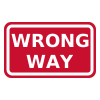
You see this sign facing you. What does it mean?
Question 4 of 50Alcohol, drugs and penalties
Which ability does alcohol usually affect first?
Question 5 of 50Road signs
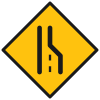
What does this sign mean?
Question 6 of 50Sharing the road
Why is it dangerous to cut in front of a large truck?
Question 7 of 50Right of way
Your light turns green, but an ambulance with flashing lights and a siren is coming. What should you do?
Question 8 of 50Turning, passing and lanes
At an intersection with two left-turn lanes, how should you turn?
Question 9 of 50Road signs
A small yellow sign below a curve sign shows "35 MPH". What does it mean?
Question 10 of 50Turning, passing and lanes
How should you signal when leaving a roundabout?
Question 11 of 50Right of way
A car is already in the intersection when you arrive. What should you do?
Question 12 of 50Road signs
A speed sign on a highway shows "MINIMUM 40". What does it mean?
Question 13 of 50Signals and pavement markings
What does a steady green light mean?
Question 14 of 50Alcohol, drugs and penalties
What can happen if you get many traffic tickets in a short time?
Question 15 of 50Safe driving and hazards
Rain is so heavy you cannot see the road. What should you do?
Question 16 of 50Safe driving and hazards
How can you let other drivers know what you plan to do?
Question 17 of 50Emergencies and equipment
When should you use your hazard warning lights?
Question 18 of 50Road signs
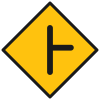
What should you expect after you pass this sign?
Question 19 of 50Alcohol, drugs and penalties
You are in a crash. Is it legal to drive away without stopping?
Question 20 of 50Speed and following distance
Why should you avoid driving right beside other cars on a multi-lane road?
Question 21 of 50Safe driving and hazards
Why is driving at night riskier than in the day?
Question 22 of 50Speed and following distance (Utah)
How does Utah mark the zones where a rural interstate speed limit changes?
Question 23 of 50Alcohol, drugs and penalties (Utah)
A Utah driver age 21 or older refuses a chemical test after a DUI arrest. How long is the license revoked for a first refusal?
Question 24 of 50Signals and pavement markings
What do two solid yellow lines down the center of the road mean?
Question 25 of 50Road signs
A sign in bright yellow-green is most likely to warn of:
Question 26 of 50Signals and pavement markings (Utah)
In Utah, where may you move into or out of an I-15 express lane?
Question 27 of 50Right of way
When must you yield the right-of-way?
Question 28 of 50Right of way (Utah)
You stopped behind a Utah school bus with flashing red lights. When may you go?
Question 29 of 50Safe driving and hazards (Utah)
In Utah, children age 8 and under must use a child safety seat unless they are at least how tall?
Question 30 of 50Turning, passing and lanes (Utah)
In Utah, you may not make a U-turn on a curve near a hilltop if you cannot see or be seen from how far?
Question 31 of 50Parking and stopping
Where is parking never allowed?
Question 32 of 50Road signs
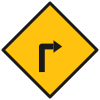
What does this sign warn of?
Question 33 of 50Parking and stopping (Utah)
In Utah, how close to a fire hydrant may you park?
Question 34 of 50Sharing the road
Where should you take extra care to watch for children?
Question 35 of 50Parking and stopping
Why is it unsafe to stop or park on railroad tracks?
Question 36 of 50Parking and stopping (Utah)
When may you use a runaway vehicle ramp in Utah?
Question 37 of 50Speed and following distance (Utah)
You are in the left lane of a Utah multi-lane highway and a car comes up behind you. What must you do?
Question 38 of 50Right of way (Utah)
In Utah, a person with a white cane is crossing the street. What must you do?
Question 39 of 50Alcohol, drugs and penalties
Which factor can raise a person's blood alcohol level?
Question 40 of 50Parking and stopping
May you park in a marked bike lane?
Question 41 of 50Emergencies and equipment (Utah)
A Utah crash damages only property, and no one is hurt. What may the drivers do?
Question 42 of 50Safe driving and hazards
Which headlights should you use in fog?
Question 43 of 50Turning, passing and lanes
A long line of cars is behind you on a two-lane road. What should you do?
Question 44 of 50Safe driving and hazards
Why is texting while driving so dangerous?
Question 45 of 50Emergencies and equipment
Your car stalls on the railroad tracks and a train is coming. What should you do?
Question 46 of 50Signals and pavement markings
What must you do at a steady red traffic light?
Question 47 of 50Safe driving and hazards
The headlights of an oncoming car are blinding you. Where should you look?
Question 48 of 50Alcohol, drugs and penalties (Utah)
A Utah driver under 21 drives with any measurable alcohol. On a first offense, what happens to driving privileges?
Question 49 of 50Signals and pavement markings (Utah)
According to the Utah handbook, when may a car drive in a marked bike lane?
Question 50 of 50Road signs
Signs that are wider than they are tall, in green, usually:
1 of 50
Answer each question to see the explanation. Keyboard: A–D or 1–4 to answer, N next, P previous.
Answers and explanations (text version)
The correct answer to each question above, why it is right, and where it comes from. Try the test first.
Question 1: D. Do not drive until you know how it affects you
A car counts as heavy machinery. Do not drive until you know how the medicine affects you.
Handbook: Chapter: Alcohol, drugs and penalties — Drugs and medicine
Question 2: A. Wait behind until you can pass safely
Wait behind the cyclist until there is room to pass safely with plenty of space.
Handbook: Chapter: Sharing the road — Bicycles
Question 3: A. You are driving against traffic
A wrong way sign means you are driving against the flow of traffic. Pull over safely and turn back.
Handbook: Chapter: Traffic signs — Regulatory signs
Question 4: D. Judgment
Alcohol affects judgment first, so a driver may feel fine while making poor choices.
Handbook: Chapter: Alcohol, drugs and penalties — How alcohol affects you
Question 5: D. The right lane ends ahead
The right edge line bends in toward the center, which means the right lane ends ahead and drivers in it must move left.
Handbook: Chapter: Traffic signs — Warning signs
Question 6: C. It needs much more distance to stop
A loaded truck needs much more distance to stop than a car, so it may not be able to stop for you.
Handbook: Chapter: Sharing the road — Large trucks and buses
Question 7: A. Stay stopped and let it go by
A green light does not let you go when an emergency vehicle with a siren is coming. Stay where you are and let it pass.
Handbook: Chapter: Right of way — Emergency vehicles
Question 8: C. Stay in your own lane through the turn
With two turn lanes, stay in your lane through the turn and end up in the matching lane.
Handbook: Chapter: Turning, passing and lane use — Turns
Question 9: B. A safe speed for the curve in good conditions
The yellow plaque shows an advisory speed, a safe speed for the curve in good conditions. In bad weather go slower than 35 MPH.
Handbook: Chapter: Traffic signs — Warning signs
Question 10: B. Signal right before your exit
Signal right just before your exit so others know you are leaving the roundabout.
Handbook: Chapter: Turning, passing and lane use — Roundabouts
Question 11: D. Let it go through first
Yield to vehicles already in the intersection. Wait for them to clear it before you go.
Handbook: Chapter: Right of way — Stop signs and intersections
Question 12: C. You should not drive below 40 in good conditions
A minimum speed sign means you should not go below 40 when conditions are good, because very slow cars can cause crashes.
Handbook: Chapter: Traffic signs — Regulatory signs
Question 13: C. Go if the way is clear, yielding as needed
A green light means you may go, but only when the way is clear. You must still yield to people and cars already in the intersection.
Handbook: Chapter: Traffic signals and pavement markings — Traffic signals
Question 14: C. Your license can be suspended
Repeated traffic violations can lead to your license being suspended, along with higher insurance costs.
Handbook: Chapter: Alcohol, drugs and penalties — Penalties
Question 15: C. Pull off the road safely and wait
If you cannot see the road, pull off safely, turn on your hazard lights, and wait for the rain to ease.
Handbook: Chapter: Safe driving and hazards — Night and weather
Question 16: D. Use your signals and brake lights
Signals, brake lights and eye contact tell other drivers and people walking what you plan to do.
Handbook: Chapter: Safe driving and hazards — Defensive driving
Question 17: B. When your stopped car could be a hazard
Use hazard lights when your car is stopped or very slow and could be a hazard to others.
Handbook: Chapter: Emergencies and vehicle equipment — Breakdowns
Question 18: A. Cars may enter from a road on the right
This side road sign warns that a road joins from the right, so cars may enter your road.
Handbook: Chapter: Traffic signs — Warning signs
Question 19: D. No, you must stop
You must stop after any crash you are in. Leaving the scene is a serious offense.
Handbook: Chapter: Alcohol, drugs and penalties — Penalties
Question 20: A. You may be in their blind spot and boxed in
Driving beside other cars can leave you in their blind spot with no room to move if something happens.
Handbook: Chapter: Speed and following distance — Managing space
Question 21: B. You cannot see as far or as clearly
At night you cannot see as far or as clearly, so it is harder to spot hazards in time.
Handbook: Chapter: Safe driving and hazards — Night and weather
Question 22: A. With pavement markings and extra signs
The handbook says the transition zones "are indicated with pavement markings and additional signs."
Handbook: Section 9: Rules of the Road — Speed
Question 23: B. 18 months
Under the implied consent law, refusing the test revokes the license "for 18 months for the first offense."
Handbook: Section 10: Alcohol/Drugs and Driving — Alcohol and the Law
Question 24: D. No passing from either side
Two solid yellow lines down the center of the road mean no passing from either side.
Handbook: Chapter: Traffic signals and pavement markings — Pavement markings
Question 25: D. A school, people walking, or bikes
Bright yellow-green is used for school, pedestrian and bicycle warning signs because it is easy to see.
Handbook: Chapter: Traffic signs — Sign shapes and colors
Question 26: D. Only at access points with white dotted lines
It is illegal to cross the double white line; you may move in and out only at access points "with white dotted striping rather than solid lines."
Handbook: Section 9: Rules of the Road — Freeway Driving
Question 27: A. Whenever it helps prevent a crash
Even when you have the right-of-way, yield if it will help prevent a crash.
Handbook: Chapter: Right of way — Right-of-way basics
Question 28: D. When its flashing red lights stop
Utah drivers must stop for the bus and "not proceed until the flashing red light or signal has stopped."
Handbook: Section 8: Basic Driving — Stopping
Question 29: C. 57 inches
Children aged eight and under must be in an approved child safety seat "unless they are 57 inches tall."
Handbook: Section 7: Preparing Your Vehicle — Car Seats
Question 30: B. 500 feet
Utah bans U-turns on a curve or near a hilltop where you "cannot see or be seen from both directions for 500 feet."
Handbook: Section 8: Basic Driving — Turns
Question 31: B. In an intersection
You may not park in an intersection, since it blocks traffic and people crossing.
Handbook: Chapter: Parking and stopping — Where not to park
Question 32: A. A sharp right turn that needs a low speed
The bent arrow means a sharp turn to the right, which needs a much lower speed than a gentle curve.
Handbook: Chapter: Traffic signs — Warning signs
Question 33: A. No closer than 15 feet
Utah lists places you may not park, including "Within 15 feet of a fire hydrant," so stay at least 15 feet away.
Handbook: Section 8: Basic Driving — Parking
Question 34: C. Near schools, parks, and playgrounds
Children near schools, parks and playgrounds may run into the road without looking.
Handbook: Chapter: Sharing the road — Pedestrians
Question 35: A. A train could hit your car
Never stop or park on railroad tracks. A train cannot stop in time and could hit your car.
Handbook: Chapter: Parking and stopping — Where not to park
Question 36: A. Only in an emergency, to stop your vehicle
You may not use a runaway vehicle ramp "unless you are in an emergency" that needs the ramp to stop your vehicle, and you may not park there.
Handbook: Section 9: Rules of the Road — Freeway Driving
Question 37: C. Move right safely to let it pass
A Utah driver in the left lane "must move safely to the right when approached from behind," and can be cited for impeding traffic.
Handbook: Section 9: Rules of the Road — Freeway Driving
Question 38: B. Come to a complete stop
When a pedestrian crosses with a guide dog or a white cane in Utah, "you must come to a complete stop."
Handbook: Section 14: Sharing the Road — Pedestrians
Question 39: B. Drinking quickly on an empty stomach
Drinking quickly on an empty stomach raises blood alcohol faster, since nothing slows its uptake.
Handbook: Chapter: Alcohol, drugs and penalties — How alcohol affects you
Question 40: B. Generally no, since it blocks cyclists
Generally you may not park in a bike lane, since it forces cyclists into traffic.
Handbook: Chapter: Parking and stopping — Where not to park
Question 41: D. Move the cars out of the travel lanes
In a property-damage-only crash, Utah lets drivers move their vehicles "out of the travel lanes" to a safe spot, but they must stay at the scene.
Handbook: Section 12: Crashes and Insurance — Section introduction
Question 42: C. Low beams
Use low beams in fog. High beams reflect off the fog and make it harder to see.
Handbook: Chapter: Safe driving and hazards — Night and weather
Question 43: B. Pull over where safe and let them pass
If a long line forms behind you, pull over where it is safe and let them pass.
Handbook: Chapter: Turning, passing and lane use — Lane use
Question 44: D. It takes your eyes and mind off the road
Texting takes your eyes, hands and mind off driving, which makes a crash much more likely.
Handbook: Chapter: Safe driving and hazards — Distracted driving
Question 45: A. Get out and walk away at an angle toward the train
Get out at once and walk away from the tracks at an angle toward the train, so debris thrown forward in the crash will not hit you.
Handbook: Chapter: Emergencies and vehicle equipment — Railroad emergencies
Question 46: D. Stop and wait behind the stop line
A steady red light means stop. Wait behind the stop line or crosswalk until you may legally go.
Handbook: Chapter: Traffic signals and pavement markings — Traffic signals
Question 47: B. Toward the right edge of your lane
Look toward the right edge of your lane to keep your path in view until the car passes.
Handbook: Chapter: Safe driving and hazards — Night and weather
Question 48: A. Denied for 6 months
Under the Not-a-Drop Act, a driver under 21 with "any measurable amount of alcohol" has all driving privileges denied for 6 months on a first offense.
Handbook: Section 10: Alcohol/Drugs and Driving — 21 and Under
Question 49: D. When entering or leaving an alley or driveway
The Utah handbook says not to "stop, park, or drive on a designated bicycle path or lane" unless entering or leaving an alley or driveway, on police duty, or in an emergency.
Handbook: Section 14: Sharing the Road — Bicycles
Question 50: B. Give directions and distances
Green horizontal signs are guide signs. They show directions, distances and exits.
Handbook: Chapter: Traffic signs — Sign shapes and colors
Practice test 2 of 10 for the Written Knowledge Test (learner permit) (Utah Driver License Division): 50 questions · 40 of 50 (80%) to pass · no time limit.