Question 1 of 40Road signs
Practice test 1 of 10 — Virginia permit test
Practice test 1 questions
Question 2 of 40Road signs · Signals and pavement markings
A crossing signal shows a white walking person. What does it mean for people on foot?
Question 3 of 40Road signs · Signals and pavement markings
Yellow center lines on a road separate:
Question 4 of 40Road signs
Small green signs with numbers along a highway are mile markers. How can they help you?
Question 5 of 40Road signs
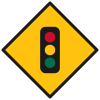
What does this sign tell you?
Question 6 of 40Road signs
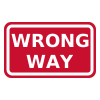
At night you pass this sign just after you turn onto a ramp. What is the best thing to do?
Question 7 of 40Road signs · Signals and pavement markings
In Virginia, when may you turn left while the light is a steady red?
Question 8 of 40Road signs
A sign over a lane says "RIGHT LANE MUST TURN RIGHT". You are in that lane. What must you do?
Question 9 of 40Road signs
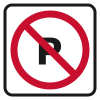
What does this sign mean?
Question 10 of 40Road signs

When you reach this sign, what must you do?
Question 11 of 40General knowledge · Sharing the road
Why might a motorcyclist suddenly change position in their lane?
Question 12 of 40General knowledge · Right of way
A school bus ahead of you has flashing yellow lights. What does this mean?
Question 13 of 40General knowledge · Emergencies and equipment
Your headlights suddenly go out at night. What should you do?
Question 14 of 40General knowledge · Right of way
An emergency vehicle without its siren or lights on is behind you. Must you pull over?
Question 15 of 40General knowledge · Parking and stopping
You park on a hill with no curb, facing up or down. Which way should you turn your wheels?
Question 16 of 40General knowledge · Right of way
You are joining a highway from an on-ramp. Who has the right-of-way?
Question 17 of 40General knowledge · Alcohol, drugs and penalties
How does a conviction for driving under the influence usually affect insurance?
Question 18 of 40General knowledge · Safe driving and hazards
In Virginia, what is the fine for using a handheld phone in a highway work zone?
Question 19 of 40General knowledge · Parking and stopping
A police car signals you to pull over. What should you do?
Question 20 of 40General knowledge · Speed and following distance
You are following a car in heavy traffic. What should you do?
Question 21 of 40General knowledge · Emergencies and equipment
When should you adjust your seat and mirrors?
Question 22 of 40General knowledge · Turning, passing and lanes
On which side should you normally pass another vehicle?
Question 23 of 40General knowledge · Licensing and insurance
A Virginia driver gets 18 demerit points within 12 months. What will DMV do?
Question 24 of 40General knowledge · Sharing the road
A vehicle is stopped on the shoulder with flashing emergency lights. What should you do?
Question 25 of 40General knowledge · Safe driving and hazards
How often should you check your mirrors?
Question 26 of 40General knowledge · Safe driving and hazards
It starts to rain during the day. What should you do with your headlights?
Question 27 of 40General knowledge · Safe driving and hazards
Why should you wear your seat belt?
Question 28 of 40General knowledge · Licensing and insurance
Which licensed 19-year-old may supervise a Virginia learner's permit holder?
Question 29 of 40General knowledge · Alcohol, drugs and penalties
What is a likely result of driving while your license is suspended?
Question 30 of 40General knowledge · Turning, passing and lanes
Where should you slow down when leaving a highway?
Question 31 of 40General knowledge · Safe driving and hazards
You are driving on a two-lane road and an oncoming car drifts into your lane. What should you do?
Question 32 of 40General knowledge · Turning, passing and lanes
After passing a car, when should you move back into its lane?
Question 33 of 40General knowledge · Emergencies and equipment
Your gas pedal sticks down. What should you do?
Question 34 of 40General knowledge · Right of way
You are at a stop sign. A car on the cross street is signaling a turn onto your road but has not slowed down yet. What is safest?
Question 35 of 40General knowledge · Parking and stopping
How should you drive in a parking lot?
Question 36 of 40General knowledge · Sharing the road
After passing a large truck, when should you move back in front of it?
Question 37 of 40General knowledge · Right of way
Your road ends at a T-intersection with no signs. A car is coming on the through road. Who has the right-of-way?
Question 38 of 40General knowledge · Alcohol, drugs and penalties
If you are convicted of aggressive driving in Virginia, how long could your license be suspended?
Question 39 of 40General knowledge · Turning, passing and lanes
You turn left from a two-way street onto another two-way street. Which lane should you end in?
Question 40 of 40General knowledge · Right of way
You hear a siren and see a fire truck with flashing lights behind you. What should you do?
1 of 40
Answer each question to see the explanation. Keyboard: A–D or 1–4 to answer, N next, P previous.
Answers and explanations (text version)
The correct answer to each question above, why it is right, and where it comes from. Try the test first.
Question 1: C. Stop, yield, or something is not allowed
Red is used for stop, yield and signs that ban an action, such as do not enter.
Handbook: Chapter: Traffic signs — Sign shapes and colors
Question 2: B. They may start to cross, watching for turning cars
The walking person means people may start to cross, but they should still watch for cars that are turning.
Handbook: Chapter: Traffic signals and pavement markings — Traffic signals
Question 3: A. Traffic moving in opposite directions
Yellow lines separate traffic moving in opposite directions.
Handbook: Chapter: Traffic signals and pavement markings — Pavement markings
Question 4: D. They tell people where you are in an emergency
Mile markers show your place on the highway, which helps you tell police or rescue workers where you are.
Handbook: Chapter: Traffic signs — Guide and service signs
Question 5: D. There is a traffic light ahead
This sign warns of a traffic light ahead. Be ready to stop if it is yellow or red.
Handbook: Chapter: Traffic signs — Warning signs
Question 6: A. Pull over, then turn around safely
The wrong way sign means you are heading into oncoming traffic. Pull to the side right away, then turn around safely.
Handbook: Chapter: Traffic signs — Regulatory signs
Question 7: A. From a one-way street onto another one-way street
Virginia allows a left on red only from a one-way street onto another one-way street, after a full stop and yielding.
Handbook: Section 2: Signals, Signs and Pavement Markings — Traffic Signals
Question 8: B. Turn right at the intersection
This sign means every vehicle in the right lane must turn right at the intersection.
Handbook: Chapter: Traffic signs — Regulatory signs
Question 9: D. You may not park here
This is a no parking sign. You may not leave your car parked in the area it covers.
Handbook: Chapter: Traffic signs — Regulatory signs
Question 10: C. Stop completely, then go when it is safe
This is a stop sign. You must come to a full stop and move on only when the way is clear.
Handbook: Chapter: Traffic signs — Regulatory signs
Question 11: D. To avoid hazards like potholes or gravel
Potholes, gravel and wet patches are more dangerous on a motorcycle, so riders may move to avoid them.
Handbook: Chapter: Sharing the road — Motorcycles
Question 12: C. It is getting ready to stop
Flashing yellow lights mean the bus is about to stop. Slow down and get ready to stop.
Handbook: Chapter: Right of way — School buses
Question 13: D. Turn on hazards and pull off the road
Try your hazard lights or high beams, then pull off the road as soon as you safely can.
Handbook: Chapter: Emergencies and vehicle equipment — Lights failure
Question 14: B. No, treat it like other traffic
You must pull over for an emergency vehicle using its siren and lights. Without them, it is treated like other traffic.
Handbook: Chapter: Right of way — Emergency vehicles
Question 15: A. Toward the edge of the road
With no curb, turn the wheels toward the edge of the road so the car rolls off the road, not into traffic.
Handbook: Chapter: Parking and stopping — Parking on hills
Question 16: B. Traffic already on the highway
When joining a highway, yield to traffic already on it and merge into a safe gap.
Handbook: Chapter: Right of way — Entering a roadway
Question 17: B. Insurance costs go up
Insurance costs usually go up a lot after a conviction for driving under the influence.
Handbook: Chapter: Alcohol, drugs and penalties — Penalties
Question 18: C. $250
If you are convicted of using a handheld communications device in a Virginia highway work zone, you will be fined $250.
Handbook: Section 2: Signals, Signs and Pavement Markings — Work Zones
Question 19: C. Pull to the right and stay in the car
Pull to the right when it is safe, stop, and stay in the car with your hands where the officer can see them.
Handbook: Chapter: Parking and stopping — Traffic stops
Question 20: D. Keep a steady gap and watch for brake lights
In heavy traffic keep a steady gap and watch for brake lights ahead so you can slow down smoothly.
Handbook: Chapter: Speed and following distance — Following distance
Question 21: B. Before you start to drive
Adjust your seat and mirrors before you start to drive, so you can see well and are not distracted on the road.
Handbook: Chapter: Emergencies and vehicle equipment — Vehicle equipment
Question 22: D. On the left
You should normally pass on the left. Passing on the right is allowed only in certain cases.
Handbook: Chapter: Turning, passing and lane use — Passing
Question 23: D. Suspend the license for 90 days and require a clinic
With "18 demerit points within 12 months or 24 points within 24 months, DMV will suspend your driving privilege for 90 days" and require a driver improvement clinic.
Handbook: Section 5: Penalties — Other DMV Requirements, Suspensions and Revocations
Question 24: D. Move over a lane, or slow down
Every state has a move over law. Move over a lane if you can, or slow down if you cannot.
Handbook: Chapter: Sharing the road — Emergency and work vehicles
Question 25: B. Every few seconds
Check your mirrors every few seconds so you always know what is behind and beside you.
Handbook: Chapter: Safe driving and hazards — Seeing and scanning
Question 26: D. Turn them on so others can see you
Turn on your headlights in rain so other drivers can see you; many states require it.
Handbook: Chapter: Safe driving and hazards — Night and weather
Question 27: B. It keeps you in your seat in a crash
A seat belt keeps you in your seat and lowers the chance of serious injury in a crash.
Handbook: Chapter: Safe driving and hazards — Seat belts and airbags
Question 28: B. The permit holder's half-sister
The supervisor "may be age 18, 19, or 20 if he or she is your legal guardian, brother, sister, half-brother, half-sister, step brother or stepsister."
Handbook: Section 6: License Types — Learner's Permit
Question 29: C. More fines and a longer suspension or jail
Driving while suspended usually leads to more fines, a longer suspension, and possibly jail.
Handbook: Chapter: Alcohol, drugs and penalties — Penalties
Question 30: A. In the exit lane, after leaving the main lanes
Keep your speed in the main lanes and slow down once you are in the exit lane.
Handbook: Chapter: Turning, passing and lane use — Highway driving
Question 31: B. Slow down, honk, and steer right
Slow down, warn the driver with your horn and steer right. Do not steer left into its lane, since it may move back.
Handbook: Chapter: Safe driving and hazards — Defensive driving
Question 32: A. When you can see its headlights in your mirror
Move back when you can see the car's headlights in your mirror, so you do not cut it off.
Handbook: Chapter: Turning, passing and lane use — Passing
Question 33: C. Shift to neutral and brake
Shift to neutral to cut power to the wheels, brake, and pull off the road when safe.
Handbook: Chapter: Emergencies and vehicle equipment — Stuck gas pedal
Question 34: C. Wait until it clearly starts to turn
A turn signal is not a promise. Wait until the car clearly starts to turn before you pull out in front of it.
Handbook: Chapter: Right of way — Stop signs and intersections
Question 35: D. Slowly, watching for people
Drive slowly in a parking lot and watch for people walking and cars backing out.
Handbook: Chapter: Parking and stopping — Parking lots
Question 36: A. When its whole front shows in your mirror
Wait until you can see the whole front of the truck in your mirror before moving in front of it.
Handbook: Chapter: Sharing the road — Large trucks and buses
Question 37: D. The car on the through road
At a T-intersection with no signs, traffic on the ending road yields to traffic on the through road.
Handbook: Chapter: Right of way — Uncontrolled intersections
Question 38: D. 10 days to 6 months
A conviction for aggressive driving in Virginia can mean a license suspension of 10 days up to 6 months.
Handbook: Section 3: Safe Driving — Aggressive Driving
Question 39: C. The lane just right of the center line
When turning left onto a two-way street, finish in the lane just to the right of the center line.
Handbook: Chapter: Turning, passing and lane use — Turns
Question 40: C. Pull to the right edge of the road and stop
For an emergency vehicle using its siren and lights, pull to the right edge of the road and stop until it passes.
Handbook: Chapter: Right of way — Emergency vehicles
Practice test 1 of 10 for the Two-part knowledge exam (traffic signs and general knowledge) (Virginia DMV): 40 questions · 34 of 40 (10 of 10 road signs and 24 of 30 general knowledge) to pass · no time limit.